There was a time not too long ago when understanding your skin required sitting in a brightly lit exam room, waiting weeks for an appointment, and paying hundreds of dollars for a dermatologist to spend ten minutes with you. That model, for millions of Americans, is rapidly becoming a relic. In 2026, artificial intelligence has quietly inserted itself between you and that appointment — and in many cases, it’s delivering answers faster, cheaper, and with surprising clinical accuracy. This is not science fiction. This is your bathroom mirror, your smartphone camera, and a beauty app you probably already have installed.
The convergence of AI, dermatology, and the beauty industry is one of the most significant consumer health shifts of this decade. And if you haven’t been paying attention, you’re already behind.
The Numbers Don’t Lie
The AI facial skin analyzer market is valued at $0.9 billion in 2026 and is projected to reach $1.35 billion by 2030, growing at a compound annual growth rate of 10.8%. Meanwhile, the broader AI beauty personalization platforms market begins at $2.3 billion in 2026, driven by accelerating adoption of computer vision-based technologies and data-driven diagnostic commerce models. These aren’t niche figures. These are mainstream market signals reflecting a fundamental behavioral shift in how Americans interact with their skin health and their beauty routines.
For context, the U.S. has a well-documented shortage of dermatologists. The American Academy of Dermatology has consistently flagged that many Americans — particularly those in rural communities and lower-income brackets — wait months to see a specialist. AI is stepping directly into that gap, not just as a beauty gimmick, but as a genuine healthcare accessibility tool.
What AI Skin Diagnosis Actually Does
Let’s be specific, because vague claims about “AI” are everywhere. In 2026, the most advanced AI skin diagnostic platforms do the following with clinical-grade precision:
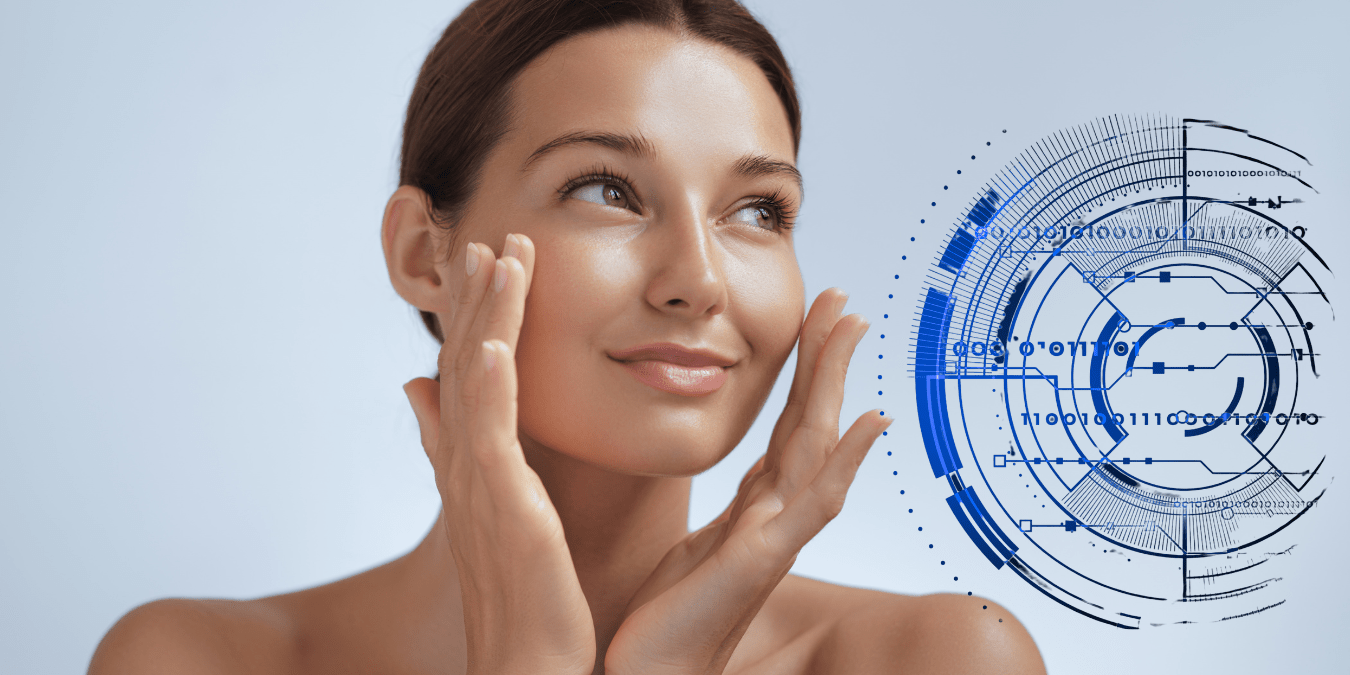
- Detect 15 or more skin concerns in real time from a standard smartphone selfie, including wrinkles, fine lines, enlarged pores, acne, redness, hyperpigmentation, texture irregularities, moisture distribution, and radiance levels
- Use multispectral imaging to reveal subcutaneous skin conditions — problems beneath the surface that the naked eye cannot see
- Track skin changes dynamically over time using cloud-based data management, giving users a longitudinal record of their skin health rather than a single snapshot
- Generate personalized skincare regimens backed by dermatologist-validated AI models trained on large-scale clinical image datasets
Perfect Corp.’s AI Skin Diagnostic, widely recognized as an industry benchmark, achieves dermatologist-validated accuracy with high test-retest reliability and has been deployed across global beauty brands, pharmacies, med-spas, and retail environments. This isn’t a consumer novelty. It’s an enterprise-grade clinical tool packaged in a consumer-friendly interface.
On the hardware side, professional-grade systems like MEICET’s 3D D9 multi-dimensional skin analysis platform use 0.2mm ultra-high precision rotating scans and 180-degree full-face imaging to detect more than 50 skin indicators — up from the 30 that prior-generation devices could identify. These machines are increasingly common in American med-spas, high-end salons, and dermatology-adjacent clinics, allowing non-specialists to offer clinical-quality assessments.
The FDA Is Paying Attention — and Acting
This is the part that separates AI skincare from every other beauty trend of the past decade: regulatory validation. The U.S. Food and Drug Administration is actively authorizing AI-driven dermatology devices, establishing legal and clinical frameworks that give these technologies real medical legitimacy.
In January 2024, the FDA authorized DermaSensor — the first AI-enabled medical device intended for skin cancer detection in primary care settings, designed specifically for use by non-specialists. This was a landmark moment. For the first time, a primary care physician without dermatology training could use a cleared AI device to evaluate suspicious lesions. The De Novo authorization pathway used for DermaSensor also created a new product classification code, allowing future AI dermatology devices to reach market through the streamlined 510(k) pathway — dramatically accelerating the pace at which new tools can receive clearance.
Then, in March 2026, PathAI announced that the FDA granted Breakthrough Device Designation to PathAssist Derm, an AI-powered pathology solution designed to analyze digital whole-slide images of skin lesions and aid pathologists in their diagnostic workflow. The Breakthrough Device Designation is reserved for technologies that offer more effective treatment or diagnosis of life-threatening conditions — the fact that the FDA applied it to an AI dermatopathology tool speaks volumes about how seriously the agency is taking this space.
These regulatory milestones matter enormously for American consumers. They signal that AI skin analysis is not a speculative wellness trend. It is an emerging medical technology with clinical evidence requirements, safety oversight, and institutional trust behind it.
How It Reached Your Bathroom
The clinical origins of AI dermatology are important, but the reason millions of Americans are experiencing these tools in 2026 has as much to do with consumer technology as it does with medicine. The beauty industry recognized early that skin diagnosis was a powerful entry point — and that AI could solve one of its most persistent problems: the gap between what a consumer buys and what actually works for their skin.
At CES 2026, the world’s largest consumer electronics showcase, beauty tech occupied more floor space than ever before. Amorepacific and MIT co-debuted Skinsight, a CES 2026 Innovation Awards Honoree that won in the Beauty Tech category. Skinsight is a next-generation electronic skin platform that analyzes the causes of skin aging in real time and delivers personalized skincare solutions by combining lifestyle patterns with real-time biological skin signals. The fact that MIT’s research labs and a major Korean beauty conglomerate collaborated to bring this to a consumer electronics show — not a medical conference — tells you exactly where the center of gravity for this technology now sits: in everyday American hands.
Haut.AI, another major platform in this space, offers AI and generative AI SaaS solutions that enable beauty brands to deliver hyper-personalized digital experiences and accelerate product innovation at scale. Brands are integrating these platforms directly into their apps and e-commerce experiences, meaning the AI skin consultation now happens before you add a product to your cart.
Personalization Is the Core Promise
The most profound promise of AI skin diagnosis is not diagnosis for its own sake. It is personalization — the end of the one-size-fits-all skincare model that has dominated the beauty industry for generations. In 2026, personalization is the defining trend of the American beauty market.
Consumers no longer want generic moisturizers marketed with aspirational photography. They want products formulated for their pore density, their specific pigmentation pattern, their moisture distribution curve, and their unique combination of environmental exposures. AI makes this not only possible but scalable.
AI-driven platforms now perform diagnosis, recommend formulas, and in some cases actually formulate products tailored to individual skin type, scalp condition, or biomarker profile. The “hyper-personalization” trend is combining genomics, real-time feedback, and interconnected IoT devices to gather and analyze data continuously — moving skincare from reactive to genuinely predictive.
US-based brands are leading this charge. Coty has partnered with Perfect Corp to deploy data-driven personalized skincare at scale, while other brands are using AI trend prediction platforms like Trendalytics to identify what specific skin concerns are most prevalent among their consumer segments and respond with targeted product development. The feedback loop between AI skin data and product formulation is tightening rapidly, and American consumers are benefiting from it in real time.
AI in Telemedicine: Bridging the Access Gap
One of the most meaningful applications of AI skin diagnosis in 2026 has nothing to do with luxury beauty. It has to do with healthcare access. Autoderm, which holds FDA Breakthrough Device Designation, is a white-label AI dermatology API built for medical-grade skin analysis at scale. It is being deployed across telemedicine platforms, pharmacies, and consumer health apps to streamline skin concern review, enable 24/7 automated intake, and reduce unnecessary specialist referrals.
For the roughly 30 percent of Americans who live in counties with limited or no access to a board-certified dermatologist, this is genuinely transformative. A patient in rural Mississippi or a low-income household in urban Detroit can now take a photo of a skin lesion, have it analyzed by a clinically validated AI tool, and receive an initial triage recommendation within minutes — all before ever interacting with a human provider. That triage can determine whether an in-person dermatology visit is urgent, whether a primary care physician can manage the concern, or whether an over-the-counter product is appropriate.
Autoderm’s integration with pharmacies is particularly notable. On-demand skin concern checks at the pharmacy level, with support for OTC product recommendations, represents a democratization of dermatological access that the traditional clinic model never achieved.
The Expert Perspective: What Dermatologists Are Saying
It is important to address the question that every responsible coverage of this topic must confront: what do actual dermatologists think? The peer-reviewed literature is increasingly supportive, though appropriately nuanced.
A comprehensive review published in the International Journal of Dermatology in 2025 identified fifteen regulatory-approved AI devices globally, including three FDA-approved systems in the United States, and concluded that AI tools are demonstrating meaningful clinical utility particularly in early detection and triage workflows. The review also noted that while AI excels at pattern recognition in well-characterized skin conditions, human clinical judgment remains essential for complex, atypical presentations and for communicating diagnosis in the full context of a patient’s health history.
The medical community’s consensus position in 2026 is not that AI replaces dermatologists. It is that AI extends dermatological reach — enabling earlier intervention, reducing diagnostic delays, and empowering patients to engage more actively with their skin health before they ever sit in an exam chair. DermaSensor’s FDA De Novo authorization explicitly framed the device’s value as supporting non-specialist primary care physicians, not replacing specialists. That framing is instructive for the broader ecosystem.
The risk of AI over-reliance is real, and board-certified dermatologists consistently flag the importance of professional evaluation for anything that appears atypical, changes rapidly, or involves features that a camera-based algorithm may not capture accurately. AI skin diagnosis is a powerful first step. It is not the last word.
Smart Mirrors, Wearables, and What Comes Next
The frontier of AI skin diagnosis in 2026 extends beyond smartphone apps. Smart mirrors equipped with high-resolution cameras and AI analysis software are appearing in American homes, hotel rooms, and retail environments at an accelerating pace. MEICET’s professional analyzer systems form a closed-loop service ecosystem — AI-powered diagnostic hardware linked seamlessly with LED light therapy devices, laser treatment equipment, and customized skincare plans, creating a complete service chain from diagnosis to treatment delivery.
Wearable skin sensors capable of continuous monitoring are entering the consumer market. Amorepacific’s Skinsight platform, developed with MIT, operates as an electronic skin platform that reads real-time skin signals and integrates them with lifestyle pattern data — essentially wearing your dermatologist on your wrist. The long-term implications of continuous skin health monitoring are significant: the ability to detect early signs of aging, inflammatory response, UV damage, and potentially precancerous changes before they become clinically visible.
Dynamic tracking algorithms that record and monitor long-term skin condition changes are already embedded in professional platforms like MEICET’s PRO-A intelligent analysis system, which focuses on aging, sensitivity, pigmentation, texture, and skin tone across extended timelines. As these longitudinal datasets grow, the predictive power of AI skin models will compound — making recommendations not just based on what your skin looks like today, but what it is likely to look like in six months given your current trajectory.
What This Means for You Right Now
If you are an American consumer navigating the beauty aisle or a telehealth platform in 2026, here is what the AI skin diagnosis revolution means practically:
- You have more information than ever before. A validated AI skin scan from a reputable platform can give you a meaningful starting point for understanding your skin concerns before you spend money on products or wait for a specialist appointment.
- Not all AI skin tools are equal. Look for platforms that explicitly cite dermatologist validation, clinical dataset training, and — where applicable — FDA clearance or designation. Consumer beauty apps that claim “AI analysis” without clinical backing are not in the same category as medically validated tools.
- AI triage is not a diagnosis. If you have a suspicious lesion, a rapidly changing mole, or a skin concern that affects your daily function, AI is the beginning of the conversation — not the end. See a board-certified dermatologist.
- Personalization is your right. The technology now exists to give you a skincare regimen built for your specific biology, not the average American face used in mass-market formulations. Demand it from the brands you buy from.
- The access gap is closing. If cost or geography has historically prevented you from getting a professional skin evaluation, AI-powered telemedicine platforms and pharmacy-based tools offer new entry points that were not available even two years ago.
The Bigger Picture
What is happening in AI skin diagnosis in 2026 is a preview of a broader transformation in consumer health. The beauty industry, historically separated from the medical establishment by a wide regulatory and cultural gulf, is converging with clinical dermatology through technology that neither industry fully controls. The FDA is building the regulatory architecture. MIT and major cosmetic conglomerates are building the science. Consumer technology companies are building the interfaces. And American consumers, increasingly health-literate and data-savvy, are pulling all of it into their daily lives.
The dermatologist is not disappearing. But the moment when you walk into that office already knowing your skin’s baseline metrics, its primary concerns ranked by severity, and the ingredients most likely to address them — that moment is here now. AI has not replaced the expert. It has prepared you to be a better patient when you meet one.
That is not a small change. For millions of Americans who have historically arrived at a dermatology appointment anxious, uninformed, and dependent on the specialist’s judgment alone, it is a fundamental shift in the patient-provider relationship. And it started, quietly and without much fanfare, the last time you pointed your phone at your own face.
This article was written based on current clinical research, regulatory filings, and industry market data as of April 2026. It is intended for informational purposes only and does not constitute medical advice. For any skin health concerns, consult a board-certified dermatologist.

Omisha is a health writer passionate about turning complex medical research into clear, actionable content readers can trust. She covers everything from nutrition and mental wellness to chronic disease management, always grounding her work in credible science and real-world relevance. When she's not writing, she's usually reading up on the latest health studies or exploring new wellness trends to write about next.