Every spring, the runways do something remarkable — they whisper secrets that the rest of the country eventually shouts. This season, those whispers turned into a roar faster than anyone anticipated. Within weeks of the Spring 2026 collections closing in New York, Milan, and Paris, American beauty shoppers were already clearing shelves, crashing brand websites, and flooding TikTok with tutorials. From the nail salons of Nashville to the Sephora aisles of Seattle, five specific beauty trends have broken free from the runway and embedded themselves into everyday American life.
I’ve spent the past decade tracking how runway beauty translates to the drugstore, the salon chair, and the medicine cabinet. This spring, the translation happened with unusual speed and clarity. That’s partly because the looks themselves were accessible — not avant-garde for the sake of it, but genuinely wearable interpretations of elegance, boldness, and self-expression. And in 2026, American consumers are more beauty-literate than ever. They know what they want, and they move fast when they see it on a model under the lights.
Here’s a deep dive into the five Spring 2026 runway beauty moves that are already reshaping what Americans are buying, booking, and wearing right now.
1. The Square Nail Renaissance: Why Blunt Tips Took Over the Salon Industry
If you tried to book a square nail appointment at your local nail bar last month without advance notice, you already understand the problem. Square nails — not squoval, not coffin, not almond — pure, blunt-edged square nails are back with a discipline and precision that feels almost architectural.
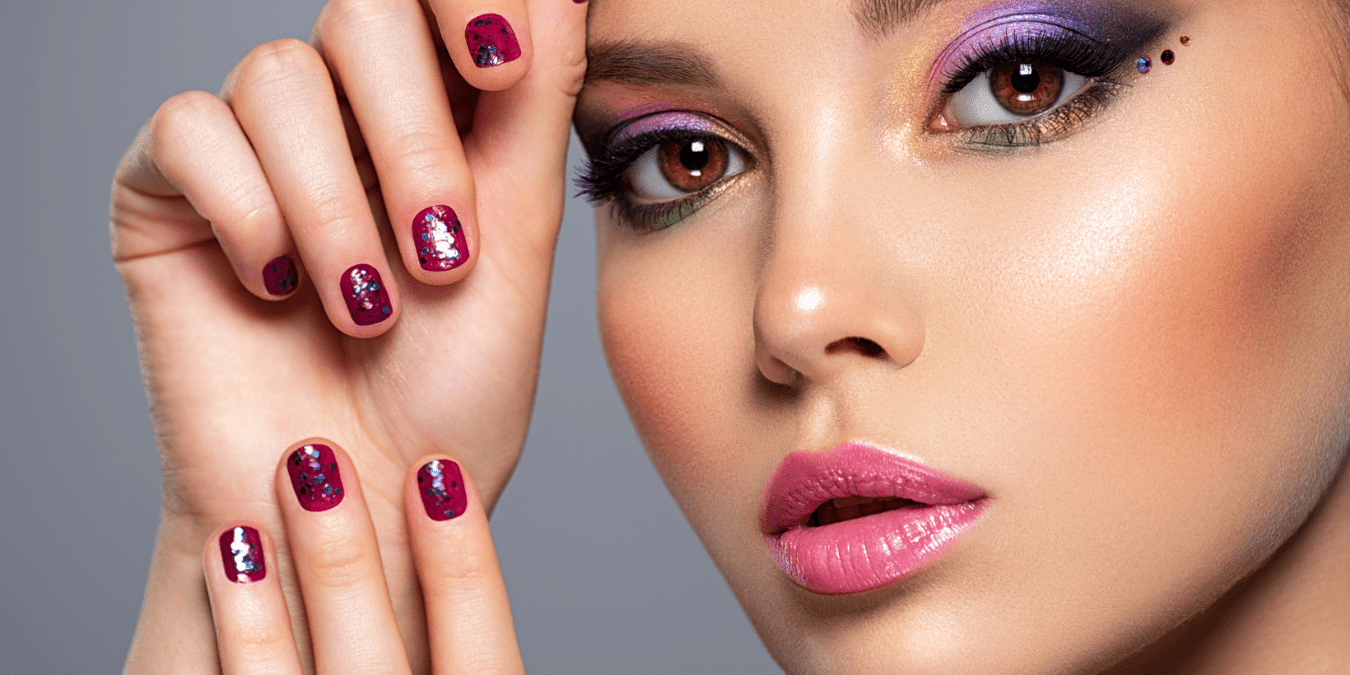
This particular shape dominated at Bottega Veneta, Prada, and several American designer showcases during the early 2026 season. But the look wasn’t just about shape. It was about the finish: opaque, single-color, high-gloss lacquer in shades like terracotta bisque, off-white cream, and deep espresso. No chrome powder. No nail art. Just geometry and color doing the heavy lifting.
The cultural signal is significant. After years of maximalist nail art — 3D gems, intricate florals, chrome ombre — the square nail trend represents a conscious aesthetic pivot toward restraint. American women, particularly in the 25-to-40 demographic, are gravitating toward what beauty insiders are calling “considered minimalism”: the idea that doing less, but doing it with intention and precision, reads as more sophisticated than doing everything at once.
According to nail industry data tracked through professional distributor networks, orders for traditional square-tip nail forms and dense-pigment single-coat polishes surged by double digits in February and March 2026. OPI, Essie, and several indie brands reported restocking challenges with their terracotta and cream shade ranges. Nail technicians across major U.S. cities confirm that the request is universal — suburban clients, urban professionals, college students. The square nail has become genuinely democratic.
What makes this trend stick beyond the season is its practicality. Square nails are structurally stronger than sharp stiletto or almond shapes, they photograph cleanly, and they work across skin tones with equal elegance. If you haven’t made the switch yet, your nail tech is ready for you — though you may need to book two weeks out.
2. Gilded Eyes: The Gold Eyeshadow Revival That’s More Wearable Than You Think
Let’s be honest about gold eyeshadow’s complicated American history. For decades, it existed in two registers: either the subtle champagne shimmer of a safe prom night look, or the full drag-adjacent gilded warrior aesthetic. Spring 2026 changed that entirely, and the runways deserve full credit for the intervention.
At Valentino, Givenchy, and notably at several New York-based emerging designers, makeup artists applied gold — real, reflective, warm gold — across the entire lid and up toward the brow bone, but kept everything else stripped back. No liner. No defined crease. No sculpted brow architecture to compete with it. The result was almost medieval in its luminosity, like something borrowed from a Byzantine mosaic, updated for a woman who also has a 9 a.m. Monday meeting.
The American makeup market responded immediately. Danessa Myricks Beauty’s Infinite Chrome Flakes in gold sold out within days of runway coverage going viral. Pat McGrath’s gold-forward palettes saw a spike in search traffic that her PR team publicly acknowledged. Even mass-market players like e.l.f. Cosmetics saw their metallic shadow sticks trend on TikTok in ways their algorithm dashboards apparently didn’t predict.
What’s driving the appeal isn’t just aesthetics — it’s the emotional resonance of the look. Gold reads as celebratory, warm, and generous. In a cultural moment where Americans are craving experiences that feel special and alive, painting your eyelids in something that catches light and holds it has genuine psychological appeal. It’s small, affordable luxury. It’s joy in a compact.
The key to wearing this trend without it feeling costume-like comes down to skin prep and restraint elsewhere. Makeup artists working with everyday clients recommend a hydrated, dewy base, gold on the lid only (no concealer baking, no heavy contour), and a clean mascara application. The gilded eye isn’t competing with your face. It’s the entire point of your face that day. Embrace that philosophy and the look lands beautifully.
3. The Glazed Lip — But Make It Tinted: How American Buyers Upgraded a Familiar Favorite
The glazed, glass-skin lip has been circulating in American beauty culture since at least 2022, fueled by Korean beauty influence and a certain Hailey Baldwin-adjacent aesthetic that proved indestructible across social platforms. But Spring 2026 runways added a critical evolution: the tint.
Rather than a clear high-shine gloss sitting on top of natural lip color, designers and their makeup teams pushed toward deeply pigmented glosses — think raspberry, terracotta, burnt sienna, and a very specific shade of brick red that has already been nicknamed “canyon gloss” by the beauty community. The finish remains soaking wet and reflective, but the color underneath is intentional and saturated.
This matters commercially because it bridges two consumer camps: those who love the plumping, sensual quality of gloss and those who want the color payoff of a lipstick. The tinted glaze delivers both. And in a market where lip product competition is intense, that positioning has proven commercially lethal — in the best possible way.
Rare Beauty’s tinted gloss line reportedly saw a 40 percent increase in reorders through Q1 2026. Fenty Beauty’s Gloss Bomb in deeper shade ranges had checkout wait times on the brand’s website. Tower 28’s ShineOn Lip Jelly — a long-standing cult favorite — broke into mainstream retail visibility in ways that its founder has described as the brand’s biggest commercial moment to date.
What’s particularly interesting from an experiential standpoint is watching this trend navigate regional taste differences across America. In the South, the berry and raspberry tones have dominated. On the coasts, the burnt sienna and brick red shades are moving fastest. In the Midwest, a soft tinted coral is threading the needle between the gloss trend and more traditional lip preferences. Beauty is always geography. The glazed tinted lip is simply smart enough to speak multiple dialects.
4. Brushed-Up Brows With Negative Space: The Most Technical Trend on This List
This one requires a brief anatomy lesson, but stay with it — because once you understand what makes this brow trend different, you’ll see it everywhere and understand why it’s commanding serious attention from beauty professionals.
Spring 2026 runways, particularly at Celine, Loewe, and several Scandinavian-influenced American shows, featured brows that were brushed dramatically upward — not feathered in the soft, diffused way that dominated 2023 and 2024, but sharply upward, almost perpendicular to the brow bone. The key distinction from previous iterations of this style: there was intentional negative space left below the brushed hairs, between the skin of the brow and the arch of the hair itself. This gap, this deliberate emptiness, creates an almost surrealist quality to the face. It emphasizes the eye socket, elongates the forehead, and gives the whole expression a kind of alert, wide-awake intensity.
For American consumers, this translated into a sudden and urgent demand for strong-hold, clear brow gels. Boy Brow by Glossier saw renewed search interest. Benefit’s 24-Hour Brow Setter became a trending product on Amazon Beauty in March 2026. Anastasia Beverly Hills — the brow authority that has held that title for nearly three decades — reported that their Clear Brow Gel outsold their tinted versions in several retail channels for the first time.
Professional brow artists are booking out weeks in advance for consultations specifically about growing out previous microblading or lamination work to achieve a more natural, brushable brow. This is notable because it signals a consumer willingness to be patient, to grow rather than to tattoo or tint — a shift in beauty philosophy as much as aesthetics.
From an expertise standpoint, it’s worth noting that this brow shape is genuinely flattering across face shapes in ways that many trends are not. The vertical emphasis created by brushing upward adds length, which benefits round and heart-shaped faces. The negative space below the arch adds dimension for flatter brow arches. It’s a technically intelligent trend, which is part of why professionals are embracing it so enthusiastically.
5. Skin as the Statement: The Rise of Intentional Flushed Texture
The fifth and most philosophically interesting trend from Spring 2026 is the hardest to describe to someone who hasn’t seen it, but the easiest to understand once you experience it. It might be called “intentional flushed texture” — though the beauty internet has offered several competing names, including “alive skin,” “bitten finish,” and the somewhat unwieldy “undone perfection.”
Here’s what it looks like in practice: skin that appears naturally flushed, as though the person just stepped in from a cold morning or finished a long walk. There is warmth concentrated at the cheeks, nose bridge, and center of the forehead. The texture is present — not concealed. Pores, slight unevenness, the natural variation of human skin — all of it visible, intentional, celebrated. Over this, a cream blush is applied with fingers rather than a brush, sheered out in a way that looks almost accidental. A subtle highlight might sit on the very top of the cheekbone, just one point of reflection against otherwise matte, natural skin.
This trend is a direct rejection of the glass-skin ideal that dominated American beauty marketing for the better part of six years. Glass skin required labor: essence layering, toner sequences, serum stacking, followed by foundation chosen specifically for its skin-like imperceptibility. The flushed texture look requires almost none of that. It asks for good moisture, a light-coverage tint or nothing at all, cream blush, and the courage to let your face look like a face.
The products selling out as a result are instructive. Milk Makeup’s Cooling Water Jelly Tint in blush tones has become a breakout hit of 2026. ILIA Beauty’s Multi-Stick has seen consistent sell-through at Credo and Sephora. RMS Beauty’s Buriti Bronzer Drops, which add warmth and radiance rather than coverage, have been backordered since February. Interestingly, several concealer lines have reported slowing reorder rates — which suggests this isn’t just a trend in what people are buying, but in how people are wearing foundation categories overall.
From an experiential perspective, this shift resonates deeply. American women have spent years being sold an ideal of skin perfection that required substantial financial and time investment and still sometimes felt unachievable. The flushed texture trend doesn’t ask for perfection. It asks for presence. That is a genuinely meaningful change in beauty culture’s relationship with the female face.
What These Five Trends Tell Us About American Beauty in 2026
Stepping back from the individual products and looks, a coherent story emerges across all five of these trends. American beauty in spring 2026 is gravitating toward the intentional over the elaborate. Square nails over intricate nail art. Gold on the lid, nothing else. Tinted gloss instead of layered lip formulas. Brushed brows with visible skin beneath them. A flush instead of a full face.
This is not minimalism in the lazy sense — it is not giving up. It is, rather, the kind of confidence that comes from knowing exactly which statement to make and committing to it completely. The beauty consumer who is winning this season is the one who picks one thing, executes it beautifully, and lets the rest breathe.
That insight has commercial implications that brands are already internalizing. Hero products — one exceptional blush, one perfect gold shadow, one technically superior brow gel — are outperforming comprehensive system-based selling. American consumers are curating rather than collecting. They are buying with intention rather than aspiration.
For anyone standing in a beauty aisle right now, trying to decide what to invest in this season, the runway has offered an unusually clear answer: choose the thing that makes you feel most alive, execute it with precision, and trust that the simplicity is the sophistication. The five trends above are not just what’s selling out. They are a collective argument for a more confident, self-possessed relationship with beauty — one that the American consumer appears very ready to embrace.
This article reflects professional beauty industry observation and consumer trend analysis based on publicly available retail data, brand announcements, and beauty editorial coverage through April 2026.

Omisha is a health writer passionate about turning complex medical research into clear, actionable content readers can trust. She covers everything from nutrition and mental wellness to chronic disease management, always grounding her work in credible science and real-world relevance. When she's not writing, she's usually reading up on the latest health studies or exploring new wellness trends to write about next.