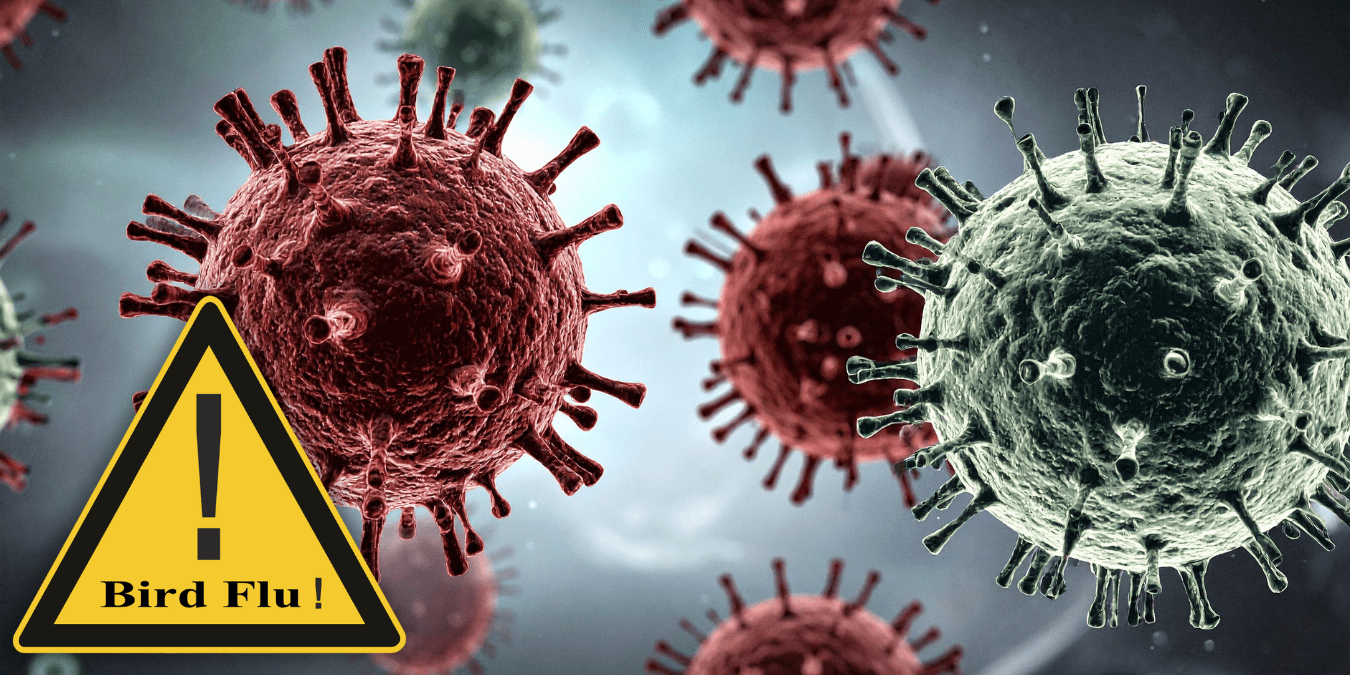
The United States is navigating one of the most consequential animal disease outbreaks in its modern history. As of late 2025, the H5N1 avian influenza virus has officially infected 71 Americans and spread across 1,084 cattle herds in 19 states. Yet the most alarming part of this story is not what has already happened — it is what scientists warn could still lie ahead.
This is not a distant threat hidden in a remote corner of the world. It is unfolding on American dairy farms, in migratory bird flyways, and, increasingly, in human bodies. Understanding exactly where we are, how we got here, and what could tip this crisis from manageable to catastrophic is essential knowledge for every American right now.
How We Got Here
The H5N1 strain of highly pathogenic avian influenza (HPAI) has been circulating globally for decades, but the current wave represents something unprecedented in scale and reach. Since January 2022, nearly 185 million birds across commercial, backyard, and wild bird populations in the United States have been affected. The virus belongs to the clade 2.3.4.4b lineage, which has proven to be far more adaptable and geographically mobile than earlier versions.
The real inflection point came in March 2024, when H5N1 was detected in U.S. dairy cattle for the first time. That was a seismic moment. Before 2024, H5N1 was primarily considered an avian pathogen — dangerous in birds, occasionally lethal in humans who had direct contact with infected poultry, but not a disease that could embed itself into the American agricultural supply chain at scale. The dairy farm discovery changed all of that.
By the time federal agencies began mapping the spread, it was clear the virus had already moved silently through herds across multiple states. Early research by scientists at The Ohio State University College of Veterinary Medicine confirmed that, early in the outbreak, H5N1 was far more widespread in dairy herds than official figures suggested — a finding that exposed critical gaps in surveillance infrastructure.
The Scope of Infection: By the Numbers
The numbers tell a story of relentless spread. To date, 71 Americans have been confirmed infected with H5N1 since early 2024, resulting in 2 deaths. Of these, 64 cases were identified through targeted monitoring of individuals directly exposed to infected animals, while 7 were detected through broader national flu surveillance systems. The 71st U.S. case — confirmed in November 2025 — involved a strain called H5N5, marking the first time this particular subtype had ever been identified in a human being anywhere in the world.
On the agricultural side, H5N1 has now been confirmed across 1,084 cattle herds in 19 states. More than 30,100 people have been monitored for potential exposure, with at least 1,260 tested after contact with infected animals. Mathematical modeling published in Nature Communications warns that dairy herd outbreaks will continue to pose a significant public health challenge and that “more urgent interventions are sorely needed”.
The economic damage is also staggering. Early projections estimate that the epidemic could inflict losses on the U.S. dairy sector ranging from $14 billion to $164 billion. Individual infected herds see milk production drop 10 to 20 percent for one to two weeks, with economic losses estimated at $100 to $200 per infected cow.
Why Cattle Were Such a Dangerous Turn
Before 2024, the scientific community had never documented H5N1 spreading between mammals through sustained, herd-level transmission. The jump to dairy cattle was not just ecologically surprising — it was deeply worrying from a pandemic preparedness standpoint.
Dairy cattle interact with humans far more routinely and intensely than wild birds do. Farm workers handle infected animals daily. Milk from infected herds enters processing facilities. When scientists detected H5N1 in retail milk samples — all processed in California — it underscored how embedded the virus had become in everyday food systems. While pasteurization kills the live virus in milk, the sheer presence of H5N1 in the commercial dairy supply chain was a wake-up call.
Two main genotypes have driven the cattle outbreak: B3.13, which was responsible for the earliest and broadest spread among herds, and D1.1, which emerged in late 2024 and has been associated with more severe illness in humans. The D1.1 genotype was linked to a fatal case in Louisiana in late 2024 and was separately introduced into dairy cattle in January 2025 — signaling that the virus was not done evolving.
The Science Behind the Pandemic Warning
When virologists say “the worst may still be coming,” they are not engaging in speculation or alarmism. They are pointing to a specific and measurable set of biological conditions that make H5N1 one of the most watched pathogens on the planet.
The immunity gap is enormous. While most adults in the U.S. carry some antibodies against the common H1 and H3 strains of seasonal flu — built through previous infections or annual flu shots — no such baseline immunity exists against H5 avian influenza. Scientists at France’s Institut Pasteur have drawn an explicit parallel to COVID-19: like the coronavirus in 2019, H5N1 would find a largely immunologically naive human population if it acquired efficient human-to-human transmission.
The historical mortality rate is terrifying. With 992 human cases reported globally since 2003, nearly half of those individuals have died. A 50 percent case fatality rate in a virus capable of pandemic spread would be catastrophic by any historical standard — dwarfing the 1918 Spanish flu, which killed an estimated 2 to 3 percent of those it infected.
The virus may be just one mutation away. Multiple scientific studies now suggest that H5N1 is only one or a small number of genetic changes away from acquiring the ability to spread efficiently between humans. Genetic analysis of the fatal Louisiana case detected low-frequency mutations that may increase the virus’s ability to infect the upper respiratory tract — the exact pathway needed for airborne human-to-human transmission. The upper respiratory tract operates at lower temperatures than deep lung tissue, and for H5N1 to spread easily between people, it needs to replicate well in that cooler environment. Right now, it is not fully adapted to that, but it is moving in that direction.
Co-infection could create a “reassortant” catastrophe. Scientists at the Global Virus Network — a coalition of virologists from more than 40 countries — have raised the alarm specifically about the risk of viral reassortment. If a person is simultaneously infected with seasonal human influenza and H5N1 bird flu, the two viruses could swap genetic segments and produce a new hybrid strain that carries H5N1’s lethality alongside seasonal flu’s proven ability to spread between people. The 2024-2025 flu season in the Northern Hemisphere was notably severe, amplifying this concern.
Spillover Cases and the Human Exposure Story
Of the 71 confirmed American cases, the vast majority were farm workers, poultry handlers, or individuals with direct exposure to infected animals. But a small and troubling subset were detected through routine flu surveillance — meaning those individuals did not have a known or obvious animal exposure at the time of diagnosis. This is one of the details that most concerns epidemiologists.
In pandemic science, sporadic cases without a clear animal exposure history can suggest one of two things: either the surveillance system is too coarse to catch every animal contact, or the virus is beginning to move between people in limited, undetected chains. Currently, there is no confirmed evidence of human-to-human transmission. But the gap between “not yet detected” and “not happening” is precisely where much of the scientific anxiety lives.
In 2026, scientists worldwide are continuing to search for any evidence that H5N1 has mutated enough to pass from person to person — acknowledging that this remains the single most critical threshold the virus has not yet crossed. If it does, the global public health response window would be measured in days, not months.
What the Government Is Doing
The federal government has not been idle. The U.S. Department of Health and Human Services allocated $200 million specifically to contain H5N1 spread among dairy cattle, funding surveillance, biosecurity improvements, and farm-level interventions. The Administration for Strategic Preparedness and Response (ASPR) has maintained stockpiles of personal protective equipment and antiviral medications in the Strategic National Stockpile.
Critically, the CDC has already developed H5 Candidate Vaccine Viruses (CVVs) — essentially the blueprint for a human H5N1 vaccine — that are expected to be effective against the strains currently circulating in wild birds, poultry, and cattle. These candidate viruses exist in preparedness storage and could be used to scale up vaccine production if human-to-human transmission were confirmed. The antiviral drug oseltamivir (Tamiflu) remains effective against current H5N1 strains, and as of the most recent analyses, no mutations conferring resistance to neuraminidase inhibitors have been detected in U.S. human cases.
However, public health experts have raised pointed concerns about whether federal monitoring infrastructure is robust enough. The Ohio State University research team found that the true early spread of H5N1 in dairy herds was significantly undercounted — a surveillance failure that echoed the early days of COVID-19 and that experts say must not be repeated.
The Broader Scientific Community Sounds the Alarm
In April 2025, the Global Virus Network released an urgent call to action signed by virologists from more than 40 countries, urging governments to dramatically improve surveillance, enforce biosecurity on farms, and accelerate pandemic preparedness planning. The statement was blunt: “While the current North American outbreak in dairy cows is largely mild, historic mortality rates of 50 percent from H5N1 in humans suggest the terrible consequences of underreacting to current threats”.
Dr. Suresh Kuchipudi, a prominent bird flu researcher, put it plainly: “We are getting dangerously close to this virus potentially causing a pandemic. We are not really talking about a virus that is yet to make a jump — we are talking about a virus that is globally present, already infecting a range of mammals, and is circulating”. His warning, delivered at a scientific briefing, drew headlines because it came from someone with deep, peer-reviewed expertise in the exact mechanisms of avian influenza transmission.
The New York Times reported in January 2026 that researchers are no longer just worried about H5N1 on American farms — other H5 strains are causing significant trouble around the world simultaneously, creating multiple evolutionary pathways toward potential pandemic strains.
What Every American Should Understand Right Now
The current public health risk to the general American public remains low, according to both the CDC and WHO. If you are not working on a dairy farm, poultry operation, or in direct contact with wild birds, your immediate personal risk from H5N1 is minimal. This is an important baseline of reassurance — and it is grounded in data, not false comfort.
But risk assessments are snapshots, not permanent verdicts. They reflect the virus as it exists today, not the virus as it may exist after another season of mutations, another winter of co-circulating flu strains, or another unexpected jump between species.
Here is what the evidence supports right now:
- H5N1 has successfully and permanently established itself in the American dairy cattle population, creating a persistent animal reservoir that did not exist before 2024.
- The longer the virus circulates in diverse mammalian hosts — cows, cats, seals, foxes, and others — the more evolutionary opportunities it has to acquire human-adapted mutations.
- The U.S. has a vaccine blueprint ready but not yet a deployed vaccine, which means any outbreak scenario would involve a race between viral spread and manufacturing scale-up.
- Seasonal influenza vaccination remains important not just for flu prevention but as a tool to reduce the theoretical co-infection risk that could generate a dangerous reassortant virus.
The Bottom Line
H5N1 is not COVID-19, and this is not 2020. But the scientists who spent decades warning about a novel respiratory virus with pandemic potential before COVID arrived — and were largely ignored until it was too late — are now issuing nearly identical warnings about H5N1. The U.S. has an opportunity that it did not have in early 2020: time, data, existing vaccine frameworks, and a playbook built from hard experience.
Whether that opportunity is seized with the urgency scientists are demanding will define not just the trajectory of this outbreak but the country’s preparedness posture for the pandemics that follow. As virologists from over 80 centers of excellence across more than 40 countries have made unambiguously clear, H5N1 is no longer a distant threat. It is here, it is evolving, and the window for getting ahead of it is open — but not indefinitely.
This article draws on data from the U.S. Centers for Disease Control and Prevention (CDC), the World Health Organization (WHO), the Pan American Health Organization (PAHO), peer-reviewed research published in Nature Communications, PMC/NIH, and statements from leading virologists within the Global Virus Network. All figures reflect the most current publicly available data as of early 2026.

Omisha is a health writer passionate about turning complex medical research into clear, actionable content readers can trust. She covers everything from nutrition and mental wellness to chronic disease management, always grounding her work in credible science and real-world relevance. When she's not writing, she's usually reading up on the latest health studies or exploring new wellness trends to write about next.