Gut Health · Nutrition · Fall 2026
Why Soup Season Is Great for Gut Health: How One Pot Can Close the Fiber Gap
About 95% of Americans fall short on fiber. A bean-and-vegetable soup can deliver roughly half a day’s fiber and 10 or more plant types in a single bowl, which is exactly what research says gut bacteria thrive on.
By the Food & Health DeskFact-checked against peer-reviewed studies, USDA and FDA guidanceUpdated November 9, 2026Scope: U.S. adults, home cooking
The first cold evening of November has a way of sending people to the soup pot. It is cheap, it reheats well, and it fills the kitchen with something better than takeout. It also happens to fix one of the most stubborn problems in the American diet, quietly, while you are just trying to get dinner on the table.
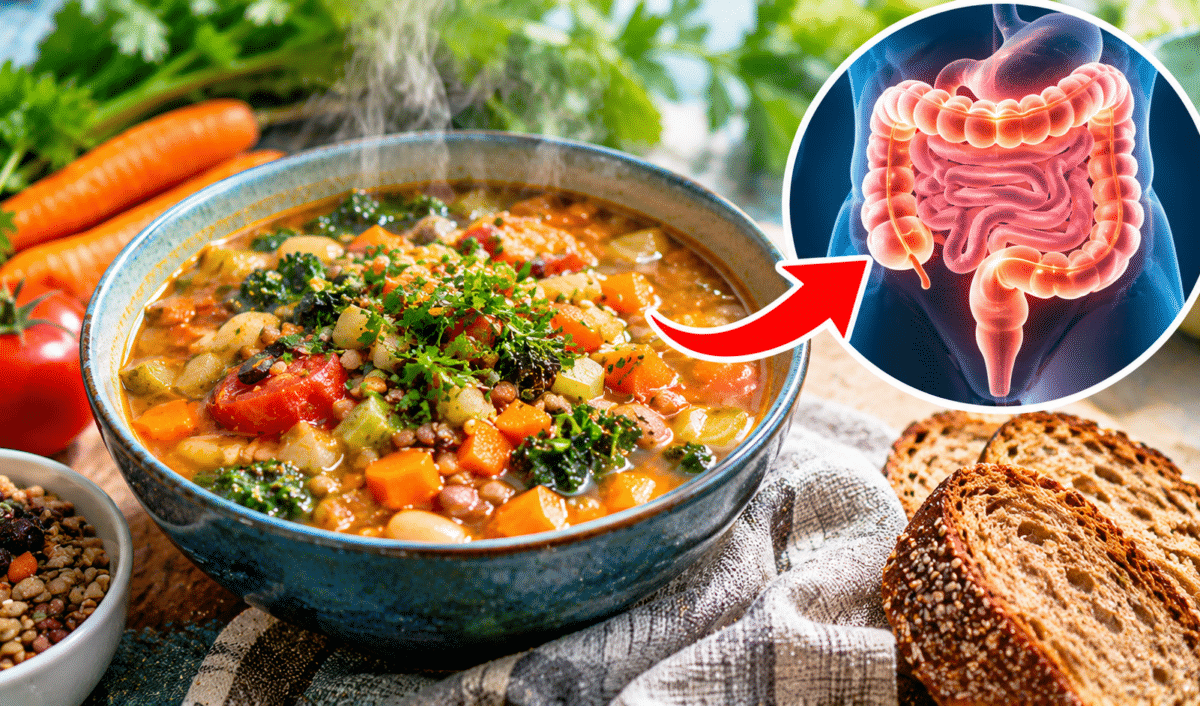
That problem is fiber. A 2017 analysis in the American Journal of Lifestyle Medicine found that about 95% of American adults and children do not get the recommended amount, averaging roughly 14 grams a day against a target near 28. Fiber is the main food for the trillions of bacteria in your large intestine, and diversity of plants matters too: the American Gut Project found people eating more than 30 different plant types a week had more diverse gut microbiomes than those eating 10 or fewer. A well-built pot of soup tackles both, which is why soup season can be gut-health season.
What We Know
- Most Americans eat about half the recommended fiber, according to a 2017 analysis.
- The American Gut Project linked eating more than 30 plant types a week with more diverse gut bacteria.
- A 2021 Stanford study found a high-fermented-food diet increased microbiome diversity and lowered 19 inflammatory proteins.
- Penn State research found a low-calorie soup before lunch cut total meal calories by 20%.
What Is Still Unclear
- No large trial has tested soup itself as a gut-health intervention.
- The 30-plant finding compared small groups and shows association, not cause.
- Evidence for bone broth and collagen improving gut lining in healthy people is limited.
- How much heat reduces the benefits of fermented foods added to soup varies by food and temperature.
The Fiber Gap Soup Was Made to Fill
Recommendations vary by age and sex. The National Academies set adequate intakes of about 25 grams a day for women and 38 grams for men, which works out to roughly 14 grams for every 1,000 calories eaten. Against an average intake around 14 grams, most adults need to roughly double what they eat now. University of Minnesota nutrition scientist Joanne Slavin told the American Heart Association that fiber “is the one thing we want people to eat more of.”
The Daily Fiber Gap, and What One Bowl Covers
Why does fiber matter so much to the gut? Your own enzymes cannot break down most fiber, so it travels to the large intestine, where bacteria ferment it. That fermentation produces short-chain fatty acids such as butyrate, which fuel the cells lining the colon and help maintain the gut barrier. Low-fiber diets starve those microbes, and over time the community becomes less diverse.
Why Soup Makes Fiber Easier
Soup turns hard-to-eat foods into easy ones. A cup of plain lentils can feel like a chore; the same lentils simmered with tomatoes, carrots and spices disappear into a comforting bowl. Cooking softens vegetable fiber, which many people find gentler on digestion, and the liquid helps fiber do its job, since fiber works best with adequate fluid. A pot also scales: one Sunday batch can provide four to six servings of fiber-rich meals for the week.
Thirty Plants a Week Sounds Hard Until You Make Soup
The American Gut Project, a citizen-science study led by researchers at the University of California San Diego and published in mSystems in 2018, analyzed gut samples from 11,336 people in the United States, the United Kingdom, Australia and 42 other countries or territories. Participants who ate more than 30 different plant types a week had more diverse gut microbiomes than those who ate 10 or fewer, regardless of whether they were vegetarian. They also carried fewer antibiotic resistance genes.
Plants in this sense include vegetables, fruits, legumes, whole grains, nuts, seeds, herbs and spices. A single pot of minestrone can hold onions, garlic, carrots, celery, tomatoes, zucchini, kale, white beans, a whole-grain pasta and basil, ten plants before you count black pepper. Three different soups in a week can carry you most of the way to 30.
Fiber per Cup in Common Soup Ingredients
The Fermented Finish Most Recipes Skip
Fiber feeds the microbes you have. Fermented foods may add new ones. In a 2021 study in the journal Cell, Stanford researchers assigned 36 healthy adults to a high-fermented-food diet or a high-fiber diet for 10 weeks. The fermented-food group, eating foods like yogurt, kefir, kimchi and fermented vegetables, saw microbiome diversity rise and 19 inflammatory proteins fall, including interleukin-6. The high-fiber group did not see the same diversity jump over 10 weeks, though researchers noted fiber’s effects may take longer or depend on a person’s starting microbes.
Soup is an easy place to add a fermented food, with one rule: add it at the end. Boiling heat kills most live microbes, so stir miso into soup after it comes off the heat, top bowls with a spoonful of plain yogurt or kefir, or serve kimchi or sauerkraut on the side.
Build a Gut-Friendly Bowl in Four Moves
Three Soups That Cover a Week of Plant Variety
Rotating recipes is the simplest way to rack up different plants. A lentil soup with carrots, celery, onion, garlic, tomatoes, spinach, cumin and lemon covers nine plants. A minestrone with white beans, zucchini, green beans, kale, tomatoes, onion, garlic, whole-grain pasta and basil adds new ones. A black bean soup with sweet potato, red pepper, corn, onion, chili powder, oregano and cilantro brings a third set. Counting overlaps only once, that is more than 20 different plants from three pots, before breakfast fruit, salad greens or a handful of nuts. Swap in whatever vegetables are cheapest that week; frozen and canned vegetables count too.
The Salt Trap in the Soup Aisle
Sodium is soup’s weak spot. Federal dietary guidelines advise adults to keep sodium under 2,300 milligrams a day, yet Americans average about 3,400, according to the FDA. The American Heart Association sets an ideal limit of 1,500 milligrams for most adults. Some canned and restaurant soups can use a large share of a day’s allowance in a single bowl, so label claims are worth knowing.
Sodium Benchmarks for Soup Lovers
| Soup type | Fiber potential | Plant variety | Gut notes | Watch out for |
|---|---|---|---|---|
| Lentil or split pea | High | Medium to high | Legumes feed fiber-fermenting bacteria | Gas when increasing fiber quickly |
| Minestrone or bean-vegetable | High | High, 8 to 12 plants | Variety supports diverse microbes | Sodium in canned versions |
| Chili with beans | High | Medium | Beans plus tomatoes and peppers | Saturated fat from fatty meat or cheese |
| Miso soup | Low to medium | Low unless vegetables added | Fermented ingredient if not boiled | Sodium can be high |
| Chicken noodle | Low | Low to medium | Comforting; add vegetables and beans | Refined noodles, salt |
| Cream-based chowder | Low | Low | Little fiber | Saturated fat and calories |
| Bone broth | None alone | None alone | Limited evidence for gut repair | Sodium in boxed versions |
The Bonus Effect: Soup Before the Main Course
Soup may also help with appetite. In Penn State research led by nutrition scientist Barbara Rolls and presented at the Experimental Biology conference, people who ate a low-calorie vegetable soup before a lunch entree consumed 20% fewer total calories at that meal, including the soup, than on days without it. The effect held whether the soup was served as separate broth and vegetables, chunky, chunky-pureed or fully pureed. Rolls suggested broth-based soups of about 100 to 150 calories per serving as a starter.
Why Warm Food Feels Easier on the Stomach
Many people say soup simply feels gentler, and there are practical reasons. Cooking softens tough plant cell walls, pureeing breaks fibers into smaller pieces, and the liquid adds volume without adding much energy. For someone recovering from a stomach bug or managing a sensitive gut, a simple broth with soft-cooked carrots and rice can be a stepping stone back to higher-fiber meals. It is also a forgiving way to use up vegetables before they spoil, which means less food waste and more plants on the menu.
Easing In If Beans Bother You
A sudden jump in fiber can cause gas and bloating while gut bacteria adjust. Increase gradually over a few weeks, start with lentils or split peas, which many people tolerate more easily than larger beans, rinse canned beans well, and drink enough fluids. People with irritable bowel syndrome may need a lower-FODMAP approach, such as small portions of canned lentils, with guidance from a dietitian.
Big-Batch Safety: Cooling, Storing, Reheating
A large pot of soup cools slowly, and that slow middle zone is where bacteria multiply. USDA advises refrigerating leftovers within 2 hours, dividing large amounts into shallow containers so they cool quickly, and eating refrigerated leftovers within 3 to 4 days. The FDA Food Code, written for restaurants, sets a useful benchmark: cool cooked food from 135°F to 70°F within 2 hours, and to 41°F or below within 6 hours total.
- 0 hoursSoup comes off the heat; portion into shallow containers.
- Within 2 hoursDown to 70°F and into the refrigerator.
- Within 6 hoursFully chilled to 41°F or below.
- 3 to 4 daysEat refrigerated leftovers, reheating to 165°F.
- 2 to 3 monthsBest quality for frozen soup.
- Start with a legumeLentils, split peas or a can of rinsed beans in every pot.
- Count your plantsAim for at least 8 to 10 in one recipe, herbs and spices included.
- Swap in whole grainsBarley, farro or brown rice instead of white noodles.
- Control the saltUse low-sodium broth and taste before adding salt.
- Finish with fermentationStir miso in off the heat or top with yogurt or kimchi.
- Cool and store safelyShallow containers, fridge within 2 hours, eat within 3 to 4 days.
- Fiber 10 g+ per bowlBeans or lentils make it easy.
- Sodium near 575 mg per bowlOur suggested cap: a quarter of the 2,300 mg daily limit.
- 3 soups a weekRotating recipes adds plant variety.
- Fluids with fiberFiber works best with enough water.
- Reheat to 165°FBring leftovers to a steady boil.
- Label and dateSo nothing lingers past 4 days.
Frequently Asked Questions
Is soup good for gut health?
It can be. Soups built with beans or lentils, several vegetables and whole grains deliver fiber and plant variety, both linked to a healthier, more diverse gut microbiome. Cream-heavy or salty soups offer less benefit.
What is the best soup for gut health?
High-fiber soups such as lentil, split pea, minestrone, black bean and other bean-vegetable soups. Adding miso or a yogurt topping after cooking can contribute live microbes.
How much fiber should I eat a day?
About 25 grams for women and 38 grams for men, or roughly 14 grams per 1,000 calories. Most Americans eat about 14 grams a day.
Does boiling miso kill probiotics?
High heat kills most live microbes. To keep them, stir miso into soup after you take it off the heat rather than boiling it.
Is bone broth good for your gut?
Bone broth can be a tasty, hydrating base, but evidence that it heals the gut lining in healthy people is limited. Adding beans, vegetables and grains does more for gut bacteria.
What does eating 30 plants a week mean?
It means eating 30 different plant foods in a week, including vegetables, fruits, legumes, grains, nuts, seeds, herbs and spices. The American Gut Project linked this to more diverse gut bacteria.
Is canned soup healthy?
Some are. Look for bean or vegetable soups with several grams of fiber and lower sodium. A “low sodium” label means 140 milligrams or less per serving.
How long does homemade soup last in the fridge?
Three to four days, according to USDA. Cool it quickly in shallow containers, refrigerate within 2 hours and reheat to 165°F. Frozen soup keeps best quality for 2 to 3 months.
The Short Version
Soup season is a natural time to feed your gut. About 95% of Americans fall short on fiber, and a bowl of lentil, vegetable and barley soup can provide about 13 grams plus 10 different plants toward the 30-a-week mark linked to a more diverse microbiome. Finish with miso or yogurt off the heat for live microbes, choose low-sodium broth, and cool big batches quickly in shallow containers. A broth-based soup before a meal may even trim calories. Build it around beans, vegetables and whole grains, and the pot does the work.

Omisha is a health writer passionate about turning complex medical research into clear, actionable content readers can trust. She covers everything from nutrition and mental wellness to chronic disease management, always grounding her work in credible science and real-world relevance. When she's not writing, she's usually reading up on the latest health studies or exploring new wellness trends to write about next.