Joint HealthNutritionU.S. 2026
The Anti-Inflammatory Food Rheumatologists Point to First Is Fatty Fish. Here’s How Much Is Enough
Rheumatologists interviewed by EatingWell said salmon, sardines and mackerel have the most consistent research for lowering inflammation in rheumatoid arthritis. Here is how much omega-3 each fish delivers, how diet compares with trial doses, and the four foods to pair with it.
By the Health & Nutrition DeskFact-checked against NIH, CDC and ACR guidanceUpdated November 9, 2026Scope: U.S. adults with or at risk of arthritis
Morning stiffness that takes an hour to fade. Knuckles that ache before a storm. For the 53 million U.S. adults with diagnosed arthritis, the question “what should I eat?” comes up at almost every appointment. And when rheumatologists answer it, one food tends to come up first.
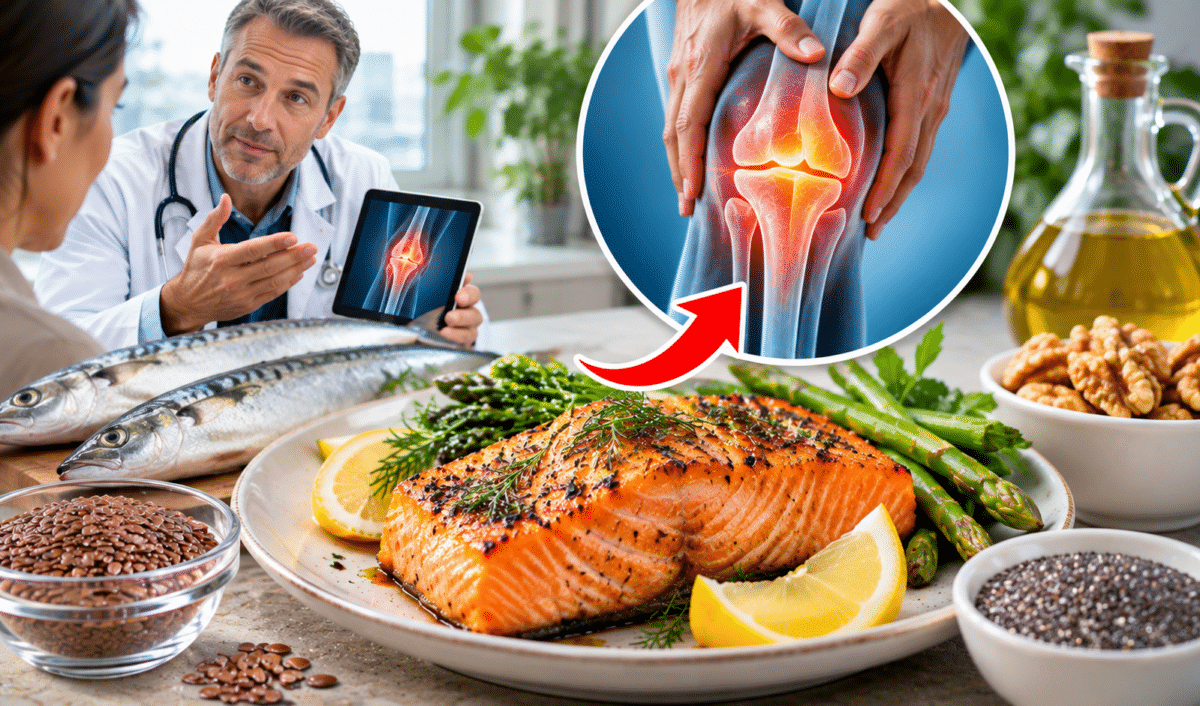
In an EatingWell article republished by Yahoo Health in August 2026, rheumatologists and dietitians named five anti-inflammatory foods: fatty fish, tart cherries, extra-virgin olive oil, leafy greens, and walnuts and flaxseed. Fatty fish led the list. Integrative rheumatologist Saimun Singla said fish such as salmon, sardines and mackerel “have the most consistent research showing they lower inflammatory markers and joint tenderness in rheumatoid arthritis.” The details, including how much omega-3 a plate of fish actually supplies, are where most advice falls short.
What We Know
- Rheumatologists quoted by EatingWell named fatty fish as having the most consistent anti-inflammatory research in rheumatoid arthritis.
- The American College of Rheumatology’s 2022 guideline conditionally recommends a Mediterranean diet for rheumatoid arthritis.
- The same guideline conditionally recommends against supplements including fish oil.
- NIH data show salmon, herring, sardines and mackerel are among the richest food sources of EPA and DHA.
What Is Still Unclear
- Fish-oil trials in rheumatoid arthritis have produced mixed results on pain and stiffness, NIH reports.
- No trial shows how much eating fish, rather than taking capsules, changes joint symptoms.
- Evidence for osteoarthritis and other forms of arthritis is weaker than for rheumatoid arthritis.
- The ideal weekly amount of fish for people with inflammatory arthritis has not been set.
Why Inflammation and Arthritis Keep Making Headlines
Arthritis is one of the most common chronic conditions in the country. CDC data from the National Health Interview Survey for 2019 to 2021 show 53.2 million adults, or 21.2%, had diagnosed arthritis. Prevalence climbs steeply with age, and women are affected more often than men. Rheumatoid arthritis and lupus are autoimmune diseases driven by inflammation, while osteoarthritis, the most common form, involves joint wear with an inflammatory component.
Who Has Diagnosed Arthritis in the U.S.
Inflammation is measured with blood markers such as C-reactive protein (CRP), interleukin-6 and tumor necrosis factor alpha, all of which the EatingWell experts said omega-3s may help lower. Medicines that block some of these signals are a cornerstone of rheumatoid arthritis treatment. Diet does not replace them, but it can shape the background level of inflammation they work against.
Does the Advice Change by Type of Arthritis?
The strongest food research is in rheumatoid arthritis, an autoimmune disease in which the immune system attacks the joint lining. That is where the fish-oil trials were run and where the American College of Rheumatology issued its diet guidance. Gout is different: it is caused by uric acid crystals, and tart cherries, not fish, are the food the EatingWell experts linked to fewer flares. Lupus is another autoimmune condition, and lupus researcher Gregg Silverman emphasized cutting back on fast food and heavily processed foods. For osteoarthritis, the most common form, weight management and exercise carry more evidence than any single food, though an anti-inflammatory pattern supports overall health. The shared thread is the same Mediterranean-style plate.
How Omega-3s in Fish Calm Inflammation
Fatty fish are rich in two long-chain omega-3 fats: eicosapentaenoic acid (EPA) and docosahexaenoic acid (DHA). When they are built into cell membranes, the body produces fewer of the inflammatory messengers made from omega-6 fats and more compounds that help resolve inflammation. That is the biological reason fish keeps appearing in anti-inflammatory advice.
Plant foods such as flaxseed, chia and walnuts supply a different omega-3, alpha-linolenic acid (ALA). The body converts only a small share of ALA into EPA and DHA, which is why rheumatologists treat fish and plant omega-3s as complements rather than substitutes.
Omega-3 EPA Plus DHA in a 3-Ounce Serving
What the Fish-Oil Trials Actually Showed
The research behind fatty fish comes largely from fish-oil studies in people with rheumatoid arthritis. NIH’s review describes several trials. In Denmark, 51 patients taking 3.2 grams a day of EPA plus DHA for 12 weeks saw significant improvements in morning stiffness, joint tenderness and pain. In Sweden, 43 patients taking 3 grams a day reduced their use of anti-inflammatory painkillers at 3 and 6 months. In South Korea, 81 patients taking 3.3 grams a day for 16 weeks saw no significant change in pain or stiffness.
Trial Doses vs What Diet and Labels Provide
The Other Four Foods on the Rheumatologists’ List
Fatty fish led, but the EatingWell experts named four other foods, each with its own role. Registered dietitian Jose Guzman cautioned that “it’s always best to focus on an overall healthful dietary pattern rather than individual food products.”
- 1Fatty fishOmega-3 EPA and DHA.3 to 4 oz, 2x a week
- 2Tart cherriesBest studied for gout flares.4 to 8 oz juice
- 3Extra-virgin olive oilMediterranean diet staple.Daily cooking fat
- 4Leafy greensSpinach, kale, chard, collards.Most days
- 5Walnuts and flaxseedPlant omega-3 ALA.1 oz nuts; 1 to 2 tbsp flax
Tart Cherries for Gout
Tart cherries are the best-studied food for reducing gout flares, according to the experts, and tart cherry juice may lower CRP. They suggested 4 to 8 ounces of 100% tart cherry juice with no added sugar, or cherries added to yogurt, oatmeal or salads. Juice adds natural sugar, so people managing diabetes should account for it.
Olive Oil, Greens and Seeds
Extra-virgin olive oil anchors the Mediterranean pattern that rheumatologist Siddharth Tambar noted the American College of Rheumatology recommends for rheumatoid arthritis. Leafy greens supply fiber and antioxidants, and the experts suggested choosing foods with 5 or more grams of fiber per serving. For plant omega-3s, NIH lists 1 ounce of walnuts at 2.57 grams of ALA, 1 tablespoon of whole flaxseed at 2.35 grams and 1 ounce of chia at 5.06 grams.
| Food | Key compound | Suggested amount | Best evidence for | Easy way to eat it |
|---|---|---|---|---|
| Salmon, sardines, mackerel | EPA and DHA | 3 to 4 oz, at least 2x a week | Rheumatoid arthritis markers and tenderness | Canned salmon or sardines on toast |
| Tart cherries | Anthocyanins | 4 to 8 oz 100% juice | Gout flare reduction | Stirred into yogurt or oatmeal |
| Extra-virgin olive oil | Polyphenols, healthy fats | Main cooking and dressing oil | Mediterranean diet benefits | Dressings, roasted vegetables |
| Leafy greens | Fiber, antioxidants | Most days | Overall diet quality | Smoothies, omelets, soups |
| Walnuts | ALA, 2.57 g per oz | 1 oz several times a week | Plant omega-3 intake | Snack or salad topping |
| Ground flaxseed | ALA, 2.35 g per tbsp | 1 to 2 tbsp daily | Plant omega-3 and fiber | Mixed into cereal or smoothies |
Food Is One Piece of the ACR Guidance
The 2022 American College of Rheumatology guideline for integrative interventions in rheumatoid arthritis put diet alongside movement. Its only strong recommendation in that list was for consistent exercise, while the Mediterranean diet received a conditional recommendation, meaning the evidence supports it but individual circumstances matter. In practice, that means the fish dinner works best for people who are also moving regularly and following their prescribed treatment. A plate of salmon cannot do the work of an exercise routine or a disease-modifying drug, but it fits naturally beside both.
Choosing Fish Without the Mercury Worry
Most fatty fish are low in mercury. The FDA and EPA advise adults to eat 2 to 3 servings, or 8 to 12 ounces, of fish a week from their “Best Choices” list. A few large predatory fish are best avoided, especially during pregnancy.
| Fish | EPA plus DHA per 3 oz | FDA/EPA category | Budget tip |
|---|---|---|---|
| Salmon, farmed or wild | 1.57 to 1.83 g | Best choice | Canned pink salmon, 0.91 g |
| Herring | 1.71 g | Best choice | Jarred or canned |
| Sardines | 1.19 g | Best choice | Shelf-stable cans |
| Atlantic mackerel | 1.02 g | Best choice | Canned fillets |
| Rainbow trout | 0.84 g | Best choice | Frozen fillets |
| Canned light tuna | 0.19 g | Best choice | Low omega-3; add a fatty fish meal |
| King mackerel, swordfish, shark | Varies | Avoid | Highest mercury |
How the Guidance Took Shape
- Earlier trialsSweden, Denmark and Korea test fish oil in RA patients.
- Nov. 2022ACR announces its first integrative RA guideline.
- 2023Guideline published; Mediterranean diet conditionally recommended.
- Oct. 2023CDC reports 53.2 million adults with arthritis.
- Aug. 2026EatingWell rheumatologists name fatty fish first.
A Practical Plan for Your Plate
- Schedule two fish mealsPut salmon, sardines, mackerel or trout on the calendar, 3 to 4 oz each.
- Keep canned fish on handCanned salmon and sardines make a 5-minute lunch.
- Cook with olive oilUse extra-virgin olive oil as your default fat.
- Add greens dailyA handful of spinach or kale in eggs, soups or smoothies.
- Sprinkle seeds1 to 2 tablespoons of ground flaxseed on cereal or yogurt.
- Cut back on ultra-processed foodLupus researcher Gregg Silverman advises avoiding fast food and packaged foods with long ingredient lists.
Four Fast Fish Meals for Busy Weeks
Canned salmon mixed with Greek yogurt, lemon and dill makes a sandwich filling in minutes. Sardines on whole-grain toast with sliced tomato and a drizzle of olive oil covers two of the five foods at once. Sheet-pan salmon with spinach or kale roasts on one tray while rice cooks. Smoked or canned mackerel stirred into a salad of greens, white beans and olive oil turns a side dish into a meal. Each relies on fish from the FDA and EPA “Best Choices” list, and each can be made from pantry staples when fresh fish is not practical.
- Fish 2x a week3 to 4 oz per serving.
- Fiber 5 g+ per servingLook for it on labels.
- Tart cherry juice 4 to 8 oz100% juice, no added sugar.
- Walnuts 1 ozSeveral times a week.
- No supplement without adviceAsk your rheumatologist first.
- Keep taking medicinesDiet complements treatment.
Frequently Asked Questions
What is the best anti-inflammatory food for arthritis?
Rheumatologists quoted by EatingWell named fatty fish such as salmon, sardines and mackerel as having the most consistent research for lowering inflammatory markers and joint tenderness in rheumatoid arthritis.
How much salmon should I eat for inflammation?
Experts suggest 3 to 4 ounces of fatty fish at least twice a week. A 3-ounce serving of farmed Atlantic salmon provides about 1.8 grams of omega-3 EPA and DHA, according to NIH.
Do rheumatologists recommend fish oil supplements?
The American College of Rheumatology’s 2022 guideline conditionally recommends against fish oil supplements for rheumatoid arthritis. Some individual doctors may still suggest them, so ask yours.
What diet do rheumatologists recommend for rheumatoid arthritis?
The American College of Rheumatology conditionally recommends a Mediterranean-style diet rich in fish, olive oil, vegetables, fruit, whole grains, legumes and nuts.
Which fish has the most omega-3?
Among common choices, farmed Atlantic salmon, herring, wild salmon, sardines and Atlantic mackerel provide the most EPA and DHA per 3-ounce serving, according to NIH data.
Is tart cherry juice good for arthritis?
Tart cherries are the best-studied food for reducing gout flares, according to the experts, and the juice may lower CRP. They suggest 4 to 8 ounces of 100% juice with no added sugar.
Can diet replace arthritis medication?
No. Anti-inflammatory foods can complement treatment, but they do not replace medications prescribed for rheumatoid arthritis, lupus or gout. Do not stop medicines without your doctor.
Is canned salmon as good as fresh?
Canned pink salmon has about 0.91 grams of EPA and DHA per 3 ounces, less than fresh Atlantic salmon but still a good, affordable source. Canned sardines provide about 1.19 grams.
The Short Version
Rheumatologists interviewed by EatingWell point to fatty fish as the anti-inflammatory food with the most consistent evidence in rheumatoid arthritis. Aim for 3 to 4 ounces of salmon, sardines, mackerel, herring or trout at least twice a week, which supplies several times the omega-3 most Americans get, though still well below fish-oil trial doses. Pair it with olive oil, leafy greens, tart cherries and walnuts or flaxseed in a Mediterranean-style pattern, which the American College of Rheumatology conditionally recommends. Skip fish oil supplements unless your rheumatologist advises them.

Omisha is a health writer passionate about turning complex medical research into clear, actionable content readers can trust. She covers everything from nutrition and mental wellness to chronic disease management, always grounding her work in credible science and real-world relevance. When she's not writing, she's usually reading up on the latest health studies or exploring new wellness trends to write about next.