Sleep HealthNeck PainBedroom Science
Best Pillows for Neck Pain, Cooling Mattresses and a 90-Minute Bedtime Habit: What the Research Shows
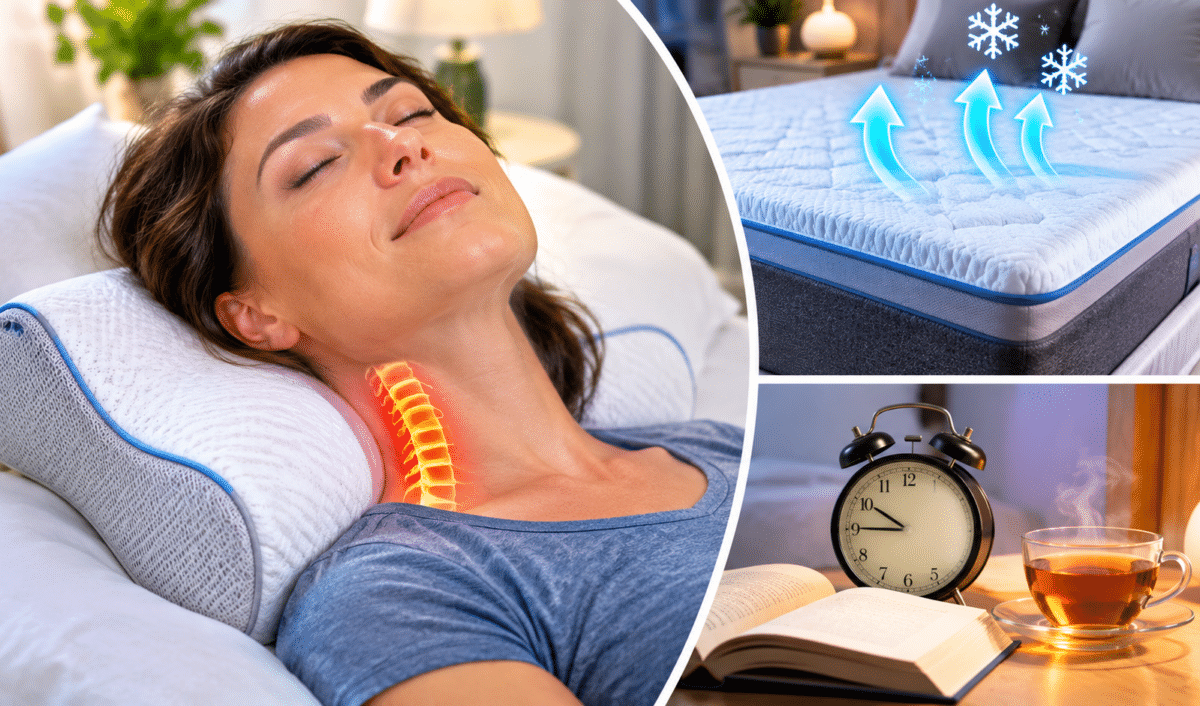
Pillow shape and height matter more than price, a cooler room is backed by better evidence than most “cooling” labels, and a warm shower timed before bed helped people fall asleep about 10 minutes faster in a major review.
PillowMatch height to how you sleepMattressRoom temperature first, materials secondBedtimeWarm shower 1 to 2 hours before bed
By The Sleep & Wellness DeskFact-checked against peer-reviewed studies, CDC data and sleep-medicine guidanceUpdated November 9, 2026Scope U.S. adults
You wake up with a stiff neck again. You turned the pillow over twice, pushed the blanket off at 3 a.m. and lay awake longer than you would like to admit. It is tempting to blame the pillow, then the mattress, then yourself, and to start shopping for whatever an ad promises will fix everything.
The research is more useful, and more modest, than the marketing. Studies point to three things worth checking: the shape and height of your pillow, the temperature of your bedroom and bed, and a simple change to your evening routine. None of these is a cure for chronic pain or insomnia. But together they address the most common physical reasons people sleep badly, and most cost far less than a new mattress.
What We Know
- A 2021 meta-analysis of 35 studies found rubber pillows reduced neck pain, waking pain and neck disability.
- Warm baths or showers 1 to 2 hours before bed shortened time to fall asleep in a 2019 review of 17 studies.
- Core body temperature naturally drops before sleep, and a cool room supports that drop.
- In CDC data for 2024, only 54.8% of U.S. adults said they usually woke up well-rested.
What Is Still Unclear
- No single pillow is proven best for everyone; most trials were small.
- Independent evidence on brand-name cooling mattresses is limited and often funded by manufacturers.
- Pillows did not improve overall sleep quality in people with chronic neck pain in the 2021 analysis.
- The best bedroom temperature may differ with age, health and bedding.
Why So Many Americans Wake Up Stiff and Tired
Neck pain is one of the most common reasons people struggle at night. A study by the Global Burden of Disease 2021 Neck Pain Collaborators, published in The Lancet Rheumatology in 2024, estimated 203 million people worldwide had neck pain in 2020. The researchers projected that will reach 269 million by 2050, a rise of 32.5%, driven mostly by population growth and aging. Women had higher rates than men, and prevalence peaked between ages 45 and 74.
Sleep trouble is widespread in the U.S. too. The CDC’s National Center for Health Statistics reported in April 2026 that in 2024, 15.4% of adults had trouble falling asleep and 18.1% had trouble staying asleep on most days or every day. Women reported more of both than men. Trouble staying asleep rose with age, reaching about 22% for adults 50 and older.
Who Has Trouble Sleeping in the U.S.
What the Pillow Research Actually Found
The strongest summary of the evidence is a systematic review and meta-analysis published in Clinical Biomechanics in 2021. Researchers in Hong Kong found 35 studies on pillow design; nine were rated high quality, with 555 participants. Rubber pillows, a category that includes latex, reduced neck pain, waking symptoms and neck disability compared with other pillows, and improved how satisfied people were with their pillows.
How Much Pillow Design Changed Neck Symptoms
Read those numbers honestly. The effects on pain were small, and the pillows did not improve overall sleep quality in people with chronic neck pain. The review also found that pillow shape and height seemed to affect neck alignment more than filling material did. In other words, a pillow that holds your head at the right height probably matters more than whether it is labeled memory foam, latex or “orthopedic.”
The Feather Pillow Finding
Spine-health, a physician-reviewed site, describes a small study that compared five pillow types for side sleepers. Latex performed best, and feather pillows were linked to the most neck stiffness on waking. Feathers compress through the night, so the head gradually sinks out of line. That study was small, but it fits the broader finding that consistent support and height matter most.
Match the Pillow to How You Actually Sleep
Spine-health’s guidance is simple: keep your head and neck in a straight line with your spine. Side sleepers need a thicker pillow to fill the gap between ear and shoulder. Back sleepers need a lower pillow that supports the curve of the neck. Stomach sleeping puts the most strain on the neck; if you cannot change it, use a very flat pillow or none at all.
| Sleep position | Pillow height | Shape and filling to consider | Extra support | Neck strain |
|---|---|---|---|---|
| Side | Thicker, fills ear-to-shoulder gap | Firm latex or contour foam that holds height | Firm pillow between the knees | Low |
| Back | Lower than for side sleeping | Contour pillow supporting the neck curve | One or two pillows under the knees | Low |
| Combination | Adjustable or dual-height | Shredded fill, buckwheat or zoned contour | Knee pillow when on the side | Moderate |
| Stomach | Very flat or none | Thin, soft pillow | Flat pillow under the hips | Highest |
| Feather pillow, any position | Sinks overnight | Most morning stiffness in one small study | Fluff often or replace | Moderate |
Cooling Mattresses Versus a Cooler Room
Your body is built to cool down for sleep. The Sleep Foundation explains that core body temperature fluctuates by about 2°F overnight, and the drop toward its low point begins about two hours before sleep, around the time melatonin is released. When the bedroom, mattress or bedding traps heat, that drop is harder to reach, and sleep can become lighter and more broken.
The cheapest fix is the thermostat. The Sleep Foundation says most doctors recommend a bedroom temperature of about 65 to 68°F, give or take a few degrees. For older adults, research suggests a somewhat warmer target. A 2023 study led by Amir Baniassadi at Hebrew SeniorLife’s Marcus Institute tracked 50 older adults for nearly 11,000 nights and found sleep was most efficient between 68 and 77°F. As nighttime temperature rose from 77°F to 86°F, sleep efficiency fell by 5% to 10%.
Bedroom Temperature Zones for Sleep
What “Cooling” on a Mattress Label Usually Means
Mattress makers use several approaches: gel-infused or open-cell foam meant to trap less heat, latex, coil-based hybrids that allow more airflow, and covers made with phase-change materials or breathable fabrics. Active systems use water or air to cool the bed. Independent, peer-reviewed comparisons of specific brands are scarce, and many claims come from manufacturer testing. The general principle is solid, though: materials that let heat and moisture escape tend to sleep cooler than dense, traditional memory foam.
The 90-Minute Bedtime Change With Surprisingly Strong Evidence
The bedtime change with the most solid evidence behind it sounds backward: warm yourself up to cool down. Researchers at the University of Texas at Austin reviewed 5,322 studies and found 17 that met their criteria; 13 had comparable data. Their meta-analysis, published in Sleep Medicine Reviews in 2019 and led by Shahab Haghayegh, found that a warm shower or bath of about 104 to 109°F, taken one to two hours before bed, helped people fall asleep about 10 minutes faster on average. The best timing was about 90 minutes before bedtime.
The Warm-Shower Timing Window, in Minutes
The reason links back to temperature. Warm water draws blood to the hands and feet, which helps the body release heat. When you step out, core temperature falls more quickly, which mimics the natural drop that signals it is time to sleep. That is why timing matters: a hot shower right before bed may leave you too warm, while one 60 to 120 minutes earlier gives the cooling effect time to kick in.
- Core cooling startsBody temperature begins its natural drop
- Warm shower or bathAbout 104 to 109°F for a few minutes
- Lower thermostatAim for 65 to 68°F for most adults
- Light bedding onBreathable sheets, lighter blanket
- Lights outPillow height matched to position
A Simple Plan for Better Nights This Week
- Notice how you really sleepAsk a partner or check how you wake up: side, back, stomach or mixed.
- Check your pillow heightA common rule of thumb: lying in your usual position, your nose should line up with the center of your body, not tilt up or down.
- Replace a flattened pillowIf it folds in half and stays folded, or you keep re-plumping it overnight, it no longer holds height.
- Set the room to 65 to 68°FOlder adults may do better up to the high 60s or low 70s.
- Add a warm shower 90 minutes before bedTry it for at least a week and note how long it takes to fall asleep.
- Upgrade the mattress lastOnly after pillow, room temperature and bedding changes have not helped enough.
When Neck Pain Is Not About the Pillow
See a doctor if neck pain follows an injury, lasts more than a few weeks, keeps getting worse, or comes with numbness, tingling or weakness in the arms, fever, headaches or trouble with balance. Likewise, frequent loud snoring, gasping during sleep or severe daytime sleepiness can signal sleep apnea, which no pillow or mattress will fix. A primary care doctor, physical therapist or sleep specialist can help sort out the cause.
- Pillow fits your positionHead and spine in a straight line
- No feather sinkingSupport holds through 8 hours
- Thermostat at 65 to 68°FOr 68 to 77°F for older adults
- Breathable sheetsCotton or linen over synthetics
- Shower 90 minutes before bedWater about 104 to 109°F
- Track sleep for 7 nightsNote time to fall asleep
Frequently Asked Questions
What type of pillow is best for neck pain?
A 2021 meta-analysis found rubber or latex pillows reduced neck pain and waking symptoms. Height and shape matter most: thicker for side sleepers, lower for back sleepers.
What is the best sleeping position for neck pain?
Back or side sleeping is generally easier on the neck than stomach sleeping. Keep your head in line with your spine using a pillow of the right height.
Are feather pillows bad for your neck?
In one small study of five pillow types, feather pillows were linked to the most neck stiffness on waking, likely because they flatten through the night.
Do cooling mattresses really work?
Breathable materials and airflow can help people who sleep hot, but independent research on specific brands is limited. Lowering the room temperature is a proven first step.
What temperature should my bedroom be for sleep?
The Sleep Foundation says most doctors recommend about 65 to 68°F. A 2023 study found older adults slept most efficiently between 68 and 77°F.
Does a warm shower before bed help you sleep?
A 2019 meta-analysis found a warm shower or bath at 104 to 109°F, one to two hours before bed, helped people fall asleep about 10 minutes faster on average.
How long before bed should I shower?
About 90 minutes before bedtime was the best timing in the 2019 review. That gives your body time to cool after the warm water.
When should I see a doctor for neck pain at night?
See a doctor if pain follows an injury, lasts several weeks, worsens or comes with numbness, weakness, fever or severe headaches.
The Short Version
Choose a pillow by height and shape for your sleep position: thicker for side sleeping, lower for back sleeping, nearly flat for stomach sleeping. Latex or rubber pillows had the best evidence for reducing neck pain, and feather pillows were linked to more stiffness in a small study. Before buying a cooling mattress, set the bedroom to about 65 to 68°F and use breathable bedding. Then try a warm shower about 90 minutes before bed, a habit linked to falling asleep about 10 minutes faster.

Omisha is a health writer passionate about turning complex medical research into clear, actionable content readers can trust. She covers everything from nutrition and mental wellness to chronic disease management, always grounding her work in credible science and real-world relevance. When she's not writing, she's usually reading up on the latest health studies or exploring new wellness trends to write about next.