Apple HealthWearablesAI and Longevity
Apple Health Age Explained: How the New AI Health App Estimates Your Body’s Age — and What It Can’t Tell You
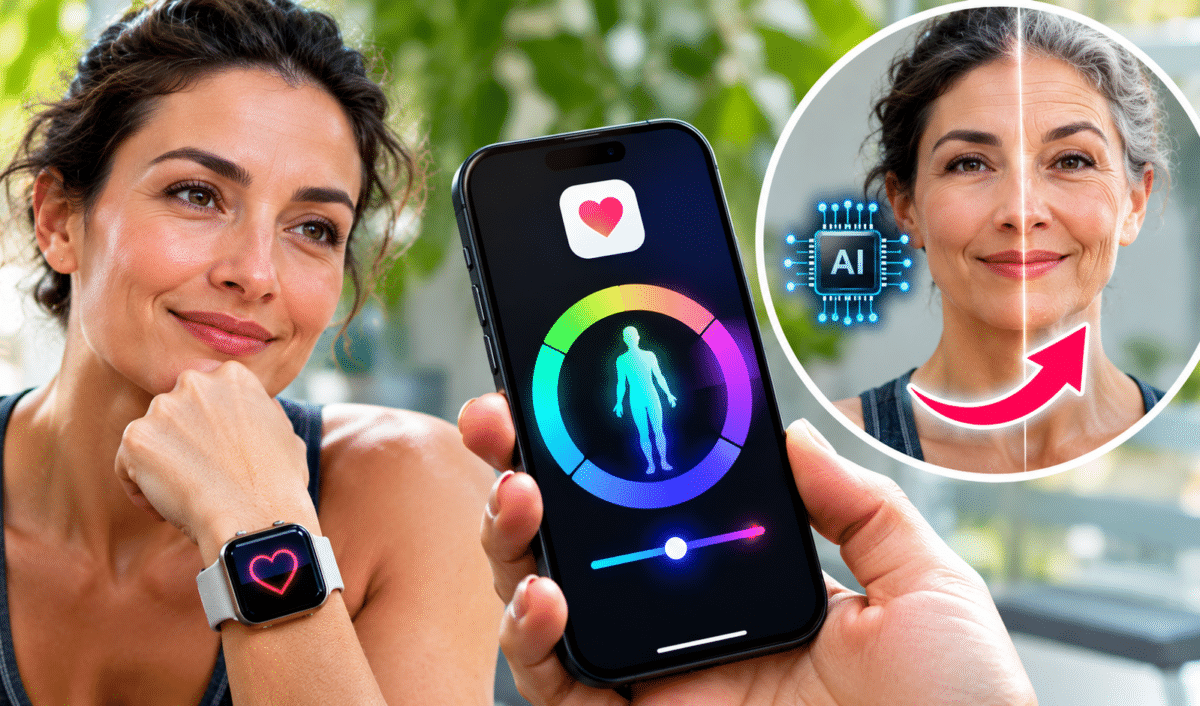
Apple’s redesigned Health app turns Apple Watch data on fitness, heart rate, sleep and heart rate variability into a “Health Age” compared with your real age. It is in developer testing now and due as a free update later this year.
You are 52. Your driver’s license says so, your knees sometimes agree. But what if your phone told you your heart, lungs and sleep were behaving more like 47, or 58? That is the promise of Health Age, the most talked-about feature in Apple’s redesigned Health app, and it is the kind of number that will be screenshotted and compared at dinner tables across the country.
Apple first showed the redesign on Sept. 9 alongside new Apple Watch models. On Nov. 3, Apple said the app is available in the iOS 27.3 developer beta and will roll out as a free software update “later this year.” Before you trust the number on your screen, it helps to understand what goes into it, how reliable those inputs are, and what the science behind “body age” can and cannot say.
What We Know
- Health Age uses VO2 max, resting heart rate, sleep and heart rate variability, and can include A1c and LDL lab data.
- The redesigned app is in the iOS 27.3 developer beta, according to Apple’s Nov. 3 announcement.
- Health Age requires an Apple Watch; the app needs an Apple Intelligence-enabled iPhone or iPad.
- Apple says on-device movement evaluations never record, store or share video.
What Is Still Unclear
- Apple has not published the formula, scale or validation data behind Health Age.
- How many days of Watch data are needed before a score appears is not stated.
- An exact public release date has not been announced.
- Apple says expanded access to some server-based AI features may cost a fee in the future.
What Apple Actually Announced
The redesign reorganizes the Health app around three areas: Insights, Longevity and Browse. Insights summarizes heart, sleep, readiness, fitness, vitals and cycle tracking data through the day, with a “For You” section suggesting daily habits. Apple’s example: after several nights of interrupted sleep, the app may suggest adjusting your wind-down routine. Longevity tracks long-term trends across seven areas: heart health, sleep, mental wellbeing, movement, metabolic health, hearing and nutrition. Health Age sits at the center of that tab.
Apple says the app was “built with Apple Intelligence at its core.” It also adds at-home movement evaluations that use the iPhone camera and Apple Watch to measure flexibility, strength, balance, movement mechanics and VO2 max, with real-time feedback. Apple says the analysis runs on the device using vision models and that no video is ever recorded, stored or shared. For lab data, Apple partnered with Quest Diagnostics on a panel of more than 50 biomarkers priced at $119 in the U.S., available at about 2,000 Quest locations, according to The Apple Post and MacTech.
The Readiness Score Behind Your Morning Decision
Alongside Health Age, Apple Watch gains a daily readiness score. MacTech reports it combines recent activity, vitals and your sleep score into a single number from 0 to 10, paired with one of four recommendations. Apple says the algorithm was developed using data from the Apple Heart and Movement Study, and the score updates during the day as new data arrives.
Apple Watch Readiness Score Recommendations
0Readiness score10
Inside the Health Age Formula: The Four Watch Signals
Apple describes Health Age as “a metric that reflects how a user’s body is tracking relative to their chronological age.” It has not published the formula. What it has disclosed is the inputs, and each has a real research basis. Understanding them tells you which habits are likely to move your score.
| Input | What it measures | How Apple gets it | Common reference point | What tends to improve it |
|---|---|---|---|---|
| VO2 max | Cardiorespiratory fitness, oxygen use during effort | Watch estimate during outdoor walks, runs or a test | Higher is better for age and sex | Regular aerobic and interval exercise |
| Resting heart rate | Heart beats per minute at rest | Watch passive readings | 60 to 100 bpm typical adult range (AHA) | Fitness, sleep, less alcohol |
| Heart rate variability | Variation between beats; recovery and stress | Watch as often as every 5 minutes on Series 12 | Compared with your own baseline | Sleep, recovery days, stress control |
| Sleep | Duration and consistency | Watch overnight tracking | 7 or more hours for adults (AASM, CDC) | Consistent schedule, cool dark room |
| A1c (optional) | Average blood sugar over about 3 months | Lab results added manually or via Quest | Below 5.7% normal (ADA) | Diet, activity, weight, medication |
| LDL cholesterol (optional) | “Bad” cholesterol | Lab results | Below 100 mg/dL optimal (NCEP) | Diet, exercise, statins if prescribed |
Why VO2 Max Is the Heavyweight
Of the four Watch inputs, VO2 max has the strongest research link to lifespan. A Cleveland Clinic study published in JAMA Network Open in 2018 followed 122,007 patients who took treadmill tests between 1991 and 2014. People in the lowest fitness group had about five times the risk of death of the most fit, a bigger gap than the study found for smoking, diabetes or coronary artery disease, as reported by Healio.
Death Risk Linked to Low Fitness Versus Common Risk Factors
The last bar is calculated by inverting the study’s reported 0.77 hazard ratio for elite versus high performers. The message is consistent across the chart: fitness is one of the strongest signals in the data, which is likely why Apple puts VO2 max first in its list.
How Accurate Is the Data Behind Your Score?
A Health Age is only as good as its inputs, and wrist-based estimates have limits. A validation study published in PLoS One in May 2025 compared Apple Watch VO2 max estimates with lab treadmill tests in 30 adults. The watch underestimated VO2 max by an average of 6.07 milliliters per kilogram per minute, with a mean absolute percentage error of 13.31%. Individual differences were wide.
Apple Watch VO2 Max Versus Lab Testing
Heart rate is a stronger area for Apple. MacTech reports Apple cited a study of more than 1,000 participants in which Apple Watch had the highest heart rate accuracy among the wearables tested. Sleep staging and HRV from the wrist are useful for trends but are not a replacement for a clinical sleep study or an electrocardiogram.
Adding Bloodwork: What the Lab Numbers Mean
Health Age can include clinical lab data such as A1c and LDL cholesterol, either entered from your own records or from the optional $119 Quest panel. Tom’s Guide reports that results will sync into Health Age and metabolic statistics, and that booking was not active in the earliest beta. These two markers have long-established clinical thresholds, which makes them easier to interpret than wearable estimates.
LDL Cholesterol Categories, in mg/dL
Adding lab results gives Health Age a window into metabolic health that a watch cannot see. It also raises the stakes: a high A1c or LDL deserves a conversation with your doctor, not just a nudge in an app. Tom’s Guide reports that third-party professionals will review markers from the Quest panel at no extra charge, but Apple has not described what follow-up care, if any, is included.
Timeline: From Announcement to Your iPhone
- Sept. 9Redesigned Health app, Health Age and readiness score announced
- Sept. 14watchOS 27 release for Series 9 or later, SE 3 and Ultra 2 or later
- Sept. 23Tom’s Guide reports Health redesign testable in iOS 27.2 public beta
- Nov. 3Apple confirms iOS 27.3 developer beta and 10 language groups
- Later in 2026Free public rollout, starting in U.S. English
Apple’s Nov. 3 update lists Health app language support including English, Chinese, French, Japanese, Korean, Norwegian, Portuguese, Spanish, Turkish and Vietnamese, while noting that some features may not be available in all regions or languages. Reports on which beta first included the redesign differ; Apple’s own newsroom names the iOS 27.3 developer beta. Apple has not given an exact public release date.
Which Devices You Will Need
The redesigned app requires an Apple Intelligence-enabled iPhone or iPad running the latest software, and some features are iPhone-only. Health Age specifically requires an Apple Watch. watchOS 27 supports Apple Watch Series 9 or later, Apple Watch SE 3 and Apple Watch Ultra 2 or later, according to MacTech. The VO2 max estimate requires an Apple Watch, AirPods Pro 3 or a compatible third-party heart rate sensor.
Privacy Questions Worth Asking
Apple says the app is built to “securely and privately protect a user’s data at every step” and that movement evaluations process video on the device. Some Apple Intelligence features use server-based models with daily usage limits, and Apple says expanded access to such features “will be available for a fee in the future.” It has not specified whether any Health features fall into that category. If you share lab data or link outside apps, review the Health app’s sharing settings and each connected app’s permissions.
How to Get a More Meaningful Health Age
- Wear the watch consistently, including at nightHealth Age needs enough history; Tom’s Guide notes it requires sufficient historical Watch data.
- Help the VO2 max estimateDo outdoor brisk walks, runs or hikes with the watch so it can measure your fitness during effort.
- Update your age, height, weight and sex in HealthThese details shape fitness and heart-rate comparisons.
- Add recent lab resultsA1c and LDL give a fuller metabolic picture; use results less than a year old.
- Look at monthly trends, not daily swingsCompare the same weeks across months rather than reacting to one night.
- Bring big changes to your doctorEspecially a rising resting heart rate, falling fitness or abnormal labs.
- Apple Watch Series 9 or laterOr SE 3, Ultra 2 or later on watchOS 27
- Apple Intelligence iPhoneRunning the latest iOS
- 7+ hours of sleep trackedAdult recommendation for most nights
- Outdoor workouts loggedFor VO2 max estimates
- A1c below 5.7%ADA normal range, if you add labs
- LDL below 100 mg/dLNCEP optimal, if you add labs
Frequently Asked Questions
What is Health Age in the Apple Health app?
Health Age is a score that compares your Apple Watch data, VO2 max, resting heart rate, sleep and heart rate variability, with your chronological age. You can add lab results like A1c and LDL.
When will the new Apple Health app be released?
Apple said on Nov. 3, 2026, that the redesigned app is in the iOS 27.3 developer beta and will roll out as a free software update later this year, starting in U.S. English.
Do I need an Apple Watch for Health Age?
Yes. Apple says Health Age requires an Apple Watch. The redesigned app also needs an Apple Intelligence-enabled iPhone or iPad running the latest software.
Is Apple Health Age accurate?
Apple has not published validation data. Its inputs vary in accuracy: one 2025 study found Apple Watch underestimated VO2 max by about 6 mL/kg/min on average. Use it for trends, not diagnosis.
How much does the Apple Health Quest blood test cost?
Apple partnered with Quest Diagnostics on a U.S. panel of more than 50 biomarkers for $119, available at about 2,000 Quest locations.
What is the Apple Watch readiness score?
A daily score from 0 to 10 based on recent activity, vitals and sleep score, with a recommendation of Recover, Pace Yourself, Ready or Go For It.
Does Apple Health Age cost extra?
The redesigned Health app is a free update. Apple says some server-based Apple Intelligence features may offer expanded access for a fee in the future, without naming Health features.
How can I lower my Health Age?
Improving fitness, sleeping consistently, managing stress and keeping labs like A1c and LDL in healthy ranges are the habits most linked to the inputs Apple uses.
The Short Version
Apple’s redesigned Health app adds Health Age, a score comparing VO2 max, resting heart rate, sleep and heart rate variability from Apple Watch with your actual age, plus optional A1c and LDL lab data. It is in the iOS 27.3 developer beta and due as a free update later this year in U.S. English. It needs an Apple Watch and an Apple Intelligence-enabled iPhone. Fitness is the input with the strongest science, but wrist estimates can be off by several points. Watch the trend over months, and take abnormal labs to your doctor.

Omisha is a health writer passionate about turning complex medical research into clear, actionable content readers can trust. She covers everything from nutrition and mental wellness to chronic disease management, always grounding her work in credible science and real-world relevance. When she's not writing, she's usually reading up on the latest health studies or exploring new wellness trends to write about next.