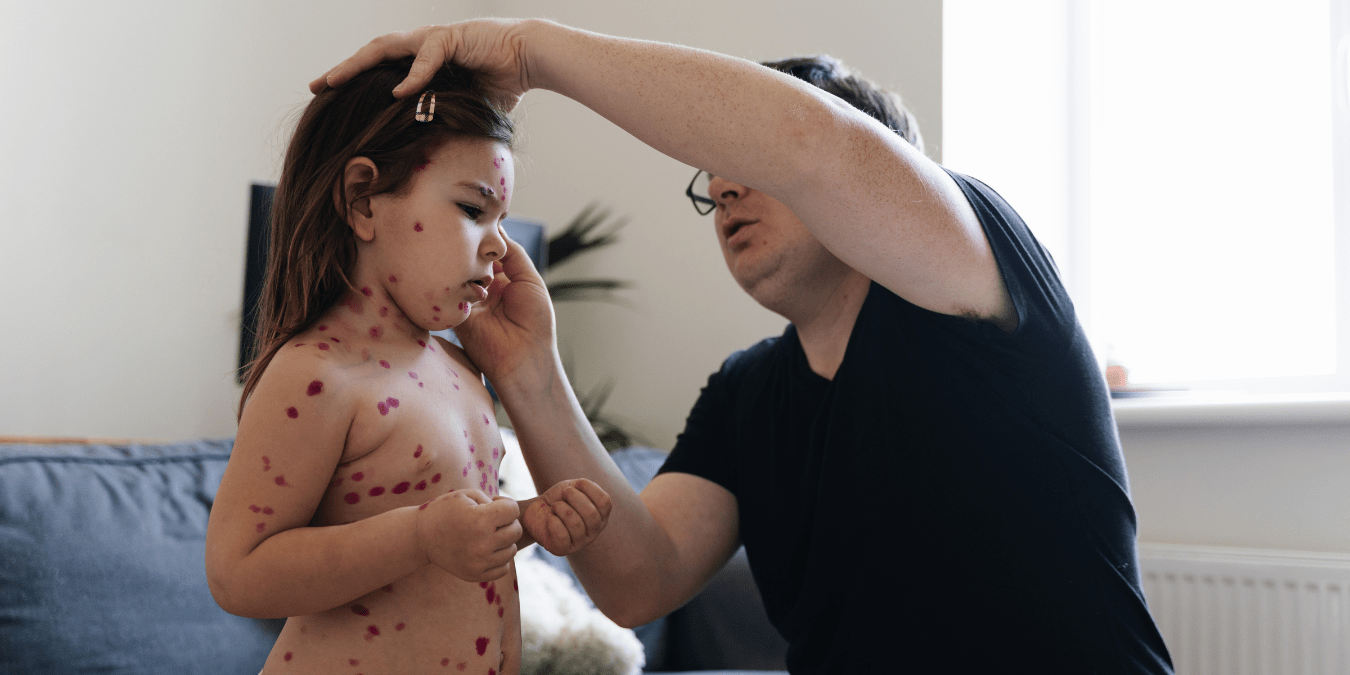
The school nurse’s office felt routine — a child with a rash, a slight fever, maybe a case of fifth disease or roseola. But when Dr. Sandra Fielding, a pediatric infectious disease specialist at a regional children’s hospital in Texas, received the call in early 2025, she immediately recognized the telltale pattern: high fever spiking past 104°F, red and watery eyes, a hacking cough, and then the characteristic blotchy red rash spreading from the hairline downward. She had seen this before, but not in over two decades of clinical practice at the volume she was now seeing it.
“We are dealing with something that a generation of American parents was told was essentially gone from this country,” Dr. Fielding told colleagues at a regional health summit. “And most of them still have no idea it’s back — spreading quietly through classrooms, day care centers, and school hallways from coast to coast.”
She was talking about measles. And the numbers tell a story that should alarm every parent in America.
The Scale of What’s Actually Happening
Most Americans associate measles with the distant past or with outbreaks in developing nations. That mental model is dangerously outdated. As of early 2026, active measles transmission has been confirmed in 33 states, making this one of the most geographically widespread domestic measles situations in decades. Cases have been documented in large urban school districts, suburban communities with high-income zip codes, and rural towns where local health infrastructure is stretched thin.
The Centers for Disease Control and Prevention (CDC) tracks measles cases through a national surveillance system, and pediatric infectious disease experts who monitor this data closely describe the current situation as deeply concerning. What makes it particularly alarming is not just the raw case count — it’s the pattern of transmission. A significant number of confirmed cases are linked directly to school settings, where unvaccinated children congregate daily in close quarters, share surfaces, breathe recirculated air, and carry pathogens home to infants, immunocompromised siblings, elderly grandparents, and others who cannot be vaccinated or whose immunity has waned.
What most parents don’t know is how efficiently measles spreads. The virus has a basic reproduction number — known as R0 — of approximately 12 to 18, meaning one infected person can spread the disease to 12 to 18 others in a susceptible population. For comparison, influenza has an R0 of about 1.2 to 1.4. Measles is so contagious that the virus can linger in an airspace for up to two hours after an infected person has left the room. Your child does not need to be in direct contact with a sick classmate to become infected.
Why Schools Are the Perfect Transmission Environment
Understanding why schools have become focal points for measles spread requires understanding a concept called herd immunity — or more precisely, what happens when it breaks down. Herd immunity against measles requires approximately 95% vaccination coverage in a community. When coverage drops below that threshold, the virus finds enough susceptible hosts to sustain transmission chains.
The MMR (measles, mumps, and rubella) vaccine is one of the most effective vaccines ever developed. Two doses provide approximately 97% protection. Yet across the United States, vaccination rates have been declining in specific pockets — and those pockets often cluster geographically, creating the exact conditions measles needs to explode.
State immunization data analyzed by public health researchers reveal that exemption rates from school vaccination requirements have been rising in dozens of states. Both medical and non-medical exemptions have increased, but the trend in non-medical exemptions — which include philosophical or religious exemptions — is particularly notable. In some counties and school districts, non-medical exemption rates now reach 5%, 10%, or even higher. Those are not random individuals scattered throughout a population. They are neighbors. Classmates. Members of the same religious congregation, homeschool cooperative, or social network. Clustering of unvaccinated children in the same classrooms creates localized vulnerability far exceeding what aggregate state-level data might suggest.
A school district reporting an overall vaccination rate of 92% sounds relatively healthy. But if that 8% unvaccinated population is concentrated in three elementary schools on the same side of town, those schools are operating below herd immunity thresholds and are functionally vulnerable to an outbreak the moment an infected child walks through the front door.
The Misinformation Pipeline Feeding This Crisis
It would be incomplete — and unfair to American parents — to discuss this outbreak without addressing the information environment that has contributed to declining vaccination rates. Over the past decade, a sophisticated and persistent ecosystem of vaccine misinformation has taken root on social media platforms, in wellness communities, and even in some corners of mainstream political discourse.
The original study claiming a link between the MMR vaccine and autism — published in 1998 by Andrew Wakefield — was retracted by The Lancet in 2010 after investigators found that Wakefield had manipulated data and had undisclosed financial conflicts of interest. Wakefield lost his medical license. Dozens of large-scale epidemiological studies involving millions of children in multiple countries have found no link between MMR vaccination and autism. The scientific consensus on this question is as settled as it is on climate change or the age of the universe.
Yet the myth persists. It has been amplified by social media algorithms that reward engagement over accuracy, by influencers who profit from health anxiety, and by a broader cultural moment in which institutional trust — including trust in public health agencies — has eroded significantly. Parents who are sincerely trying to protect their children are sometimes making decisions based on information that is factually false and that carries real, measurable risk for their own kids and for the community.
This is not a political statement. Vaccine hesitancy exists across the ideological spectrum. What matters is that children are getting sick from a disease that is almost entirely preventable, and that misinformation is a documented driver of that reality.
What Measles Actually Does to Children
Part of what makes measles so dangerous is that it is frequently described as a childhood illness — a phrase that implies something relatively benign. It is not. Before the measles vaccine became available in the United States in 1963, measles infected approximately 3 to 4 million Americans every year. Of those, roughly 48,000 were hospitalized annually. About 1,000 suffered permanent brain damage from measles encephalitis. Around 400 to 500 died every year — and those are conservative estimates, because measles-related deaths from secondary bacterial pneumonia and other complications were not always attributed to measles in death records.
For children under 5, and especially those under 1 year of age who are too young to be vaccinated, measles is particularly brutal. The infection attacks the immune system in a way that researchers now describe as “immune amnesia” — a phenomenon in which measles can erase immune memory cells that a child has built up over years through previous infections and vaccinations. This leaves children newly vulnerable to pathogens they had previously developed protection against, increasing their risk of serious illness for months or even years after the measles infection resolves.
For immunocompromised children — those undergoing chemotherapy, living with HIV, or managing certain genetic immune disorders — exposure to measles can be life-threatening. These children cannot receive the live MMR vaccine. Their only protection is the herd immunity provided by the vaccinated community around them. When that immunity breaks down in a school environment, the child with leukemia in third grade becomes a casualty of someone else’s vaccination decision.
Complications from measles include pneumonia (the leading cause of measles-related death in young children), encephalitis (brain swelling that can cause permanent neurological damage or death), and a rare but uniformly fatal late complication called subacute sclerosing panencephalitis (SSPE), which can emerge years after a measles infection and causes progressive brain deterioration.
The 33-State Spread: A Closer Look at Geography
The geographic spread of measles across 33 states reflects several overlapping transmission dynamics. Interstate travel, international travel, and the movement of unvaccinated populations along regional corridors have all played roles. The virus does not respect state lines. A child who attends an unvaccinated community event in one state can travel to a family reunion in another state, exposing dozens of relatives before anyone realizes they are infected — measles is contagious for four days before the rash even appears.
Certain metropolitan areas have seen the heaviest case concentrations, often tied to specific communities with low vaccination rates. But rural transmission chains have also emerged, spreading through regions where access to healthcare is limited, where outbreak response capacity is constrained by understaffed local health departments, and where families may go longer without recognizing measles symptoms because younger clinicians have rarely or never seen a case in practice.
Health officials in several states have activated emergency response protocols, including school exclusion orders for unvaccinated students, emergency vaccination clinics, and enhanced surveillance requirements for healthcare providers. But outbreak response is inherently reactive. By the time health officials confirm a case, identify exposure sites, notify contacts, and implement control measures, transmission chains are already spreading.
What Public Health Experts Are Saying
Pediatric infectious disease physicians, epidemiologists, and public health officials have been sounding alarms about declining measles vaccination coverage for years. The current outbreak is, in many ways, the predictable consequence of trends that were clearly visible in surveillance data well before transmission chains established themselves in dozens of states.
Dr. Paul Offit, director of the Vaccine Education Center at Children’s Hospital of Philadelphia and one of the nation’s foremost vaccine researchers, has repeatedly emphasized that measles is not a harmless childhood rite of passage — it is a serious disease with serious consequences, and the vaccine that prevents it is extraordinarily safe and effective. He and colleagues at major academic medical centers have consistently called for strengthening school vaccination requirements, limiting non-medical exemptions, and investing in community-based vaccination outreach.
The American Academy of Pediatrics (AAP), the Infectious Diseases Society of America (IDSA), and the CDC have all issued guidance emphasizing the importance of maintaining high MMR vaccination rates and responding aggressively to outbreaks. These organizations represent the collected clinical experience and scientific expertise of tens of thousands of physicians who treat children every day.
Their message to parents is consistent: the MMR vaccine is safe, it works, and getting your child vaccinated on the recommended schedule is one of the most important things you can do to protect them and the children around them.
What Parents Can Do Right Now
If you are a parent reading this, here is the practical, actionable information that matters.
Check your child’s vaccination status. The MMR vaccine is recommended at 12 to 15 months for the first dose and at 4 to 6 years for the second dose. Contact your pediatrician or your local health department to confirm your child’s vaccination records. If your child missed doses or if you are uncertain about their vaccination history, catch-up vaccination is available and effective.
Talk to your pediatrician, not social media. If you have questions or concerns about the MMR vaccine, bring them to a board-certified pediatrician or family medicine physician. They can review your child’s individual health history, address your specific concerns with accurate information, and help you make a genuinely informed decision — not a decision based on viral misinformation that has been repeatedly debunked.
Ask your child’s school about vaccination rates. Many states require schools to report their vaccination and exemption rates publicly. In states where this data is available, parents have every right to request it. If your child’s school has a high exemption rate, that is material information for your family’s health planning.
Know the symptoms. If your child develops a high fever (often exceeding 104°F) accompanied by cough, runny nose, red and watery eyes (conjunctivitis), and then a rash that starts at the hairline and spreads downward, contact your pediatrician before going to a clinic or emergency room. Call ahead so the facility can take precautions to prevent exposure of other patients. Early identification is critical for outbreak control.
Protect infants and immunocompromised family members. If you have a baby under 12 months, a pregnant family member, or an immunocompromised individual in your household, be especially attentive to outbreak notifications in your community. In some circumstances, pediatricians can administer the first MMR dose as early as 6 months if international travel or significant outbreak exposure is anticipated — discuss this with your child’s doctor.
The Broader Stakes for American Public Health
The measles outbreaks spreading across 33 states are not just a pediatric health story. They are a signal about the state of American public health infrastructure, the consequences of eroding institutional trust, and the real-world cost of misinformation at scale.
The United States eliminated endemic measles transmission in 2000 — meaning the virus was no longer spreading continuously within the country and cases were linked to imported infections. That achievement represented decades of coordinated public health work, sustained high vaccination rates, and investment in surveillance and response capacity. It was a genuine triumph of preventive medicine.
That elimination status is now at risk. Sustained transmission in multiple states over an extended period can trigger a reassessment of elimination status by international health authorities. Beyond the symbolic and reputational implications, losing elimination status would mean accepting that measles is once again an endemic disease in America — one that will continue to infect, hospitalize, and kill American children on a recurring basis, year after year.
That does not have to happen. The tools to prevent it exist. The science is clear. The vaccine works. Community transmission of measles is not inevitable — it is the result of choices made at the individual, community, and policy levels. And those choices can be made differently.
For every parent who checks their child’s vaccination records this week, schedules an overdue well-child visit, or has an honest conversation with their pediatrician about vaccine questions, that is a choice that makes their child safer, their school safer, and their community more resilient. In a moment of genuine public health challenge, that kind of individual action adds up to something that matters enormously.
The school nurse’s office is not supposed to be the front line of a measles outbreak. With adequate vaccination coverage, it does not have to be.
This article is written for informational purposes and reflects current public health guidance from the CDC, the American Academy of Pediatrics, and pediatric infectious disease experts. Always consult a licensed healthcare provider for medical advice specific to your child’s health needs.

Omisha is a health writer passionate about turning complex medical research into clear, actionable content readers can trust. She covers everything from nutrition and mental wellness to chronic disease management, always grounding her work in credible science and real-world relevance. When she's not writing, she's usually reading up on the latest health studies or exploring new wellness trends to write about next.