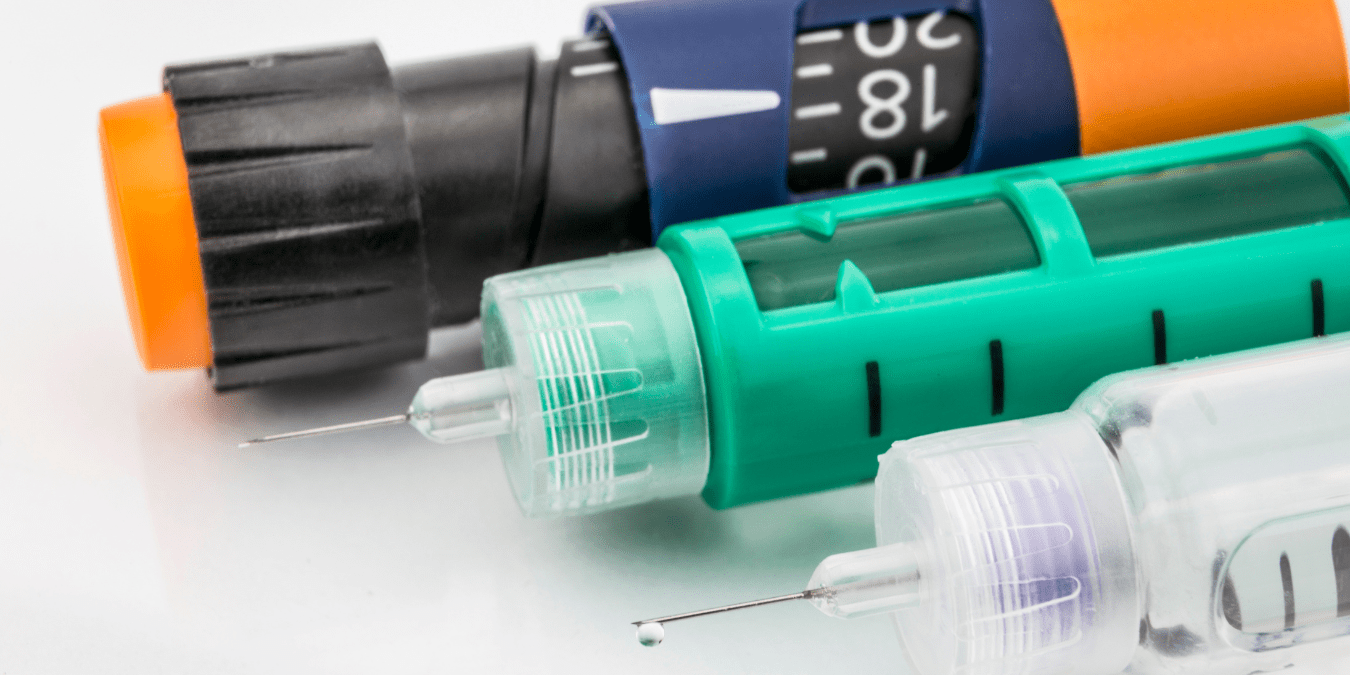
Every morning, millions of Americans wake up and perform a ritual that has nothing to do with coffee or alarm clocks. They check their blood sugar, draw up a syringe, and inject a hormone their bodies cannot produce on their own. For people living with diabetes, insulin is not a lifestyle choice — it is oxygen in a bottle. And for far too long, that bottle has come with a price tag that defies every moral standard a wealthy nation should hold itself to.
Now, a bipartisan bill is moving through the U.S. Senate that would cap what privately insured Americans pay out-of-pocket for insulin at $35 per month. On the surface, it sounds like a breakthrough. And in many ways, it is. But diabetes advocates across the country are greeting it with cautious optimism at best — and outright frustration at worst. Because progress, they say, is not the same as a solution.
What the INSULIN Act of 2026 Actually Does
The bill at the center of this debate is called the Improving Needed Safeguards for Users of Lifesaving Insulin Now Act — or, mercifully, the INSULIN Act of 2026. Introduced in late March 2026 by a rare bipartisan coalition of senators — Jeanne Shaheen (D-NH), Susan Collins (R-ME), Raphael Warnock (D-GA), and John Kennedy (R-LA) — the bill targets the glaring gap that has existed between what Medicare patients pay for insulin and what everyone else pays.
Since the passage of the Inflation Reduction Act in 2022, Medicare beneficiaries have been protected by a $35 monthly cap on insulin costs. That cap transformed the lives of millions of seniors overnight. But the 38 million Americans living with diabetes who rely on private or employer-sponsored insurance? They were left without any equivalent protection — subject to deductibles, cost-sharing structures, and formulary decisions that could push monthly insulin costs into the hundreds of dollars.
The INSULIN Act of 2026 aims to fix that. It would require insurers to waive deductibles and limit cost-sharing to no more than $35 per month — or 25 percent of the list price, whichever is lower — for at least one type of insulin in each dosage category. Health plans would be required to comply starting in 2027. The bill has earned endorsements from the Endocrine Society, the American Diabetes Association, and Breakthrough T1D, among others.
Critically, the bill also includes a provision championed by Senator Warnock: a 10-state pilot grant program that would fund community health centers to provide affordable insulin to uninsured patients. The program would be authorized at $100 million for fiscal year 2027. An insulin resource center and hotline would also be established to connect uninsured individuals with available assistance.
Why This Moment Matters
To understand why this bill carries so much emotional weight, you need to understand what insulin rationing looks like in real life. It is not an abstraction. It is a parent of a two-year-old named Bain Brandon in Mississippi, paying $194 out-of-pocket for a one-month supply of insulin vials and a three-month backup supply of pens — even with insurance. It is a college student cutting doses in half because they cannot afford to refill their prescription. It is a 26-year-old aging off a parent’s insurance plan and suddenly facing a monthly bill that rivals rent.
A landmark study published in the Annals of Internal Medicine found that approximately 1.3 million Americans rationed their insulin due to cost in a single year, with more than 16 percent of insulin-using diabetics reporting that they had skipped doses, taken less than prescribed, or delayed purchases to save money. Researchers at Harvard Medical School described insulin rationing as “frequently harmful, and sometimes deadly”. That is not hyperbole — people have died because they stretched out their insulin to make ends meet.
Even more alarming: a Yale University study published in November 2025 found that 1 in 4 patients at a major diabetes center was still rationing insulin due to cost in 2024 — a rate completely unchanged from 2017, despite every policy intervention introduced during that period. The crisis has not meaningfully improved for the most vulnerable patients. That context makes the INSULIN Act both urgently necessary and frustratingly insufficient.
The Coverage Gap Nobody Talks About
Here is the part that rarely makes the headline: the $35 cap, as written, does not apply to everyone with private insurance.
About 57 percent of people with private health insurance plans do not get any relief from state-level measures to cap insulin costs. Many of those plans are self-funded employer plans — meaning the employer itself bears the cost of employees’ health claims rather than purchasing a traditional insurance policy. These self-funded plans are governed by federal ERISA law, which means state-level insulin cap laws cannot touch them. The INSULIN Act would change this at the federal level, which is exactly why a federal bill is so critical — but the legislation still needs to pass.
Even if the bill becomes law, it addresses only out-of-pocket costs for insured patients. It does not lower the actual list price of insulin. When a privately insured patient pays $35 at the pharmacy counter, their insurer still pays the full, undiscounted list price — a price that, in some cases, runs hundreds of dollars per vial. This means the financial burden shifts from patient to insurer, which in turn can mean higher premiums for everyone. The underlying dysfunction in the insulin pricing system — one built on manufacturer list prices, PBM rebates, and formulary negotiations — remains completely intact.
The Uninsured: Left Behind Again
The most consistent criticism from diabetes advocates is not about what the INSULIN Act does. It is about who it ignores.
As of 2025, an estimated 25 to 30 million Americans remain uninsured. For people with diabetes in that group, the daily math of staying alive is brutal. Research published in peer-reviewed journals has shown that out-of-pocket insulin costs for the uninsured averaged $2,800 per person per year in the post-ACA period — a staggering burden that state and federal copay caps do nothing to address. Uninsured individuals with diabetes ration their insulin more frequently than any other demographic group.
The bill’s pilot program — 10 states, funded at $100 million — is a genuine attempt to address this population. Advocates acknowledge that. But a pilot program is not a policy. It is an experiment. It will serve a fraction of the uninsured diabetic population, for a limited period, in a limited number of states. What happens to the uninsured diabetic in Texas, or Alabama, or Ohio, who does not live in a participating state? They are still on their own.
The American Diabetes Association has called the bill “a critical step” — notable language that implies a journey not yet finished. Organizations like Public Citizen have long argued that any insulin pricing reform that does not address the underlying list price problem is, at best, cost-shifting rather than cost-cutting.
The PBM Problem Nobody in Congress Wants to Fully Solve
To understand why a $35 cap is a bandage on a deeper wound, you need to understand the role of Pharmacy Benefit Managers (PBMs) — the often-invisible middlemen who negotiate drug prices between manufacturers and insurers.
Research published in JAMA Health Forum found something that should alarm every American: between 2014 and 2018, the list price of insulin increased 40 percent, while the net price insulin manufacturers actually received fell by 31 percent. This divergence happened because PBMs were collecting larger and larger rebates from manufacturers — rebates that were not consistently passed on to patients at the pharmacy counter. The money was disappearing into a system that rewards complexity over transparency.
The INSULIN Act does include provisions requiring that rebates and discounts normally collected by PBMs be passed through to patients. It also includes measures to encourage competition from generic and biosimilar insulins. These are meaningful additions that go beyond simple copay-capping. But advocates note that PBMs have consistently found ways to work around reforms, whether by restructuring fees, adjusting formularies, or leveraging their enormous market power in ways that smaller players cannot counter.
Three manufacturers — Eli Lilly, Novo Nordisk, and Sanofi — collectively supply 96 percent of the insulin used in the United States. That near-monopoly, combined with a PBM system that profits from high list prices, has created a market structure almost perfectly designed to resist the kind of systemic reform that would actually make insulin affordable for everyone.
Why Previous Efforts Failed — and What’s Different This Time
This is not the first time Congress has tried to cap insulin prices for privately insured Americans. The Affordable Insulin Now Act was introduced in Congress in November 2025 by Representatives Lucy McBath, Angie Craig, and others — but it never advanced through the full legislative process. Before that, insulin pricing provisions were stripped from the Build Back Better bill in 2021 when Senator Joe Manchin withdrew his support, leaving millions of Americans without the federal protection Medicare patients would later receive.
What is different about the INSULIN Act of 2026 is its bipartisan authorship. Having both Susan Collins and John Kennedy — two Republicans — alongside Democratic co-sponsors Shaheen and Warnock is not a small thing in the current political environment. The bill does not require one party to hand the other a victory. It frames insulin affordability as a kitchen-table issue that transcends political identity — because it does. Diabetes does not check voter registration cards.
Still, the bill faces a Congress where previous attempts have failed, where pharmaceutical industry lobbying remains powerful, and where the current administration’s approach to drug pricing has been inconsistent. Advocates are keeping their fingers crossed, but they have been here before.
What Diabetes Advocates Actually Want
When advocates say the INSULIN Act is “not enough,” they are not dismissing it. They are insisting that the conversation cannot stop here. The full picture of what they are asking for includes:
- Universal out-of-pocket caps that apply to every insured American regardless of plan type, with no loopholes for self-funded employers
- Actual price negotiation on insulin list prices — not just cost-shifting to insurers
- A permanent, nationwide program for uninsured diabetics, not a 10-state pilot
- PBM transparency and reform that ensures rebates flow back to patients at the point of sale
- Competition through biosimilars and generics, supported by policies that prevent PBMs from excluding lower-cost alternatives from formularies
- Protection for young adults who lose parental insurance coverage at age 26 and face sudden, often unmanageable cost spikes
The human stakes are not abstract. Marlee Brandon, the Mississippi mother of two-year-old Bain, said it plainly: “One day, Bain will be an adult, and he won’t be able to be on our insurance anymore. I feel like a lot of people don’t realize how much and how expensive it is”. Her worry is not irrational. It is a forecast grounded in the lived experience of millions of American families.
A Step Forward, Not a Finish Line
The INSULIN Act of 2026 is real progress. For the millions of privately insured Americans who currently pay far more than $35 per month for insulin, this bill — if passed — would deliver immediate, tangible financial relief. That matters. A parent who can now afford their child’s insulin without sacrificing groceries is not experiencing a symbolic victory. They are experiencing survival.
But diabetes advocates are right to hold the line on what “enough” means. A functioning healthcare system should not require a bipartisan miracle just to prevent people from dying because they cannot afford a medication that has existed for over a century, whose active ingredient costs pennies to produce, and whose price in the United States is eight to ten times higher than in comparable wealthy nations. The $35 cap is a floor that should have been laid decades ago. It is not a ceiling on what this country owes to the 38 million Americans living with diabetes.
The INSULIN Act is a mile marker, not a finish line. Every advocate, every lawmaker, and every American who cares about health equity needs to keep running.
Sources for this article include reporting from PBS NewsHour, the Associated Press, KFF Health News, the American Diabetes Association, the Endocrine Society, peer-reviewed research published in the Annals of Internal Medicine and JAMA Health Forum, and official Senate press releases from Senators Shaheen, Warnock, Collins, and Kennedy.

Omisha is a health writer passionate about turning complex medical research into clear, actionable content readers can trust. She covers everything from nutrition and mental wellness to chronic disease management, always grounding her work in credible science and real-world relevance. When she's not writing, she's usually reading up on the latest health studies or exploring new wellness trends to write about next.