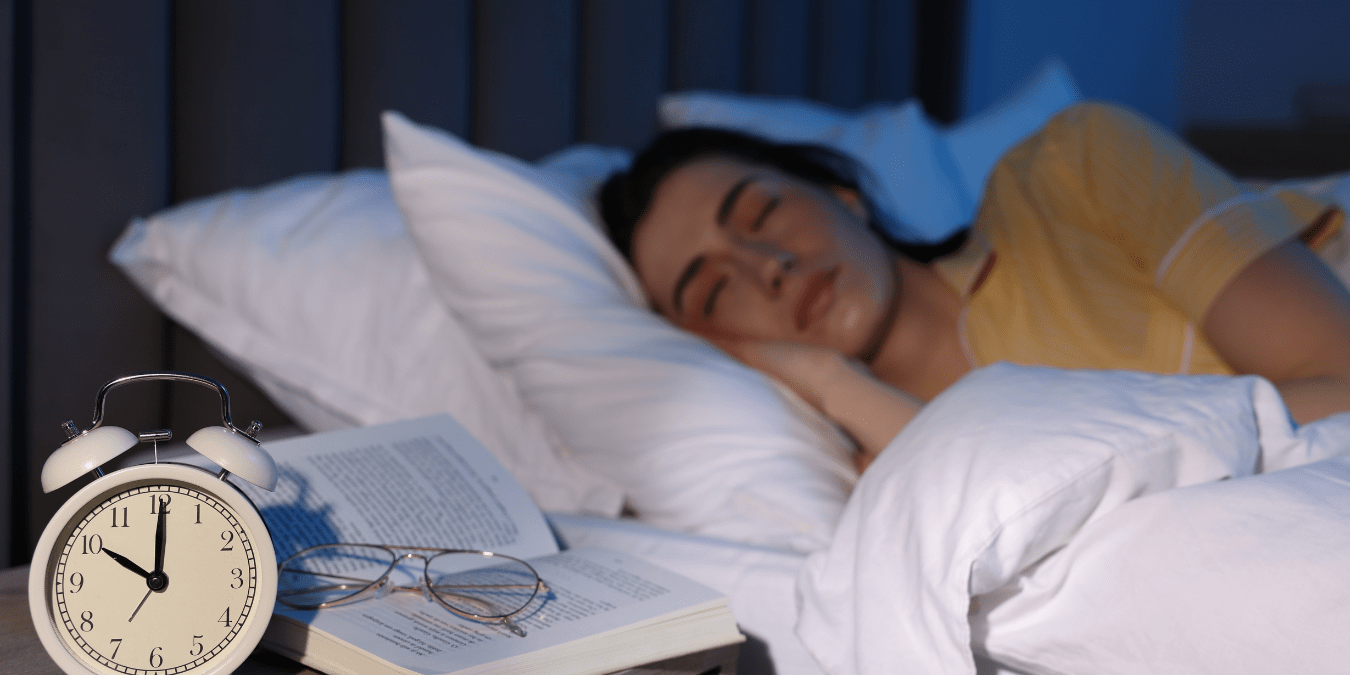
Sleep has moved from afterthought to obsession. It sits at the center of dinner conversations, dominates podcast feeds, and generates billions in product sales. But here is the uncomfortable truth that sleep scientists keep repeating: the more frantically Americans chase perfect sleep, the worse their rest often becomes. The United States is experiencing a full-blown sleep crisis, and the wellness industry’s well-intentioned response may be quietly making it worse.
America Has a Sleep Problem Nobody Can Ignore
The numbers are striking. According to the National Sleep Foundation’s 2025 Sleep in America Poll, six out of every ten adults do not get enough sleep. Nearly four in ten adults report trouble falling asleep three or more nights per week, and almost half report trouble staying asleep at that same frequency. Meanwhile, data collected from wearable devices by Withings covering millions of nights of sleep across the United States between 2020 and 2025 showed that Americans lost an average of 32 minutes of sleep per night over that five-year period — a staggering loss equivalent to about 120 full nights of sleep per person.
Those are not abstract statistics. They translate into impaired concentration, weakened immune function, increased cardiovascular risk, and deteriorating mental health. The U.S. Centers for Disease Control and Prevention has estimated that roughly one-third of American adults report not getting sufficient sleep, and millions more suffer from undiagnosed disorders such as insomnia and sleep apnea. Poor sleep has quietly emerged as one of the most pressing and underappreciated public health emergencies in the country.
And yet, despite widespread awareness, despite a wellness market flooded with sleep gadgets, supplements, and optimization protocols, Americans are still exhausted. The question worth asking is not just why so many people sleep poorly — but why the solutions being marketed to them so often fail.
The Rise of the Sleep Economy
Sleep has never been more commercially valuable. Industry analysts now estimate the global sleep economy at over $585 billion, with wellness hotels, tech companies, supplement brands, and app developers all racing to capture a share of the market. Sleep tourism — a segment where luxury resorts offer circadian-aligned lighting, sound-engineered rooms, and guided sleep rituals for travelers — has emerged as one of the fastest-growing niches in the global wellness economy.
At the consumer level, wearable devices like the Oura Ring and WHOOP transformed sleep from a mystery into a measurable metric. Sleepmaxxing — an internet-driven cultural movement in which people pile on sleep hacks, supplements, mouth tape, red-light therapy, cold plunges, and meticulous bedtime routines — became a genuine social phenomenon, particularly among millennials and Gen Z. Tracking sleep became a hobby, almost a sport.
But after years of relentless data collection, viral sleep trends, and aggressive supplementation, many Americans are still tired — and increasingly frustrated. That frustration has catalyzed an important cultural shift. As Naturepedic’s 2026 sleep trend analysis put it plainly: people are ready to reassess what actually works and what simply adds noise.
The Biggest Mistake: Treating Sleep Like a Performance Metric
Ask any board-certified sleep physician what they see most frequently in their practice, and many will describe the same pattern: a highly motivated, deeply anxious patient who is doing everything “right” on paper — tracking every sleep stage, hitting a strict 10 p.m. bedtime, taking supplements, wearing a sleep mask — and still waking up exhausted. The diagnosis is often orthosomnia, a clinical term for insomnia caused by obsessive focus on achieving perfect sleep scores.
According to the American Academy of Sleep Medicine, nearly 48% of Americans have used a sleep tracking device within the past year to monitor their sleep quality. More than half of those users (55%) are adjusting their behaviors based on what the data shows. That sounds productive — but the AASM warns that the growing cultural fixation on sleep data is also increasing anxiety in a measurable and clinically significant way. When you treat sleep as a performance to be optimized rather than a biological process to be supported, you activate exactly the kind of mental arousal that prevents deep sleep from occurring.
Sleep expert and author Dr. Wendy Troxel, a licensed clinical psychologist and senior behavioral scientist at the RAND Corporation, has described this dynamic clearly: sleep is not a skill you can will yourself into performing better at. It is a passive, automatic process that happens when the brain feels safe, unthreatened, and adequately relaxed. Introducing anxiety into that equation — even anxiety about wanting more sleep — is physiologically counterproductive.
The goal was never a perfect sleep score. It was restorative, sustainable rest. — Global Wellness Institute, 2026
The Phone in Bed Problem Nobody Is Solving
If there is one habit that sleep researchers agree is definitively destroying American sleep quality, it is smartphone use in bed. Dr. Troxel of RAND identified it as the single most harmful nightly behavior among American adults: “About 90% of Americans are using their phones in bed, and as much as I would like to tell everybody to remove the phone entirely from the bedroom, I realize that ship has probably sailed by now,” she said.
A 2026 survey from the American Academy of Sleep Medicine reinforced this concern with hard data. Over one-third of adults (38%) say that using their phone or tablet before bed to scroll through news — commonly called doomscrolling — makes their sleep significantly or slightly worse. The impact is most acute among adults aged 18 to 24, with 46% reporting that the habit disrupts their sleep. More troubling still, more than one-quarter of adults (26%) openly say they prioritize screen time over getting the recommended seven hours of sleep.
What makes phone use in bed uniquely damaging is not just the blue light — it is the combination of blue light and emotionally charged content. The AASM’s Dr. James Rowley put it plainly: “Blue light, especially when combined with emotionally charged content, can trick our body clocks into a state of daytime-level alertness, disrupting the circadian rhythm and making it more difficult to achieve high-quality sleep”. This means doomscrolling before bed is neurologically similar to drinking a cup of coffee and watching a thriller — right before you expect your brain to power down.
The Melatonin Myth
Walk into any Walmart or CVS in America and you will find entire shelves dedicated to melatonin supplements in doses ranging from 1 mg to 20 mg. Melatonin has become the nation’s go-to sleep aid, with 58% of respondents in a Sleep Foundation survey reporting prior melatonin use, making it the most widely used sleep supplement in the country. Most people believe it is harmless, natural, and a direct shortcut to sleep.
The science tells a more complicated story. A landmark study presented at the American Heart Association’s Scientific Sessions 2025 — one of the most prestigious cardiovascular medicine conferences in the world — found that among adults with chronic insomnia, those who used melatonin long-term (12 months or more) had approximately a 90% higher chance of developing heart failure over five years compared with matched non-users. Participants taking melatonin were nearly 3.5 times more likely to be hospitalized for heart failure, and nearly twice as likely to die from any cause compared with non-users.
The researchers were careful to note that the study cannot prove cause and effect — people with severe, treatment-resistant insomnia may have other underlying health vulnerabilities. But the findings are striking enough that the American Heart Association flagged them as warranting urgent further investigation. Poison control centers in the United States have received five times the number of calls about melatonin overdose compared to 20 years ago, and emergency rooms have seen a fourfold increase in children being treated after accidental melatonin ingestion.
The root problem is that melatonin is not a sleeping pill. It is a hormonal signal. In physiological terms, your brain naturally produces melatonin as daylight fades — it is a cue that darkness has arrived, not a sedative that forces sleep. Taking a 10 mg melatonin gummy is like blasting your body with a hormonal megaphone when a whisper would do. Sleep clinicians generally recommend that if melatonin is used at all, doses should remain below 0.5 mg, taken 30 to 60 minutes before the desired sleep time — not the high doses found in most commercial products.
The 90-Minute Sleep Cycle Fallacy
One of the most widely shared sleep “hacks” online claims that you should schedule your sleep in 90-minute increments — based on the idea that the human sleep cycle lasts exactly 90 minutes — so that you always wake up at the end of a cycle and feel refreshed rather than groggy. It sounds elegant. It is not accurate science.
Sleep expert Dr. Jade Morse has explained clearly why this idea misses the mark: “The idea misses out on the fact that each cycle can vary. While the 90-minute increment idea can be attractive to some who are trying to get a better handle on achieving their best night’s sleep, it will likely miss the mark. When you prioritize a full night of restful sleep, you’re more likely to feel refreshed and energized, regardless of whether you wake up at the end of a specific cycle”. Human sleep cycles are not mechanical clockwork. They vary by individual, by age, by stress level, and even by the specific night. Trying to reverse-engineer a wake-up time based on a fixed cycle duration introduces unnecessary complexity into what is fundamentally a simple biological need.
The Late-Night Workout Myth
For years, fitness culture and sleep culture existed in tension, with conventional wisdom insisting that exercising within a few hours of bedtime would sabotage sleep quality by raising cortisol, spiking body temperature, and revving up the central nervous system. Millions of Americans have restructured their workout schedules around this belief — often at significant inconvenience.
A peer-reviewed paper published in Sleep Health, the journal of the National Sleep Foundation, challenges this assumption directly. The research team, led by Dr. Rebecca Robbins of NYU Langone Health, reviewed survey data from U.S. adults and found that nighttime exercise was not associated with sleep disturbance for the majority of individuals. Additional experimental evidence showed no impairment of sleep following vigorous nighttime exercise. The caveat is individual variability — some people are genuinely sensitive to late exercise — but the broad cultural prohibition against it has no universal scientific backing.
What the Research Says Actually Works
Amid all the noise, sleep scientists are remarkably aligned on what genuinely improves sleep. The evidence converges around a handful of behavioral and environmental factors that are far less glamorous than the latest supplement stack — but far more effective.
Consistent sleep timing is the single most powerful lever available to anyone struggling with sleep. Going to bed and waking up at the same time every day — including weekends — anchors your circadian rhythm, the internal biological clock that regulates virtually every system in your body. Sleep optimization, in the truest scientific sense, is about repeatable changes rather than perfect scores.
Light exposure management is the biological mechanism underlying consistent timing. Morning sunlight exposure — ideally within 30 minutes of waking — signals to the brain that the day has begun, helping set the timing for melatonin release that evening. Minimizing bright artificial light and blue light in the two hours before bed does the opposite, allowing natural melatonin production to proceed on schedule.
Bedroom environment matters more than most people prioritize. Research consistently shows that cooler rooms (around 65 to 68 degrees Fahrenheit) facilitate more restorative sleep, because body temperature must drop slightly for deep sleep stages to initiate. Darkness and quiet — or consistent white noise to mask unpredictable sounds — round out a sleep environment that the brain associates with safety and rest.
Wind-down routines that are free from screens and emotionally activating content give the nervous system time to shift from sympathetic (alert) to parasympathetic (restful) activation. For children and teenagers, sleep physicians recommend a 30- to 60-minute wind-down routine without smartphones, in a dimly lit room. The same principle applies to adults.
Napping strategically, not habitually. Brief power naps earlier in the day — no longer than 20 minutes — can support alertness without disrupting nighttime sleep architecture. Longer naps taken in the late afternoon or evening, however, create competition with the sleep drive that makes it harder to fall asleep at a normal hour.
The Anxiety Loop You Need to Break
Perhaps the most important — and most underappreciated — insight from contemporary sleep science is this: worry about sleep is itself a primary driver of insomnia. This is not a philosophical observation. It is a neurobiological reality. The brain cannot simultaneously be in a state of threat-detection (anxious about not sleeping) and a state of resting deactivation (actually sleeping). They are mutually exclusive.
The Global Wellness Institute’s 2026 sleep trends report identified a broad cultural recalibration underway: consumers are moving away from relentless optimization and toward approaches that prioritize nervous system balance and long-term wellbeing. The most effective sleep interventions, including Cognitive Behavioral Therapy for Insomnia (CBT-I) — which is endorsed by the American College of Physicians as the first-line treatment for chronic insomnia above and beyond any medication — work primarily by dismantling the anxious relationship a person has developed with their own bed.
CBT-I teaches patients that the bed is not a place of struggle, that occasional poor sleep is normal and not catastrophic, and that the effort to control sleep is paradoxically what maintains sleeplessness. It is the mental equivalent of telling someone to relax: the harder they try, the less it works.
The Intelligent Sleep Era: AI Without Obsession
Artificial intelligence is now entering the sleep space at scale, with AI-powered tools enabling more sophisticated and personalized sleep monitoring, predictive health insights, and behavioral coaching. This represents a genuine opportunity — but only if Americans learn from the mistakes of the first wave of sleep tracking culture.
The lesson from the past decade of wearables is instructive. Tracking data is only valuable if it produces actionable insight, not anxiety. Sleep experts now recommend using trackers to identify broad patterns over weeks — not to obsess over nightly scores. One poor night is not a crisis; a three-week pattern of fragmented sleep warrants attention. The best version of AI-assisted sleep optimization will help people simplify their relationship with sleep, not complicate it further.
The Real Prescription
Sleep optimization, done right, is not a product you buy or a protocol you follow. It is a practice of removing obstacles — the phone, the inconsistency, the anxiety, the overstimulation — and trusting a biological system that has been successfully running in human beings for hundreds of thousands of years.
The sleep economy will keep growing. New gadgets and supplements will keep launching. But the people who sleep best are rarely the ones with the most sophisticated setups. They are the ones who go to bed at a consistent time, keep their bedroom dark and cool, put their phone in another room, and stop trying to engineer unconsciousness.
That is not a hack. That is sleep science — and it has been available, free of charge, all along.
This article is written for informational purposes only and does not constitute medical advice. If you are experiencing chronic sleep difficulties, please consult a board-certified sleep medicine physician or a licensed behavioral health professional trained in CBT-I.

Omisha is a health writer passionate about turning complex medical research into clear, actionable content readers can trust. She covers everything from nutrition and mental wellness to chronic disease management, always grounding her work in credible science and real-world relevance. When she's not writing, she's usually reading up on the latest health studies or exploring new wellness trends to write about next.