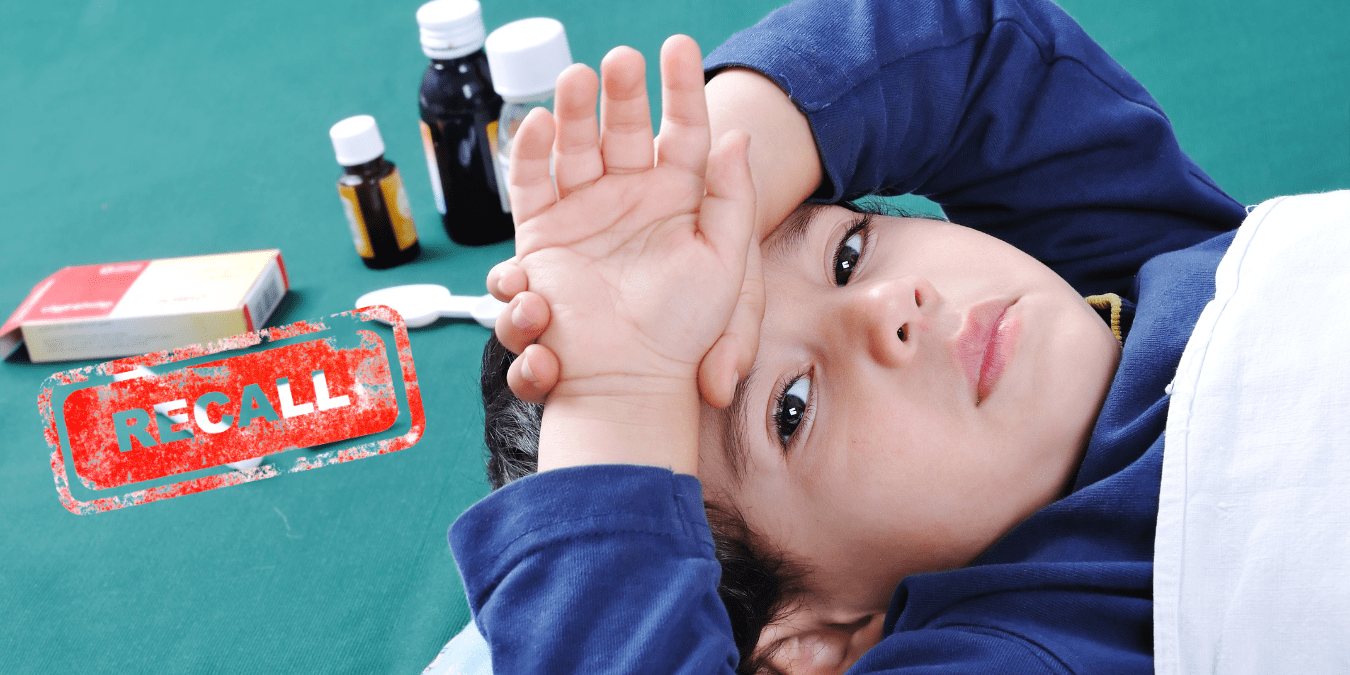
Nearly 90,000 bottles of children’s ibuprofen are quietly vanishing from shelves—and your medicine cabinet might be hiding one. What exactly is in that “foreign substance”? How do you know if your child’s dose is unsafe? And what should you do right now before the next fever spikes? The truth will shock you.
If your child has ever taken liquid ibuprofen for fever or pain, you’ve probably kept a bottle in the bathroom cabinet or diaper bag. Overnight, that same bottle has turned into a potential safety concern after U.S. regulators announced a nationwide recall of almost 90,000 bottles of children’s ibuprofen. As a parent, you’re likely asking: Is this mine? Is my child safe? And what should I do right now?
Here’s what we know, how to check your bottles, and what safer alternatives look like—without fear‑driven headlines, just clear, evidence‑based steps.
What’s Being Recalled and Why?
The recall targets Children’s Ibuprofen Oral Suspension, USP, 100 mg per 5 mL, a liquid ibuprofen product sold over the counter for children’s pain and fever. The U.S. Food and Drug Administration (FDA) has classified this as a Class II recall, meaning there is a possible risk of temporary or medically reversible health effects, but not an immediate, life‑threatening one.
The trigger is consumer complaints of foreign particles—described as gel‑like clumps or black specks—in the liquid medication. Strides Pharma, Inc., the manufacturer, is voluntarily pulling 89,592 bottles that were distributed nationwide and asking retailers and consumers to stop using the affected lots. Importantly, no injuries or illnesses have been reported so far, but the agency is still treating this as a serious product‑quality issue.
Key recall details at a glance
| Item | Detail |
| Product name | Children’s Ibuprofen Oral Suspension, USP, 100 mg per 5 mL |
| Manufacturer | Strides Pharma, Inc. |
| Reason for recall | Potential presence of foreign substance (gel‑like particles, black specks) |
| Number of bottles affected | Approximately 89,592 bottles distributed nationwide |
| FDA classification | Class II recall (moderate health risk) |
| Current status | No reported adverse events yet |
- Louisiana Vibrio Vulnificus Outbreak 2026 Explained: Who Faces the Greatest Risk in Gulf Coast Waters and How to Stay Safe

- 3 Midlife Habits Linked to Almost 13 More Dementia-Free Years, According to a 26-Year Study of 12,409 Adults

- Your Blood Pressure Reading Has a “Hidden Number” Doctors Say Most People Ignore
- AI Is Now Diagnosing Your Skin Before You Even Visit a Dermatologist — Here’s How the Beauty Industry Is Changing Everything in 2026

- The Side-Part Is Making the Most Unexpected Comeback in American Beauty History — And This Time, It’s Not Going Anywhere

- This Heat Protectant Spray From LolaVie Is Going Viral in the US — Stylists Say It Cuts Drying Time and Saves Your Blowout for Days
How to Check If Your Child’s Ibuprofen Is Affected
For a Discover‑style post, this is the most actionable section. Parents will scroll straight to the “how to check” steps, so they need to be scannable, visual, and step‑by‑step.
Step 1: Find the bottle in your cabinet
First, pull out any child‑specific ibuprofen liquid you have at home. If it’s labeled “Children’s Ibuprofen Oral Suspension, USP” with 100 mg per 5 mL, it could be in scope.
Still using the older “Infants’ Ibuprofen Concentrated” style bottle (50 mg per 1.25 mL) is not the same as this current recall; those were part of earlier, separate recalls due to higher‑than‑stated ibuprofen levels.
Step 2: Look at the packaging details
To see if your bottle is specifically affected, check three things on the label:
- NDC (National Drug Code)
- Lot number
- Expiration date
The FDA and Strides Pharma have posted exact NDC‑lot combinations on the official recall page. If your bottle’s NDC and lot number match any of the listed values, stop using it immediately.
Step 3: Verify on the FDA recall page
Because lot numbers change frequently and can be confusing, the safest move is to:
- Open the FDA recall notice for Strides’ children’s ibuprofen.
- Match the NDC–lot–expiration on your bottle against the table of recalled lots.
- If you see a match, set the bottle aside and follow the disposal instructions below.
If your NDC and lot are not listed, the FDA indicates your bottle is not part of this recall—but you should still visually inspect the liquid before giving it to your child.
Step 4: Visual inspection (if in doubt)
If you don’t see a clear lot match but you’re unsure, shake the bottle gently and hold it up to the light:
- Look for gel‑like blobs, stringy clumps, or black specks floating in the liquid.
- If you see anything unusual, do not administer it to your child.
- Even if the lot isn’t listed, contact the manufacturer or your pharmacist for guidance.
What the “Foreign Substance” Risk Means for Your Child
Parents often worry about words like “foreign substance” because they sound dramatic. In this case, the FDA has not yet disclosed the exact chemical nature of the particles, only that multiple consumers reported them in the liquid suspension.
Two main concerns are being flagged:
- Choking or aspiration risk
- Gel‑like or solid particles could pose a choking hazard if a child accidentally swallows a chunk instead of smooth liquid.
- This is especially worrisome for younger toddlers or children who cannot chew or clear their airways well.
- Potential for irritation or tissue reaction
- If the particles are not inert, they could theoretically cause gastrointestinal irritation, oral or throat discomfort, or other local reactions.
- Because no adverse events have been reported yet, regulators are treating this as possible but not confirmed harm, which is why it’s a Class II, not a Class I, recall.
Even if the harm ends up being minimal, the core principle remains: any medicine that isn’t smooth, clear, and labeled correctly should not be given to a child.
What to Do If Your Bottle Is Recalled
If your bottle matches the NDC–lot–expiration on the FDA list, or if you suspect contamination, here’s what to do right now:
Safely stop using the product
- Do not administer another dose with that bottle.
- Mark it clearly (e.g., heavy “X” or “RECALL” on the label) so other caregivers don’t pick it up later.
Dispose of it safely
- Follow FDA or local disposal guidelines for OTC medications. In many areas, the recommendation is to:
- Mix the liquid with an unappealing substance (like coffee grounds or cat litter).
- Place it in a sealed plastic bag, then in the household trash—not down the sink or toilet.
- If you are unsure, ask your pharmacist for a local disposal protocol or a take‑back program.
Demand a refund or replacement
- Most pharmacies and retailers will refund or replace recalled OTC medications if you bring the bottle in or show a receipt.
- Check the manufacturer’s website or customer service line for specific instructions; some companies offer online forms or mail‑in instructions.
Talk to your pediatrician if your child already took it
If your child used this ibuprofen recently and is fine, it’s still worth mentioning to your pediatrician at the next check‑in, especially if you saw any odd particles in the bottle.
If your child develops difficulty breathing, choking, vomiting, or unusual behavior after taking the medication, seek immediate medical care and tell the provider about the recall and lot number.
Safer Alternatives for Children’s Fever and Pain
After a recall like this, parents ask: “What can I safely give my child now?” Here are evidence‑based options to discuss with your pediatrician:
1. Acetaminophen (paracetamol) liquid
- Widely used for children’s fever and pain when dosed correctly.
- Available over the counter in infant drops and children’s suspensions.
- Always follow weight‑based dosing on the label or your doctor’s instructions.
2. Other ibuprofen products (if not Strides)
- Only ibuprofen products from other manufacturers that are not on the recall list are considered safe at this time.
- Brands like Advil, Motrin, or store‑brand equivalents from different makers are still available, but you should still check for lot advisories and visually inspect every bottle before use.
3. Non‑drug measures that help
Medication is only one part of managing fever or pain:
- Fluids and rest help more than people realize.
- Cool (not cold) compresses or a lukewarm bath can ease discomfort.
- Clothing and room temperature that prevent overheating make a big difference.
If your child is under 3 months with any fever, or has trouble breathing, extreme lethargy, rash, or dehydration, seek urgent care rather than waiting for home remedies.
How This Recall Fits Into Broader Children’s Med Safety
Recalls like this are rare but not unheard of. In the past, too‑potent infants’ ibuprofen batches and contaminated cold/fever products have also been pulled from the market. These events highlight why checking lot numbers and expiration dates is just as important for kids’ meds as for your own prescriptions.
here’s how you can frame this section to build trust and authority:
- You’re not alarmist—you acknowledge the scale (“almost 90,000 bottles”) but also the lack of reported harm so far.
- You emphasize regulation (FDA Class II, voluntary recall, nationwide distribution) to show parents the system is working.
- You encourage verification—directing readers to official sources rather than relying on social‑media rumors.
This builds expertise (you explain dosage forms, NDCs, and recall classes), experience (you walk through inspection steps), authoritativeness (you cite FDA and manufacturer), and trustworthiness (you do not exaggerate risk).
Quick “Did This Happen to Me?” Checklist
Because Discover readers love bullet‑style takeaways, wrap the post with a simple checklist they can use:
- ✅ Open every child‑specific ibuprofen liquid bottle in your home.
- ✅ Check the label for Children’s Ibuprofen Oral Suspension, USP, 100 mg per 5 mL.
- ✅ Match NDC and lot number to the FDA recall list.
- ✅ If there’s a match or any visible particles, stop using it and dispose of it safely.
- ✅ Talk to your pediatrician or pharmacist before switching to another ibuprofen brand.
- ✅ If your child has taken it and is having breathing, choking, or severe reactions, seek emergency care.
Why This Matters Beyond One Bottle
This recall isn’t just about one lot of ibuprofen. It’s a reminder that even everyday, “safe‑looking” medicines can have quality issues, and that parents are often the first line of inspection. Shaking the bottle, checking the label, and knowing where to find recalls are small habits that protect your children more than you might think.