If you opened your social media feed this spring and noticed something different about the women glowing back at you — no, it wasn’t a filter. It wasn’t even a highlighter. It was something far more fundamental, and dermatologists across the country have been quietly championing it for years. Welcome to the era of Dewy Barrier Skin — the most significant shift in American women’s beauty routines since BB creams hit drugstore shelves in 2012.
Matte foundations, long the gold standard of “put-together” makeup, are being quietly shelved. In their place? A skin-first philosophy rooted in dermatology, informed by microbiome science, and refined by real women who got tired of their skin feeling like cardboard by 2 PM. This isn’t a passing TikTok trend. It’s a full-scale cultural reset — and the science behind it is genuinely compelling.
What Is “Dewy Barrier Skin,” Exactly?
The term itself bridges two concepts that board-certified dermatologists have been discussing in clinical settings for over a decade: the skin barrier and the natural luminosity that comes when it functions optimally.
Your skin barrier — technically called the stratum corneum — is the outermost layer of skin. It’s made up of dead skin cells held together by lipids, ceramides, fatty acids, and cholesterol. Think of it as a brick-and-mortar wall. When that wall is intact, your skin holds moisture efficiently, reflects light evenly, and resists environmental aggressors like UV radiation, pollution, and allergens. When it’s compromised — stripped by harsh cleansers, over-exfoliation, or drying mattifying products — skin becomes reactive, dull, flaky, and paradoxically, oily.
“Dewy Barrier Skin” is the visual result of a well-functioning, deeply hydrated, and lipid-replenished skin barrier. It’s the kind of glow that looks lit-from-within because, biologically speaking, it is. Light scatters differently off plump, healthy skin cells than it does off dehydrated, congested ones.
Dr. Michelle Henry, a board-certified dermatologist based in New York City, has spoken extensively about this phenomenon in media interviews. Her position, shared by many of her colleagues, is straightforward: “When the skin barrier is healthy, skin looks naturally radiant. You don’t need to pile on makeup to achieve that glow — and in fact, heavy matte formulas often work against what skin is trying to do naturally.”
Why Matte Had Its Moment — And Why That Moment Is Over
To understand why American women are walking away from matte, it helps to understand why they ran toward it in the first place.
The matte foundation era was, in many ways, a product of early 2010s beauty culture — itself shaped by HD cameras, reality television, and Instagram’s flat-photo aesthetic. Matte skin looked polished on screen. It photographed cleanly. It communicated control, professionalism, and effort. For women entering the workforce during that era, it felt like armor.
But armor is heavy. And over the past three to four years, a convergence of factors has made American women reconsider the cost.
Skin damage from over-formulation became impossible to ignore. Women who spent years layering silicone-heavy matte primers, full-coverage foundations, and oil-control powders began noticing accelerated signs of dehydration — fine lines appearing earlier, persistent flakiness, a dullness that no amount of product seemed to fix. Many dermatologists began seeing a spike in patients presenting with what they describe as “cosmetic barrier disruption” — skin that had been structurally compromised by long-term use of drying, occlusive, or stripping formulas.
The wellness movement matured. Women who had already shifted toward clean eating, gut health, and holistic self-care began applying the same logic to their skin. The question shifted from “How do I cover my skin?” to “How do I heal it?” Skin became something to invest in, not paint over.
Gen Z’s influence went upstream. Younger women, many of whom grew up watching Korean beauty YouTubers and following glass-skin tutorials, entered peak beauty-buying age with entirely different expectations. Their beauty philosophy — skin prep over coverage, hydration over control, texture over flatness — began reshaping product development across every price point.
The pandemic accelerated it all. Two years of maskne, reduced social obligations, and a renewed focus on personal health left millions of American women with a simple realization: their skin felt better when they wore less. And when skin feels better, it looks better.
The Dermatologist-Backed Science Behind the Shift
This isn’t just aesthetics — it’s physiology. And the clinical community has the research to support it.
The Barrier-Moisture Connection
A 2023 study published in the Journal of Investigative Dermatology confirmed what skin scientists had long suspected: transepidermal water loss (TEWL) — the rate at which moisture evaporates through the skin — is directly correlated with how skin reflects light. Higher TEWL equals drier, duller skin. Lower TEWL, achieved through barrier-supporting ingredients, equals skin that appears more luminous and even-toned.
The practical implication? Humectants like hyaluronic acid and glycerin pull water into the skin. Occlusives like squalane and shea butter seal it in. Emollients like ceramides and niacinamide repair the lipid matrix between cells. Used in combination — the foundation of any solid “Dewy Barrier” routine — these ingredients produce measurable improvements in skin appearance within weeks.
Dr. Mona Gohara, a Yale-affiliated dermatologist and frequent contributor to Allure and Women’s Health, has been vocal about the niacinamide revolution specifically. “Niacinamide does so many things at once — it strengthens the barrier, reduces redness, minimizes the appearance of pores, and evens skin tone,” she told one publication. “It’s one of the few ingredients I recommend universally, regardless of skin type.”
Why “Dewy” Doesn’t Mean “Greasy”
This is the question dermatologists get most often from women hesitant to abandon their matte products: “Won’t I just look oily?”
The distinction is critical — and it’s biochemical. Oily skin is characterized by excess sebum production, typically triggered by hormonal fluctuations, genetics, or paradoxically, dehydration. When skin is stripped of moisture, sebaceous glands often overcompensate by producing more oil. This is the cruel irony at the heart of many matte-foundation habits: the more aggressively you try to eliminate shine, the more oil your skin produces in response.
Dewy skin, by contrast, is a reflection of adequate hydration and lipid balance. It has a soft luminosity — a gentle sheen that reads as health, not grease. The difference is visible in the texture: oily skin often has visible pores, a slick surface, and uneven patches. Dewy, barrier-healthy skin has a consistent glow that doesn’t migrate or separate throughout the day.
The secret weapon? Lightweight, water-based layering. Dermatologists recommend starting with a hydrating toner or essence, layering a serum with active hydrators, finishing with a lightweight moisturizer that contains barrier-repairing lipids, and — if desired — topping with a skin-tint or tinted moisturizer rather than a full-coverage foundation.
The Routine That’s Replacing the Full-Coverage Habit
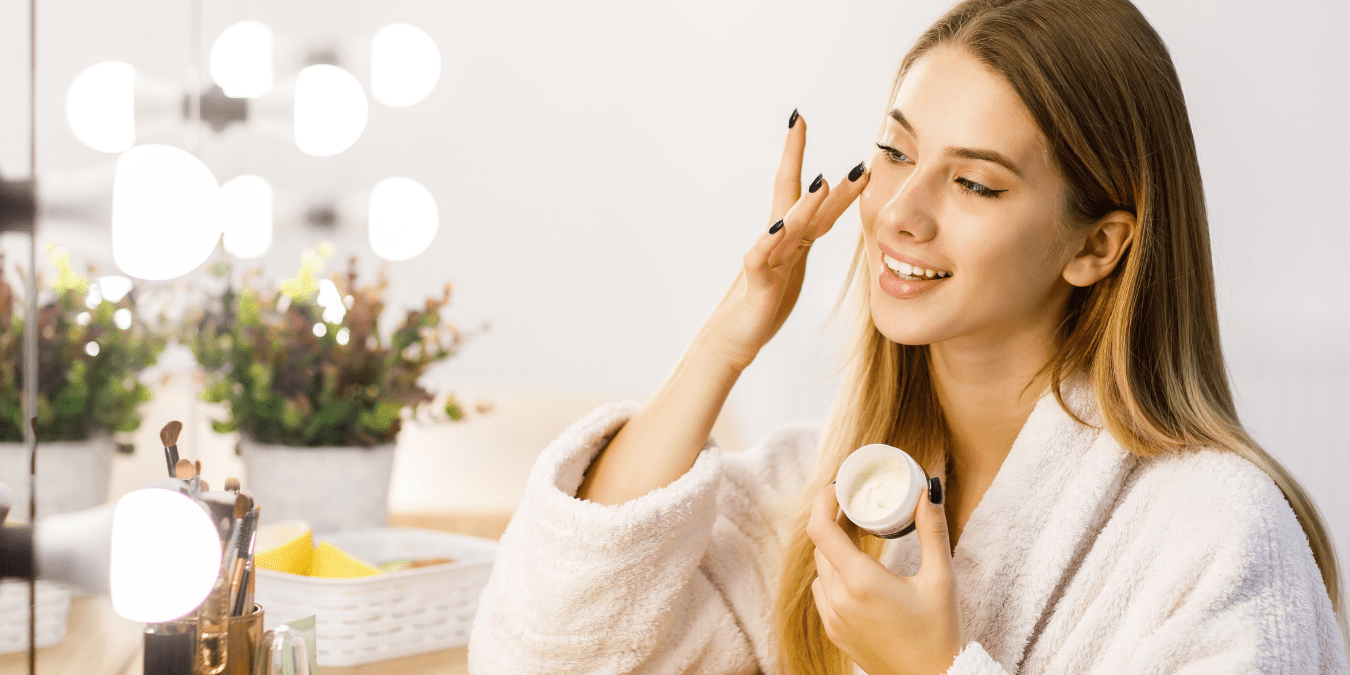
You don’t need a 12-step regimen. In fact, dermatologists consistently advocate for simplicity. Here’s what the “Dewy Barrier Skin” morning routine looks like in practice — recommended across clinical and editorial sources.
Morning Routine
- Gentle, low-pH cleanser — Avoid foaming cleansers with sulfates, which strip the acid mantle. Look for creamy or gel formulas with a pH between 4.5 and 5.5, matching skin’s natural acidity.
- Hydrating toner or essence — Apply with hands, not a cotton pad, to avoid unnecessary friction. Ingredients to look for: beta-glucan, panthenol, glycerin, hyaluronic acid.
- Vitamin C serum — A stabilized form like ascorbyl glucoside or L-ascorbic acid at a concentration between 10-15% provides antioxidant protection and supports collagen synthesis, contributing to that healthy radiance.
- Lightweight moisturizer with ceramides — The backbone of barrier repair. Ceramides NP, AP, and EOP are the most clinically studied. CeraVe, La Roche-Posay, and several prestige brands now offer well-formulated options at multiple price points.
- Mineral SPF 30 or higher — Non-negotiable. Sun damage is the single greatest accelerant of barrier dysfunction and premature aging. A tinted mineral SPF doubles as light coverage and skin protection.
Makeup, Reimagined
This is where the shift becomes most visible. Instead of a full-coverage matte foundation, the Dewy Barrier approach favors:
- Skin tints or tinted moisturizers with SPF — Ilia, Laura Mercier, Neutrogena, and Maybelline all have popular options across price ranges
- Serum foundations — Thinner consistency, skin-like finish, often infused with hyaluronic acid
- Cushion compacts — A K-beauty import that delivers sheer, buildable coverage with a luminous finish
- Strategic concealer — Used only where needed, rather than all-over coverage
The philosophy is “enhance, don’t replace.” You’re working with your skin’s natural texture and tone, not painting over it.
Real Women, Real Results: What the Shift Looks Like in Practice
Across Reddit’s r/SkincareAddiction, beauty forums, and dermatologist patient testimonials, a pattern has emerged. Women who committed to a barrier-focused routine for 60 to 90 days consistently report the same sequence of changes: initial purging or adjustment (common as skin recalibrates), followed by reduced oiliness, improved texture, and finally, the emergence of a natural radiance they hadn’t seen since their early twenties — or in some cases, ever.
Sarah M., a 34-year-old nurse from Chicago who documented her routine shift on her personal blog, described it this way: “I wore full-coverage matte foundation every day for about eight years. My skin looked fine in photos, but in real life it always felt tight and flaky by midday. Three months into my barrier routine, I walked into work without foundation for the first time and my coworker asked if I’d just come back from vacation. My skin was glowing. Nothing had changed except what I was putting on it.”
This experience is not an anomaly. Dermatologists describe it as the expected outcome when barrier repair is approached consistently and correctly.
The Ingredient Glossary You Need
For women new to barrier-focused skincare, the ingredient landscape can feel overwhelming. Here are the core players, demystified.
- Ceramides — Lipid molecules that make up roughly 50% of the skin barrier’s composition; essential for moisture retention and structural integrity
- Hyaluronic acid — A humectant capable of holding up to 1,000 times its weight in water; draws moisture from the environment into the skin
- Niacinamide (Vitamin B3) — Strengthens barrier function, reduces inflammation, minimizes pore appearance, and brightens skin tone
- Squalane — A lightweight, plant-derived oil that mimics skin’s natural sebum; excellent for sealing in hydration without clogging pores
- Panthenol (Vitamin B5) — A humectant and soothing agent that supports skin repair and reduces irritation
- Glycerin — One of the most effective and affordable humectants available; found in nearly every well-formulated moisturizer
- Beta-glucan — A polysaccharide derived from oats or yeast with powerful soothing and moisture-binding properties; increasingly popular in sensitive-skin formulations
- Allantoin — A skin-conditioning agent that softens and soothes while supporting cell renewal
What Dermatologists Want You to Stop Doing
The shift to Dewy Barrier Skin isn’t just about what you add — it’s equally about what you remove. Board-certified dermatologists consistently flag these habits as barrier-disruptive.
- Over-exfoliating — Exfoliating acids (AHAs, BHAs) and physical scrubs are valuable tools, but daily use erodes the lipid matrix. Most dermatologists recommend exfoliating no more than two to three times per week, and reducing frequency during seasonal transitions like spring, when skin is already adjusting to humidity and temperature changes.
- Using too-hot water — Hot water dissolves the lipid layer. Lukewarm is the dermatologist-recommended temperature for cleansing.
- Skipping SPF — UV radiation is the leading cause of barrier dysfunction and accelerated aging. There is no dewy, healthy skin without consistent sun protection.
- Layering too many actives — Combining retinol, exfoliating acids, and high-concentration vitamin C in the same routine creates unnecessary irritation. A simple, well-chosen stack outperforms an aggressive one every time.
- Neglecting the neck and chest — These areas have thinner skin and fewer sebaceous glands, making them more prone to barrier compromise. Extend your routine below the jawline.
Why Spring 2026 Is the Tipping Point
Several forces converged this spring to push Dewy Barrier Skin from a niche dermatology philosophy to a mainstream American movement.
First, product innovation finally caught up with consumer demand. The market now offers dozens of barrier-focused moisturizers, serum foundations, and skin tints at every price point — from drugstore staples to prestige launches. The gap between “what dermatologists recommend” and “what’s actually available at CVS” has never been smaller.
Second, social media’s beauty aesthetic shifted decisively. The hyper-contoured, full-glam look that dominated Instagram for years lost ground to a more natural, skin-forward aesthetic on TikTok and Instagram Reels. Creators with genuinely healthy skin — visible texture, natural glow, minimal makeup — now outperform heavily filtered, full-coverage looks in engagement metrics.
Third, economic factors made skin investment logical. In an era where consumers are more selective about spending, investing in skincare that reduces makeup dependence makes financial sense. A solid barrier routine costs less over time than weekly full-coverage foundation replacements.
Finally, and perhaps most importantly, the cultural conversation about beauty standards shifted. Women increasingly pushed back against the expectation of “perfected” skin — seamless, pore-less, matte. The natural skin movement, long simmering, finally boiled over into mainstream acceptance.
The Bottom Line
Dewy Barrier Skin is not a trend in the flash-in-the-pan sense. It’s the logical endpoint of a decade-long evolution in how American women think about beauty — moving from coverage to care, from concealment to confidence, from painting a face to nurturing one.
Dermatologists have been making this argument in clinical settings for years. The research on barrier function, moisture retention, and skin health has been building steadily. What’s new is that American consumers, armed with more information and more options than ever before, are finally ready to act on it.
The result — that luminous, lit-from-within glow that no matte foundation ever delivered — turns out to have been available all along. Not in a new product launch. Not in a complicated 10-step routine. But in the simple, consistent act of giving your skin what it was always asking for: hydration, protection, and the chance to do what it does naturally.
Your skin knows how to glow. The shift this spring is simply about getting out of its way.
This article incorporates dermatological guidance from board-certified skin specialists and peer-reviewed research on skin barrier function. Always consult a licensed dermatologist before making significant changes to your skincare routine, particularly if you have a diagnosed skin condition such as eczema, rosacea, or acne.

Omisha is a health writer passionate about turning complex medical research into clear, actionable content readers can trust. She covers everything from nutrition and mental wellness to chronic disease management, always grounding her work in credible science and real-world relevance. When she's not writing, she's usually reading up on the latest health studies or exploring new wellness trends to write about next.