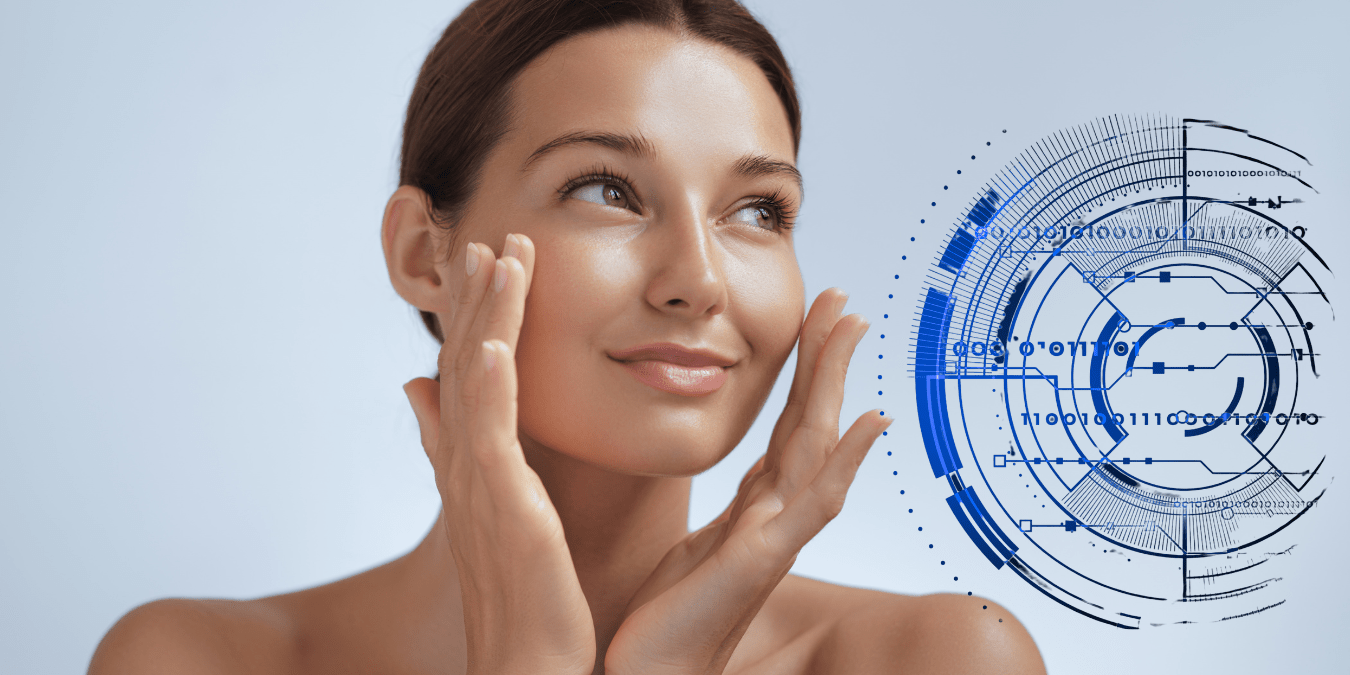
You know her. She walks into the room and something about her skin just looks alive. Not oily, not cake-faced, not like she just got a facial — just radiant in that quiet, effortless way that makes you want to ask what she’s using.
So you ask.
And she says something annoyingly simple like, “Oh, I just drink a lot of water,” or “I really try to sleep well,” and you want to laugh because you’ve been drinking 80 ounces of water a day and sleeping with a silk pillowcase and spending more on skincare than you do on groceries — and your skin still doesn’t look like that.
Here’s the honest truth that the skincare industry has very little financial incentive to tell you: the women who glow without looking greasy, without a filter, without fifteen steps — they’ve figured out something that has almost nothing to do with what’s sitting on their bathroom shelf. And once you understand what it actually is, it changes the way you think about skin forever.
The $21 Billion Distraction
The U.S. skincare market is worth over $21 billion. Walk into any Sephora, Ulta, or Target and you’ll find entire walls dedicated to serums, essences, moisturizers, and treatments promising luminosity, dewiness, and the kind of glow that gets you mistaken for someone ten years younger.
The marketing is brilliant. It speaks to real insecurities with real emotional precision. “Tired-looking skin.” “Uneven tone.” “Loss of radiance.” And so we buy. We layer. We patch-test and double-cleanse and slugging and skin cycle — all valid, all potentially helpful — but often missing the core issue entirely.
Here’s what decades of dermatological research, nutritional science, and simple observation consistently point to: the women who glow without shine share one defining characteristic, and it lives below the skin’s surface, not on top of it.
That characteristic is metabolic health — specifically, stable blood sugar and low-grade systemic inflammation.
Before your eyes glaze over, stay with me. This is not a wellness lecture. This is the single most practical, most ignored, most powerful explanation for why two women can use the exact same skincare routine and get completely different results.
What “Glow” Actually Is, Biologically
Genuine radiance — the kind that doesn’t wash off — is a reflection of how efficiently your skin cells are functioning. Healthy skin cells turn over regularly, retain moisture effectively, produce collagen at a reasonable rate, and manage inflammation without going haywire. The result is skin that appears plump, even-toned, smooth, and lit from within.
When dermatologists and aestheticians talk about “luminosity,” they’re describing skin that reflects light evenly because the surface is smooth and the underlying tissue is well-hydrated and structurally intact.
Now here’s where blood sugar enters the picture. When glucose levels in the bloodstream spike repeatedly — from ultra-processed foods, erratic eating patterns, chronic stress, or poor sleep — a process called glycation occurs. Glycation is what happens when excess sugar molecules attach to proteins in your body, including collagen and elastin, the structural proteins that keep skin firm and bouncy. These glycated proteins are called Advanced Glycation End-products, or AGEs (an acronym that is, unfortunately, exactly as ominous as it sounds).
AGEs make collagen stiff and brittle. They impair the skin’s ability to repair itself. They accelerate the visible signs of aging and contribute directly to dullness, uneven texture, and that flat, tired look that no serum has ever truly fixed.
And it gets more layered than that.
The Inflammation-Skin Connection Nobody Talks About at the Beauty Counter
Chronic low-grade inflammation is one of the most pervasive and under-discussed drivers of skin concerns in the United States. It doesn’t feel like anything dramatic — you don’t have a fever, you don’t feel sick — but it quietly disrupts nearly every biological process your body depends on, including skin cell regeneration.
Inflammation triggered by poor diet, chronic stress, disrupted sleep, or gut microbiome imbalance shows up on the skin as redness, puffiness, uneven tone, accelerated aging, increased sensitivity, and yes — that persistent dullness that no brightening product seems to fix.
A 2020 study published in the Journal of Investigative Dermatology found strong correlations between markers of systemic inflammation and visible skin aging beyond what chronological age alone would explain. Women with higher inflammatory markers consistently had skin that appeared older and less vital than peers of the same age with lower inflammatory burden.
This is why two women at 38 can look a decade apart in skin age — not because one found the right serum, but because their internal environments are fundamentally different.
The One Thing Women Who Glow Have in Common
The women who genuinely glow — consistently, without makeup, across seasons and stress cycles — have found a way, consciously or not, to manage their internal inflammation and support stable metabolic function.
That’s it. That’s the secret hiding in plain sight.
It’s not a specific product. It’s not a celebrity facialist or a $400 retinol. It’s the daily, unglamorous, unsexy practice of keeping their internal systems in relative balance.
What does that actually look like in practice? It’s different for everyone, but the patterns among “naturally glowing” women are remarkably consistent when you look closely.
They Eat in Ways That Support Stable Blood Sugar
This doesn’t mean they’re on a restrictive diet. It means they’ve largely moved away from the blood-sugar-spiking eating patterns that define so much of American food culture — eating highly processed carbohydrates on an empty stomach, skipping meals and then overeating, relying on sugary coffee drinks as a meal substitute.
Women with consistently great skin tend to eat protein and fat with their carbohydrates, which slows glucose absorption and flattens those damaging spikes. They’re not necessarily keto or low-carb. They just eat in a way that doesn’t send their blood sugar on a rollercoaster four times a day.
Glucose monitoring research, including studies facilitated by continuous glucose monitors in non-diabetic populations, has consistently shown that people with flatter glucose curves report better skin, better energy, and better sleep — three things that are deeply interconnected and all show up on your face.
They Prioritize Sleep in a Way That Most Americans Don’t
The United States has a cultural problem with sleep. We brag about being busy. We stay up scrolling. We treat seven hours as a luxury rather than a baseline biological requirement.
But skin repair happens almost entirely during sleep. Human growth hormone — which triggers cellular repair and collagen synthesis — is predominantly released during deep sleep stages. Cortisol, the stress hormone that drives inflammation and breaks down collagen, is supposed to drop significantly at night. When sleep is insufficient or fragmented, cortisol stays elevated longer, repair mechanisms are compromised, and the face pays the price.
Women who glow tend to be protective of their sleep not because they’re indulgent, but because they’ve either learned or intuited that nothing in their skincare routine can compensate for chronic sleep deprivation. Not vitamin C. Not niacinamide. Not a $300 peptide cream.
They’ve Found a Sustainable Relationship With Stress
This one is the most nuanced because stress is unavoidable in modern American life. Nobody is walking around in a permanent state of zen. But there is a meaningful difference between stress that is processed and metabolized versus stress that is accumulated and held in the body chronically.
Chronic psychological stress elevates cortisol long-term, which breaks down collagen, thins the skin barrier, triggers inflammation, and worsens conditions like acne, rosacea, eczema, and psoriasis. This is not anecdotal — it’s one of the most well-documented relationships in dermatological science.
Women with radiant skin have often developed some form of consistent stress release, whether that’s regular physical movement, therapy, prayer, creative work, social connection, or simply the habit of actually taking breaks during the day. The specific method matters far less than the consistency of it.
Their Gut Is Working For Them, Not Against Them
The gut-skin axis is one of the most exciting areas of current dermatological and microbiome research. The community of bacteria that lives in your digestive tract has a direct and demonstrable influence on skin health, primarily through its regulation of systemic inflammation.
A disrupted gut microbiome — caused by antibiotic overuse, highly processed diets, chronic stress, or low dietary fiber — increases intestinal permeability (commonly called “leaky gut”), which allows bacterial byproducts to enter the bloodstream and trigger the exact kind of systemic inflammation that shows up on skin as dullness, redness, and accelerated aging.
Women with radiant skin often have dietary habits that, whether intentional or not, support gut diversity: adequate fiber from vegetables and whole grains, fermented foods, limited ultra-processed food, and enough water to keep things moving efficiently.
Why Topical Products Have a Ceiling
This is not an argument against skincare. Sunscreen is non-negotiable and backed by decades of ironclad evidence. A good moisturizer genuinely supports the skin barrier. Retinoids have legitimate science behind them. Niacinamide, azelaic acid, and certain peptides have real, meaningful effects.
But topical products work at the surface. They can reinforce and protect the skin barrier, deliver some actives to the upper layers of skin, and address surface-level concerns. What they cannot do is reach the dermis where collagen and elastin live, change the metabolic environment that governs how skin cells function, or reverse the glycation damage happening at a cellular level.
Think of it this way: if your house has a slow water leak in the foundation, painting the walls a fresh color will make it look better for a while. But the structural issue is still there, getting worse, and eventually the paint won’t be enough.
Expensive serums are fresh paint. Internal health is the foundation.
That’s why the women who spend thousands on skincare and still don’t glow, and the women who use basic drugstore moisturizer and look incredible, both exist simultaneously. The product line matters far less than the foundation beneath it.
The Practical Starting Point Nobody Wants to Hear
The good news and the frustrating news are the same: you don’t need to buy anything new to start addressing this. You may, however, need to change something.
Here are the highest-leverage places to start based on current evidence:
- Add protein to every meal, especially breakfast — this is one of the fastest ways to flatten glucose spikes without dramatic dietary overhaul
- Walk after eating, even ten minutes — post-meal movement dramatically reduces blood glucose spikes and is one of the most underrated health tools available to anyone, anywhere, for free
- Protect your sleep window — even shifting bedtime thirty minutes earlier consistently for two weeks produces measurable changes in skin appearance and cortisol rhythms
- Increase dietary fiber gradually from whole food sources, which feeds beneficial gut bacteria and reduces intestinal inflammation
- Limit ultra-processed foods not because of calories, but because of their demonstrated effect on gut microbiome diversity and systemic inflammation
- Find one consistent stress outlet that you actually enjoy and will actually do — not the one you think you should be doing
- Keep your skincare routine simple — fewer products means less chance of disrupting the skin barrier and more consistency with what actually works
None of this is revolutionary. All of it is consistently supported by research across dermatology, nutritional science, and metabolic health. And all of it is free or nearly so.
A Word on Realistic Expectations
It would be dishonest not to acknowledge that genetics play a role. Some people are simply predisposed to more luminous skin based on factors outside their control, including melanin distribution, sebaceous gland activity, and baseline inflammatory set points.
It would also be dishonest not to acknowledge that age, hormonal changes, and environmental factors like sun damage and pollution create real challenges that require real skincare intervention. None of this is meant to suggest that skincare is useless or that radiant skin is accessible to everyone equally regardless of circumstance.
What it is meant to suggest is that if you’ve been investing heavily in topical products and not seeing the skin you want, the missing variable is almost certainly internal — and that variable is almost certainly more within your influence than the beauty industry would like you to believe.
The Bottom Line
The women who glow without shine are not more genetically blessed on average, not richer, not using some secret product that hasn’t reached the mainstream yet. They are, in most cases, living in a way that keeps their internal systems — their blood sugar, their inflammation levels, their sleep quality, their gut health, their stress response — in enough balance that their skin can do what it is biologically designed to do.
The glow was never in the bottle. It was always a reflection of what’s happening beneath the surface.
That’s a harder sell than a serum. It doesn’t ship in two days. You can’t add it to your cart. But it’s the only thing that actually explains why some women’s skin looks the way it does — and more importantly, it’s the only approach that can genuinely get yours there too.
Start with one thing. The protein at breakfast. The walk after dinner. The earlier bedtime. Pick the one that feels most manageable and do it consistently for thirty days. Your skin will start telling you something different than what your bathroom shelf has been saying.
And it’ll be worth listening to.
This article is intended for informational purposes and reflects current research in dermatology, nutrition, and metabolic health. It is not a substitute for personalized medical advice. Consult a board-certified dermatologist or healthcare provider for concerns specific to your skin or health.

Omisha is a health writer passionate about turning complex medical research into clear, actionable content readers can trust. She covers everything from nutrition and mental wellness to chronic disease management, always grounding her work in credible science and real-world relevance. When she's not writing, she's usually reading up on the latest health studies or exploring new wellness trends to write about next.