If you’ve spent years layering on moisturizer only to end up with skin that feels either tight and dry an hour later or suspiciously shiny by noon, you’re not doing anything wrong with your product — you’re doing something wrong with your timing. Specifically, the two-minute window between washing your face and applying moisturizer might be the single most overlooked variable in skincare routines across America.
Korean beauty enthusiasts and Gen-Z skin-care devotees have quietly known this for years. Their glowing, almost poreless-looking skin isn’t always the result of a 12-step routine or expensive serums. A significant portion of that luminosity comes down to one deceptively simple habit: applying moisturizer on damp skin, not dry skin.
Let’s unpack exactly why this works, what the science says, and how to do it correctly so you get that healthy, lit-from-within glow — without the grease.
Why Timing Your Moisturizer Matters More Than the Formula
Most Americans follow the same routine by habit. You wash your face, reach for a towel, dry your skin completely, maybe wait a few more minutes, then apply moisturizer. It feels logical. Clean, dry canvas — apply product. Done.
But here’s the problem: the moment your skin is fully dry after cleansing, your skin barrier has already started working overtime to recapture the moisture it just lost. Transepidermal water loss (TEWL) — the process by which water evaporates from your skin into the surrounding air — begins almost immediately after washing. By the time you’ve dried off and reached for your moisturizer, your skin has already lost a measurable amount of hydration. You’re essentially trying to fill a bucket that already has a hole in it.
Board-certified dermatologists in the United States, including those affiliated with the American Academy of Dermatology (AAD), have noted that moisturizers are significantly more effective when applied within two to three minutes of cleansing, while skin still retains some surface moisture. The AAD itself recommends applying moisturizer “while your skin is still damp” as part of its official guidance on managing dry skin and eczema — a detail that often gets buried beneath product recommendations.
The damp-skin method isn’t a trend. It’s applied dermatology.
The Science Behind Damp-Skin Application
To understand why this works, you need to understand what moisturizers actually do. Most moisturizers work through one or more of three mechanisms:
- Humectants (like hyaluronic acid, glycerin, and niacinamide) draw water from the environment and deeper skin layers toward the surface
- Emollients (like squalane, ceramides, and fatty acids) fill in the gaps between skin cells, smoothing texture and improving barrier function
- Occlusives (like petrolatum, shea butter, and dimethicone) form a physical seal on top of skin to prevent water from escaping
When you apply a humectant-heavy moisturizer to dry skin in a low-humidity environment (which describes most air-conditioned American homes and offices), hyaluronic acid has nowhere to pull moisture from except the deeper layers of your skin. This can paradoxically leave your skin feeling tighter or drier over time — a frustrating irony that has driven many Americans to swap out products when the real issue was application technique.
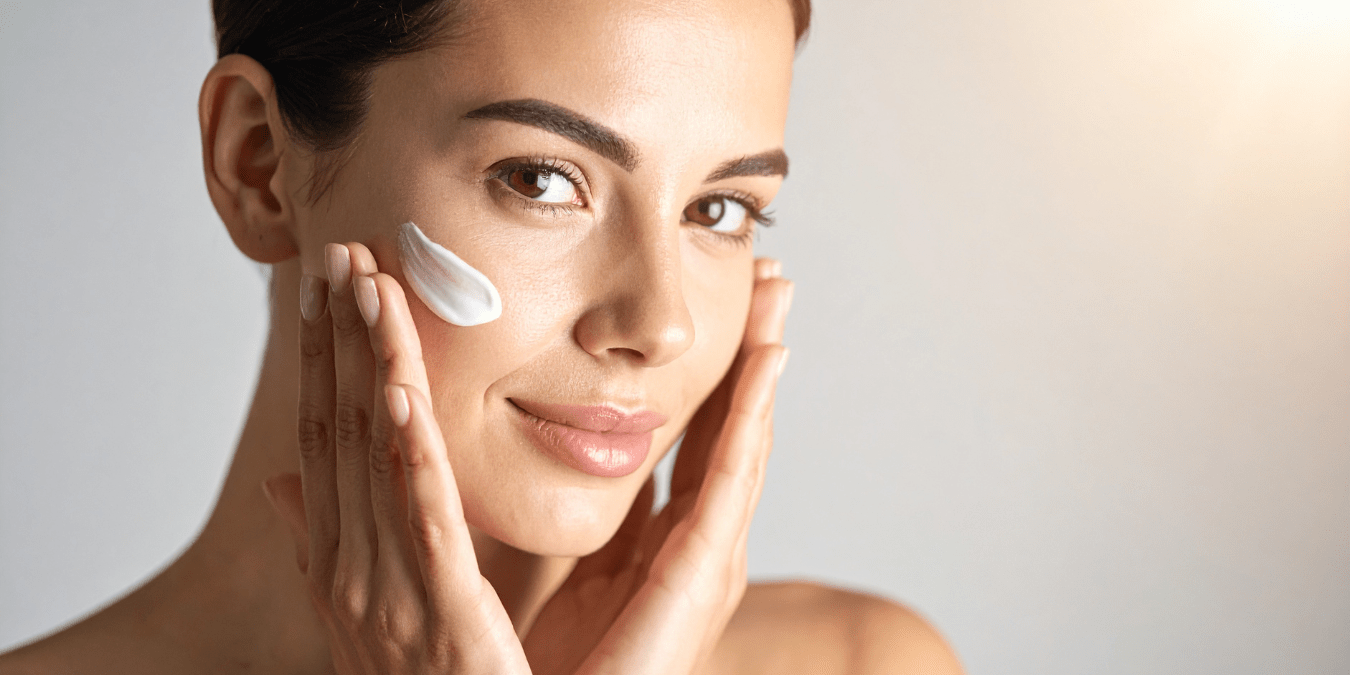
Apply that same moisturizer to damp skin, and the humectants have an immediate, readily available water source sitting right on the surface. They lock it in. The emollients seal the hydration between skin cells. The occlusives cap everything off. Your skin barrier stays intact, and instead of fighting moisture loss, your moisturizer is actively amplifying the water already present.
The result? Plumper-looking skin, reduced fine lines (most of which are actually just dehydration lines, not permanent wrinkles), and that characteristic glass-skin luminosity that looks effortless because, when done right, it genuinely is.
Why Korean Women and Gen-Z Have Been Ahead of This Curve
Korean beauty philosophy, often referred to as K-beauty, is built around one foundational principle that Western skincare historically undervalued: hydration is the foundation of everything else. Before brightening. Before anti-aging. Before any active ingredient does its job effectively — you need a fully hydrated skin barrier.
The Korean skincare routine, even in its simplified modern form, treats the skin as something to be nourished incrementally with multiple lightweight layers rather than one heavy cream. The technique of applying products to freshly cleansed, still-damp skin is built into the method by design. Products are pressed gently into skin rather than rubbed in — a technique that also reduces friction-related irritation and preserves more of the product on your skin rather than smearing it onto your palms.
Gen-Z skincare culture in the United States absorbed this philosophy heavily through platforms like TikTok and YouTube between 2020 and 2024, during a period when “glass skin,” “skin flooding,” and “slugging” routinely went viral. Skin flooding — the practice of layering hydrating products on wet or damp skin from thinnest to thickest — is essentially the damp-skin moisturizer trick scaled up into a full routine. It gained millions of followers not because it was a gimmick but because it worked, visibly and quickly.
What’s notable is that dermatologists who engaged with these trends largely validated them. The viral moments aligned with legitimate science, which is why they stuck around rather than fading out like many other skincare fads.
The Oily-Skin Exception That Isn’t Really an Exception
One of the biggest concerns Americans with oily or acne-prone skin have about this technique is intuitive but ultimately misplaced: “If I apply moisturizer to wet skin, won’t I just look greasier?”
The answer is no — and understanding why actually reframes how oily skin works altogether.
Oily skin is frequently dehydrated skin. This sounds contradictory until you understand that oil (sebum) and water (hydration) are two completely different things. When your skin is chronically dehydrated — whether from over-cleansing, using harsh actives, or living in dry climates — your sebaceous glands often compensate by producing more oil in an attempt to protect the barrier. It’s a biological overcorrection. The result is that tight, shiny combination skin so many Americans describe: oily in the T-zone, dry or flaky everywhere else.
When you properly hydrate your skin using the damp-skin method with lightweight, non-comedogenic moisturizers, you signal to your skin’s oil production system that the barrier is intact and no emergency sebum response is needed. Many people with oily skin who consistently use this method report that their skin becomes significantly less oily over weeks and months — not because they dried it out, but because they finally gave it what it needed.
Dermatologists in the U.S. frequently recommend this approach to patients who describe oily, breakout-prone skin that feels simultaneously dry — a demographic that represents a surprisingly large portion of American adults, particularly in cities with varying seasonal humidity like Chicago, New York, and Denver.
How to Actually Do This Correctly
The damp-skin method sounds simple, but execution matters. Here’s what actually works, broken down practically.
Step 1: Cleanse with a gentle, non-stripping cleanser. Harsh cleansers that leave your skin feeling squeaky-clean are removing your natural oils along with dirt and makeup. That tight feeling is not “clean” — it’s compromised barrier function. A good gentle cleanser, including gel, cream, or micellar options, should leave skin feeling soft, not stripped.
Step 2: Pat (don’t rub) your face with a clean towel — but leave it slightly damp. You’re not going for dripping wet. You’re going for that state where your skin is visibly moist but not running. About 60 to 70 percent dry is a useful mental image.
Step 3: Apply your serum or essence first if you use one. If you use a hydrating serum (hyaluronic acid, niacinamide, peptides), apply it now while skin is damp. Press it in gently with your palms rather than rubbing.
Step 4: Apply moisturizer within 60 seconds. This is the critical window. Don’t check your phone. Don’t answer a text. Apply your moisturizer immediately while your serum is still absorbing and your skin is still damp. Use upward pressing motions rather than downward rubbing strokes.
Step 5: Let everything absorb for 60 to 90 seconds before applying SPF or makeup. Rushing this step causes pilling — that frustrating experience where your skincare products ball up under foundation.
That’s genuinely the whole method. No new products required. Just a change in timing and technique.
Product Considerations That Make a Difference
The damp-skin method works with most moisturizers, but certain formulations respond dramatically better to it.
Gel moisturizers and gel-cream hybrids — the kinds that have dominated Korean beauty staples like the Belif Aqua Bomb, COSRX HA moisturizer, and American drugstore equivalents like Neutrogena Hydro Boost — are specifically designed to interact with surface moisture. Their water-binding ingredients perform best when there is water present to bind.
If you’re using a very occlusive, thick cream (common in colder U.S. climates or for extremely dry skin types), the damp-skin method still helps but you’ll want to be slightly drier than if using a lightweight gel, since very occlusive creams can feel uncomfortably heavy when applied to very wet skin.
Ingredients to specifically look for if you want to maximize this method:
- Glycerin (one of the most effective humectants available at any price point)
- Hyaluronic acid (ideally multi-weight, which penetrates at different skin depths)
- Panthenol (vitamin B5, known for its water-retention and barrier-repairing properties)
- Ceramides (essential for barrier repair, particularly after using retinoids or acids)
- Beta-glucan (a Korean beauty staple that outperforms hyaluronic acid in several hydration studies)
Conversely, avoid starting this method the same week you introduce a new active like retinol or a strong AHA/BHA. Let your skin adjust to actives first, then layer the damp-skin technique in once your barrier is stable.
What Dermatologists and Estheticians Actually Say
It’s worth being direct about the professional consensus here, because skincare advice online is extraordinarily crowded with opinions that aren’t grounded in clinical reality.
The damp-skin application guidance is not controversial among licensed U.S. estheticians or board-certified dermatologists. It is consistent with basic understanding of how moisturizing ingredients work and how the skin barrier functions. The AAD’s published patient resources support it. Clinical estheticians who work in medical spa settings across the U.S. — including those who treat post-procedure skin where barrier repair is critical — universally apply products to damp or misted skin for exactly the reasons described in this article.
Where the professional community does offer nuance is around the degree of dampness and the specific skin conditions involved. For someone actively managing eczema or psoriasis, the three-minute rule (apply moisturizer within three minutes of bathing, per AAD eczema guidelines) is considered clinically significant, not just beneficial. For those managing acne with drying treatments like benzoyl peroxide, applying a barrier moisturizer to damp skin afterward can help offset the drying effects without adding comedogenic oils.
The technique is universally appropriate. The product choice within that technique should reflect individual skin type and any dermatological conditions being managed.
The Bigger Picture: Why Americans Are Often Last to Know
There’s a broader cultural pattern worth naming. American skincare marketing has historically prioritized product innovation over application technique. The conversation around skincare in the U.S. has been dominated by “what to buy” rather than “how to use what you already have.” This serves the consumer product industry extremely well. It does not always serve consumers.
Korean beauty culture, built in part around the concept of jeong — a depth of care and attention — has long treated application as equally important to formulation. The ritualistic pressing, patting, and layering that characterizes the K-beauty routine isn’t performative. It’s functional. Gentle application techniques reduce irritation, improve absorption, and reinforce the idea that skincare is something you do for your skin, not just to it.
Gen-Z’s embrace of skin-first beauty philosophy — the preference for genuine skin health over heavy makeup coverage — has brought a version of this mindset into mainstream American culture in a way that previous K-beauty waves didn’t fully achieve. The numbers reflect it: the U.S. skincare market surpassed the color cosmetics market in sales by 2023, and the gap has continued to widen.
The damp-skin moisturizer trick sits right at the intersection of this shift. It costs nothing, requires nothing new, and works because it aligns with how skin actually functions — not how marketing campaigns describe it.
One Final Thought Before You Try It Tonight
Tonight, after you wash your face, do one thing differently. Don’t fully dry your skin. Leave it damp — slightly, deliberately damp — and apply your moisturizer in the next 60 seconds. Press it in with your palms instead of rubbing it across your face. Wait a moment.
Over the next week, pay attention to how your skin feels an hour after your routine instead of just immediately after. Notice whether your skin holds its softness longer, whether your makeup sits differently, whether you reach for that midday blotting paper less often.
The glow that Korean and Gen-Z women are achieving isn’t built on products most Americans can’t access. It’s built on understanding that skin is a living barrier that responds to how you treat it in the specific moments that matter — and that the 60-second window after cleansing is one of the most consequential moments in your entire skincare routine.
You’ve had the right moisturizer all along. You just needed the right moment to use it.
This article is written for informational purposes based on widely available dermatological guidance. For specific skin conditions, consult a board-certified dermatologist.

Omisha is a health writer passionate about turning complex medical research into clear, actionable content readers can trust. She covers everything from nutrition and mental wellness to chronic disease management, always grounding her work in credible science and real-world relevance. When she's not writing, she's usually reading up on the latest health studies or exploring new wellness trends to write about next.