Why Americans Are
Ditching the Gym for
At-Home Fitness Apps
The locker room era is fading fast. In 2026, tens of millions of Americans are choosing sweat equity on their own terms — and the industry is scrambling to keep up.
The Gym Is No Longer
the Default
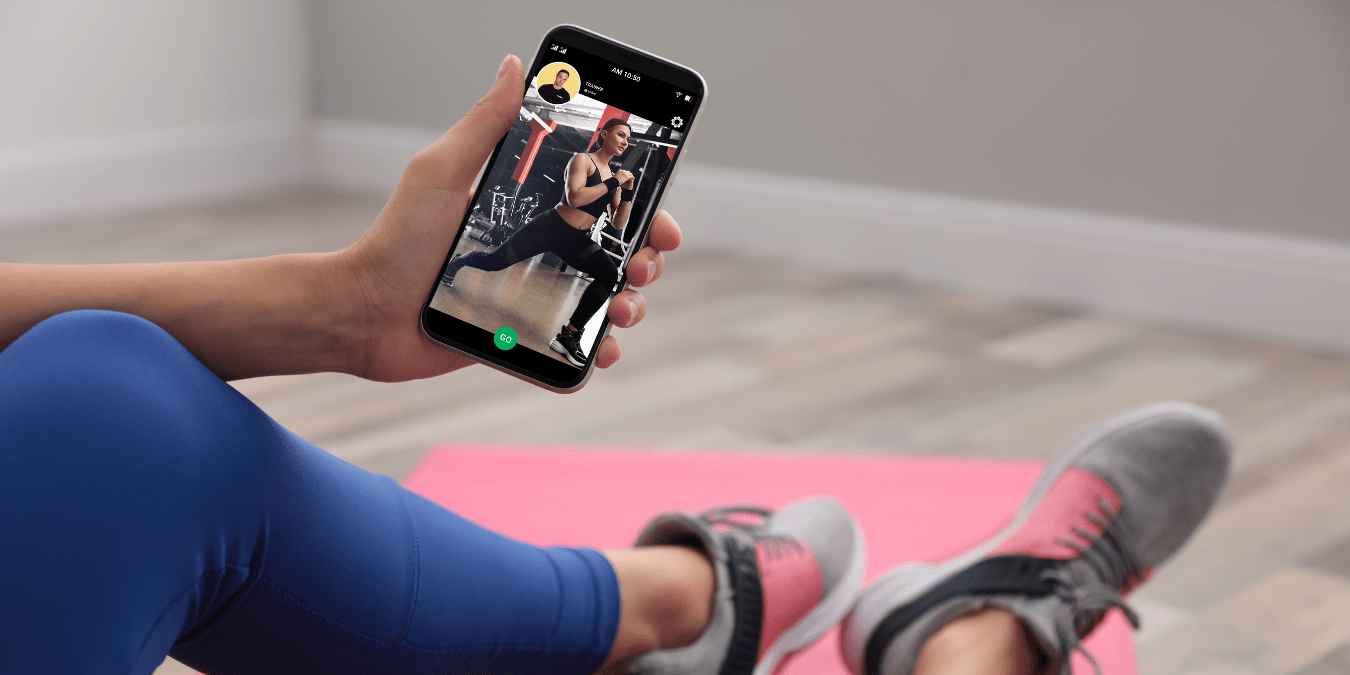
Picture it: 6 a.m. on a cold Tuesday in February. A decade ago, that driven American would be fighting for a parking spot at a 24-hour fitness chain. In 2026, that same person is unrolling a yoga mat in their living room, AirPods in, following a live instructor streaming from Austin, Texas.
This isn’t a pandemic-era habit that accidentally stuck around. It’s a full-blown cultural reset — driven by economics, technology, community evolution, and a generation that simply refuses to be locked into a contract they’ll rarely use.
The numbers are impossible to ignore. Traditional gym membership growth in the U.S. plateaued below 2% between 2024 and 2025, while the digital fitness subscription market surged by more than 21% in the same period. Apps like Peloton Digital, Daily Burn, Nike Training Club, Ladder, and Centr are not merely filling a convenience gap — they’re rewriting what Americans believe a “workout” should look and feel like.
The gym was always a means to an end. The app became the end itself — personal, immediate, and actually used.— Dr. Priya Mehta, Exercise Physiologist, University of Michigan
So what is really driving this exodus? The answer is layered, data-rich, and far more fascinating than a simple “convenience” story. Let’s break it down reason by reason.
The Real Cost of a Gym Membership Will Surprise You
Let’s talk money — specifically, the money most people mentally overlook when they swipe their card at the gym desk. The average American gym membership runs $50–$65 per month at face value. But that’s the starting line, not the finish.
Add a mandatory enrollment fee ($30–$100), a premium locker rental, parking or transit costs, post-workout protein shakes, and the branded water bottle you convinced yourself was an investment — and the real monthly outlay quietly climbs past $110–$130 with unnerving consistency.
Now contrast that with at-home fitness apps: most flagship platforms price between $12.99 and $24.99 per month. Some, like Nike Training Club, are entirely free. Family plans slash per-person costs even further. There is no enrollment fee. There is no parking. There is no $9 smoothie.
| Cost Factor | Traditional Gym | Fitness App |
|---|---|---|
| Monthly Subscription | $50–$65 | $0–$25 |
| Enrollment / Sign-up Fee | $30–$100+ | $0 |
| Commute (time & fuel) | 15–45 min/session | Zero |
| Contract Lock-in | Often 12 months | Month-to-month |
| Family / Multi-user | +$20–40 per person | $5–10 per add-on |
| Access Hours | 6 AM–10 PM (typical) | 24/7, always |
| Avg. Annual True Cost | $1,200–$1,600+ | $156–$300 |
In an era of sustained inflation and tightened household budgets, the arithmetic is ruthless. And when a 2025 Fitness Industry Association survey found that 41% of gym members attended fewer than twice per month, the cost-per-visit math becomes almost comedically unfavorable for the traditional model. Americans are doing the math — and the app wins every time.
Fitness Must Fit Your Life — Not the Other Way Around
There’s a phrase that’s become almost a mantra in modern wellness circles: “The best workout is the one you actually do.” It sounds like a bumper sticker, but it holds a truth the gym industry has been painfully slow to absorb.
Americans in 2026 are managing hybrid work schedules, side hustles, dependent children, aging parents, and unpredictable commutes. The idea of reserving a 90-minute block — including travel, workout, and shower — four times a week is a fantasy for most households.
Fitness apps close that gap with surgical precision. A 20-minute HIIT session at 11 p.m. after the kids go to bed. A 30-minute yoga flow on a hotel room floor in Dallas. A strength circuit in the garage on a Saturday afternoon. These aren’t compromises — for the majority of American users, they’ve become their preferred mode of exercise.
- Workouts segmented into 10, 20, 30, 45, and 60-minute formats for any schedule window
- Offline download capability — no Wi-Fi needed in hotels, basements, or dead zones
- Cross-device syncing across phone, tablet, smart TV, and Apple Watch without friction
- Programs designed for zero equipment, minimal equipment, or a full home gym setup
- Pause-and-resume sessions that respect the reality of real-life interruptions
- Multilingual classes and adaptive programs for beginners through advanced athletes
The flexibility is psychological as much as logistical. When the “gym” is your living room, the hardest barrier — the commute, the parking, the mental friction — simply vanishes. What remains is a decision between pressing play and not pressing play. And behavioral science consistently tells us: the easier the choice, the more often the right choice gets made.
“Reducing friction is more powerful than increasing motivation. Fitness apps have engineered friction out of the equation. When you remove the commute, the intimidating gym floor, and the rigid class schedule, adherence rates climb dramatically. We see this consistently across behavioral health research.”
Digital Fitness Isn’t Lonely — It’s Deeply Social
The most persistent objection to at-home fitness is the community argument: you sacrifice the energy of a packed group class, the relationships with trainers, the accountability of showing up somewhere in person. It was a legitimate concern — about five years ago.
In 2026, it is categorically not true. The social infrastructure built into leading fitness apps has become genuinely sophisticated, and in some cases more motivating than anything a traditional gym floor delivers.
Peloton’s real-time leaderboard — visible during every live class — has spawned a fiercely competitive social ecosystem. Users exchange virtual high-fives, form accountability squads, follow each other’s streaks, and celebrate milestones publicly. Daily Burn hosts live interactive sessions where instructors call out members by name. Future pairs every subscriber with a human coach who sends daily text check-ins. Ladder runs team-based weekly competitions where groups of strangers push each other across time zones.
The social layer of 2026’s fitness apps has become genuinely sophisticated — and for introverts, remote workers, parents, or anyone who finds traditional gym culture alienating, it has been nothing short of transformative.
Your App Knows Your Body Better Than a 20-Minute Orientation
When you join a traditional gym, you might receive a brief orientation walkthrough and a laminated generic program card. When you open a modern fitness app, you receive something fundamentally different: an adaptive intelligence that learns how you move, recover, and improve.
Leading platforms now use AI-driven personalization engines that adjust programming in real time based on your performance data, recovery biometrics, schedule changes, and long-term goals. Whoop analyzes sleep quality, heart rate variability, and strain scores to recommend exactly how hard to push on any given day. Tempo uses computer vision to analyze your form mid-rep, cueing corrections in real time — exactly what a trainer does, at a fraction of the price.
For the first time in history, every American — regardless of income level — has access to the kind of individualized, science-backed programming previously reserved for professional athletes with $5,000-per-month coaching budgets.
AI-Adaptive Programming
Apps like Future and Ladder continuously rebuild your weekly plan around fatigue, performance data, and life schedule — zero manual reconfiguration required.
Biometric Integration
Seamless syncing with Apple Watch, Garmin, Oura Ring, and Whoop gives coaches a real-time window into your physiological readiness every single day.
Goal-Specific Pathways
Training for a 5K, losing 30 lbs, recovering from injury, or building muscle after 60 — apps offer specific, medically-informed program pathways for every scenario.
Real-Time Form Feedback
Computer vision in apps like Tempo and Kemtai reads your movement patterns and delivers live corrections — eliminating injury risk from unsupervised solo training.
The Apps Americans Are Actually Using
The market has matured dramatically since the pandemic-era boom. Each leading platform now owns a distinct user persona and value proposition. Here’s where the digital fitness ecosystem stands in 2026:
These are not niche products. Peloton Digital alone reported over 3 million app subscribers in its FY2025 earnings. The combined monthly active user base across the top-ten US fitness apps now exceeds 40 million people — a figure that dwarfs the entire membership rolls of any single gym chain in American history.
The Gym Was Never Truly Inclusive — And Americans Know It
There is a conversation in American wellness culture that the fitness industry has been reluctant to fully confront: for a large portion of the population, the traditional gym environment is not just inconvenient — it is actively unwelcoming.
Gym anxiety — a well-documented form of situational social anxiety — affects an estimated 50% of Americans according to a 2024 OnePoll survey. The triggers are consistent and familiar: fear of being watched, body image concerns, confusion about equipment, and the unspoken hierarchy that rewards the already-fit and sidelines beginners.
At-home fitness apps have quietly dismantled every one of those barriers. There is no audience. No mirror surrounded by people in better shape. No confusion in front of a cable machine with someone waiting impatiently behind you. Just you, your space, and an instructor who has guided thousands of beginners with patience and zero judgment.
- Reduced exercise-related anxiety — no social observation or performance pressure
- Higher sense of autonomy and personal control over the workout experience
- Improved body image outcomes from progress-based (not comparison-based) metrics
- Integrated mindfulness, meditation, and breathwork content alongside physical programs
- Consistency-driven dopamine cycles from streak tracking and milestone celebrations
- Lower barriers for people managing eating disorders, body dysmorphia, or exercise trauma
Leading apps have moved aggressively into mental wellness adjacency. Peloton’s meditation library now exceeds 1,000 guided sessions. Centr integrates mindfulness directly into its weekly programming. Daily Burn has added a “recovery and restore” content vertical that blends gentle movement with evidence-based stress reduction — reflecting what behavioral researchers have known for years: Americans don’t just want to look better. They want to feel better.
“We’re seeing a meaningful shift in how clients describe their relationship with exercise when they transition to home-based platforms. The removal of social evaluation — even just perceived evaluation — reduces cortisol response significantly. The result is people who actually want to work out, rather than people who feel they have to.”
It’s Not Just Millennials — The Data Is Surprising
If you picture the average at-home fitness app user as a 28-year-old woman in a sunlit apartment doing yoga, you’re seeing only a fragment of the real story. The demographic spread of who is abandoning traditional gym memberships in 2026 is far more diverse — and far more telling — than the marketing images suggest.
Gen X (ages 40–55) is the fastest-growing segment of new fitness app subscriptions, accounting for 31% of net new subscribers in 2025 according to IBISWorld. Time-strapped, managing joint health concerns, and acutely value-conscious, this cohort has discovered that structured low-impact programming from apps like Centr and Peloton’s yoga library maps precisely to their needs — without requiring them to drive anywhere.
Adults over 60 represent another surging category. Silver Sneakers Go and AARP-affiliated Daily Burn programs recorded 44% year-over-year enrollment growth, largely driven by physicians recommending structured at-home movement for patients facing barriers to in-person attendance — mobility limitations, transportation issues, or simply the social intimidation of a gym designed around younger bodies.
Gen X (40–55)
Fastest-growing adopter segment. Drawn to time efficiency, joint-friendly formats, and the absence of social pressure that gym floors create.
Millennials (26–41)
The core user base. Highly data-driven, community-motivated, and most likely to subscribe to multiple apps simultaneously for variety.
Gen Z (18–25)
Treat fitness content as entertainment. Use apps for structure alongside self-directed YouTube and TikTok fitness exploration.
Adults 60+
Up 44% YoY. Physician-recommended, accessibility-driven adoption. Often their first access to professional fitness instruction ever.
Rural Americans deserve particular attention. For roughly 60 million people living in areas where the nearest gym is 30–45 minutes away, at-home fitness apps haven’t been merely convenient. They’ve been genuinely transformative — providing access to professional-grade programming where none existed before.
Gyms Aren’t Going Down Without a Fight
To be precise: traditional gyms are not dying. But they are being forced to evolve — and the smarter chains are doing so with intelligence and urgency. They’ve recognized that competing on convenience is a losing battle, and they’re doubling down on what apps genuinely cannot replicate: heavy iron, specialized facilities, and the irreplaceable energy of bodies in motion together.
Planet Fitness has expanded its judgment-free brand with new “social gym” flagship locations designed to feel more like community centers than workout factories. Equinox has moved aggressively upmarket, with tier memberships exceeding $300 per month — positioning the gym as a status symbol rather than a utility. YMCA has launched digital companion apps for members, attempting to bridge the physical and digital in a single relationship.
We’re not competing with Peloton for the couch. We’re competing for the person who wants both — physical space and digital intelligence.— Fitness industry executive, speaking at IHRSA Global Summit 2025
The candor is notable. The future of fitness isn’t purely digital or purely physical — it’s hybrid. And the consumers making the most sophisticated decisions in 2026 are the ones treating apps and gyms as complementary tools rather than rival products.
How to Decide What’s Actually Right for You
Here’s an honest, science-grounded framework — not marketing copy — to help you decide whether to cancel that membership or keep it:
- Your schedule is unpredictable, irregular, or includes heavy travel
- You find gym environments intimidating, crowded, or socially draining
- Bodyweight, resistance bands, dumbbells, or cardio are your primary training modalities
- You respond well to data, metrics, and tangible progress tracking
- You have young children and unpredictable daily availability windows
- Budget is a real constraint and you want maximum value per dollar spent
- You rely on barbells, cable machines, squat racks, pools, or saunas
- In-person accountability and group energy are non-negotiable for your motivation
- You’re training for a sport or competition requiring facility-grade equipment
- You have the schedule consistency and proximity to make attendance cost-effective
Exercise physiologist Dr. Priya Mehta recommends thinking in terms of a “fitness ecosystem” rather than a binary choice: “A $15 app subscription plus a $25/month pay-per-visit pass for heavy lifting days might be the most intelligent, cost-effective, and sustainable approach most Americans have ever had access to.”
Five Ways At-Home Fitness Will Evolve by 2028
The current wave is not a plateau — it’s a launchpad. As AI matures, wearables advance, and consumer expectations rise, here’s where credible evidence points:
AI Coaches Replace Human Trainers for 80% of Use Cases
Not because AI is superior in every way, but because it’s available at 4 a.m., infinitely patient, and personalized to a degree no human can match at scale. Human coaching survives as a high-value premium tier.
AR/VR Workouts Cross into the Mainstream
Apple Vision Pro’s fitness integration and Meta’s immersive gym environments are moving from early-adopter novelties to standard app features. By 2028, virtual training environments will be a baseline expectation.
GLP-1 Users Drive a New Fitness Content Category
The 15 million+ Americans on semaglutide and similar medications need specialized resistance training to preserve muscle during rapid weight loss. Apps are already building programs for this emerging, underserved segment.
Insurance Reimbursement Becomes Standard
Several major insurers already partially reimburse fitness app subscriptions as preventive care. Industry analysts project this becomes a standard employer-sponsored health benefit across most plans by 2027.
“Going to the Gym” Becomes “Training”
When location becomes irrelevant, what remains is the work — intentional, programmed, and personal. The vocabulary and identity around fitness will complete its shift from place to practice.
- Digital fitness subscription market projected to reach $12.4 billion by 2028, up from $6.8B in 2024
- Connected fitness hardware expected to grow 38% by 2027 as prices fall below $500
- Employer wellness integrations projected to cover 120 million US workers by 2028
- Traditional gym memberships forecast to decline from 64M to 52M Americans by 2027
- Hybrid gym-plus-app bundle pricing expected from all major chains by end of 2026
This Isn’t a Fitness Trend — It’s a Behavioral Revolution
Zoom out from the apps and the spreadsheets for a moment. What we’re witnessing is something deeper than a shift in where Americans exercise. It’s a fundamental renegotiation of who holds power in the wellness relationship.
For decades, gyms held all the leverage. They controlled access to equipment, set the hours, wrote the contracts, and hired the trainers. Consumers bent their lives around the institution’s schedule.
Technology has inverted that dynamic entirely. Today, the institution must adapt to the consumer — or lose them permanently to an app that already has. The fitness industry is experiencing the same disruption that transformed music (Spotify), entertainment (Netflix), and education (Coursera). And like those industries, the survivors will be the ones who understand that access + personalization + community is an unbeatable combination at any price point.
For American consumers — still managing economic anxiety, compressed schedules, and the residual skepticism from years of unused gym memberships — the at-home fitness app isn’t a compromise. It’s a correction. A smarter, more honest relationship with movement, health, and self-investment.
The mat is unrolled. The screen is lit. The instructor is live. For millions of Americans in 2026, that’s more than enough. That’s everything.

Omisha is a health writer passionate about turning complex medical research into clear, actionable content readers can trust. She covers everything from nutrition and mental wellness to chronic disease management, always grounding her work in credible science and real-world relevance. When she's not writing, she's usually reading up on the latest health studies or exploring new wellness trends to write about next.