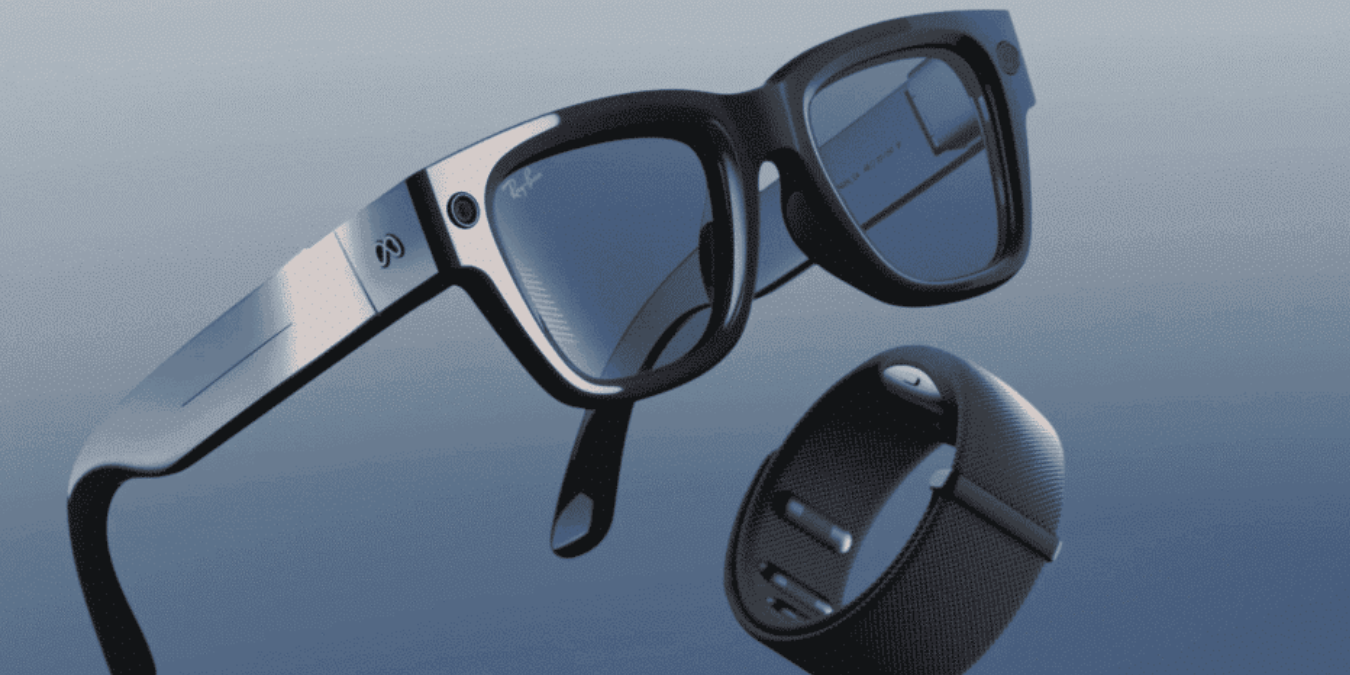
There’s a strange moment that millions of people have experienced in the last year — your wrist buzzes, a notification appears, and a quiet sentence changes everything: “Irregular heart rhythm detected. Consider speaking with your doctor.”
You feel fine. You’ve felt fine for weeks. But something on your wrist just noticed what your body hadn’t told you yet.
This isn’t a futuristic scenario anymore. It’s Monday morning in 2026, and your smartwatch — the same device tracking your sleep and counting your steps — has quietly evolved into one of the most sophisticated early-warning medical systems ever strapped to a human body. Powered by artificial intelligence that processes thousands of data points per hour, today’s wearables are detecting conditions like atrial fibrillation, early-stage sleep apnea, blood oxygen irregularities, stress-induced cardiovascular strain, and even early metabolic disorders — often days or weeks before symptoms become noticeable enough to send someone to a clinic.
This is not hype. This is a documented, peer-reviewed, clinically validated shift in how healthcare works. And if you’re wearing a smartwatch right now, you’re already part of it.
The Quiet Revolution on Your Wrist
To understand how dramatic this shift is, consider what a smartwatch was doing just five years ago. It counted steps. It told time. It maybe buzzed when your phone rang. That was largely the extent of its medical utility.
Fast forward to 2026, and the sensors embedded in premium wearables — from Apple Watch Series 10 to Samsung Galaxy Watch 7 to Garmin’s clinical-grade Venu 4 — are performing tasks that would have required dedicated hospital equipment not long ago. Electrocardiogram (ECG) readings. Photoplethysmography (PPG) sensors measuring blood volume changes. Skin temperature sensors tracking micro-variations across 24-hour cycles. SpO2 sensors monitoring blood oxygen saturation continuously. Galvanic skin response detecting stress and autonomic nervous system shifts.
But raw sensor data is just noise without intelligence behind it. That’s where AI changes everything.
Modern wearables run on-device machine learning models trained on tens of millions of anonymized health records. These models don’t just look at your heart rate in isolation — they look at the pattern of your heart rate relative to your activity level, your sleep stage, your recent history, and population-wide baselines. They identify anomalies not by crossing a single threshold, but by recognizing complex multi-variable signatures that human eyes reviewing a printout would almost certainly miss.
This is the core insight: AI-powered wearables don’t diagnose. They detect deviations from your personal baseline with a precision that no human observer could match at scale.
Atrial Fibrillation: The Case That Proved Everything
If you want a single story that illustrates how dramatically this technology has matured, it’s atrial fibrillation — or AFib — a heart rhythm disorder affecting over 59 million people globally. AFib dramatically increases the risk of stroke and heart failure, but its maddening characteristic is that it often comes and goes. A patient can walk into a cardiologist’s office, sit through a 30-second ECG, show a perfectly normal rhythm, and walk out undiagnosed — only to have a stroke three weeks later.
Wearables changed that calculus entirely.
In 2019, the Apple Heart Study — one of the largest cardiac screening studies ever conducted — enrolled over 400,000 participants and showed that Apple Watch could detect irregular pulse rhythms suggestive of AFib with impressive sensitivity. That was just the beginning. By 2024 and into 2025, multiple clinical validations confirmed that continuous passive monitoring through consumer wearables was catching AFib episodes that traditional episodic testing was missing entirely.
In 2026, the FDA has cleared multiple wearable-based AFib detection systems not merely as “wellness” tools but as Software as a Medical Device (SaMD) — a regulatory classification that carries serious clinical weight. Insurance providers in the United States, the United Kingdom, and increasingly across South and Southeast Asia are beginning to cover wearable-assisted cardiac monitoring as a legitimate preventive care modality.
The lived experience of this? A 52-year-old teacher from Chennai whose watch flagged a recurring irregular rhythm over three nights. She had no symptoms. She felt tired, but attributed it to a heavy week. Her watch logged nine separate AFib episodes across 72 hours. When she brought the exported health data to her cardiologist, he confirmed paroxysmal atrial fibrillation and started anticoagulation therapy. Her stroke risk, previously unaddressed, dropped dramatically.
Her watch didn’t diagnose her. Her cardiologist did. But her watch made sure she walked into that appointment with evidence in hand.
- The Great American “Lock In”: Why the 2025 Winter Arc is the Only Resolution That Actually Works (If You Don’t Make This Fatal Mistake)

- 3 Midlife Habits Linked to Almost 13 More Dementia-Free Years, According to a 26-Year Study of 12,409 Adults

- 37% of Women Over 65 Are Losing Hair — But the Real Shocker Is How Many Younger Women Are Now Using These FDA-Approved At-Home Treatments to Stop It Early

- 40% of US Adults at Risk: Experts Break Down Fatty Liver Surge, Hidden Gut Issues, and Simple Steps to Protect Your Liver Now

- 5 Simple Home Tests to Check If Your Eggs Are Still Safe to Eat Past the Expiration Date

- 5 Subtle Eye Symptoms Warning of Kidney Problems US Adults Should Never Ignore

Beyond the Heart: What Wearables Are Tracking in 2026
Cardiac monitoring may have been the opening act, but the 2025-2026 generation of wearables has expanded the scope of passive health intelligence in ways that feel genuinely remarkable.
Sleep Apnea Detection
Sleep apnea affects an estimated 936 million people worldwide, yet the majority remain undiagnosed because traditional diagnosis requires an overnight polysomnography study — an expensive, uncomfortable, lab-based procedure. Most people never get one. Apple’s watchOS update in late 2024 introduced FDA-cleared sleep apnea detection using accelerometer-based breathing disturbance analysis. By 2026, Samsung and Garmin have followed with their own validated algorithms. People are discovering moderate-to-severe sleep apnea they’ve had for years — the kind that silently damages the cardiovascular system, impairs cognition, and raises diabetes risk — through nothing more than sleeping with their watch on.
Blood Glucose Trends (Non-Invasive Monitoring)
This is the frontier that health tech has been chasing for a decade, and in 2026 it’s finally becoming real. While true non-invasive blood glucose measurement remains technically difficult, several devices now offer glucose trend estimation using near-infrared spectroscopy and AI modeling. These aren’t precise enough for insulin dosing decisions, but they’re valuable enough for early metabolic risk flagging. For prediabetes detection — where catching the condition years before full Type 2 diabetes develops can mean the difference between lifestyle reversal and lifetime medication — this capability is potentially transformative.
Mental Health and Stress Biomarkers
Perhaps the most underappreciated development is how wearables are beginning to track mental health-adjacent physiological signals. Heart rate variability (HRV) — the tiny variations in time between heartbeats — is a remarkably sensitive indicator of autonomic nervous system health and psychological stress load. AI models analyzing HRV trends across weeks and months are being used in 2026 to flag periods of elevated chronic stress, early burnout patterns, and even preliminary research suggests possible correlations with depressive episode onset. This is early science, but it’s moving fast.
Infection and Illness Onset
Fitbit’s research (now under Google Health) demonstrated during the COVID-19 pandemic that resting heart rate elevation, HRV reduction, and skin temperature changes could predict illness onset one to two days before symptoms appeared. By 2026, this capability has been refined and integrated into multiple platforms. Several wearables now provide a “body battery” or “readiness” score that drops measurably before users consciously feel sick — creating a window where rest, hydration, and medical consultation can intervene earlier than ever before.
How the AI Actually Works
It’s worth pausing here to explain — without drowning in jargon — what’s actually happening under the hood, because understanding the mechanism builds appropriate trust in the technology.
The AI systems in modern health wearables operate through a combination of on-device edge computing and cloud-based model training. The on-device component handles real-time anomaly detection — it doesn’t need to send your raw health data to a server to flag an irregular heartbeat. This is important for both latency (a real-time alert needs to be real-time) and privacy (sensitive health data processing happens locally when possible).
The cloud-based component handles something different: longitudinal learning. Over weeks and months, your wearable builds a personal health baseline specific to you — your typical resting heart rate at 2 AM, your normal HRV on weekday mornings, your average SpO2 during deep sleep. An anomaly isn’t defined against a population average. It’s defined against your average. This personalization is what makes modern wearable AI meaningfully more sensitive than earlier threshold-based alert systems.
The models themselves are trained on massive federated datasets — meaning the AI learns from millions of users’ patterns without any individual’s raw data being centrally stored or exposed. This federated learning approach, pioneered by Google and Apple in particular, has allowed health AI to train on genuinely diverse populations while maintaining privacy standards.
What Doctors Actually Think About This
There’s a reasonable concern worth addressing directly: are physicians welcoming this data, or are they overwhelmed by anxious patients clutching wrist-generated health exports?
The honest answer is: both, and the field is actively working through it.
Dr. Sunita Rao, a cardiologist practicing in Bengaluru with over 18 years of experience, puts it plainly: “The patients who come in with six months of continuous heart rate data from their watch are actually easier to work with than patients who come in with nothing but symptoms and anxiety. The data gives us something concrete to evaluate. The challenge is helping patients understand what the data means — and doesn’t mean.”
That interpretive gap is real. A smartwatch flagging an “irregular rhythm” generates the same notification whether the person has benign ectopic beats or genuine AFib. The notification is designed to send people to doctors, not replace them. But in a world where health anxiety is already high, a poorly worded alert can trigger unnecessary emergency room visits or, conversely, false reassurance (“my watch says I’m fine”) in people who need care.
The medical community’s response has been to push for better clinical integration infrastructure. In 2026, major hospital systems in the US, UK, Germany, and increasingly in India and Southeast Asia are building formal wearable data intake pipelines — standardized ways to import, analyze, and attach wearable health exports to electronic health records. The friction between consumer tech and clinical medicine is actively being engineered away.
Privacy, Data, and the Question You Should Be Asking
No honest discussion of AI health wearables in 2026 is complete without confronting the data question directly.
Your smartwatch knows an enormous amount about you. It knows when you sleep poorly. It knows when your resting heart rate spikes on a Sunday evening (stress about Monday?). It knows when your activity drops for two weeks (illness? depression? injury?). It knows the rhythm of your heart across hundreds of thousands of heartbeats.
Who owns that data? Who can access it? How is it used?
These are not abstract questions. Apple has maintained strong stances on health data privacy — Health app data is encrypted end-to-end and not shared with advertisers. Google has made commitments around Fitbit data separation from advertising systems, though scrutiny remains warranted. Samsung and Garmin have their own data governance frameworks.
The regulatory environment is tightening appropriately. In the European Union, the amended Medical Device Regulation and the AI Act together create meaningful constraints on how health data from wearables can be processed and shared. In India, the Digital Personal Data Protection Act 2023 is beginning to have real enforcement teeth around sensitive personal data, which explicitly includes health information.
As a user, the practical advice is straightforward: review the health data sharing settings in your wearable’s companion app. Opt out of research data sharing programs if you’re uncomfortable, though many of these programs are genuinely contributing to medical knowledge. Understand that your data is most private when processed on-device rather than in the cloud. And be appropriately skeptical of third-party health apps requesting access to your wearable’s raw data feed.
The Equity Problem We Can’t Ignore
There’s a structural tension embedded in everything written above that deserves honest acknowledgment.
The populations most likely to benefit from early disease detection — lower-income communities, populations with limited access to regular preventive healthcare, rural populations far from specialist care — are the populations least likely to own a smartwatch priced between 15,000 and 50,000 rupees (or 200 to 600 USD).
Early detection technology that primarily benefits people who are already well-resourced in healthcare access risks widening health outcome gaps rather than closing them. This is a genuine concern, not a theoretical one. Researchers studying health technology adoption consistently find that consumer health tech follows existing socioeconomic gradients.
The promising counterforces are real but partial. Older Apple Watch and Samsung models drop in price as new generations release, making continuous monitoring more accessible over time. Several health systems in India, including through AIIMS research programs, are piloting subsidized wearable distribution for high-risk cardiac patients in underserved areas. Insurance reimbursement frameworks, when they mature, could turn wearable monitoring from a personal luxury purchase into a covered medical service.
But equity in AI health technology requires deliberate design and deliberate policy — it doesn’t happen by accident.
What You Should Actually Do With This Information
If you’re wearing a smartwatch right now — or considering one — here’s what the current state of the evidence actually supports doing:
- Take anomaly notifications seriously enough to follow up, not seriously enough to panic. An AFib alert warrants a call to your doctor. It doesn’t warrant an emergency room visit in most cases unless accompanied by chest pain, shortness of breath, or dizziness.
- Use longitudinal trends more than single readings. One elevated heart rate reading means very little. A consistent pattern of elevated resting heart rate over three weeks is genuinely worth discussing with a physician.
- Export and share your data proactively. Most wearable platforms allow PDF or structured data export. Bringing this to annual checkups gives your doctor information they’d otherwise never have.
- Don’t use wearable data to self-diagnose or self-treat. The technology is designed to connect you to the healthcare system earlier and more effectively — not to replace it.
- Treat the privacy settings seriously. Five minutes reviewing what you’ve consented to share is five minutes well spent.
The Future That’s Already Arriving
In research labs and early clinical trials right now, the next generation of wearable health intelligence is already being tested. Non-invasive continuous glucose monitoring is getting closer to clinical-grade accuracy. Wearables that can detect early signs of Parkinson’s disease through gait analysis and tremor pattern recognition are in trials. Blood pressure monitoring without a cuff — continuously, passively, from the wrist — has moved from impossible to merely technically challenging. Early Alzheimer’s biomarker detection through sleep pattern analysis is an active research area with preliminary but promising results.
The trajectory is clear. The device on your wrist is becoming, year by year, a more sophisticated collaborator in your healthcare. Not a replacement for physicians. Not a source of diagnoses. But an always-present observer with a memory longer than yours, a pattern-recognition capability exceeding any single clinician’s experience, and a singular focus on flagging when your personal normal has shifted in ways that warrant attention.
Your smartwatch already knows something is wrong before you do — not because it’s magical, but because it’s watching continuously while you’re busy living your life.
The only question that remains is whether you’re listening.
This article is for informational purposes and does not constitute medical advice. Always consult a qualified healthcare professional regarding personal health concerns.

Omisha is a health writer passionate about turning complex medical research into clear, actionable content readers can trust. She covers everything from nutrition and mental wellness to chronic disease management, always grounding her work in credible science and real-world relevance. When she's not writing, she's usually reading up on the latest health studies or exploring new wellness trends to write about next.