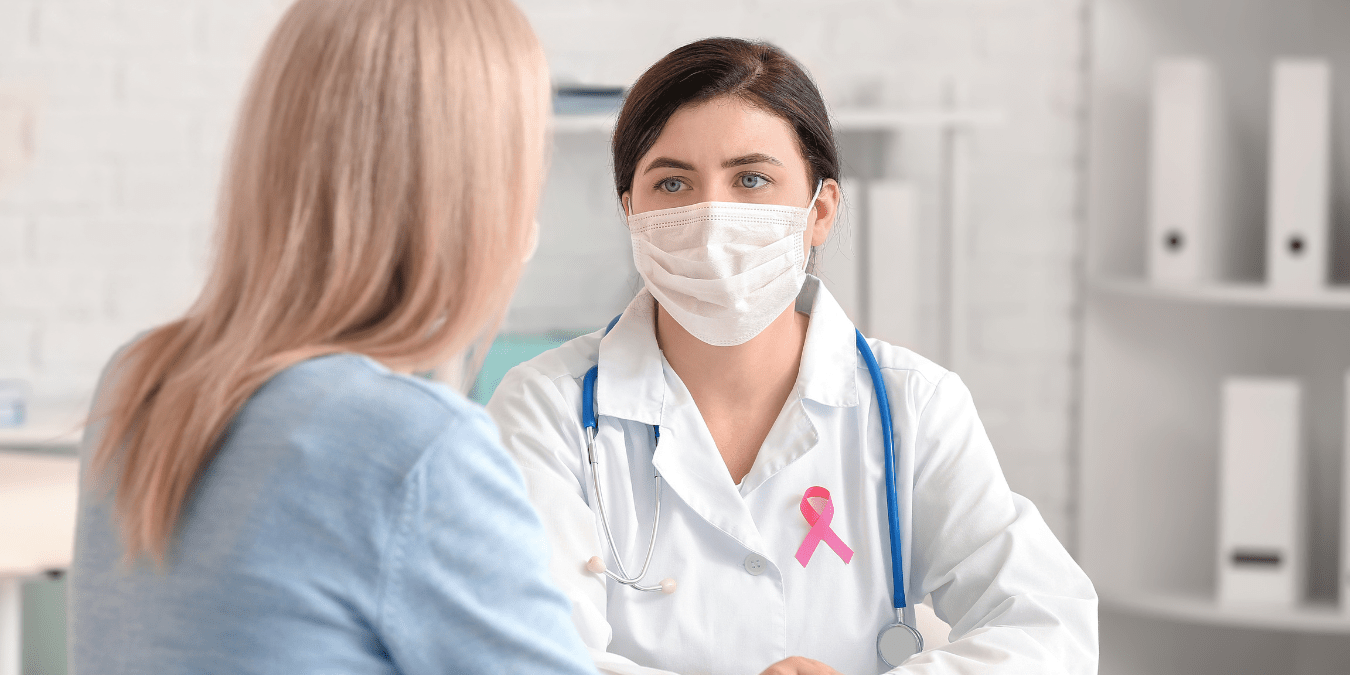
Imagine walking out of your annual mammogram with a clean bill of health — only to be diagnosed with breast cancer eight months later. For tens of thousands of American women every year, this is not a hypothetical. It is their reality. These are called interval cancers: tumors that surface between regular screening appointments, often because the signs were present on the previous scan but were too subtle, too easily overlooked, or buried in a backlog of images reviewed by an already-exhausted radiologist.
Now, a seismic breakthrough from Google is threatening to change that story — permanently.
In March 2026, results from the largest NHS clinical study of AI-assisted mammography to date — involving 175,000 women — revealed that Google’s AI system detected 25% of all interval cancers that had previously been missed by trained human radiologists. The findings, published in Nature Cancer, represent more than a statistical milestone. They represent a paradigm shift in how breast cancer will be screened, detected, and ultimately defeated across the globe — including right here in the United States.
What Exactly Did Google’s AI Find?
To appreciate the magnitude of this discovery, you first need to understand what “interval cancer” means — and why missing it is so dangerous.
Interval cancers are malignancies diagnosed after a negative screening mammogram but before the next scheduled scan. By the time a woman feels a lump or her doctor orders further imaging, the tumor has typically progressed beyond its earliest, most treatable stage. These are the cancers that haunt oncologists, confound radiologists, and devastate families. They are also among the hardest to catch — which is precisely why Google’s results are so extraordinary.
In the NHS study, Google’s AI was deployed as a second reader alongside human radiologists, reviewing mammograms from 125,000 women. When it functioned as that second reader, the cancer detection rate rose from 7.54 per 1,000 women (human alone) to 9.33 per 1,000 women (AI-assisted). The AI not only caught more cancers overall — it specifically identified a quarter of those dangerous, between-scan tumors that had been given the all-clear by expert radiologists. Critically, it also identified more invasive cancers and significantly reduced false positives for women having their first-time scan.
The Science Behind the System
Google’s AI model is built on deep learning technology trained on tens of thousands of de-identified mammogram images. The system has been designed to recognize patterns in breast tissue — including micro-calcifications, density shifts, and asymmetries — that may be imperceptible to the human eye on any given reading session. These subtle “whispers” of malignancy are precisely what get lost when a radiologist is reading their 80th scan of the day, fatigued, under institutional pressure, or simply lacking the kind of pattern-recognition bandwidth that a machine can sustain indefinitely.
The AI doesn’t replace the radiologist — it augments them. In the NHS trial, AI could analyze mammograms far faster than clinicians, reducing scan reading times by almost one-third in part of the study. This is operationally significant: radiologist shortages are a documented crisis in both the UK and the U.S., with reports of up to one in ten diagnostic posts being vacant in the NHS alone. An AI system that can absorb a significant share of that workload — while simultaneously catching cancers humans missed — is nothing short of transformative.
The model’s underlying architecture evaluates each mammogram and assigns risk classifications. High-risk cases get flagged for double radiologist review; low-risk cases may be cleared with a single reader. This triaging function alone could allow healthcare systems to redirect their most scarce clinical resource — expert human attention — toward the patients who need it most.
- Louisiana Vibrio Vulnificus Outbreak 2026 Explained: Who Faces the Greatest Risk in Gulf Coast Waters and How to Stay Safe

- 3 Midlife Habits Linked to Almost 13 More Dementia-Free Years, According to a 26-Year Study of 12,409 Adults

- Your Blood Pressure Reading Has a “Hidden Number” Doctors Say Most People Ignore
- AI Is Now Diagnosing Your Skin Before You Even Visit a Dermatologist — Here’s How the Beauty Industry Is Changing Everything in 2026
- The Side-Part Is Making the Most Unexpected Comeback in American Beauty History — And This Time, It’s Not Going Anywhere

- This Heat Protectant Spray From LolaVie Is Going Viral in the US — Stylists Say It Cuts Drying Time and Saves Your Blowout for Days
This Is Not One Study in Isolation
What makes this moment so consequential is not just the NHS trial. It is the convergence of multiple large-scale, independent studies — from multiple countries — all pointing in the same direction.
A prospective study published in late 2025 involving 579,583 women across multiple U.S. sites found that a multistage AI-driven workflow for digital breast tomosynthesis (3D mammograms) helped radiologists identify 21.6% more cancers compared to historical data. Crucially, this benefit held across racial and ethnic groups — including Black, Hispanic, and white non-Hispanic women — suggesting that AI may help close longstanding screening disparities rather than widen them. Researchers estimated this level of improvement could result in an additional 34,097 cancers found per year across the 43 million mammograms performed annually in the United States.
A separate Swedish trial involving 100,000 women, published in The Lancet in early 2026, found that AI-assisted screening cut the rate of cancer diagnoses in subsequent years by 12% — meaning fewer women were diagnosed at later, harder-to-treat stages when AI helped during their previous scan. And at the 2024 RSNA (Radiological Society of North America) annual meeting, research showed that more than a third of women across 10 healthcare practices voluntarily paid out-of-pocket for AI-enhanced screening — and those women were 21% more likely to have cancer detected.
The message from the global research community is clear and consistent: AI in mammography works, it is safe, and its benefits are real.
What This Means for American Women Specifically
The United States performs approximately 43 million mammograms per year. Breast cancer remains the most commonly diagnosed cancer in American women, with more than 2 million people diagnosed globally each year. In this context, the implications of Google’s findings are staggering.
The FDA has been actively engaging with AI breast cancer tools. In May 2025, the agency granted its first-ever De Novo authorization to Clairity Breast — an AI platform that predicts a woman’s five-year risk of developing breast cancer using only a standard screening mammogram. That same year, Washington University School of Medicine’s AI breast cancer risk technology received FDA Breakthrough Device Designation, placing it on an accelerated path to approval. In December 2025, Lunit submitted a 510(k) premarket notification to the FDA for an AI-based mammography risk prediction model, with clearance expected in 2026.
The pipeline is filling rapidly. The regulatory infrastructure is being built. The evidence base is solidifying. For American women, the question is no longer whether AI will be part of their mammogram experience — it is when, and at which facility.
The Problem AI Is Solving: Human Limits Are Real
It would be easy to frame this story as “machines versus doctors.” That would be wrong. The real story is about the structural limits of any human screening program at scale — and what happens when technology is used to address those limits honestly.
A radiologist reviewing screening mammograms is performing an act of sustained, high-stakes visual pattern recognition under institutional time pressure. Studies consistently show that even expert radiologists miss a meaningful percentage of visible cancers on any given read — not because they are incompetent, but because of cognitive fatigue, perceptual limitations, and the sheer volume of normal-appearing scans they must review before encountering a malignant one. A 2020 study in Nature using data from 28,000 UK and U.S. women found that Google’s DeepMind AI outperformed the equivalent of two radiologists working together, reducing false negatives by 9.4% in the U.S. dataset and false positives by 5.7%. This was achieved even though the AI had access only to the imaging data, while the human radiologists also had access to patient histories and prior mammograms.
The 2024 Radiology journal study reinforced this with striking granularity: an AI algorithm flagged 23.5% of interval cancers on prior screening mammograms at a 96% specificity threshold — and correctly located 76.9% of those flagged tumors. At a slightly lower threshold, it flagged more than 35% of interval cancers. These numbers tell a painful story: the cancer was visible. It was there on the scan. The AI saw it. The human did not.
Dense Breasts, Disparities, and the Equity Angle
One of the most overlooked dimensions of AI’s promise in mammography is its potential to reduce healthcare disparities — particularly for women with dense breast tissue.
Dense breasts are a known risk factor for breast cancer and also make mammograms harder to read. Tumors can hide behind dense tissue like shadows behind a fog bank. The 2025 U.S. study found that AI improved cancer detection rates for women with dense breasts by 22.7% — one of the largest gains observed in any subgroup. New U.S. federal mandates now require that women be informed of their breast density category after each screening mammogram, and AI-driven workflows are increasingly positioned as a direct clinical response to that regulatory requirement.
For Black women — who are diagnosed with breast cancer at younger ages, face higher rates of aggressive subtypes, and historically have experienced worse outcomes — AI tools that detect cancers earlier and equitably could be genuinely life-saving. The U.S. prospective study found no significant variation in AI’s benefit across racial and ethnic subgroups, a finding researchers described as critically important for equitable implementation.
What You Should Do Before Your Next Mammogram
This research does not mean you should wait for AI to come to you. It means you should ask your imaging center whether AI-assisted reading is already part of their workflow — because in many facilities across America, it already is.
Here is what every woman should know and do:
- Ask your radiology center directly whether they use an FDA-cleared AI-assisted mammography tool as part of their screening workflow.
- Know your breast density. Federal law now requires imaging centers to inform you. Dense breast tissue increases both your cancer risk and your mammogram’s difficulty — and AI may be especially valuable for you.
- Do not skip your annual screening. AI is a tool to augment, not replace, scheduled mammograms. Early detection still depends on regular screening.
- Understand interval cancer risk. If you feel a new lump or experience breast changes between scheduled scans, do not wait for your next appointment. Seek evaluation immediately, regardless of your previous clean mammogram result.
- Consider self-pay AI upgrades if available. RSNA research showed that women who voluntarily enrolled in AI-enhanced screening programs were 21% more likely to have cancer detected. As the technology proliferates, this option is becoming available at more centers across the country.
- Stay informed about FDA approvals. The regulatory landscape is moving quickly. Tools cleared today may be standard of care within two to three years.
The Human Element Will Never Disappear
It is important to state clearly: Google’s AI is not a replacement for the radiologist, the oncologist, or the compassionate patient-provider relationship that sits at the heart of good medicine. What it is, is a tireless second pair of eyes — one that never gets fatigued, never rushes through a scan because the queue is long, and never fails to notice a suspicious cluster of micro-calcifications because it is the end of a twelve-hour shift.
The future of breast cancer screening in America is not a robot reading your mammogram in isolation. It is a radiologist and an AI system working together — with the AI handling the volume-intensive, pattern-recognition heavy lifting, and the radiologist providing clinical judgment, patient context, and the irreplaceable human wisdom of knowing when further investigation is warranted and when reassurance is appropriate.
Google’s March 2026 findings represent the clearest proof yet that this collaboration works — that it saves lives, that it catches what humans miss, and that it does so equitably across populations. The 25% of interval cancers it detected were not statistics. They were tumors growing silently inside real women who had been told they were clear. They were months of additional treatment time. They were, in many cases, the difference between a Stage I diagnosis and a Stage III one. They were, potentially, years of life.
The Bottom Line
Breast cancer is the most commonly diagnosed cancer in American women, and mammography has been the cornerstone of early detection for decades. But mammography is only as powerful as the system reading it — and human systems have limits. Google’s AI has now demonstrated, across tens of thousands and hundreds of thousands of women, that those limits can be meaningfully extended.
The technology exists. The evidence is in. The FDA is building the regulatory framework. The only remaining question is how quickly healthcare institutions, insurers, and policymakers will move to make AI-assisted mammography the universal standard of care it deserves to be — and how many women will receive an earlier, more treatable diagnosis as a result.
For every woman heading to her next mammogram, this moment matters. You deserve to know that the best available tools are working on your behalf — and you have every right to ask whether they are.
The information in this article is based on peer-reviewed clinical research, published studies, and regulatory filings. It is intended for educational purposes and does not constitute medical advice. Always consult with your healthcare provider regarding your individual breast health needs.

Omisha is a health writer passionate about turning complex medical research into clear, actionable content readers can trust. She covers everything from nutrition and mental wellness to chronic disease management, always grounding her work in credible science and real-world relevance. When she's not writing, she's usually reading up on the latest health studies or exploring new wellness trends to write about next.