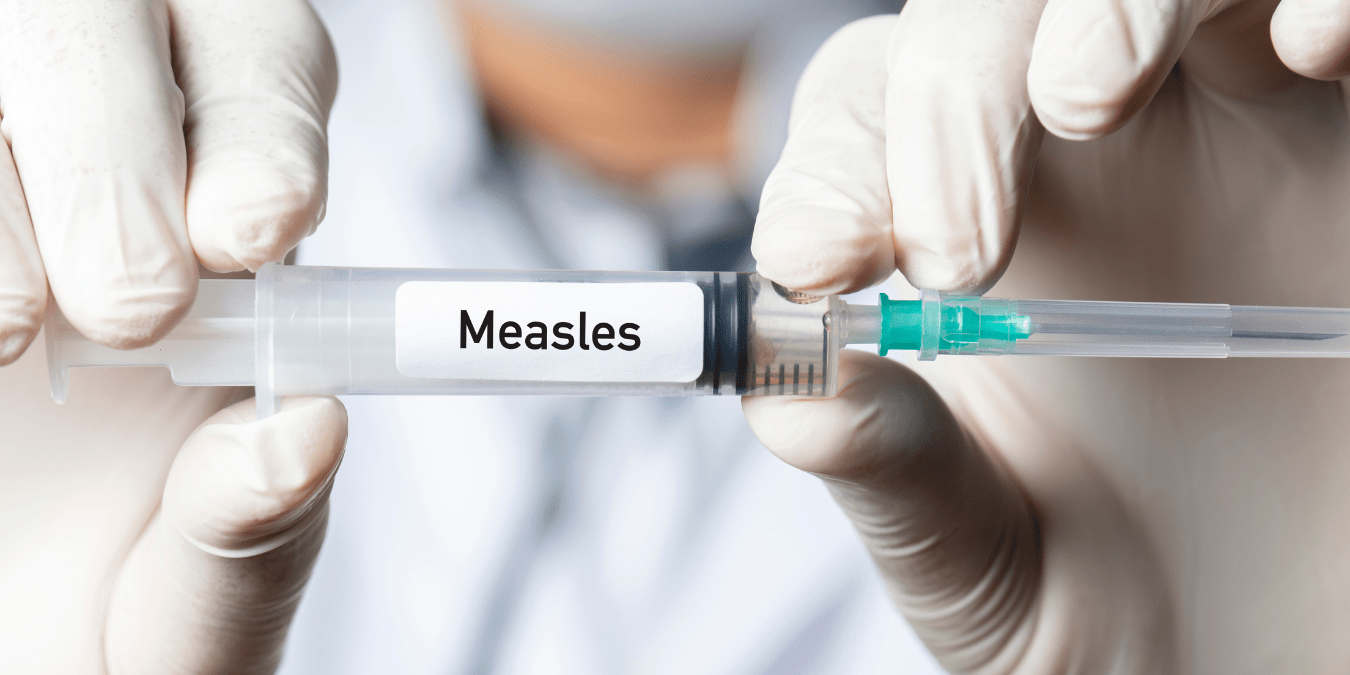
For 25 years, the United States wore its measles elimination status like a badge of public health honor. Declared measles-free in 2000, America had successfully interrupted the continuous domestic spread of one of history’s most devastating diseases. Then, in the autumn of 2025, a small, tightly-knit, under-vaccinated community in the Upstate region of South Carolina changed everything. What began as a handful of cases in Spartanburg County has grown into the largest measles outbreak the United States has seen since elimination was first declared — and the numbers are still climbing.
By February 6, 2026, the South Carolina Department of Public Health confirmed 920 cases linked to that single Upstate outbreak. As of mid-February, the count had grown to 950. Across the United States, 2025 ended with more than 2,065 confirmed measles cases — the nation’s highest yearly total in decades. This is not just a local public health emergency. It is a warning flare shot directly at the heart of America’s vaccination infrastructure.
What “Eliminated” Really Means
It is important to understand what the word “eliminated” means in the public health context, because it does not mean “eradicated.” When the CDC declared measles eliminated in 2000, it meant there was no continuous, year-round transmission of the virus within the United States. The disease still existed elsewhere in the world. Travelers could still import individual cases. But the country’s vaccination coverage was so high — and the resulting herd immunity so robust — that imported cases would fizzle out rather than ignite community transmission.
For over two decades, that system held. The MMR (measles, mumps, and rubella) vaccine is extraordinarily effective — 97% effective at preventing measles after two doses. But effectiveness is only meaningful when enough people are vaccinated. The moment vaccination rates dip below a critical threshold, the entire protective shield can crack open. And that is precisely what happened in South Carolina.
The Virus Itself Is the Most Contagious Pathogen Known to Science
To understand the scale of what happened in Spartanburg County, you first need to appreciate just how ferociously contagious measles really is. Scientists measure a virus’s contagiousness using a metric called the basic reproduction number, or R0 (pronounced “R-naught”). This number represents how many people one sick person will infect in a fully susceptible population.
The measles virus has an R0 of between 12 and 18. For comparison, seasonal influenza has an R0 of about 1.3. Even COVID-19’s original strain had an R0 of roughly 2 to 3. Measles sits in a category almost entirely by itself. Two cycles of transmission from a single infected person could, mathematically, expose up to 342 individuals.
The virus also spreads in an almost supernatural way. It is airborne — meaning it travels through respiratory droplets and aerosols that can linger in the air for up to two hours after an infected person has left a room. An unvaccinated child walking into a classroom where a measles patient sat hours earlier can contract the disease simply by breathing. The virus is contagious four days before any visible symptoms appear, which means an infected person can unknowingly spread measles to dozens of people before anyone realizes there is a problem.
Given this biology, the math of herd immunity becomes unforgiving. To stop measles from spreading, roughly 93 to 95% of a community must be immune. If that threshold drops even a few percentage points, the virus finds its opening — and it moves fast.
- Your Smartwatch Already Knows Something Is Wrong — Why AI-Powered Wearables in 2026 Are Catching Diseases Before Your Doctor Even Schedules Your Appointment

- Your Light Bulb Could Be Making Your Anxiety Worse — or Better: Here’s the Science Behind Colour Therapy

- Your Gut Health Obsession Just Got Scientific Backup — Here’s What Doctors Actually Say Works in 2026

- Your Child’s School Could Be Ground Zero: The Hidden Measles Outbreaks Spreading Across 33 States That Most American Parents Have No Idea About
- Your Blood Pressure Reading Has a “Hidden Number” Doctors Say Most People Ignore
- Your Blood Pressure Is Perfect — But These 7 Silent Clues in Your Blood Work Say Your Arteries May Already Be Clogging

How South Carolina’s Upstate Region Became Ground Zero
The outbreak that has now consumed South Carolina’s attention did not materialize out of thin air. It emerged from a combination of declining vaccination rates, a permissive exemption policy, and a cluster of close-knit communities with deep-seated vaccine skepticism.
South Carolina allows parents to claim religious exemptions from school vaccine requirements by simply signing a form asserting that immunizations “conflict with my religious beliefs”. There is no requirement for a doctor’s note, a formal religious inquiry, or any medical review. This relatively low barrier has enabled years of quietly accumulating immunity gaps, particularly in private and faith-based schools across the state.
The outbreak officially began in early October 2025, when the South Carolina Department of Public Health confirmed eight cases in Spartanburg County in the Upstate region. By the end of the year, the national MMR vaccination rate among South Carolina’s kindergarteners had already fallen well below the 95% target, with some individual schools reporting dramatically lower rates. One private school, Shining Light Baptist Academy, had a vaccination rate of just 21%. Another private Christian institution in neighboring North Carolina — Shining Baptist Academy — had only 60% of students vaccinated, and more than 170 individuals connected to it were placed in quarantine after a student arrived contagious with measles linked to the South Carolina outbreak.
Dr. Linda Bell, South Carolina’s state epidemiologist, put it plainly: “The primary challenge to controlling measles spread is the lower than needed vaccination coverage to achieve herd immunity in the community”. A pediatrician in Columbia, South Carolina, described the situation in even starker terms: “When you have communities that have low vaccination rates, you essentially have a tinderbox for measles because it is so incredibly contagious. That’s what happened in the Upstate of South Carolina”.
The January Spike and the Failure to Contain the Fire
After the initial October 2025 cases, health officials hoped the outbreak could be contained through contact tracing, quarantines, and targeted vaccination campaigns. Those hopes were short-lived. Cases spiked dramatically in early January 2026, following the holiday season — a period when families gather, travel, and attend communal religious events.
By January 27, 2026, South Carolina had surpassed the 789-case mark, overtaking the 2025 West Texas outbreak — which itself had resulted in 762 infections and the deaths of two young girls — as the largest measles outbreak since elimination was declared. A week later, on February 6, the case count hit 920, with 44 new cases reported in a single two-day period. At that point, 277 people remained in quarantine and eight were in active isolation.
Of the 920 confirmed cases, a devastating 840 individuals were unvaccinated. Twenty had received one dose of the MMR vaccine. Twenty-four were fully vaccinated — a reminder that no vaccine is 100% effective for every individual, which is precisely why community-wide coverage matters so much. Only herd immunity protects those for whom the vaccine cannot provide full individual protection.
The outbreak also rippled beyond South Carolina’s borders. North Carolina recorded at least 14 cases directly linked to the South Carolina cluster. The BBC reported that health experts feared the U.S. was at genuine risk of losing its measles elimination status entirely — a fate that had already befallen the United Kingdom and Canada.
The Compounding Crisis: A National Vaccine Hesitancy Epidemic
South Carolina did not develop its vaccination problem in isolation. It is a symptom of a nationwide erosion of trust in immunization — one that has been building for years and accelerated during and after the COVID-19 pandemic.
Nationally, the U.S. recorded more than 2,200 confirmed measles cases in 2025 — a stark increase compared to any year since elimination. That figure represented a more than 4.5-fold increase over the 285 cases recorded in all of 2024. By October 2025, 1,544 cases had been confirmed across 41 states, with more than 40 distinct outbreaks identified. In the first two weeks of 2026 alone, at least 171 new cases were reported — nearly matching the average annual total for the previous 25 years combined.
The role of prominent vaccine skeptics in this environment cannot be ignored. Robert F. Kennedy Jr., who was confirmed as U.S. Health and Human Services Secretary in early 2025, had for years promoted scientifically discredited claims linking vaccines to autism. As the Texas outbreak was killing children, Kennedy had initially downplayed the crisis, calling annual outbreaks “not unusual”. He later expressed concern and acknowledged the MMR vaccine’s role in community immunity, but continued to describe vaccination as a “personal decision” — a framing that public health experts warned was dangerous precisely because it obscures the collective, community-level nature of immunity.
When prominent figures in government reinforce the idea that vaccine decisions are purely personal choices rather than public health responsibilities, vaccine hesitancy gains a veneer of legitimacy. The result is not just a medical phenomenon — it is a social one.
What Measles Actually Does to the Human Body
Lost in the political debate is the devastating clinical reality of measles infection, particularly for children. Measles is not just a rash and a fever. It is a systemic immune assault.
The virus enters through the respiratory tract and then systematically dismantles the immune system’s memory cells — a phenomenon called “immune amnesia” — leaving survivors newly vulnerable to other infections for weeks or months. For children under five and immunocompromised individuals, the consequences can be catastrophic.
The CDC reports that approximately 1 in every 1,000 children who contract measles will develop encephalitis — swelling of the brain — which can cause convulsions, deafness, and permanent intellectual disability. Between 1 and 3 children out of every 1,000 infected will die from respiratory or neurological complications.
Then there is Subacute Sclerosing Panencephalitis (SSPE) — perhaps the most heartbreaking consequence of measles infection. SSPE is a rare but invariably fatal brain disorder that emerges silently, six to eight years after a measles infection, causing progressive mental deterioration, muscle jerks, uncontrollable seizures, and ultimately death. It affects roughly 1 in 10,000 people who contract measles — but for infants infected before their first birthday, the risk skyrockets to 1 in 600. There is no cure. Nearly all patients die within five years of developing symptoms.
In the South Carolina outbreak, the age breakdown of cases is particularly alarming: 246 cases were in children under five years old, 611 were in children aged 6 to 17, and 82 were in adults aged 18 or older. These are not statistics — they are children who face the real risk of these complications.
The Policy Response: Too Little, Too Late?
As the outbreak burned through Spartanburg County and beyond, South Carolina’s public health infrastructure scrambled to respond. Mobile vaccination units were deployed. Free MMR clinics were established. By January 2026, over 16,800 doses of measles vaccine were administered statewide — a 72% increase compared to January 2025.
In the legislature, State Senator Margie Bright Matthews introduced a bill that would eliminate religious exemptions for the MMR vaccine for students in public K-12 schools and childcare settings. “The goal of the bill is simply to protect children and stop the spread of measles in South Carolina,” she said. The bill drew both support and fierce opposition, reflecting the deep ideological fault lines around vaccine mandates in American society.
Meanwhile, the CDC conducted a scenario assessment for the 2025-2026 South Carolina outbreak, and as of March 3, 2026, the Upstate region had now identified 990 cases. Officials cautioned that the escalating outbreak could persist for several more weeks or months due to persistently insufficient vaccination rates.
The Lesson America Cannot Afford to Ignore
The South Carolina measles outbreak is a case study in what happens when decades of vaccine success breed complacency. When a disease disappears from everyday life, the memory of its horrors fades. Parents who have never seen a child suffer from measles encephalitis find it easy to weigh the theoretical discomfort of a vaccine against the seemingly distant risk of a disease they have never witnessed. That psychological gap — between invisible protection and invisible threat — is where vaccine hesitancy takes root.
The MMR vaccine is one of the most studied, most effective, and safest medical interventions in human history. Two doses provide 97% protection. The vaccine does not cause autism — a claim that has been thoroughly and repeatedly debunked by decades of global research. Yet in communities where that myth has been allowed to fester, the consequences are being measured in hospital admissions, quarantine orders, and the looming specter of SSPE diagnoses that will not surface for years.
The U.S. elimination of measles was not inevitable. It was earned — through generations of coordinated public health work, school vaccination requirements, and the quiet, collective decision of millions of parents to protect not just their own children, but everyone else’s children too. That achievement is now genuinely at risk. The BBC reported that health experts believe the country is teetering on the edge of losing measles elimination status — a reversal that would place America alongside countries that have already suffered that public health setback.
What Needs to Happen Now
The path forward is not complicated, but it is politically difficult. Evidence from public health research is unambiguous:
- Vaccination rates must return to and sustain 95% coverage in every community, every school, and every county — not just statewide averages that can mask dangerous local gaps.
- Non-medical exemptions must face higher scrutiny. States with loose religious or philosophical exemption policies consistently see higher outbreak rates. Making exemptions easier to obtain than vaccinations is a structural invitation for disease resurgence.
- Trusted messengers matter. Vaccine confidence is rebuilt not through mandates alone, but through consistent, credible communication from pediatricians, community leaders, and yes — government health officials who speak with clarity rather than ambiguity.
- Early response saves lives. The window to contain an outbreak before it reaches exponential growth is narrow. The South Carolina response, while substantial, came after the tinder had already caught.
America spent 25 years protected from measles not because the virus went away, but because enough people chose to be vaccinated. That collective shield held for a quarter-century. In one under-vaccinated community in upstate South Carolina, it shattered — and 920 confirmed cases later, the country is relearning a lesson it should never have had to learn again.
The data cited in this article is sourced from the South Carolina Department of Public Health, the Centers for Disease Control and Prevention, peer-reviewed medical literature, and verified reporting from major health news organizations. All case counts are as reported through February–March 2026 and may have changed as the outbreak continues.

Omisha is a health writer passionate about turning complex medical research into clear, actionable content readers can trust. She covers everything from nutrition and mental wellness to chronic disease management, always grounding her work in credible science and real-world relevance. When she's not writing, she's usually reading up on the latest health studies or exploring new wellness trends to write about next.