Your ergonomic chair isn’t fixing the problem—it might be hiding it. Discover the “Micro-Injury” antidote: 6 “lazy” yoga poses that rehydrate brittle fascia instead of just stretching muscles. Erase “Tech Neck” and unlock your spine in 5 minutes without leaving your living room floor. The relief is instant.
The Invisible Collapse
It starts as a dull ache between your shoulder blades at 10:00 AM. By 3:00 PM, it’s a burning throb that no ergonomic chair—not even the $800 mesh one you bought during the 2024 Black Friday sales—can fix.
You aren’t “injured” in the traditional sense. You haven’t slipped a disc lifting a heavy box. You are suffering from the silent epidemic sweeping the United States in 2025: Cumulative Micro-Trauma.
New data from 2025 reveals that 61% of remote workers in the US report worsening musculoskeletal pain, despite “improved” home office setups. The culprit? It’s not your posture; it’s your fascia.
Most back pain advice treats your body like a stack of bricks that just needs to be straightened. But recent fascial research suggests your back is more like a sponge. When you sit for 6+ hours, that sponge dries out, becoming brittle and matted. Stretching a dry sponge doesn’t work—it tears it.
To fix 2025’s specific brand of back pain, you don’t need intense stretching. You need rehydration.
Here are 6 deceptive, “lazy” yoga poses that don’t just stretch your muscles but rehydrate your fascia, unlocking stiffness from the inside out.
- Why Consistent Meal Timing Matters for Your Health: The Science Behind Eating on Schedule

- Nothing Kills Faster Than Your Own Mind: How to Stop Stressing Over Things You Can’t Control

- What Causes Male Pattern Baldness? Uncover the Science Behind Hair Loss

- Stop Baldness Naturally: Must-Have Products for Hair Density and Shine – Without Any Side Effects?

- Unlocking the Hidden Truth About Cholesterol: What Your Doctor Isn’t Telling You!

1. The “Tech-Neck” Eraser: Sphinx Pose (Salamba Bhujangasana)
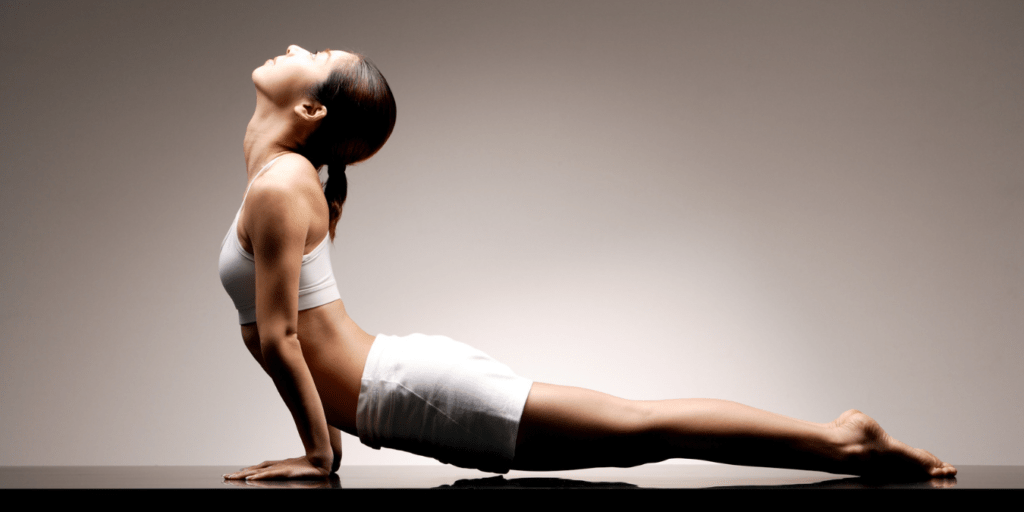
The Target: Upper Cervical Spine & Thoracic Chest
The 2025 Context:
We spend an average of 9 hours a day looking down—at phones, laptops, and tablets. This reverses the natural curve of the neck, leading to what chiropractors are calling “Text Claw” of the spine.
How To Do It:
Lie on your stomach. Place your elbows directly under your shoulders, forearms parallel like the number 11. Press your forearms into the floor and gently lift your chest. Crucial Detail: Do not crank your head back. Keep your chin parallel to the floor and look straight ahead.
The Hidden Secret:
This is the anti-laptop pose. By passively compressing the lower back (in a gentle way), you act like a tourniquet. When you release the pose, fresh, nutrient-rich blood rushes into the lumbar discs, “plumping” them up. It’s not just a stretch; it’s a hydraulic reset.
2. The Stress Melter: Legs-Up-The-Wall (Viparita Karani)
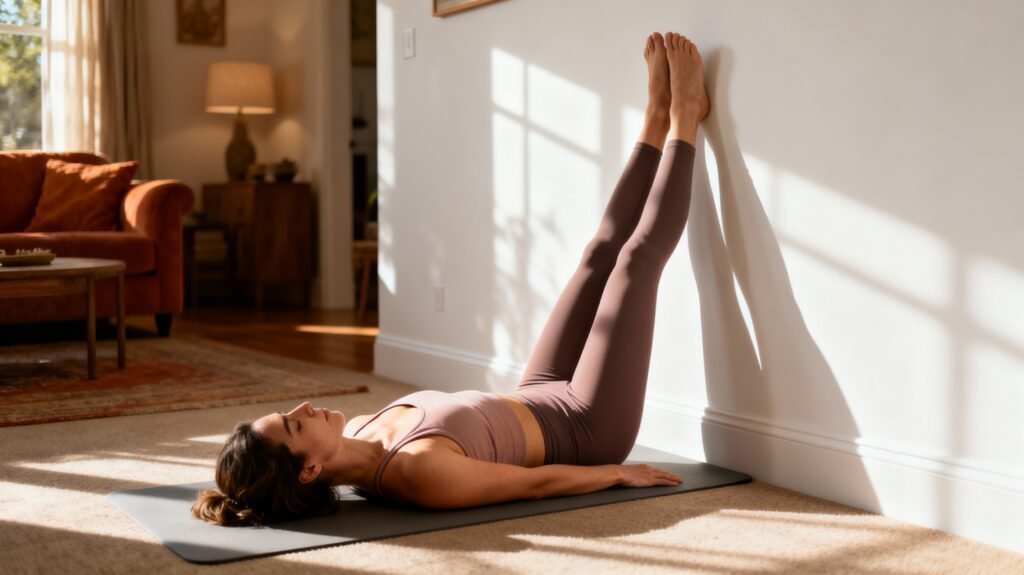
The Target: Lower Back Decompression & Nervous System
The 2025 Context:
Anxiety and back pain are biologically linked. When you’re stressed about that Zoom deadline, your psoas muscle (the deep “soul muscle” connecting your spine to your legs) tightens, pulling your lower back into a painful arch.
How To Do It:
Sit sideways against a wall, then swing your legs up so your heels rest on the wall. Lie flat on your back. If your hamstrings are tight, scoot your hips back a few inches. Rest your arms by your sides, palms up. Stay for 5–10 minutes.
The Hidden Secret:
This is the only pose on this list that requires zero muscular effort. It physically forces your femur bones to “drop” into the hip sockets, releasing the grip of the psoas. A 2025 study noted that this position significantly lowers cortisol levels, which is often the chemical root of back tension.
3. The Desk Undo: Seated Cat-Cow (Marjaryasana-Bitilasana)
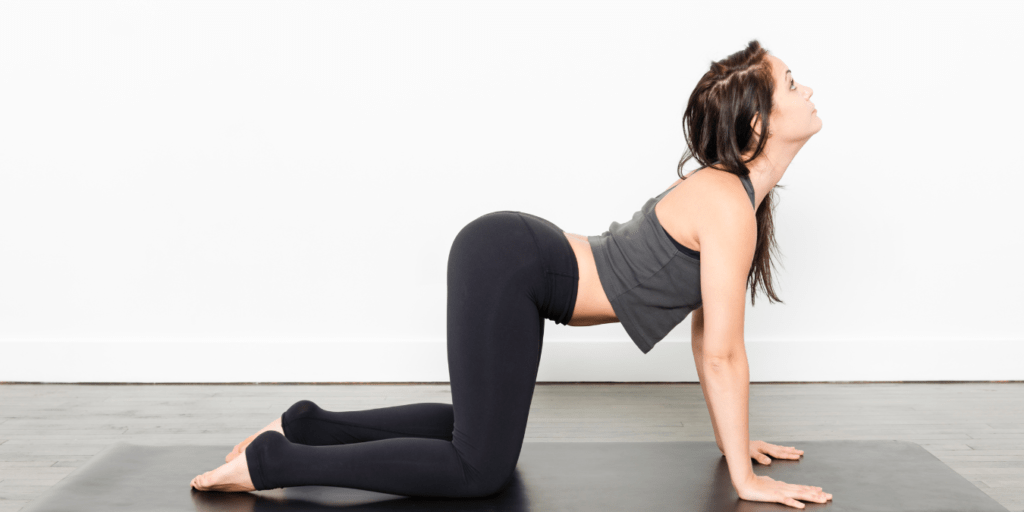
The Target: Spinal Fluidity
The 2025 Context:
Static sitting causes your spinal fluid to stagnate. You feel stiff because your vertebrae are literally “stuck” together by dehydrated connective tissue.
How To Do It:
You don’t even need to leave your desk chair. Sit on the edge of your seat, feet flat.
- Inhale: Arch your back, lift your chest, look up (Cow).
- Exhale: Round your spine, drop your chin, tuck your tailbone (Cat).
- Repeat for 1 minute.
The Hidden Secret:
Focus on segmentation. Don’t just flop back and forth. Try to move one vertebrae at a time, starting from the tailbone and rippling up to the neck. This “flossing” motion breaks up the “fuzz” (accumulated fascia) that grows between muscle layers when you are sedentary.
4. The Scapula Savior: Thread the Needle (Parsva Balasana)
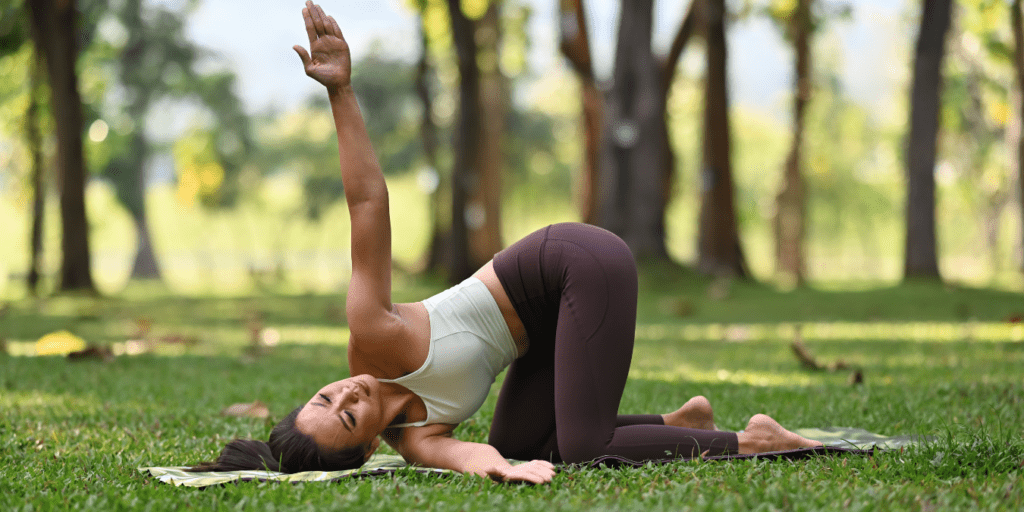
The Target: Rhomboids (The “Mouse Hand” Pain)
The 2025 Context:
If you use a mouse or trackpad with your right hand, your right shoulder blade is likely “glued” to your ribcage. This asymmetry pulls your entire spine out of alignment.
How To Do It:
Start on all fours (tabletop position). Inhale your right arm high to the sky. Exhale and slide your right arm under your left armpit, resting your right shoulder and cheek on the mat. Keep your hips high.
The Hidden Secret:
This creates a gentle twist in the thoracic spine (upper back), which is the stiffest part of the body for office workers. It physically pulls the shoulder blade away from the spine, releasing the knots that massage balls can’t reach.
5. The Hip Unlock: Reclined Figure-4 (Supta Kapotasana)
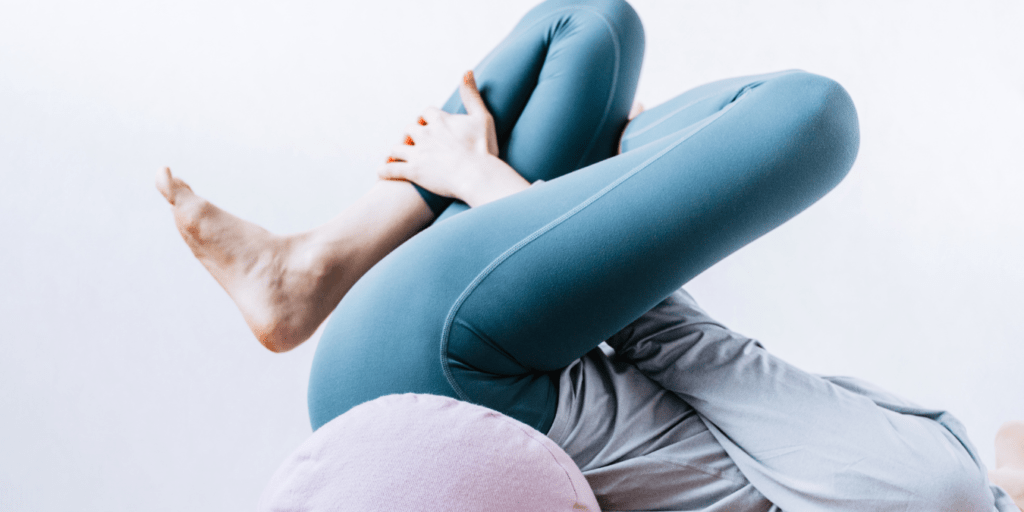
The Target: Piriformis & Sciatic Nerve
The 2025 Context:
“Gluteal Amnesia” (Dead Butt Syndrome) is real. Weak glutes force your lower back to do heavy lifting it wasn’t designed for. The piriformis muscle often compensates, clamping down on the sciatic nerve.
How To Do It:
Lie on your back. Cross your right ankle over your left knee (making a “4” shape). Thread your hands behind your left thigh and gently pull it toward you. Keep your head on the floor.
The Hidden Secret:
This is safer than the traditional Pigeon Pose, which can torque the knees. By doing it on your back, your spine is fully supported by the floor, allowing your brain to send a “safety” signal to the muscles, permitting a deeper release than if you were upright and balancing.
6. The Total Reset: Wide-Knee Child’s Pose with Side Stretch
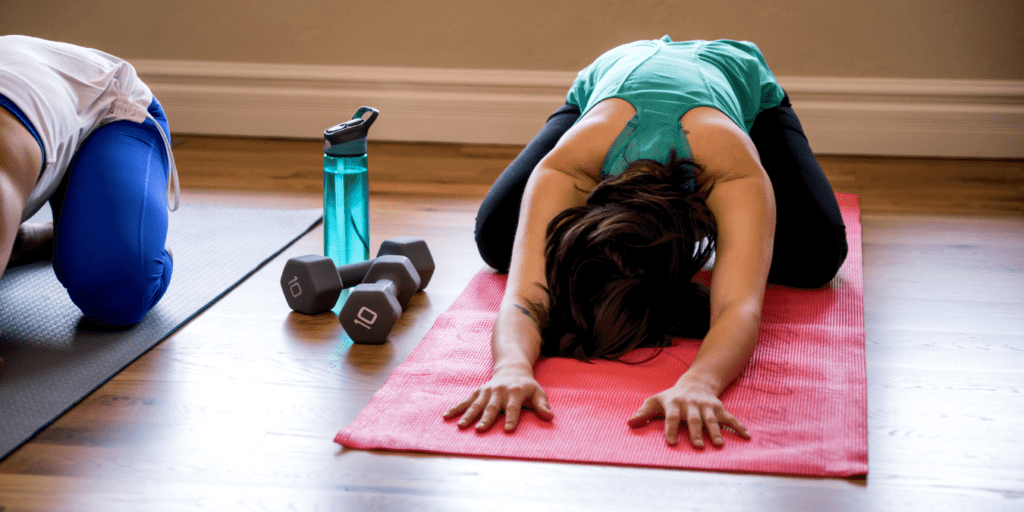
The Target: Latissimus Dorsi (The “Wing” Muscles)
The 2025 Context:
Your “Lats” are huge muscles that run from your armpits down to your lower back. When you hunch, they shorten, perpetually pulling your lower back into compression.
How To Do It:
Kneel on the floor, big toes touching, knees wide. Sit your hips back onto your heels and walk your hands forward until your forehead touches the floor.
- The Twist: Walk both hands off the right side of your mat. Anchor your left hip heavy onto your left heel. You should feel a massive opening along the entire left side of your torso.
The Hidden Secret:
This stretches the Thoracolumbar Fascia, the diamond-shaped connective tissue in your lower back that is the epicenter of 80% of back pain cases.
The 2025 “Micro-Dose” Protocol
You don’t need a 60-minute class. The future of wellness is frequency over duration.
- 10:00 AM: Seated Cat-Cow (1 min at desk)
- 1:00 PM: Sphinx Pose (2 mins on office floor – yes, normalize this!)
- 9:00 PM: Legs-Up-The-Wall (5 mins before bed)
Final Thought: The Future of Your Spine
As we move toward 2026, bio-wearables are beginning to alert us when our “spinal hydration” drops, but until you have that tech, these poses are your best defense.
The “surprising” truth about back pain in 2025 is that it’s rarely about weakness—it’s about stagnation. You don’t need to “work out” your pain; you need to “flow” it out. By integrating these 6 poses, you aren’t just stretching; you are future-proofing your body against the digital age.

Omisha is a health writer passionate about turning complex medical research into clear, actionable content readers can trust. She covers everything from nutrition and mental wellness to chronic disease management, always grounding her work in credible science and real-world relevance. When she's not writing, she's usually reading up on the latest health studies or exploring new wellness trends to write about next.