If you’ve spent more than five minutes scrolling through Instagram Reels or TikTok’s beauty corner this spring, you already know something is happening with blush. The powdery, skin-melting, almost dreamy flush that’s been flooding feeds from New York to Los Angeles isn’t your grandmother’s rosy cheek moment. It’s the coral blush trend — and it’s redefining the way American women (and men) think about color, placement, and the entire concept of a “natural” look.
I’ve worked with hundreds of clients in my esthetician practice over the past decade, tested more blushes than I can count, and consulted with makeup artists who’ve prepped faces for everything from Brooklyn editorial shoots to Nashville red carpets. This spring, every single one of them is talking about coral. So let me walk you through everything — the why behind the trend, the science of the color, the best products available right now in the US market, and the precise, step-by-step technique for achieving that soft “cloud-of-color” effect that makes it look like the flush is coming from within your skin rather than sitting on top of it.
Why Coral Blush Is Dominating Spring 2026
Color trends in beauty don’t happen in a vacuum. They emerge from a cultural conversation — and right now, that conversation is about warmth, optimism, and a return to something that feels human and imperfect in the best possible way.
Coral sits at the intersection of orange and pink, and that positioning is precisely what makes it so compelling for spring. It reads as a sun-kissed flush rather than a clinical pop of color. It mimics the natural redness that appears across the nose, cheeks, and temples when you’ve been outdoors — which is why, on skin, it almost always looks like it belongs there. Makeup artists refer to this as “wearable warmth,” and coral delivers it more convincingly than almost any other shade on the spectrum.
Beyond aesthetics, there’s a practical reason coral has taken over US beauty feeds specifically. The shade works across a remarkably wide range of skin tones — something that has historically been a limitation of rosy or mauve blushes. For deeper complexions, coral reads as a rich, terracotta warmth. For fair and medium skin tones, it delivers that just-been-at-the-farmers-market glow. When a single color trend genuinely flatters everyone, it spreads fast — and that’s exactly what happened here.
The “cloud-of-color” descriptor that’s attached itself to this trend refers to a specific application style: diffused, layered, and blended so softly that the color appears to exist just beneath the surface of the skin rather than on top of it. It’s the opposite of the sharp contour-blush hybrid look that dominated 2023. This is soft. This is airy. This is effortful-looking effortlessness, which is, let’s be honest, the hardest thing to achieve in beauty.
Understanding the Color: What Makes Coral Work on Skin
Before you pick up a brush, it helps to understand what you’re working with. Coral blush typically contains a balance of red and yellow pigments, which means it pulls warm without reading as orange or bronze. The best coral blushes for this cloud-of-color technique also include a very subtle shimmer — not a full glitter, but what formulators call a “micro-pearl” — that catches light the way real flushed skin does.
When you apply warmth-based pigment to skin, it interacts with your natural undertones. This is why the placement and build-up method matters so much. If you dump a heavy hand of coral on the apples of your cheeks (the old-school application zone), it can look garish. But when you apply it using the diffused cloud method — which I’ll break down in detail below — you’re working with your skin’s natural warmth zones, not against them.
The natural warmth zones of the face are the areas where blood vessels sit closest to the surface: the bridge of the nose, the upper cheeks just below the outer eye, the temples, and lightly across the forehead. Coral blush, applied across these zones with a feathered technique, doesn’t just add color — it amplifies the face’s existing warmth map. The result is a flush that looks biological, not cosmetic.
Choosing the Right Coral Blush Formula for Your Skin Type
Not all coral blushes are created equal, and the formula you choose will significantly affect your final result. Here’s how to navigate the options currently available at US retailers.
For oily or combination skin: Pressed powder formulas are your best friend for this trend. Look for finely milled options with low-shimmer finishes. Products available at Sephora, Ulta, and even Target’s premium beauty section offer excellent options in the $18 to $45 range. The goal is a formula that grips skin without sliding or oxidizing over the course of the day.
For dry or mature skin: Cream blushes are having a serious moment, and for good reason. A cream-to-powder coral blush melts into skin in a way that makes the cloud effect feel genuinely effortless. Tap it in with your ring finger before it sets, and you’ll get that lit-from-within quality immediately. The key is applying it before any setting powder — a mistake many beginners make that creates a patchy, separated finish.
For normal skin: Lucky you — you can work with both formats. A popular technique among professional makeup artists right now is layering a cream blush base underneath a sheer powder in a matching coral tone. This gives you the depth of a cream with the blendability and staying power of a powder on top.
For deeper skin tones specifically: Look for coral blushes that list “terracotta” or “burnt sienna” in their shade family. These are coral formulas with deeper pigment bases that show up beautifully on melanin-rich skin without washing out or reading as muddy. Avoid anything marketed as “sheer coral” if your skin tone is deep — those formulas are often under-pigmented and simply won’t deliver the color payoff you’re after.
The Exact Step-by-Step Cloud-of-Color Technique
This is the section you actually came for, so let me be precise. I’ve broken this down into the exact method I use with my own clients and in my personal practice to recreate what you’re seeing on your feeds.
Step 1: Prep your canvas.
The cloud-of-color effect only works on a smooth, hydrated base. Apply your moisturizer, let it absorb fully (at least 90 seconds — most people don’t wait long enough), and then apply a thin layer of your preferred foundation or skin tint. This step is non-negotiable. Coral blush on bare, dry skin will emphasize texture and pores rather than creating that seamless flush.
Step 2: Choose the right brush.
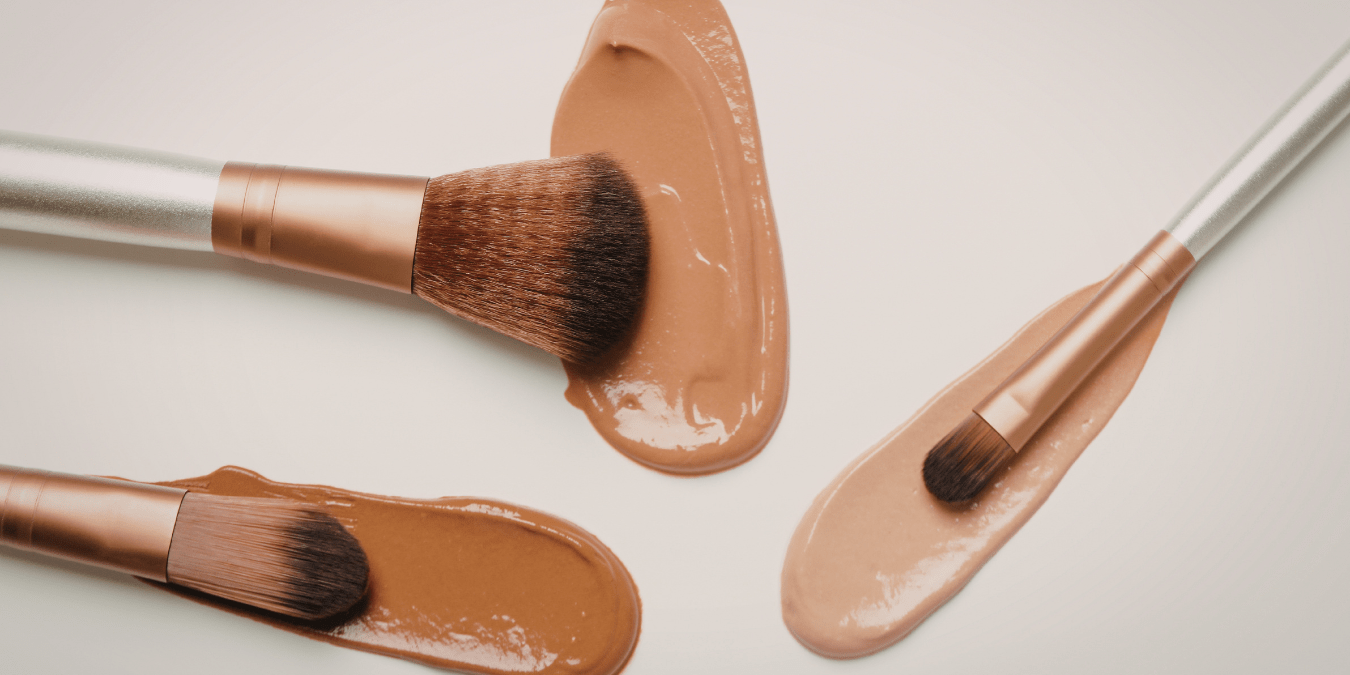
This is where most at-home attempts go wrong. You need a large, fluffy, dome-shaped powder brush — not a kabuki, not a tapered contour brush, and not the tiny paddle brush that came with your blush compact. The dome shape is critical because it disperses pigment over a wide surface area without concentrating color in one spot. If you’re investing in one brush for this look, this is it.
Step 3: Tap, don’t swirl.
Pick up product by tapping the brush gently into your blush compact twice. Then tap the brush against your wrist or hand once to knock off any excess. Swirling picks up too much product and concentrates pigment at the brush’s center — the enemy of the diffused cloud finish.
Step 4: Start at the temples.
This is the key differentiator of the cloud technique versus traditional blush placement. Rather than starting at the apples of the cheeks, begin at your temples with a light, circular buffing motion. Work your way inward toward the upper cheekbone, keeping your pressure very light. You’re not pressing color into skin — you’re dusting it on.
Step 5: Drift across the nose.
With whatever product remains on the brush after the cheek application, lightly dust across the bridge of your nose. This is the step that sells the “natural flush” illusion more than any other. It connects the color across the face and references the way real redness behaves — which never stops at a cheekbone.
Step 6: Build in layers, not in one pass.
The cloud effect is always built in at least two to three light passes rather than one heavy application. After your first pass, step back and look at your face in natural light or near a window. Then go back in with a second pass, concentrating on the upper cheekbone area where you want the most intensity. This layered approach creates depth — color that looks like it has dimension rather than sitting flat on the surface.
Step 7: Blend the edges aggressively.
The borders of your blush application should disappear completely into your skin. Take a clean brush (or the same brush after tapping out all remaining product) and buff in circular motions at every edge of your blush. There should be no discernible “where the blush starts and stops” — only a gradual intensification toward the center of your flush zone.
Step 8: Set with a light dusting of translucent powder (powder blush wearers only).
If you used a cream blush base, skip this step — it will disrupt your finish. But if you built your look entirely with powder, a very light pass of translucent setting powder over the blush (not instead of it) will lock the color in place and extend your wear time significantly, especially important in warmer spring weather.
Pairing the Look: What Goes with Coral Blush
One reason this trend has resonated so strongly in the US market is how well coral blush integrates with the broader “clean girl” and “no-makeup makeup” aesthetics that have dominated American beauty culture for the past two years. The cloud technique essentially functions as a standalone statement — meaning you don’t need a full face of makeup for it to look intentional and polished.
For the most editorial version of the trend, pair coral blush with a glossy, clear or nude lip, mascara only on the upper lashes, and clean, brushed-up brows. This combination lets the blush read as the focal point without competition from other elements.
If you want a slightly more dressed-up version — appropriate for a spring wedding, a dinner, or a work event — a warm brown or terracotta lip liner (worn alone or under a sheer gloss) pairs beautifully with coral blush without clashing. Avoid cool-toned lip products like berries, mauves, or true reds alongside coral blush — the temperature conflict between warm blush and cool lip creates a disjointed effect that reads as unintentional.
For eyes, warm-toned neutrals in copper, gold, or a soft peach shadow complement the trend perfectly. If you love a bold eye, a smudged, earthy brown liner along the lower lash line harmonizes with the blush’s warmth rather than fighting it.
Skincare Prep That Makes Coral Blush Land Differently
Here’s something that doesn’t come up enough in trend coverage: your skincare routine directly affects how blush wears and how “real” it looks. As an esthetician, this is something I discuss with clients constantly.
Dehydrated skin — skin that lacks water content — has a dull, slightly grayish quality that coral blush cannot fully compensate for. Before any big blush moment, prioritize hydration in your skincare for at least three to five days. A hyaluronic acid serum applied to damp skin, followed by a ceramide-based moisturizer, creates a plump, luminous canvas that makes any blush (but especially warm, semi-sheer corals) look phenomenal.
Exfoliation is equally important, but timing matters. Exfoliate the evening before — never the morning of — a bold blush day. Freshly exfoliated skin can be slightly reactive and may make warm-toned products appear more intense or ruddy than intended. Giving your skin barrier 12 to 24 hours to settle after exfoliation ensures you’re working with a balanced, even-toned canvas.
Sun exposure is the wild card. If you’ve spent time outdoors and your skin already has some natural warmth or redness, dial back your coral blush significantly. The cloud technique on already-warm skin can tip into looking overworked. On those days, one very light pass across the temples and nose bridge is enough.
Longevity Tips: Making Your Coral Blush Last All Day
Spring weather in the US — with its humidity spikes, wind, and increasingly warm afternoons — creates real challenges for blush longevity. These are the professional techniques that make a meaningful difference.
A blush-specific primer (or a thin layer of your regular face primer concentrated on the cheek area) creates a gripping surface that extends blush wear by several hours. This step is especially valuable for oily skin types. Apply the primer, let it set for 60 seconds, and then proceed with your blush application as normal.
Setting spray applied after your full look is complete seals everything — including your blush — into place. Hold the bottle 10 to 12 inches from your face and mist in an X and T pattern across your face. Don’t rub it in. Let it air dry. The mesh-like film it creates over your makeup prevents oxidation and feathering throughout the day.
For touch-ups on the go, carry a small pressed coral blush in your bag (most are compact and travel-friendly) along with a mini version of your dome brush. A single tap-and-buff pass at midday is enough to refresh the look without building up excess product.
The Bigger Picture: Why This Trend Matters
Trend coverage can sometimes feel superficial, but the coral blush movement is worth taking seriously because of what it represents in the larger arc of American beauty culture. It’s a pushback against the overly sculpted, heavily filtered aesthetic that defined the late 2010s and early 2020s. It prioritizes skin that looks like skin — warm, alive, slightly imperfect in the most human way possible.
The cloud-of-color technique isn’t just a technique. It’s a philosophy: that makeup should enhance what’s naturally there rather than construct something artificial over it. Coral, with its warmth and its biological resonance with real flushed skin, is the ideal ambassador for that idea.
Whether you’re a makeup minimalist looking for your one product to make a difference, or a seasoned beauty enthusiast ready to add a new dimension to your spring routine, the coral blush trend offers something genuinely worth exploring. The technique is learnable. The products are widely available. And the result — that soft, warm, sun-touched cloud of color that makes your face look like it’s glowing from somewhere deep inside — is worth every moment of practice it takes to get there.

Omisha is a health writer passionate about turning complex medical research into clear, actionable content readers can trust. She covers everything from nutrition and mental wellness to chronic disease management, always grounding her work in credible science and real-world relevance. When she's not writing, she's usually reading up on the latest health studies or exploring new wellness trends to write about next.