Recipes Plant-Based Dessert
Can a Chocolate Cheesecake Made With Cauliflower and Tofu Really Deliver 15 Grams of Protein a Slice — and Still Taste Like Dessert?
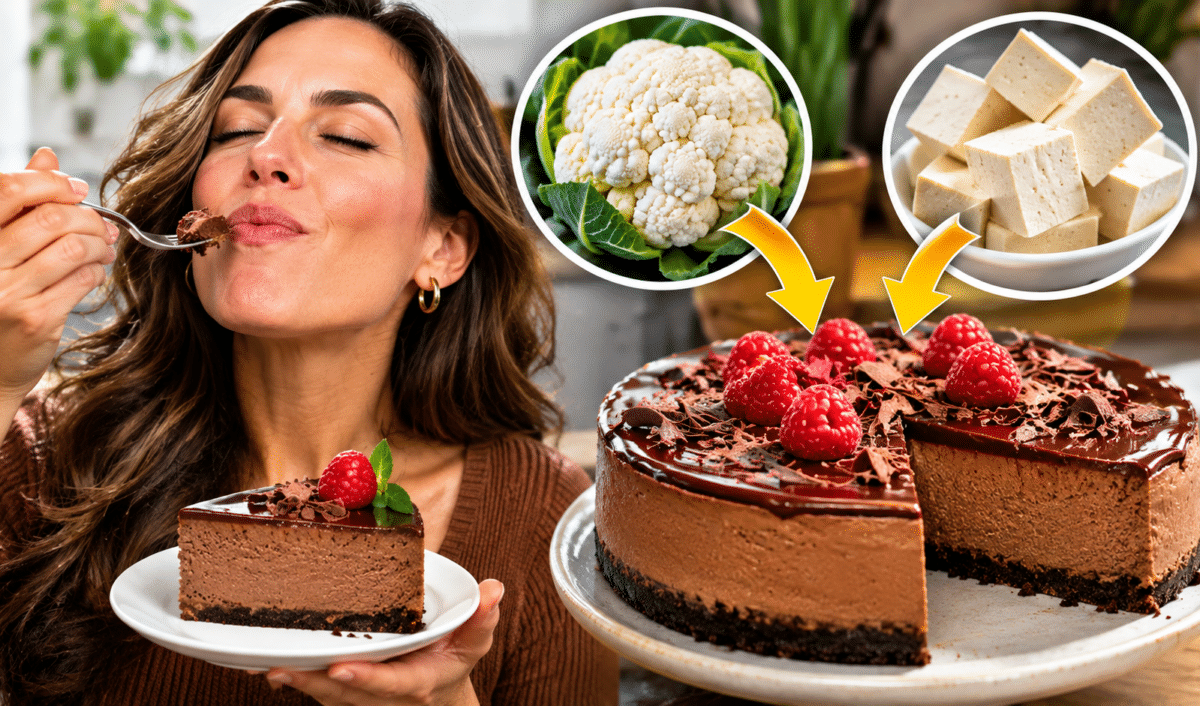
A no-bake vegan chocolate cheesecake built on steamed cauliflower, silken tofu, cashews and cocoa. We calculated the nutrition ingredient by ingredient and compared it with classic cheesecake.
By The Food DeskNutrition calculated from USDA FoodData Central values for each ingredientUpdated November 16, 2026Scope Home kitchens, U.S. measurements
Cheesecake is one of the most loved desserts in America and one of the hardest to lighten. The classic version is cream cheese, sugar and eggs on a buttery crust, which is why a single slice can approach 400 calories with only about 5 grams of protein. Vegan versions usually swap in soaked cashews, which helps with texture but does little for protein or calories.
This recipe takes a different route. Steamed cauliflower adds body and moisture without much flavor, silken tofu brings creaminess and protein, a smaller amount of cashews keeps it rich, and plant protein powder plus cocoa turn it into a chocolate dessert that holds up nutritionally. The result is not a diet food. It is a satisfying slice that happens to deliver nearly double the protein of a classic cheesecake per 100 grams.
What We Know
- Silken tofu and cashews supply most of the whole-food protein.
- Cauliflower adds volume and fiber with very few calories.
- USDA lists classic cheesecake at about 5.5 g protein per 100 g.
- Cocoa powder is one of the most fiber-dense baking ingredients.
What Is Still Unclear
- Exact protein, which depends on your protein powder brand.
- Lab-verified nutrition; our figures are calculated, not tested.
- How texture holds after more than a month frozen.
- Whether sensitive tasters can detect the cauliflower.
Why Cauliflower Belongs in a Cheesecake
Cauliflower is mostly water and mild in flavor once cooked, which makes it a quiet stand-in for some of the cream cheese in a classic recipe. USDA FoodData Central lists raw cauliflower at about 25 calories, 1.9 grams of protein and 2 grams of fiber per 100 grams. Steamed until very soft and blended, it becomes smooth and slightly starchy, adding body to the filling while diluting calories.
Silken tofu does the creamy work. It blends to a custard-like texture, with about 61 calories and 7.2 grams of protein per 100 grams, according to USDA data compiled by SouperSage. Raw cashews, at about 18.2 grams of protein and 553 calories per 100 grams, add richness and the faint tang people expect from cheesecake. Cocoa powder brings flavor and a surprising amount of fiber, about 37 grams per 100 grams.
Protein in the Main Ingredients
The protein powder is what pushes this dessert into high-protein territory. Without it, the cake still delivers about 10.6 grams of protein per slice, more than a classic cheesecake slice of similar weight, but adding two scoops raises it by about 5 grams per slice. Choose an unflavored or chocolate pea, soy or blended plant protein you already like the taste of, because it will come through.
The Recipe: Three Layers, No Oven
This makes one 8-inch springform cheesecake, cut into 8 slices. A high-speed blender gives the smoothest filling, but a food processor works if you blend longer and scrape often.
- Topping (optional)1 cup raspberriesAdds about 1 g fiber per sliceFresh raspberries, cocoa nibs or a thin layer of melted dark chocolate. Nutrition figures below exclude the topping.
- Chocolate fillingAbout 1,010 g99 g protein total2 cups steamed cauliflower florets (about 250 g raw), one 14-ounce package silken tofu (397 g), 1 cup raw cashews (140 g) soaked, 2 scoops chocolate plant protein (60 g), 1/3 cup cocoa powder (28 g), 1/3 cup maple syrup (105 g), 2 tablespoons melted coconut oil (28 g), 1 teaspoon vanilla and a pinch of salt.
- Date and almond crustAbout 266 g26 g protein total1 cup almond flour (112 g), 6 pitted Medjool dates (about 144 g), 2 tablespoons cocoa powder (10 g) and a pinch of salt, pulsed until it holds together when pressed.
- Soak the cashewsCover with water for 2 to 4 hours, or with boiling water for 10 to 15 minutes if short on time. Drain.
- Steam the cauliflowerSteam 10 to 12 minutes until a knife slides through with no resistance. Cool for 10 minutes and pat dry.
- Make the crustPulse almond flour, dates, cocoa and salt until sticky. Press firmly into a lined 8-inch springform pan and chill.
- Blend the fillingBlend cashews, cauliflower, tofu, maple syrup, coconut oil and vanilla until completely smooth, 2 to 4 minutes. Add cocoa and protein powder and blend 1 more minute.
- Taste and adjustAdd more maple syrup a tablespoon at a time if needed, or a squeeze of lemon for tang.
- Set and chillPour over the crust, smooth the top and refrigerate at least 6 hours, ideally overnight, before slicing.
- 2 to 4 hrsSoak cashews, or 15 min in boiling water
- 12 minSteam cauliflower until very soft
- 10 minPress the date and almond crust
- 5 minBlend the filling until silky
- 6 to 12 hrsChill until sliceable
How It Stacks Up Against Classic Cheesecake
USDA FoodData Central lists commercially prepared cheesecake at 321 calories, 5.5 grams of protein, 25.5 grams of carbohydrate and 22.5 grams of fat per 100 grams, as summarized by HappyForks. Chocolate cheesecake comes in at 374 calories and 5.97 grams of protein. A USDA survey entry for plain cheesecake reaches 399 calories per 100 grams, with 27 grams of total sugars and 0.5 grams of fiber, according to GetFoodFacts.
Protein per 100 Grams: This Recipe Versus Classic Cheesecakes
Calories per 100 Grams: Where the Recipe Lands
The per-slice picture is less dramatic, because our slice is generous at about 159 grams. At 368 calories, it is in the same range as many commercial slices, so the gain is mostly in protein, fiber and the absence of cholesterol, not in a big calorie cut. Cut 10 slices instead of 8 and each one drops to about 295 calories and 12.5 grams of protein.
Where the Protein Comes From in One Whole Cake
Swaps for Allergies, Sugar and Protein Goals
Because the recipe leans on nuts and soy, it will not suit everyone. The table below shows common substitutions and their likely effect on protein per slice, estimated from the same USDA values.
| Goal | Swap | Approximate protein per slice | Texture effect | Notes |
|---|---|---|---|---|
| Base recipe | None | 15.6 g | Dense, creamy | 8 slices of about 159 g |
| No protein powder | Omit powder, add 2 tbsp more cocoa | 10.6 g | Slightly softer | Still above classic cheesecake per 100 g |
| Nut-free | Sunflower seed flour crust, extra tofu for cashews | About 14 g | Lighter, less rich | Check powder for nut traces |
| Soy-free | Extra cashews and cauliflower for tofu, pea protein | About 13 g | Richer, denser | Higher calories from nuts |
| Lower sugar | Halve maple syrup, add sugar-free sweetener to taste | 15.6 g | Firmer set | Saves about 17 calories per slice |
| Smaller slices | Cut 10 slices | 12.5 g | No change | About 295 calories each |
Swap figures are estimates by this desk and indicative only. Always check labels if you are cooking for someone with a food allergy, since many protein powders and chocolate products are processed alongside nuts, soy or dairy.
Why Your Protein Powder Changes the Numbers
Plant protein powders vary widely. Some deliver 15 grams of protein per scoop, others 25 grams or more, and scoop sizes differ between brands. Because two scoops supply about a third of the cake’s protein, that range matters. At 15 grams per scoop, each of 8 slices would have about 14.3 grams of protein; at 25 grams per scoop, about 16.8 grams. Check the Nutrition Facts panel on your container and adjust the math before you count this toward a daily protein goal.
Flavor varies as much as protein. Pea protein can taste earthy, soy protein is usually milder, and blends often split the difference. Chocolate-flavored powders tend to disappear best into this filling. Sweetened powders also add sugar or sweeteners, so taste the filling before adding the full amount of maple syrup.
Making It Ahead for the Holidays
With Thanksgiving on November 26, this is a practical make-ahead dessert. Because it needs no oven, it frees up baking space for pies and sides. Make it one or two days before serving, keep it covered in the refrigerator and add any fresh fruit topping just before serving so the berries stay bright. A whole cake also freezes well if you want to prepare it a week or more in advance.
Storage and Serving
The cheesecake keeps covered in the refrigerator for 4 to 5 days. For longer storage, freeze individual slices wrapped tightly for up to a month and thaw in the refrigerator for 2 to 3 hours. Slice with a knife dipped in hot water and wiped dry between cuts. Serve cold; the filling softens noticeably at room temperature after about 30 minutes.
A Dessert That Fits a Bigger Food Trend
Plant-based desserts are part of a category that is large even as parts of it struggle. Plant-based foods generated $7.9 billion in U.S. retail sales in 2025, more than double the $3.3 billion recorded in 2018, according to the Plant Based Foods Association. Sixty percent of U.S. households bought plant-based foods in 2025, and 78% of those came back to buy more. The Good Food Institute reported that while total plant-based dollar sales fell 4% in 2024, tofu, tempeh and seitan grew 11% in dollars.
That last number explains who this recipe is really for. Most people buying plant-based foods are not vegan; they are mixing plant proteins into an omnivorous diet. A dessert that is dairy-free and egg-free but still rich and satisfying works for vegan guests, people avoiding dairy and anyone curious about getting more protein from plants.
- Steam 10 to 12 minutesCauliflower must be very soft
- Use silken tofuOne 14-ounce package
- Soak cashews 2 to 4 hoursOr 15 minutes in boiling water
- Chill 6 hours minimumOvernight is best
- Check powder labelProtein varies by brand
- Store 4 to 5 daysOr freeze up to a month
Frequently Asked Questions
Can you taste the cauliflower in this cheesecake?
Most people cannot when it is steamed until very soft and blended with cocoa, tofu and cashews. Under-cooked cauliflower is more noticeable, so steam it thoroughly.
How much protein is in a slice of vegan cauliflower cheesecake?
About 15.6 grams per slice when cut into 8, based on USDA ingredient values and a typical plant protein powder. Without protein powder, it is about 10.6 grams.
Is vegan cheesecake healthier than regular cheesecake?
This version has more protein and fiber and no cholesterol, with about 231 calories per 100 grams versus 321 for commercial cheesecake. Calories per slice remain substantial because nuts and dates are energy-dense.
What can I use instead of silken tofu?
Extra soaked cashews and more cauliflower work, though the cake becomes richer and higher in calories. Plain unsweetened plant-based yogurt can replace part of the tofu.
Do I need to bake a cauliflower cheesecake?
No. This is a no-bake recipe that sets in the refrigerator in 6 to 12 hours thanks to the coconut oil, cashews and protein powder.
How long does vegan cheesecake last in the fridge?
About 4 to 5 days covered in the refrigerator, or up to a month in the freezer if slices are wrapped tightly.
What protein powder works best in vegan cheesecake?
Chocolate or unflavored pea, soy or blended plant proteins work well. Choose one you already enjoy, since its flavor carries through.
Is this cheesecake gluten-free?
The ingredients are naturally gluten-free, but check protein powder and cocoa labels for gluten if you need to avoid it strictly.
The Short Version
This no-bake vegan chocolate cheesecake uses steamed cauliflower, silken tofu, cashews, cocoa and plant protein powder over a date and almond crust. Calculated from USDA values, each of 8 slices has about 15.6 grams of protein, 6 grams of fiber and 368 calories. Per 100 grams, it has nearly double the protein of classic cheesecake and about 28% fewer calories. Steam the cauliflower until very soft, use silken tofu and chill at least 6 hours. Protein varies with your powder brand.

Omisha is a health writer passionate about turning complex medical research into clear, actionable content readers can trust. She covers everything from nutrition and mental wellness to chronic disease management, always grounding her work in credible science and real-world relevance. When she's not writing, she's usually reading up on the latest health studies or exploring new wellness trends to write about next.