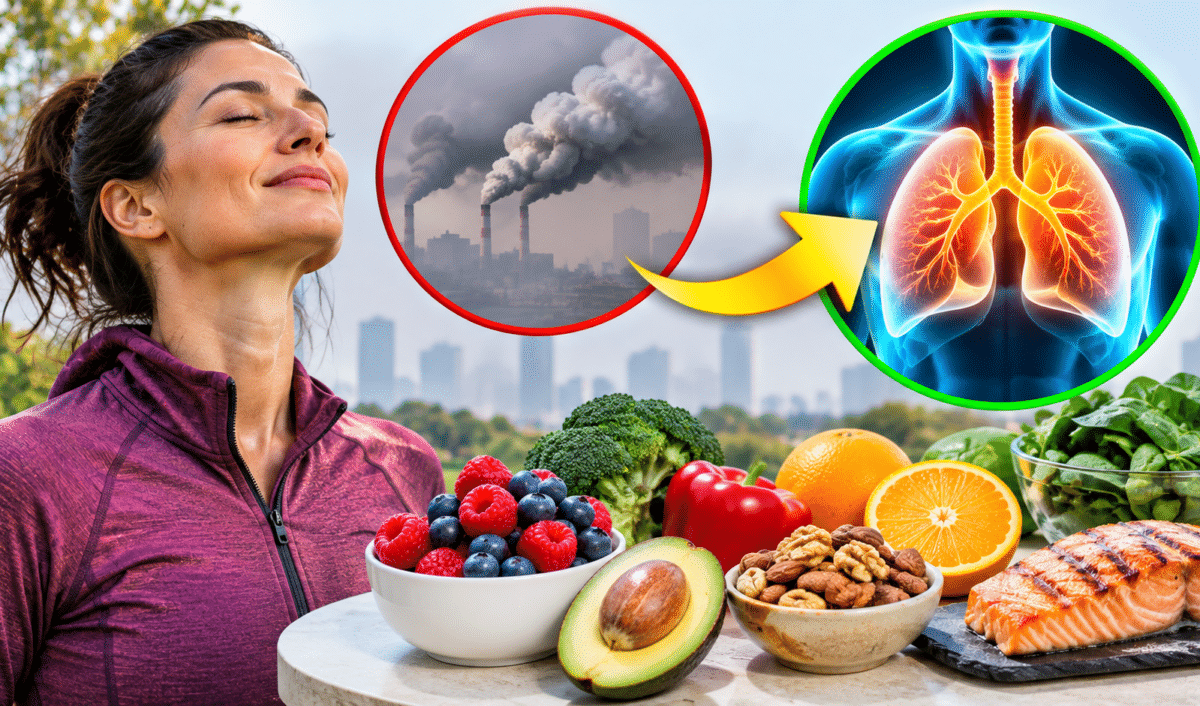
Air Quality and Nutrition / U.S. Health
Can What You Eat Soften the Damage From Air Pollution — and How Much Protection Is Realistic?
With 152.3 million Americans living where air quality earns a failing grade, studies of more than 750,000 people link Mediterranean-style eating and higher fruit intake to smaller pollution-related harms. Diet helps at the margins. It is not a filter.
VegetablesFruitWhole grainsFish and legumesOlive oil
By The Environmental Health DeskFact-checked against American Lung Association data, EPA standards and peer-reviewed cohort studiesUpdated November 12, 2026Scope U.S. residents
Wildfire smoke drifts across state lines. Summer ozone settles over cities. In many parts of the country, checking the Air Quality Index has become as routine as checking the weather. And for most people, there is little they can do about the air outside their front door beyond staying indoors on the worst days.
That is why a growing line of research has caught attention: what if the food on your plate could blunt some of the harm? Large studies in the United States and United Kingdom suggest people who eat Mediterranean-style diets or more fruit show weaker links between pollution and heart deaths or lung function loss. The findings are real, but they come from observational research, and no diet makes dirty air safe.
What We Know
- 44% of Americans live in counties with at least one failing air quality grade, per the American Lung Association.
- Mediterranean diet adherence was linked to weaker associations between PM2.5 or nitrogen dioxide and heart deaths.
- Higher fruit intake was linked to smaller pollution-related lung function loss in women.
- Diet showed no significant protection against ozone in the large U.S. study.
What Is Still Unclear
- Whether diet itself causes the protection, or people who eat well differ in other ways.
- Why the fruit benefit appeared only in women in the U.K. study.
- Which specific foods or nutrients matter most.
- Whether diet helps during short, intense events such as wildfire smoke.
How Many Americans Breathe Failing Air
The American Lung Association’s 2026 State of the Air report, covering data from 2022 to 2024, found that 152.3 million people, or 44% of Americans, live in counties that received a failing grade for ozone or particle pollution. Ozone worsened in much of the country, especially the Southwest, and affected more people than in any of the previous five reports.
Who Lives With Failing Air Quality
The burden is not shared equally. People of color make up 42.1% of the U.S. population but 54.2% of residents in counties with at least one failing grade, and Hispanic residents are 3.2 times as likely as white residents to live where all three measures fail. Bakersfield, California, had the worst year-round particle pollution for a seventh straight year, and Los Angeles again had the worst ozone.
The Pollutants That Matter for Diet Research
Fine particulate matter, called PM2.5, consists of particles 2.5 micrometers or smaller, from vehicle exhaust, power plants, industry and wildfires. They are small enough to reach deep into the lungs and bloodstream. Nitrogen dioxide comes mainly from traffic. Ozone forms when sunlight reacts with pollutants. Each harms the body partly through oxidative stress and inflammation, which is exactly why researchers suspected antioxidant-rich diets might help.
The Big U.S. Study: Mediterranean Diet and Pollution Deaths
The strongest U.S. evidence comes from the NIH-AARP Diet and Health Study. Researchers at NYU School of Medicine, led by doctoral student Chris Lim with senior author George Thurston, analyzed 548,699 people with an average enrollment age of 62, living in six states and two metropolitan areas. They were followed for more than 17 years, during which 126,835 died. Diet was scored on a 9-point Mediterranean diet index.
Rise in Death Risk From Pollution, by Diet Adherence
Least Mediterranean diet adherenceMost adherence
In other words, pollution was still linked to more deaths in everyone, but the increase was smaller among people who ate the most Mediterranean-style diets. “The ozone effect was not significantly blunted by a Mediterranean diet,” Thurston said. The study was presented as a conference abstract, so it carries less weight than a peer-reviewed paper.
Fruit and Your Lungs: The 2025 U.K. Findings
At the European Respiratory Society Congress in Amsterdam in September 2025, Pimpika Kaewsri of the University of Leicester presented an analysis of about 200,000 UK Biobank participants. She looked at lung function, measured as FEV1, the amount of air you can exhale in one second, in relation to PM2.5 exposure and diet, adjusting for age, height and socioeconomic status.
Among women, each 5 µg/m³ increase in fine particles was linked to a 78.1 ml drop in FEV1 for those with low fruit intake, but a 57.5 ml drop for those eating four or more portions a day. No similar association appeared in men, who reported eating less fruit. A healthy diet was linked to better lung function in both sexes regardless of pollution. “This difference in dietary patterns may help explain why the potential protective effect of fruit against air pollution was only observed in women,” Kaewsri said.
Why Antioxidants Are the Leading Theory
When fine particles reach the lungs, they trigger the release of reactive molecules that damage cells, a process called oxidative stress, along with inflammation that can spread through the bloodstream to the heart and blood vessels. Fruits and vegetables supply vitamin C, carotenoids and polyphenols, compounds that help neutralize those reactive molecules. Olive oil and fish add fats that may calm inflammation. Kaewsri described this as a possible explanation, not a proven mechanism, and the studies did not measure these processes directly.
Other Promising but Smaller Studies
A 2025 UK Biobank study in Environment and Health followed 115,467 people for 11 years and found higher scores on the MIND diet, a brain-focused blend of Mediterranean and DASH eating, were linked to lower air pollution-associated risk of neurodegenerative disease, particularly in people with shorter telomeres, a marker of biological aging. Researchers also continue to test specific nutrients such as B vitamins and omega-3 fats in small trials, but evidence there is early.
- 2018NIH-AARP analysis of 548,699 adults links Mediterranean diet to weaker pollution-death associations.
- Feb. 2024EPA tightens the annual PM2.5 standard to 9 µg/m³, from 12.
- June 2025UK Biobank study of 115,467 people links the MIND diet to lower pollution-related brain disease risk.
- Sept. 2025ERS Congress study of about 200,000 people links fruit intake to smaller lung function loss in women.
- April 2026State of the Air finds 152.3 million Americans in counties with failing air.
What a Pollution-Resilient Plate Looks Like
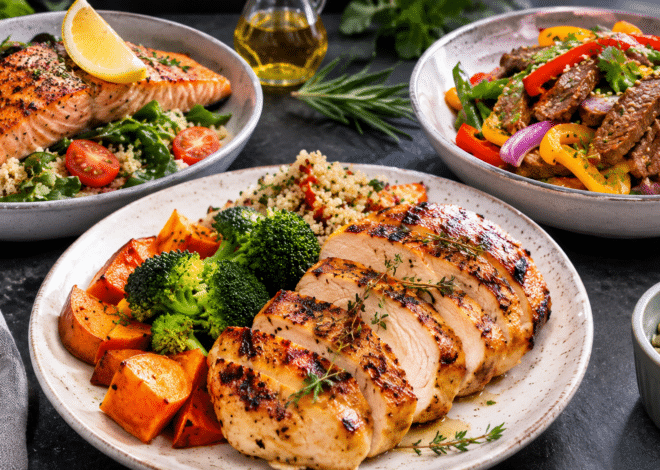
No study has proven a single “anti-pollution” food. The common thread is an overall pattern rich in antioxidant and anti-inflammatory foods, the same pattern recommended for heart health. The serving targets below are indicative, drawn from the studies above and general Mediterranean diet guidance.
Fine Particle Limits: U.S. Standards Versus WHO Guidance
Diet Plus Defense: Reading the Air Quality Index
Diet works slowly, over years. On a bad air day, the bigger protective step is limiting exposure. The EPA’s Air Quality Index, shown on weather apps and AirNow.gov, translates pollution into six color-coded levels. This decoder covers every level.
| AQI level | Range | Who is affected | What to do |
|---|---|---|---|
| Good | 0 to 50 | Little or no risk | Normal outdoor activity |
| Moderate | 51 to 100 | Unusually sensitive people | Sensitive people consider shorter outdoor exertion |
| Sensitive groups | 101 to 150 | Children, older adults, people with heart or lung disease | Sensitive groups reduce prolonged outdoor exertion |
| Unhealthy | 151 to 200 | Everyone may notice effects | Move workouts indoors; close windows |
| Very unhealthy | 201 to 300 | Health alert for everyone | Avoid outdoor exertion; run air purifiers |
| Hazardous | 301 and higher | Emergency conditions | Stay indoors; follow local guidance |
- Check the AQI dailyUse AirNow.gov or a weather app, especially in wildfire and ozone season.
- Build a fruit and vegetable habitWork toward 4 or more fruit portions and several vegetable portions a day.
- Shift to Mediterranean fatsUse olive oil, nuts and fish in place of butter and processed meats.
- Time outdoor exerciseOzone peaks in afternoons; exercise in the morning on high-ozone days.
- Filter indoor airA HEPA air purifier sized for your room can cut indoor particle levels during smoke events.
- Talk to your doctor if you are at riskPeople with asthma, COPD or heart disease need personal action plans.
Wildfire Smoke Changes the Math
The diet studies looked at long-term average exposure, not the short, intense spikes that come with wildfire smoke. During those events, particle levels can jump far above normal for days at a time, and the most effective protection is reducing what you breathe in: staying indoors with windows closed, running filtered air and wearing a well-fitted N95 mask if you must go outside. A healthy diet may help your body cope over the long run, but it is not a smoke-day strategy. Think of food as a background investment and the AQI as your daily guide.
Why Ozone Is a Special Case
The U.S. study found no significant protection from diet against ozone. Ozone is a gas that irritates the airways directly, and its effects may work differently from particle pollution. That makes timing and avoidance especially important on high-ozone days, which the State of the Air report says are becoming more common in much of the country, particularly the Southwest.
- 4+ fruit portions a dayHigh-intake group in U.K. study
- Mediterranean patternScored on a 9-point index
- Check AQI above 100Sensitive groups take care
- HEPA filter for smoke daysSize it to the room
- Morning workouts in summerOzone peaks later in the day
- Food first, not pillsStudies measured diets, not supplements
Frequently Asked Questions
Can diet protect you from air pollution?
It may reduce some harms. Large studies link Mediterranean-style diets and higher fruit intake to smaller pollution-related increases in heart deaths and lung function loss, but diet does not make polluted air safe.
What foods help protect the lungs from pollution?
Fruit stands out in recent research; women eating 4 or more portions a day lost less lung function per pollution increase. Vegetables, whole grains, fish, olive oil and nuts are part of the protective pattern.
Does the Mediterranean diet reduce pollution risks?
In a study of 548,699 U.S. adults, the rise in cardiovascular deaths per 10 µg/m³ PM2.5 was 17% for the least adherent and 5% for the most adherent.
How many Americans live with unhealthy air?
The American Lung Association’s 2026 report found 152.3 million people, or 44% of Americans, live in counties with at least one failing air quality grade.
Do antioxidant supplements protect against air pollution?
The main studies measured whole diets, not supplements. Some small trials have tested nutrients like B vitamins and omega-3s, but evidence is limited.
What is a safe level of PM2.5?
The EPA’s annual standard is 9 µg/m³ and the WHO guideline is 5 µg/m³. Experts say there is no level with zero risk.
Does diet protect against ozone?
The large U.S. study found no significant protection from a Mediterranean diet against ozone, so limiting exposure on high-ozone days matters most.
What should I do on a bad air quality day?
Check the AQI, limit outdoor exertion when it exceeds 100 for sensitive groups or 150 for everyone, close windows and use a HEPA air purifier.
The Short Version
With 152.3 million Americans living in counties with failing air, diet offers modest extra protection. A study of 548,699 U.S. adults found the pollution-linked rise in cardiovascular deaths was 17% for people least adherent to a Mediterranean diet but 5% for the most adherent. A U.K. study linked eating four or more fruit portions daily to less lung function loss in women. Diet showed no protection against ozone, and the evidence is observational. Eat a fruit- and vegetable-rich Mediterranean-style diet, and still check the AQI and limit exposure on bad days.

Omisha is a health writer passionate about turning complex medical research into clear, actionable content readers can trust. She covers everything from nutrition and mental wellness to chronic disease management, always grounding her work in credible science and real-world relevance. When she's not writing, she's usually reading up on the latest health studies or exploring new wellness trends to write about next.