Health · GLP-1 Medications · U.S. 2026
Lift Procedures Climb as GLP-1 Users Ask About Loose Skin: What Actually Helps It Tighten
Arm, neck and thigh lifts each rose about 20% in 2025, and 82% of plastic surgeons say they field GLP-1 questions. Here is why fast weight loss leaves skin behind, what you can do during treatment, and which fixes match which kind of sagging.
By the Health & Wellness DeskFact-checked against ASPS data, KFF polling, AAD guidance and clinical trialsUpdated November 8, 2026Scope: U.S. adults using semaglutide or tirzepatide
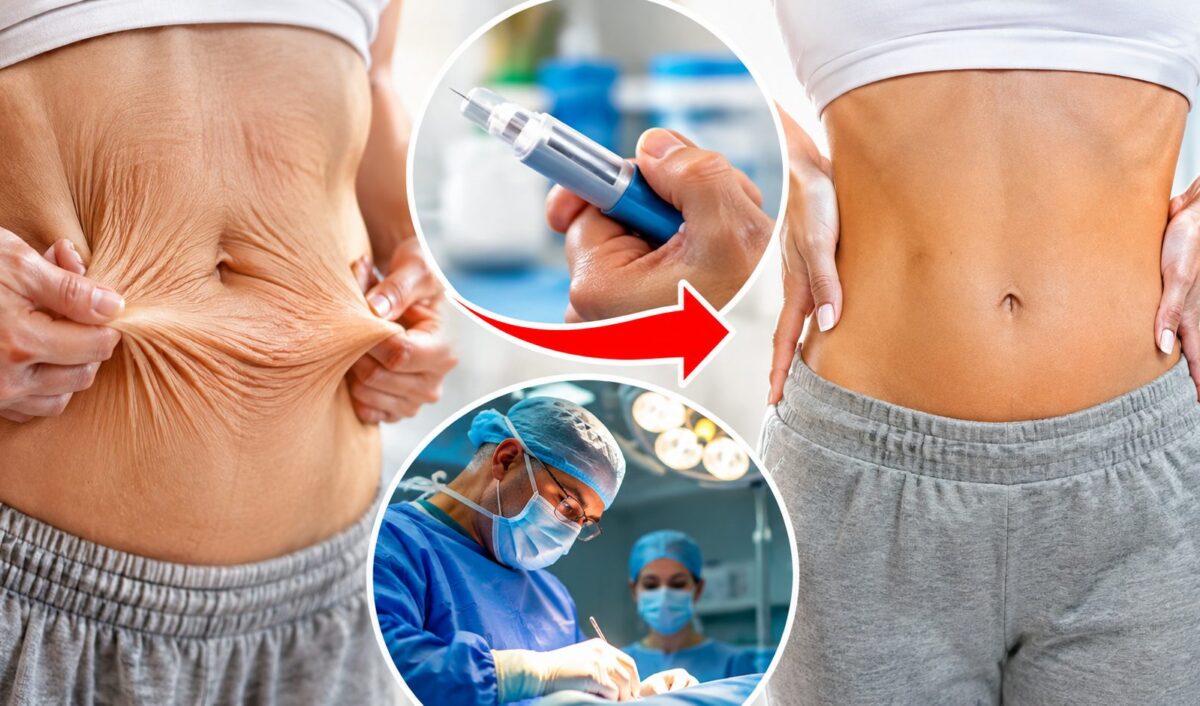
The scale finally moved, and it kept moving. Forty pounds, then sixty. Then one morning the mirror shows something the scale never warned about: cheeks that look hollow, a softer jawline, upper arms that fold when you reach for a shelf. For many of the roughly 1 in 8 American adults now taking a GLP-1 drug such as Ozempic, Wegovy, Mounjaro or Zepbound, loose skin is the side effect nobody mentioned at the first appointment.
It is now showing up in national data. The American Society of Plastic Surgeons reported on Sept. 1, 2026, that arm lifts rose 21%, neck lifts 21% and thigh lifts 20% in 2025, while 82% of its member surgeons said they had received consultation requests related to GLP-1 use. The society notes that its figures do not prove the drugs caused the growth, but the pattern matches what dermatologists describe in their offices. The good news: there is more you can do than wait, and not every case of sagging needs a scalpel.
What We Know
- KFF’s November 2025 poll found 12% of U.S. adults currently take a GLP-1 drug and 18% have ever taken one.
- ASPS data released Sept. 1, 2026, show double-digit growth in arm, thigh, neck, face and upper body lifts in 2025.
- Rapid, large weight loss reduces facial and body volume and can leave skin lax, crepey or folded, according to the American Academy of Dermatology.
- Clinical trials show part of GLP-1 weight loss comes from lean tissue, not only fat.
- Treatments range from skin care and devices to injectables and lift surgery.
What Is Still Unclear
- Whether GLP-1 drugs affect skin directly, beyond the effect of weight loss itself, is still being studied.
- No large randomized trial has tested how to prevent loose skin during GLP-1 treatment.
- The share of procedure growth driven by GLP-1 users specifically has not been measured.
- Long-term results of injectables in GLP-1 patients come mainly from small, industry-funded studies.
The Lift Boom in Plain Numbers
Lift procedures were the fastest-growing category in the ASPS 2025 Procedural Statistics Report. ASPS President Dr. C. Bob Basu described patients as seeking “authentic restoration rather than transformation,” and said significant weight loss, however it happens, can leave excess skin and lost facial volume that diet and exercise cannot fix. Dr. Sara Dickie, a plastic surgeon quoted by the society, called it “the real start of this GLP-1 revolution.”
Which Lift and Restoration Procedures Grew in 2025
One caution from the society itself: consultations are not the same as completed surgeries. Many people ask about lifts, learn about cost, recovery or the need to wait for stable weight, and choose a less invasive route or nothing at all.
Why Skin Gets Left Behind When the Pounds Leave Fast
Skin is a living, stretchable organ held together by collagen and elastin. When weight rises over years, skin expands to cover the new volume and its fibers stretch. When the volume underneath shrinks, the skin’s ability to contract depends on how much elastic recoil those fibers still have. Age, years of sun exposure, smoking, genetics and how long the weight was carried all reduce that recoil.
Speed matters too. Dermatologists quoted by Healio in 2025 described rapid weight loss as giving skin too little time to adapt, with volume loss most visible in the chin, neck, jaw and lower face. Dermatologist Dr. Sabrina Fabi pointed to early lab research suggesting GLP-1 drugs reduce glucose uptake in fat-derived stem cells, which help make collagen and new fat. That idea is still preliminary. The AAD says the drugs “may also affect collagen, muscle, and fat cells,” and calls for more study.
The Face Shows It First
Facial fat pads give the cheeks, temples and under-eye area their youthful fullness. Lose them and bone structure becomes more prominent, eyes can look sunken, and lines deepen. That cluster is what people call “Ozempic face.” It is not a medical diagnosis and it is not unique to these drugs. It is what the face of any adult can look like after a large, fast loss of fat.
How Much Weight GLP-1 Drugs Remove in Major Trials
For comparison, a study of 360 bariatric surgery patients published in 2013 found that 92.8% reported problems with redundant skin, mostly on the abdomen, upper arms and buttocks, after an average loss of 35.2 kilograms, or about 78 pounds. GLP-1 drugs at top doses now approach bariatric-level loss for some patients, which helps explain why plastic surgeons are hearing the same complaints.
The Muscle Factor Most People Overlook
Not every pound lost on a GLP-1 drug is fat. Body-composition substudies using DXA scans found that lean mass, which includes muscle, made up roughly 39% of weight lost in STEP 1 and about 25% in SURMOUNT-1. Some lean loss is expected with any diet, because a smaller body needs less supporting tissue. But muscle sits directly beneath skin, and less of it under the arms, thighs and buttocks makes laxity look worse.
What the Lost Weight Was Made Of
Semaglutide 2.4 mg, STEP 1
Tirzepatide, SURMOUNT-1
In May 2025, four medical groups, the American College of Lifestyle Medicine, the American Society for Nutrition, the Obesity Medicine Association and The Obesity Society, issued a joint advisory listing eight nutrition priorities for GLP-1 patients. Adequate protein and strength training to preserve lean mass were among them. The advisory did not set one number, but many obesity medicine clinicians aim for 1.2 to 1.6 grams of protein per kilogram of body weight per day, adjusted for kidney health and individual needs.
Five Phases: A Skin-Smart GLP-1 Timeline
There is no official schedule for managing skin during GLP-1 treatment. The phases below reflect common clinical practice described by dermatologists and plastic surgeons; timing varies by person and dose.
- Before dose 1Set a baselineTake photos, ask about protein targets and start 2 strength sessions a week. Patients prone to hair shedding can see a dermatologist first.
- Months 1 to 4Dose escalationAppetite falls quickly. Keep protein steady, drink fluids and wear SPF 30 or higher daily.
- Months 4 to 16Peak lossMost trial weight loss happens here. Talk with your prescriber if loss is far faster than planned.
- 3 to 6 months stableLet skin settleSkin often contracts somewhat once weight plateaus. Non-surgical treatments can start in this window.
- 6 to 12 months stableConsider surgeryMany surgeons prefer weight to be stable for several months before a lift, so results hold.
Match the Fix to the Sag: A Four-Level Guide
The most useful question is not “how do I tighten my skin” but “what kind of looseness do I have.” Mild crepiness, lost facial volume and heavy overhanging folds are different problems, and the treatments that work for one do little for another.
Nothing in a jar removes a skin fold. Topicals can improve texture and tone, and retinoids have the strongest evidence for aging skin, though the AAD notes they can irritate dry skin, a common complaint on GLP-1 drugs. Devices heat deeper layers to prompt modest collagen remodeling. They tighten slightly, not dramatically.
Injectables Aimed at “Ozempic Face”
Hyaluronic acid fillers replace volume immediately. Collagen stimulators such as poly-L-lactic acid, sold as Sculptra, work gradually over several sessions. In a small Galderma-sponsored study presented in 2025, 85.7% of GLP-1 patients treated with Sculptra plus Restylane fillers said their face looked less gaunt at week 40, and 91.4% would recommend the regimen. The study’s lead investigator and a co-author reported consulting fees from the company, and the full sample size was not published in that report.
| Treatment | Best for | Typical course | How long results last | Downtime |
|---|---|---|---|---|
| Topical retinoid | Crepey texture, fine lines | Nightly, results in 3 to 6 months | As long as used | None to mild |
| Radiofrequency microneedling | Mild laxity, texture | 2 to 4 sessions, 4 to 6 weeks apart | Often 1 year or more | 1 to 3 days |
| Focused ultrasound | Brow, jaw, neck laxity | 1 session, results over 2 to 3 months | Often 1 year or more | Minimal |
| Hyaluronic acid filler | Facial hollows | 1 to 2 visits | 6 to 18 months | 1 to 7 days |
| Poly-L-lactic acid | Broad facial volume loss | 2 to 3 sessions, 4 to 8 weeks apart | Up to about 2 years | 1 to 7 days |
| Fat grafting | Face or hands | 1 procedure, sometimes repeated | Long-lasting once fat survives | 1 to 2 weeks |
| Lift surgery | Hanging folds on arms, thighs, body, neck | 1 operation per area | Long-lasting if weight stays stable | 2 to 6 weeks |
The ranges in that table are indicative, drawn from common clinical practice and product labeling rather than a single study. Your clinician’s plan may differ based on skin type, age and the amount of weight lost.
Six Habits That Protect Skin While the Weight Comes Off
- Lead with proteinAim for a protein source at every meal; many clinicians suggest 1.2 to 1.6 g per kilogram daily.
- Lift something, twice a weekFederal activity guidelines call for muscle-strengthening work at least 2 days a week plus 150 minutes of moderate activity.
- Ask about pacePatients worried about skin or hair can discuss slower dose escalation with their prescriber.
- Wear sunscreen dailyThe AAD recommends broad-spectrum, water-resistant SPF 30 or higher; sun damage breaks down collagen.
- Moisturize damp skinUse a ceramide moisturizer right after bathing, as the AAD advises, to counter GLP-1 dryness.
- Skip smokingSmoking accelerates collagen loss and slows healing if you later choose a procedure.
When Loose Skin Becomes a Medical Issue
Loose skin is not only cosmetic. The AAD notes that skin folds where skin rubs against skin can trap moisture and cause rashes, so these areas should be kept clean and dry. In the 2013 bariatric study, about half of patients said redundant skin interfered with daily physical activity. Persistent rashes, infections or skin breakdown under a fold are reasons to see a doctor, and sometimes help build a case for insurance coverage of a panniculectomy, which removes the overhanging apron of abdominal skin.
| What you notice | Likely category | First step | Who to see |
|---|---|---|---|
| Fine crepey lines on arms or chest | Cosmetic, mild | Retinoid, moisturizer, SPF 30 | Dermatologist if no change in 3 to 6 months |
| Hollow cheeks or temples | Cosmetic, volume | Wait for stable weight | Board-certified dermatologist or plastic surgeon |
| Jowls or neck laxity | Cosmetic, laxity | Device consult or neck lift consult | Dermatologist or facial plastic surgeon |
| Arm or thigh skin that hangs | Structural | Surgical consult once stable | Board-certified plastic surgeon |
| Rash, odor or skin breakdown in folds | Medical | Keep dry; treat the rash | Primary care or dermatologist promptly |
| Abdominal apron limiting walking or hygiene | Medical | Document symptoms | Plastic surgeon; ask about insurance criteria |
| Sudden hair shedding | Related side effect | Check protein and nutrients | Dermatologist |
A Quick Checklist Before Any Procedure
- Weight stable 3 to 6 monthsLonger for surgery; ask your surgeon for their threshold.
- Board certification checkedConfirm with the ABPS or American Board of Dermatology.
- Tell them about your GLP-1Surgeons and anesthesiologists need to know for safe sedation planning.
- Get 2 written quotesCompare total costs, including facility and anesthesia fees.
- Ask about maintenanceFillers may need repeating every 6 to 18 months.
- Plan recovery timeBody lifts can mean 2 to 6 weeks away from heavy activity.
Frequently Asked Questions
Does Ozempic or Wegovy cause loose skin?
Loose skin mainly comes from losing a lot of weight quickly, which semaglutide and tirzepatide can produce. Researchers are still studying whether the drugs also affect skin directly. Age, sun damage, genetics and muscle loss make sagging more likely.
What is Ozempic face?
It is an informal term for the hollow cheeks, sunken eyes, sagging and deeper lines that can appear after rapid weight loss. It is not a medical diagnosis and can happen with any large, fast weight loss.
Can you prevent loose skin while taking a GLP-1 drug?
You cannot fully prevent it, but you may reduce it by eating enough protein, doing strength training at least twice a week, wearing daily sunscreen, avoiding smoking and discussing a sensible pace of weight loss with your prescriber.
Will loose skin tighten on its own after weight loss?
Some skin contracts over the months after weight stabilizes, especially in younger people with less sun damage. Large folds after major weight loss usually do not resolve without surgery.
What is the best treatment for sagging skin after GLP-1 weight loss?
It depends on the type. Crepey skin may improve with retinoids, mild laxity with radiofrequency or ultrasound devices, facial hollowing with fillers, collagen stimulators or fat grafting, and hanging folds only with lift surgery.
How long should I wait after GLP-1 weight loss before plastic surgery?
Many surgeons prefer weight to be stable for several months, often 6 to 12, before body-lift surgery. Tell your surgeon you take a GLP-1 drug, since it can matter for anesthesia planning.
How much protein should I eat on a GLP-1 medication?
A 2025 joint advisory from four medical groups stresses adequate protein without setting one figure. Many obesity medicine clinicians suggest 1.2 to 1.6 grams per kilogram of body weight daily. Ask your clinician, especially if you have kidney disease.
Does insurance cover skin removal after weight loss?
Cosmetic lifts are generally not covered. Removing an abdominal apron may be covered when there is documented medical need, such as recurring rashes or infections, depending on your plan’s criteria.
The Short Version
As GLP-1 use has spread to about 1 in 8 U.S. adults, lift procedures have surged and most plastic surgeons now field questions about the drugs. Loose skin comes from fast, large volume loss on top of age, sun damage, genetics and lost muscle. During treatment, protein, strength training, sunscreen and a sensible pace give skin the best chance. Afterward, match the fix to the problem: topicals for texture, devices for mild laxity, injectables for facial hollows and surgery for hanging folds, ideally once weight has been stable for months.

Omisha is a health writer passionate about turning complex medical research into clear, actionable content readers can trust. She covers everything from nutrition and mental wellness to chronic disease management, always grounding her work in credible science and real-world relevance. When she's not writing, she's usually reading up on the latest health studies or exploring new wellness trends to write about next.