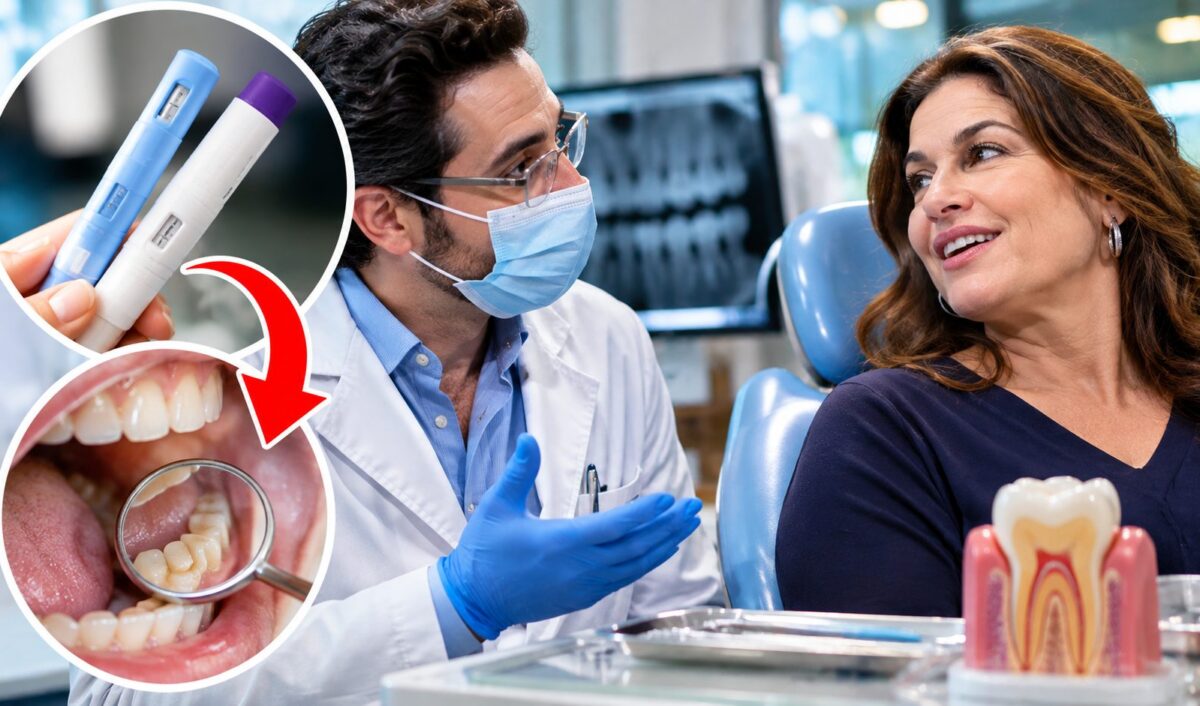
Taking Ozempic or Zepbound? 6 Things Your Dentist Needs to Know Before Your Next Visit
GLP-1 drugs do not damage teeth directly, but dry mouth, reflux, vomiting and slower digestion can change your cavity risk and how sedation is planned. Here is what to share, and why it matters.
By the Consumer Health DeskFact-checked against FDA labels, anesthesia society guidance, CDC and KFF dataUpdated November 9, 2026Scope U.S. adults on semaglutide or tirzepatide
The intake form asks you to list your medications. You write down your blood pressure pill and maybe a vitamin. The weekly injection in your refrigerator does not feel like something a dentist would care about. It is one of the most useful things to mention.
About 1 in 8 U.S. adults now takes a GLP-1 drug, according to a KFF poll from late 2025. These medicines, sold as Ozempic and Wegovy (semaglutide) and Mounjaro and Zepbound (tirzepatide), slow digestion and curb appetite. That is how they work. It is also why they can leave your mouth drier, bring stomach acid up toward your teeth, and change the precautions a dental team takes before sedation. Experts interviewed by Yahoo Health in late October 2026, including an American Dental Association spokesperson, pointed to six specific details worth saying out loud.
What We Know
- GLP-1 drugs slow stomach emptying, which is why anesthesia groups issued special guidance in October 2024.
- Nausea and vomiting are common, especially while doses rise; FDA labels list vomiting in up to 24% of Wegovy users.
- The American Dental Association says GLP-1 drugs can cause or worsen dry mouth.
- Repeated exposure to stomach acid from vomiting or reflux can erode tooth enamel.
- A 2025 study found GLP-1 users had more difficulty identifying basic tastes than non-users.
What Is Still Unclear
- No study has yet measured saliva flow before and after starting a GLP-1, so dry-mouth estimates rely on reports.
- Dry mouth is not listed as a common adverse reaction in the main FDA labels, so its true frequency is unknown.
- Whether better blood sugar control on these drugs measurably improves gum health is still being studied.
- Specific dental-office guidance from the ADA on sedation and GLP-1s is limited compared with surgical guidance.
1Name the Drug, the Dose and Where You Are on the Ladder
“Ozempic” is not enough. Your dentist needs the specific drug, the current dose and, most important, whether you recently started or stepped up. Kimberly Sanders, a clinical associate professor at the UNC Eshelman School of Pharmacy, told Yahoo Health that this matters most before procedures involving sedation, such as wisdom tooth removal or implant surgery.
The reason is the stomach. GLP-1 drugs slow how quickly food leaves it. Under deep sedation or general anesthesia, a stomach that still holds food raises the risk that contents could be inhaled into the lungs. In October 2024, the American Society of Anesthesiologists and four other medical societies issued joint guidance. Most patients can keep taking their GLP-1, but those at highest risk should follow a liquid-only diet for 24 hours before the procedure, and elective procedures should wait if someone is in the dose-escalation phase or has active nausea, vomiting or abdominal pain.
The Zepbound Dose Ladder: When Side Effects Peak
- Week 02.5 mgStarter dose; GI effects begin for some
- Week 45 mgFirst step up
- Week 87.5 mgEscalation continues
- Week 1210 mgCommon maintenance dose
- Week 1612.5 mgEscalation continues
- Week 2015 mgMaximum dose reached
Wegovy follows a similar pattern, stepping from 0.25 mg to the 2.4 mg maintenance dose over 16 weeks. Ozempic, used for type 2 diabetes, starts at 0.25 mg for 4 weeks before rising. If you have elective dental surgery on the calendar, the weeks right after a dose increase are the ones to avoid when you can.
How Much Risk Does Your Visit Carry?
Most dental work uses local anesthetic only, and you stay awake and able to protect your airway. The anesthesia guidance is aimed at sedation and general anesthesia. This framework, based on the 2024 multi-society guidance, shows where the drug detail matters most.
2List the Other Medicines That Quietly Dry Your Mouth
Saliva is your mouth’s built-in defense. It rinses away food, neutralizes acid and carries minerals that help repair early enamel damage. The ADA says GLP-1 drugs can cause or worsen dry mouth, and Dr. Ann Defnet, an obesity medicine specialist, told Yahoo Health that dehydration is a major driver because the drugs can blunt thirst as well as appetite.
The effect stacks. Sanders noted that antihistamines, antidepressants and some anti-nausea drugs can also dry the mouth, and people on a GLP-1 sometimes start an anti-nausea medicine for the side effects. That is why your dentist wants the full list, including over-the-counter allergy pills, sleep aids and supplements, not just prescriptions.
Dryness is not trivial for teeth. CDC survey data from 2011 to 2012 found that about 91% of U.S. adults aged 20 to 64 had experienced tooth decay and about 27% had untreated cavities. Periodontist Sally Cram, an ADA spokesperson, said reduced saliva alone, even without vomiting, can raise the risk of cavities, gum inflammation and bad breath.
3Say How Fast the Weight Is Coming Off
Rapid weight loss by any method can affect bone density, and eating too little can slow healing, Sanders said. That is relevant if you are planning implants, bone grafts or extractions, where healing depends on bone and nutrition. Your dentist cannot see your scale. A simple statement such as “I have lost 30 pounds in four months” gives them context.
4Admit the Vomiting and Reflux, Even If It Feels Minor
Stomach acid is strong enough to dissolve tooth enamel. Occasional episodes rarely cause lasting damage, but frequent vomiting or reflux can, according to a 2026 review in the Canadian Journal of Diabetes cited by Yahoo Health. Telling your dentist lets them look for early erosion, often on the back surfaces of upper teeth, and add fluoride protection before it progresses.
Stomach Side Effects on Zepbound vs Placebo
Nausea
Diarrhea
Vomiting
Indigestion
Burping
Vomiting Rises With the Dose
Semaglutide shows a similar pattern. The Wegovy label lists nausea in 44% of adults, diarrhea in 30%, vomiting and constipation in 24% each, and burping in 7%. These numbers come from long trials; many people find symptoms ease after the escalation weeks.
Common Side Effects Listed for Wegovy
The Rinse-First Rule
Brushing right after vomiting or reflux can scrub acid-softened enamel. Cram advised rinsing with water immediately, then waiting 30 to 60 minutes before brushing gently with a soft brush and fluoride toothpaste.
5Describe Every New Change Inside Your Mouth
Dryness, a metallic or bitter taste sometimes called “Ozempic tongue,” sulfur-smelling breath from slower digestion, and sudden tooth sensitivity have all been reported. A 2025 study found GLP-1 users had a harder time identifying sweet, sour, salty, bitter and savory tastes than non-users. If your dentist judges your cavity risk higher, Cram said, they may recommend cleanings every three to four months instead of every six.
| What you notice | Likely link to GLP-1 | What your dentist may do | What you can do at home |
|---|---|---|---|
| Dry, sticky mouth | Less thirst, dehydration, stacked medicines | Check cavity risk; prescription fluoride | Sip water on a schedule; sugar-free xylitol gum |
| Morning dryness | Mouth breathing plus dehydration | Screen for mouth breathing | Bedroom humidifier; limit evening alcohol |
| Metallic or bitter taste | Reflux, dry mouth | Rule out other causes | Tongue scraper; ask prescriber about reflux |
| Bad breath, sulfur burps | Slower stomach emptying | Gum check, cleaning | Clean tongue; smaller meals |
| Sudden sensitivity | Acid erosion from vomiting or reflux | Fluoride varnish, desensitizing paste | Rinse, then brush after 30 to 60 minutes |
| Bleeding or puffy gums | Dry mouth, plaque buildup | Periodontal exam | Floss daily; water flosser if helpful |
| Worn, glassy enamel | Frequent vomiting or reflux | Monitor erosion, protective treatment | Report frequency honestly |
6Share Your A1c If You Have Diabetes
Many people taking Ozempic or Mounjaro have type 2 diabetes, which raises the risk of gum disease. Sanders said good blood sugar control helps predict how well dental implants heal, so bringing your latest A1c gives your dentist a clearer picture. The CareQuest Institute for Oral Health notes that better glucose control may help gums over time. If you also take insulin or a sulfonylurea, mention it: combined with a GLP-1, these raise the chance of low blood sugar, which matters if you are asked to fast before a procedure.
+Turning the Six Disclosures Into a Visit Plan
A 2026 letter in the British Dental Journal noted that stigma around weight-loss drugs can make patients hesitant to mention them. Dentists ask because the answers change their care. Use this table to see what each type of visit typically needs.
| Appointment | Anesthesia | What to emphasize | Typical prep | Concern level |
|---|---|---|---|---|
| Cleaning and exam | None | Dry mouth, new symptoms | None | Low |
| Filling | Local | Sensitivity, erosion | None | Low |
| Crown or root canal | Local | Nausea during long appointments | Light meal, anti-nausea plan | Low |
| Extraction with nitrous | Local plus nitrous oxide | Dose stage, recent nausea | Follow office instructions | Moderate |
| Oral sedation | Sedative pill | Dose stage, other medicines | Possible fasting or liquid diet | Moderate |
| Implant or wisdom teeth with IV sedation | IV sedation | All six disclosures | Possible 24-hour liquid diet; avoid escalation weeks | Plan ahead |
| General anesthesia | General | All six, plus A1c | Per anesthesia team; possible stomach ultrasound | Plan ahead |
- Update the intake formWrite the GLP-1 name, dose and start date, not just “weight loss shot.”
- Call a week before any sedationAsk whether you need a liquid diet or a timing change.
- Loop in your prescriberLet them weigh in before any dose is skipped or delayed.
- Report symptoms with numbers“Vomiting twice a week” is more useful than “some nausea.”
- Ask about fluorideIn-office varnish or prescription toothpaste can offset dry mouth.
- Book the right intervalAgree on every 3 to 4 months or every 6, based on your risk.
- Sip on a scheduleDo not wait for thirst; water or unsweetened tea.
- Chew xylitol gumSugar-free; keep it away from dogs, for whom xylitol is toxic.
- Brush 2 times a dayFluoride toothpaste, soft brush.
- Floss once a dayOr use a water flosser.
- Wait 2 hours before lying downAfter meals, to limit reflux, as Sanders advised.
- Cut back on soda and alcoholBoth worsen dryness and acid exposure.
?Frequently Asked Questions
Does Ozempic damage your teeth?
GLP-1 drugs do not directly damage teeth. Side effects such as dry mouth, vomiting and acid reflux can raise the risk of cavities, gum inflammation and enamel erosion, which is why your dentist should know you take one.
Should I tell my dentist I take Zepbound or Wegovy?
Yes. Share the drug, dose and whether you are increasing it, plus other medicines, weight-loss pace, any vomiting or reflux, new mouth symptoms and, if you have diabetes, your A1c.
Do I need to stop Ozempic before dental surgery?
Usually not. 2024 guidance from five medical societies says most patients can continue GLP-1 drugs. Those at higher risk may be asked to follow a 24-hour liquid diet, and elective procedures may be delayed during dose escalation. Never stop without your prescriber’s advice.
Why do GLP-1 drugs matter for dental sedation?
They slow stomach emptying, so food can remain in the stomach longer. Under deep sedation or general anesthesia, that raises the risk of stomach contents entering the lungs, so the anesthesia team may change preparation instructions.
What is Ozempic tongue?
It is an informal name for a bitter, sour or metallic taste some GLP-1 users report. Reflux and dry mouth are the likely causes. A 2025 study also found users had more difficulty identifying basic tastes.
How do I treat dry mouth from a GLP-1?
Sip water throughout the day, chew sugar-free xylitol gum, use saliva substitutes, run a humidifier at night and limit caffeine, soda and alcohol. Ask your dentist about prescription fluoride if dryness persists.
Should I brush my teeth right after throwing up?
No. Rinse with water first, then wait 30 to 60 minutes before brushing gently with a soft toothbrush and fluoride toothpaste, so you do not scrub acid-softened enamel.
How often should I see the dentist while on a GLP-1?
Many people can stay with a six-month schedule. If you have dry mouth, frequent reflux or new cavities, your dentist may recommend cleanings every three to four months.
The Short Version
If you take Ozempic, Wegovy, Mounjaro or Zepbound, tell your dentist six things: the drug and dose and whether you are still increasing it, every other medicine, how fast you are losing weight, any vomiting or reflux, new mouth changes, and your A1c if you have diabetes. Routine cleanings rarely change. Sedation may call for a 24-hour liquid diet or new timing under 2024 anesthesia guidance. Protect enamel by rinsing before brushing, fight dry mouth with water and xylitol gum, and never stop your medicine without your prescriber.

Omisha is a health writer passionate about turning complex medical research into clear, actionable content readers can trust. She covers everything from nutrition and mental wellness to chronic disease management, always grounding her work in credible science and real-world relevance. When she's not writing, she's usually reading up on the latest health studies or exploring new wellness trends to write about next.