Diabetes · Exercise Science · U.S. 2026
Can a 5-Minute Workout Help Lower Blood Sugar? What New Exercise-Snack Research Shows for Type 2 Diabetes
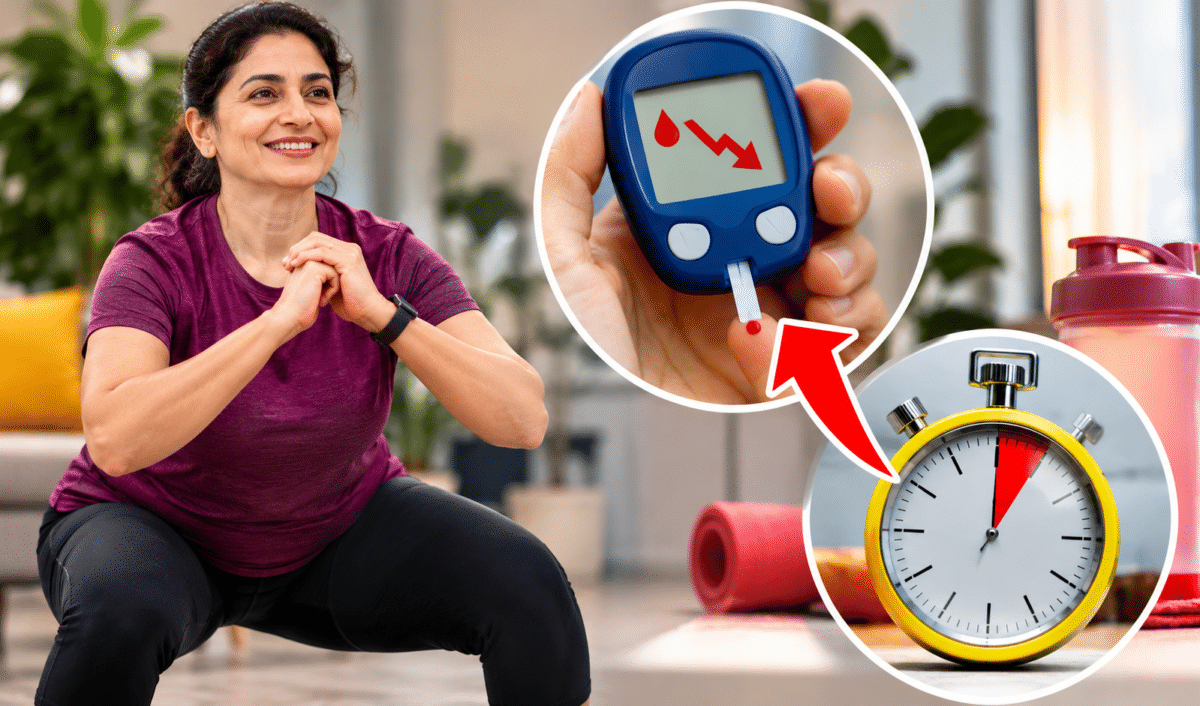
A 2026 Diabetologia study found that four 1-minute bursts of bodyweight exercise near meals trimmed post-meal glucose spikes. Short bouts are not a full exercise plan, but they are a proven place to start.
By the Health & Fitness DeskFact-checked against CDC data, ADA guidance and peer-reviewed trialsUpdated November 9, 2026Scope: U.S. adults with type 2 diabetes or prediabetes
You finished dinner 20 minutes ago. The dishes can wait, the couch is calling, and a 45-minute workout feels about as likely as a trip to the moon. Here is the question researchers have been testing: what if five minutes of movement, done right after that meal, did measurable good for your blood sugar?
The evidence says it can, within limits. In a randomized crossover study published in Diabetologia in 2026, 31 adults with well-managed type 2 diabetes did four 60-second bursts of moves like squats, jogging in place or jumping jacks, ideally within an hour of meals. Continuous glucose monitors showed lower daytime blood sugar and smaller post-meal spikes on those days than on sedentary ones. The changes were modest, not dramatic. For the roughly 40 million Americans with diabetes, modest and doable may be exactly the point.
What We Know
- A 2026 Diabetologia study of 31 adults with type 2 diabetes found four 1-minute exercise bursts near meals lowered post-meal glucose and daytime levels.
- A 2016 Diabetes Care study found 3-minute activity breaks every 30 minutes reduced glucose, insulin and C-peptide responses over a day of sitting.
- A 2022 meta-analysis of 7 studies found 2 to 5 minutes of light walking after meals lowered blood sugar more than sitting or standing.
- CDC data show 40.1 million Americans have diabetes and 115.2 million adults have prediabetes.
What Is Still Unclear
- Whether daily exercise snacks lower A1c over months, not just glucose on the day, is not yet proven.
- The best number, timing and intensity of short bouts has not been settled.
- Most studies are small, short and involve people whose diabetes is already well managed.
- A separate 2026 study suggests longer sessions predict bigger A1c gains, so short bouts may be a floor rather than a ceiling.
Why Diabetes Experts Are Paying Attention to Tiny Workouts
Scale explains the interest. According to the CDC, 40.1 million people in the United States, or 12.0% of the population, had diabetes in 2023. About 11 million of them did not know it. Another 115.2 million adults had prediabetes, including more than half of Americans aged 65 and older. Most were not meeting activity targets, and “no time” is one of the most common reasons people give.
The U.S. Blood Sugar Picture in Millions of People
Muscles are the reason short bursts work. When muscles contract, they pull glucose out of the bloodstream for fuel, using pathways that do not depend entirely on insulin. That matters in type 2 diabetes, where insulin works less effectively. Moving soon after eating catches glucose as it enters the blood, which is why timing shows up again and again in the research.
Three Studies, Three Short Formats That Moved Glucose
Four One-Minute Bursts Near Meals
The 2026 Diabetologia study is notable because it happened in real life. Participants exercised at home, prompted by short emailed videos, while wearing glucose monitors and fitness trackers. On active days they did four 60-second bursts spread across the day and nothing else. Compared with sedentary days, post-meal spikes were smaller and glucose swings steadier. The authors acknowledged it was small and could not say how long the benefits last.
Three-Minute Breaks Every Half-Hour
In a 2016 study in Diabetes Care, researchers at Australia’s Baker Heart and Diabetes Institute had 24 inactive adults with type 2 diabetes sit for 8 hours on three separate days. On two of those days, participants got up every 30 minutes for 3 minutes of either light walking or simple resistance moves such as half-squats and calf raises. Both reduced glucose, insulin and C-peptide responses compared with uninterrupted sitting. Only the resistance breaks also lowered triglycerides.
A Short Walk After Eating
A 2022 meta-analysis in Sports Medicine, led by Aidan Buffey of the University of Limerick, pooled 7 studies. As little as 2 to 5 minutes of light walking after a meal lowered blood sugar compared with sitting. Standing helped a little. Walking helped more, and it was the only option that measurably lowered insulin. The benefit was strongest when movement happened within 60 to 90 minutes of finishing a meal.
| Study | Who | Format | Daily active minutes | Main finding |
|---|---|---|---|---|
| Diabetologia, 2026 | 31 adults, well-managed type 2 | 4 bursts of 60 seconds, near meals | 4 | Smaller post-meal spikes, lower daytime glucose |
| Diabetes Care, 2016 | 24 adults, type 2, mean age 62 | 3 minutes every 30 minutes over 8 hours | 42 to 48 | Lower glucose, insulin, C-peptide; resistance also cut triglycerides |
| Sports Medicine, 2022 | 7 pooled studies | 2 to 5 minutes of light walking after meals | 6 to 15 | Lower blood sugar vs sitting; standing helped less |
| Med Sci Sports Exerc, 2026 | 58 adults, newly diagnosed type 2 | 26-week personalized program | Varied | Longer sessions predicted bigger A1c drops |
| ADA guidance | Adults with diabetes | 150 minutes a week plus 2 to 3 strength sessions | About 21 on average | Core recommendation for long-term control |
The 5-Minute Routine: Five Moves, Sixty Seconds Each
This routine combines the bodyweight moves used in exercise-snack research with the half-squats and calf raises from the sitting-breaks study. It needs no equipment, fits in a kitchen and can be scaled down. Aim for an effort where you can talk but would not want to sing.
- 0:00 to 1:00March in placeLift knees to hip height if comfortable and swing your arms.Warm-up, about 100 steps
- 1:00 to 2:00Chair squatsSit back toward a sturdy chair, tap it, stand up.10 to 15 reps
- 2:00 to 3:00Wall or counter push-upsHands on the counter edge, body straight.10 to 15 reps
- 3:00 to 4:00Step jacksStep one foot out as arms rise, alternate sides; jump only if cleared.30 to 40 steps
- 4:00 to 5:00Calf raisesHold the counter, rise onto toes, lower slowly.15 to 20 reps
Scaling the Routine Up or Down
If five moves in a row feels like too much, start seated. Marching, arm raises and seated leg extensions still contract large muscles, and the 2022 meta-analysis found that even light effort beat sitting still. If the routine feels easy after two or three weeks, raise the challenge rather than the time: slow the lowering phase of each squat to three seconds, move your hands lower on the counter for push-ups, or swap step jacks for brisk stair climbing. The goal is an effort around 5 or 6 on a 10-point scale, enough to warm you up without leaving you breathless. People with balance concerns can keep one hand on the counter for every move.
How Short Bouts Add Up Toward the Weekly Goal
When to Move: A Day Built Around Meals
Because post-meal glucose rises fastest in the first hour or so, the timing below follows the 60 to 90 minute window from the walking meta-analysis and the near-meal approach from the 2026 study. Exact times are illustrative.
- 7:30 a.m.BreakfastCheck glucose first if you use insulin or a sulfonylurea.
- 8:00 a.m.Snack 1: 5-minute routineAbout 30 minutes after eating.
- 10:30 a.m.Desk break3 minutes of calf raises and half-squats, as in the sitting study.
- 12:30 p.m.Lunch, then walk5 minutes of easy walking within 60 to 90 minutes.
- 3:00 p.m.Desk breakAnother 3-minute interruption to sitting.
- 6:30 p.m.DinnerOften the largest meal and biggest spike.
- 7:00 p.m.Snack 2: 5-minute routineBefore settling on the couch.
Dinner deserves special attention. For many Americans it is the largest and most carbohydrate-heavy meal, and it is followed by the longest stretch of sitting in the day. A short routine at that moment targets the biggest rise. If evening exercise makes it hard to fall asleep, choose the gentler moves, such as marching and calf raises, and save step jacks for earlier in the day. Desk workers can treat the mid-morning and mid-afternoon breaks as the minimum and add the post-meal routines as their schedule allows.
Active Minutes in an 8-Hour Sitting Day by Break Pattern
Check Before You Move: Glucose Zones for Insulin Users
For most people with type 2 diabetes who manage it with lifestyle, metformin or GLP-1 drugs, a 5-minute routine carries little risk of low blood sugar. The picture changes if you take insulin or a sulfonylurea such as glipizide, which can push glucose too low during activity. These general zones reflect common ADA guidance; your care team may set different numbers.
People taking GLP-1 drugs such as Ozempic or Mounjaro have a different consideration. Low blood sugar is uncommon unless they also use insulin or a sulfonylurea, but nausea can make bouncing moves uncomfortable soon after eating. Choosing walking, squats and calf raises over step jacks, and waiting 20 to 30 minutes after a meal, usually solves that.
| Your situation | 5-minute routine | What to adjust | Ask your clinician about |
|---|---|---|---|
| Prediabetes | Good fit | Add after the largest meal first | Building toward 150 minutes a week |
| Type 2, diet or metformin | Good fit | None needed for most | Adding strength training |
| Type 2 on GLP-1 drugs | Good fit | Gentler moves if nauseated | Protecting muscle during weight loss |
| Type 2 on insulin or sulfonylurea | Check first | Test glucose; carry fast carbs | Dose timing around activity |
| Type 1 diabetes | Check first | Monitor before and after | Insulin and carb adjustments |
| Diabetic eye disease (retinopathy) | Modify | Skip jumping and straining | Which intensity is safe |
| Foot numbness (neuropathy) | Modify | Supportive shoes; check feet daily | Low-impact alternatives |
| Heart disease or chest symptoms | Clear first | Stop if chest pain or dizziness | Whether testing is needed |
Six Steps to Make the Habit Stick
- Pick one anchor mealStart after dinner, when many people see the biggest spike.
- Set a 30-minute reminderA phone alarm after eating removes the decision.
- Start with 2 minutes if 5 feels hardThe walking meta-analysis found benefits from 2 to 5 minutes.
- Add a second session after 2 weeksThen a third, building toward 15 minutes a day.
- Watch your own dataIf you wear a glucose monitor, compare post-meal peaks on active and inactive days.
- Layer in strength twice a weekThe ADA recommends 2 to 3 resistance sessions on nonconsecutive days.
- Sturdy chair nearbyFor squats and balance.
- Supportive shoesEspecially with neuropathy.
- Fast carbs within reach15 grams if you use insulin.
- Water bottleSip before and after.
- Talk testSpeak in full sentences, not sing.
- Stop signals knownChest pain, dizziness, shortness of breath.
Frequently Asked Questions
Can 5 minutes of exercise lower blood sugar?
Yes, for the hours after you do it. Studies show 2 to 5 minutes of light walking after meals, 3-minute breaks every 30 minutes and four 1-minute exercise bursts a day can all reduce post-meal glucose in people with type 2 diabetes or at risk of it.
What is the best exercise to lower blood sugar quickly?
Walking soon after a meal is the most studied option. Simple resistance moves like squats and calf raises also help and may lower triglycerides. The best choice is the one you can do consistently and safely.
When should I exercise after eating to lower blood sugar?
Research suggests within about 60 to 90 minutes after finishing a meal, when glucose is rising. Many people start 15 to 30 minutes after eating.
What are exercise snacks?
Exercise snacks are very short bouts of activity, often 1 to 5 minutes, spread through the day. Examples include stair climbing, squats, brisk walking or marching in place.
How much exercise does the American Diabetes Association recommend?
For most adults with diabetes, at least 150 minutes a week of moderate to vigorous activity over at least 3 days, plus 2 to 3 strength sessions on nonconsecutive days, and breaking up long sitting about every 30 minutes.
Can short workouts lower A1c?
Short bouts clearly improve glucose on the day they are done. Whether they alone lower A1c over months is less certain. A 2026 study found longer sessions predicted bigger A1c drops, so short bouts work best as a starting point.
Is it safe to exercise with diabetes if I take insulin?
Generally yes, with precautions. Check glucose before activity, carry fast-acting carbs, and treat readings below 70 mg/dL before exercising. Ask your care team how to adjust doses or snacks.
Do exercise snacks help with prediabetes?
They can reduce post-meal glucose and help build an activity habit. Prevention programs focus on reaching about 150 minutes of weekly activity and modest weight loss, and short bouts can count toward that total.
The Short Version
A 5-minute workout will not replace a full exercise plan, but research shows it can lower the blood sugar spike after a meal. A 2026 Diabetologia study found four 1-minute bursts near meals helped adults with type 2 diabetes, matching earlier findings on 3-minute sitting breaks and 2- to 5-minute post-meal walks. Do the five-move routine within an hour of eating, start with your largest meal, and build toward 150 weekly minutes plus strength work. If you use insulin or a sulfonylurea, check your glucose first.

Omisha is a health writer passionate about turning complex medical research into clear, actionable content readers can trust. She covers everything from nutrition and mental wellness to chronic disease management, always grounding her work in credible science and real-world relevance. When she's not writing, she's usually reading up on the latest health studies or exploring new wellness trends to write about next.