Fitness · Strength · U.S. Fall 2026
Morning Outdoor Leg Workout: A 20-Minute Plan That Builds Strength and Resets Your Body Clock
With clocks back on standard time since Nov. 1, sunrise arrives about an hour earlier. Research links leg strength to longer life and morning daylight to earlier, steadier sleep. Here is how to combine both, safely.
ByThe Fitness & Health DeskFact-checkedAgainst CDC, NSC and federal activity guidance plus peer-reviewed studiesUpdatedNovember 9, 2026ScopeU.S. adults without major joint or heart limits
The alarm goes off, and for the first time in weeks it is not pitch black outside. When daylight saving time ended on Sunday, Nov. 1, sunrise across most of the country jumped about an hour earlier. For a few weeks, many people have a narrow window of morning daylight before work that did not exist in October. That window is a good place for one of the most useful things an adult can train: their legs.
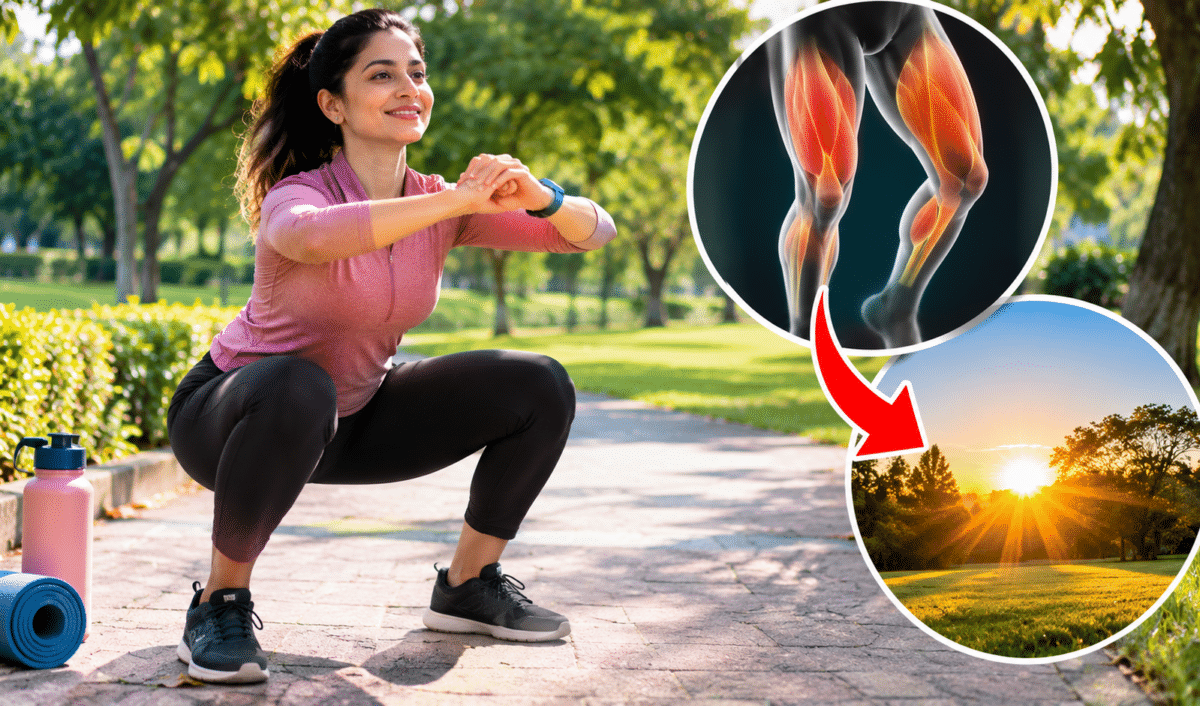
Strong legs carry you up stairs, out of chairs and through the decades. A 2026 study in JAMA Network Open of more than 5,000 women aged 63 to 99 found that faster chair-stand times and stronger grip were linked to lower risk of death over eight years. Separately, University of Washington researchers found that daytime outdoor light, even on cloudy winter days, shifts the body clock earlier. A short outdoor leg session captures both effects at once, and it needs nothing more than a park bench, a curb and comfortable shoes.
What We Know
- Federal Physical Activity Guidelines call for muscle-strengthening activity on at least 2 days a week.
- CDC survey data for 2020 found 31.0% of adults met that guideline and 24.2% met both strength and aerobic targets.
- A 2026 JAMA Network Open study linked faster chair-stand times and stronger grip to lower mortality in older women.
- A University of Washington study found each hour of daytime light shifted body clocks about 30 minutes earlier.
- The National Safety Council reports 74% of pedestrian traffic deaths happen in dark conditions.
What Is Still Unclear
- Whether morning workouts build more strength than evening ones has not been settled; consistency matters more than clock time.
- The strength-mortality studies are observational, so they show links, not proof that training extends life.
- How much outdoor light is needed to shift the body clock for any one person varies with age, latitude and weather.
- Most light-and-sleep research involves young adults, such as college students.
Why Your Legs Deserve the First 20 Minutes of the Day
Most Americans skip strength training entirely. The CDC’s National Health Interview Survey for 2020 found that fewer than half of adults met the aerobic activity guideline, fewer than a third met the muscle-strengthening guideline, and about a quarter met both. The gap widens with age, which is exactly when leg strength starts to matter most for balance, independence and fall prevention.
How Many U.S. Adults Meet Physical Activity Guidelines
Meeting Both Guidelines Falls Steeply With Age
Men
Women
The Chair-Stand Clue to Longevity
The 2026 JAMA Network Open study, led by Michael LaMonte at the University at Buffalo, measured two simple things in more than 5,000 older women: grip strength and how quickly they could stand up from a chair five times without using their arms. Over eight years, each additional 7 kilograms of grip strength was associated with about a 12% lower risk of death, and each 6-second improvement in chair-stand time with about a 4% lower risk. The links held after accounting for daily activity measured by accelerometers, walking speed and inflammation. The chair stand is essentially a leg test, which is why squats and step-ups belong at the center of any morning routine.
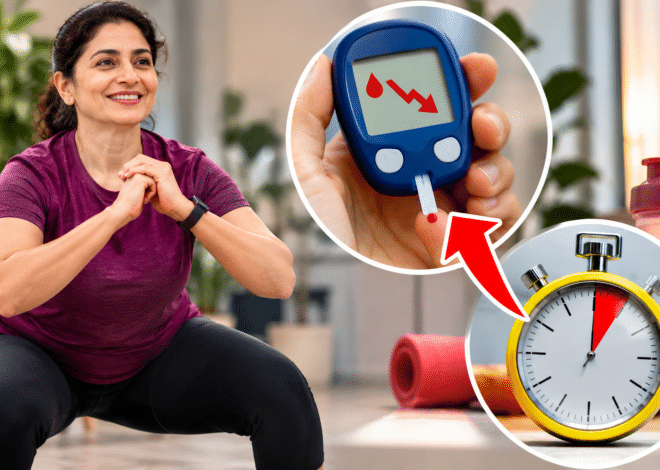
There is a metabolic reason to start with legs, too. The muscles of the hips and thighs are among the largest in the body, so working them demands more energy and moves more glucose out of the bloodstream than training smaller muscle groups. That makes a leg session one of the most efficient uses of a short morning window.
What Morning Daylight Does That the Gym Lights Cannot
Your internal clock runs a little longer than 24 hours and needs daily cues to stay aligned. Light is the strongest one. A University of Washington study published in the Journal of Pineal Research tracked 507 undergraduates with wrist monitors from 2015 to 2018. Each hour of daytime light moved their body clocks about 30 minutes earlier, while each hour of indoor evening light pushed them about 15 minutes later. Crucially, even cloudy outdoor winter light had the effect, because it is far brighter than typical indoor lighting.
How Light and Season Moved Students’ Body Clocks
The study’s setting, Seattle, gets nearly 16 hours of daylight at the summer solstice and just over 8 at the winter solstice. Much of the country sits somewhere between. The practical takeaway: in the darker half of the year, getting outside in the morning is one of the few levers you control that nudges your clock earlier. A 20-minute workout outdoors stacks that light exposure onto exercise you were going to do anyway.
The 20-Minute Park-Bench Leg Circuit
This circuit uses six movements that train the quadriceps, hamstrings, glutes, inner and outer thighs and calves. Do each move for the listed reps, rest about 30 seconds, and complete two or three rounds depending on fitness. All you need is a sturdy bench, low wall or step and a curb.
- 1Bodyweight squatsFeet shoulder-width, sit hips back, chest tall, stand fully.12 to 15 repsQuads, glutes
- 2Reverse lungesStep back, lower until both knees bend near 90 degrees, push up.8 to 10 per legQuads, glutes, balance
- 3Bench step-upsStep onto a bench or wall 12 to 18 inches high, drive through the heel.8 to 10 per legGlutes, quads
- 4Lateral lungesStep wide to one side, sit into that hip, keep the other leg straight.8 per sideInner and outer thighs
- 5Single-leg hingeHold the bench lightly, hinge forward on one leg, back flat.8 per legHamstrings, glutes
- 6Curb calf raisesBalls of feet on a curb edge, rise high, lower slowly below level.15 to 20 repsCalves, ankles
- 0:00 to 5:00Warm-upBrisk walk to the park, plus 10 leg swings each side.
- 5:00 to 10:00Round 1All six moves at an easy tempo.
- 10:00 to 15:00Round 2Same moves, slower lowering, 3 seconds down.
- 15:00 to 18:00Round 3 or hillThird round, or 4 brisk uphill walks of 30 seconds.
- 18:00 to 20:00Cool-downEasy walk and calf, hip and hamstring stretches.
Three Form Checks Worth More Than Extra Reps
First, watch your knees on squats, lunges and step-ups. They should track in line with your second and third toes rather than caving inward, which loads the joint unevenly. Second, keep your weight spread across the whole foot, especially the heel, when you stand up; rising onto your toes shifts work away from the glutes and onto the knees. Third, on single-leg hinges, think about pushing your hips back rather than reaching your hands to the ground. A flat back and a slight knee bend protect the lower back and put the work into the hamstrings, where it belongs.
Easier Options for Stiff Knees or New Exercisers
If full squats or lunges hurt, shorten the range rather than skipping the move. Squat to the bench and stand back up, hold the back of the bench during lunges, and use a low step or curb instead of a full-height bench. Static holds, such as a wall sit against a tree or a split-squat hold for 20 to 30 seconds, build strength with less joint movement. People returning after injury, surgery or a long break should check with a physical therapist about which variations fit.
Make It Harder Without Adding Time
Once 3 rounds feel manageable, increase difficulty instead of duration. Slow the lowering phase to 3 or 4 seconds, pause at the bottom of each squat and lunge, use a higher bench for step-ups, or switch to split squats with your back foot on the bench. Each change raises the demand on your muscles, which is what drives strength gains, while keeping the session at 20 minutes.
| Weeks | Rounds | Lowering tempo | Sessions per week | Progression cue |
|---|---|---|---|---|
| 1 to 2 | 2 | 2 seconds | 2 | Learn form; finish feeling you could do more |
| 3 to 4 | 2 to 3 | 3 seconds | 2 to 3 | Add the third round if recovery feels good |
| 5 to 6 | 3 | 3 seconds plus pause | 3 | Raise bench height or add hill walks |
| 7 to 8 | 3 | 4 seconds | 3 | Swap squats for bench split squats |
| 9 and up | 3 | 4 seconds | 2 to 3 | Test chair stands and track your time |
Cold, Dark and Slippery: Reading the Morning Before You Go
November mornings bring two risks that summer workouts do not: cold muscles and poor visibility. The National Safety Council reports that 74% of the 7,080 pedestrian traffic deaths in 2024 occurred in dark conditions, with or without streetlights. If your route starts before sunrise, visibility is a safety issue, not a style choice.
| Condition | Risk | What to change | Gear |
|---|---|---|---|
| Before sunrise | Visibility | Stay in lit areas; face traffic when walking on roads | Reflective vest, clip-on light |
| Dawn, clear | Low | Best time for daylight benefit | Bright outer layer |
| Frost on surfaces | Slipping | Replace step-ups and curb raises with squats and lunges on dry pavement | Shoes with good tread |
| Rain | Slipping, chill | Shorten to 2 rounds; avoid wet benches | Water-resistant shell |
| Strong wind | Wind chill | Start into the wind, finish with it at your back | Windproof layer, hat |
| Ice | Falls | Move indoors | None outdoors |
| Air quality alert | Breathing | Check AirNow; move indoors if unhealthy | None |
Six Habits That Turn One Workout Into a Routine
- Lay out clothes the night beforeRemoving decisions at 6:30 a.m. is half the battle.
- Pick a fixed routeA park or schoolyard within a 5-minute walk keeps the session at 20 minutes.
- Schedule 3 days, expect 2Missing one session still meets the 2-day guideline.
- Test your chair stand monthlyTime 5 sit-to-stands with arms crossed and watch it improve.
- Eat protein at breakfastPairing training with protein supports muscle repair.
- Keep evening screens dimmerThe UW study found evening light pushes your clock later.
- Warm-up 5 to 8 minutesLonger when below 50°F.
- Reflective layerAny time before full daylight.
- Bench height 12 to 18 inchesLower if knees complain.
- Rest 30 secondsBetween moves, not minutes.
- Stop for sharp painMild burn is fine; joint pain is not.
- Water before and afterCold air still dehydrates.
Frequently Asked Questions
Is it better to work out legs in the morning or evening?
Both build strength. Research has not settled a clear winner, and consistency matters more than clock time. Morning outdoor sessions add daylight exposure, which helps shift the body clock earlier.
Can you build leg muscle without weights?
Yes. Bodyweight squats, lunges, step-ups and single-leg exercises can build strength, especially for beginners. Progress by slowing the tempo, adding pauses or using single-leg versions.
How many days a week should I train legs?
Federal guidelines recommend muscle-strengthening activities for all major muscle groups on at least 2 days a week. Two or three leg sessions with a rest day between them works well for most people.
Is it safe to exercise outside in cold weather?
For most healthy adults, yes. Dress in layers, cover hands and head, warm up longer and move indoors in icy conditions or extreme wind chill. People with heart or lung conditions should ask their doctor first.
How long should a leg workout be?
Twenty minutes is enough for a focused bodyweight session with a warm-up and cool-down. Strength comes from effort and consistency more than length.
Does morning sunlight really help sleep?
Research suggests yes. A University of Washington study found each hour of daytime light shifted the body clock about 30 minutes earlier, which can make falling asleep and waking easier.
What is the chair stand test?
It measures how quickly you can stand up from a chair five times without using your arms. A 2026 study found faster times were linked to lower risk of death in women aged 63 to 99.
What should I wear for a dark morning workout?
Wear bright or reflective clothing and a small light, especially before sunrise. The National Safety Council reports most pedestrian traffic deaths happen in dark conditions.
The Short Version
Standard time has brought brighter mornings, making mid-November a smart moment to start a morning outdoor leg workout. Fewer than a third of U.S. adults meet the strength guideline, yet leg strength tracks with longevity, and morning daylight helps set your body clock. A 20-minute park-bench circuit of squats, lunges, step-ups, lateral lunges, single-leg hinges and calf raises, done 2 to 3 times a week, covers the basics. Warm up longer in the cold, wear reflective gear before sunrise, and move indoors when surfaces are icy.

Omisha is a health writer passionate about turning complex medical research into clear, actionable content readers can trust. She covers everything from nutrition and mental wellness to chronic disease management, always grounding her work in credible science and real-world relevance. When she's not writing, she's usually reading up on the latest health studies or exploring new wellness trends to write about next.