Nutrition Research / Immune Health / Adults 60+
Can a Daily Handful of Walnuts Support Your Immune System — and What Do Higher Antibody Levels Really Mean?
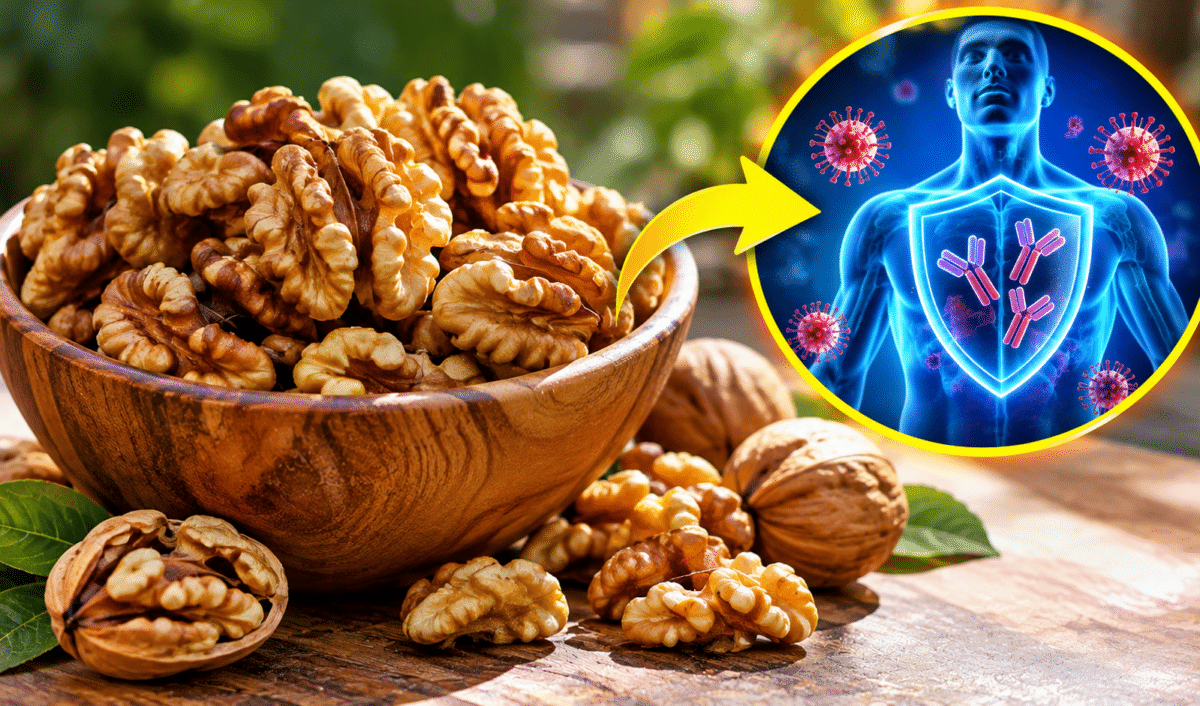
A new analysis of a two-year trial found older adults who ate walnuts every day had about 6% higher levels of IgG, the body’s most common antibody, than those who skipped them. Researchers say the health meaning is still unknown.
By The Nutrition Science DeskFact-checked against JACC Advances, Circulation and Nutrients study reportsUpdated November 12, 2026Scope U.S. adults, especially 60 and older
As we age, the immune system slowly changes. Older adults tend to respond less strongly to vaccines and infections, a process scientists call immunosenescence. So when a headline suggests a common food might support immune health, it is natural to pay attention, especially heading into cold and flu season.
The latest study comes from the Walnuts and Healthy Aging trial, known as WAHA, one of the largest and longest nut studies ever run. A new analysis published in JACC Advances found that eating walnuts every day for two years was linked to modestly higher levels of a key antibody. The finding is real but narrow, and the researchers were careful not to overstate it. Here is what was measured and what it may or may not mean for you.
What We Know
- Total IgG was about 6% higher in the walnut group than controls after two years.
- U.S. participants showed an 11% difference; Spanish participants showed no significant effect.
- Walnuts did not significantly change IgM, oxidized LDL or antibodies against it.
- Earlier WAHA results showed walnuts lowered LDL cholesterol by 4.3 mg/dL over two years.
What Is Still Unclear
- Whether higher IgG is beneficial, neutral or harmful in this context.
- Why results differed between the U.S. and Spain.
- Whether walnuts reduce infections or improve vaccine responses; neither was measured.
- The analysis was post hoc, with many comparisons and no correction for multiple testing.
Inside the Two-Year Walnut Trial
WAHA enrolled 708 cognitively healthy adults aged 63 to 79 in two places, Loma Linda, California, and Barcelona, Spain, between May 2012 and May 2014. Half were randomly assigned to eat walnuts every day, about 15% of their daily calories or 30 to 60 grams. The other half avoided walnuts. People who already ate more than two servings of tree nuts a week, or took fish oil, flaxseed oil or soy lecithin supplements, were excluded.
To check whether people actually ate their walnuts, researchers measured alpha-linolenic acid, or ALA, the plant omega-3 in walnuts, in the red blood cell membranes of Spanish participants. ALA rose 426% in the walnut group and fell 6% in the control group, strong evidence that participants followed the plan.
Why Older Adults Were the Focus
WAHA was designed to study healthy aging, so every participant was in their 60s or 70s. That matters for immune research. With age, the body tends to make fewer new immune cells, and antibody levels and vaccine responses can shift. Researchers are interested in whether everyday foods can slow those changes. A trial that runs for two years, rather than a few weeks, gives slow-moving markers such as antibody levels time to change, which is one reason this analysis drew attention despite its limits.
What the Researchers Measured
The team, led by T. Sharma with G. Chiva-Blanch, M. Caga-Anan and colleagues, tested blood samples at the start and after two years for total immunoglobulin G and M, oxidized LDL known as MDA-LDL, and antibodies against oxidized LDL. These markers sit at the crossroads of immunity and heart disease, because the immune system reacts to oxidized cholesterol in artery walls.
IgG, IgM and Why a 6% Difference Is Hard to Read
Antibodies, also called immunoglobulins, are Y-shaped proteins that tag germs and damaged molecules for removal. There are several types, and they do different jobs.
Walnut Group Versus Control After Two Years
Two details complicate the headline. First, total IgG and IgM fell in both groups over the two years, which may reflect normal aging. The walnut group’s IgG simply declined less. Second, at the start, American participants had total IgG and IgM levels about 25% lower than Spanish participants, and the two groups also differed in weight, smoking, education and cholesterol. The researchers could not determine what drove the different results by country.
Is More IgG Always Better?
Not necessarily. Very low IgG can leave people vulnerable to infections, but high IgG can also reflect chronic inflammation or immune disease. The News-Medical summary noted an earlier analysis of the ASCOT trial that linked higher IgG to fewer cardiovascular events in people with high blood pressure. That is suggestive, not proof. The WAHA authors wrote that whether the IgG difference is “beneficial, neutral, or adverse” was not established, and they did not measure infections or heart events.
What Earlier Walnut Research Found
The immune findings add to a longer body of WAHA research. The trial’s best-known result, published in Circulation in August 2021, found walnuts lowered LDL cholesterol and shifted cholesterol particles toward a healthier profile. Lead researcher Emilio Ros of the Hospital Clinic of Barcelona noted that the healthy fats in walnuts “did not cause participants to gain weight.” Those earlier analyses were funded by the California Walnut Commission; the funding source for the new analysis was not stated in the summary reviewed.
WAHA Cholesterol Results After Two Years
Not every walnut study has been positive. A small 2025 randomized trial in the journal Nutrients, with 20 middle-aged adults at cardiometabolic risk completing four weeks of daily walnuts, found no significant changes in antioxidant capacity or inflammatory markers such as IL-6 and TNF-alpha. The authors suggested four weeks may have been too short. Some earlier walnut trials had reported reductions in those same inflammatory markers.
- 2012WAHA enrollment begins in California and Spain
- 2014Enrollment closes at 708 adults
- 2016Two-year intervention ends
- 2021Circulation reports LDL drop of 4.3 mg/dL
- 20254-week Nutrients trial finds no inflammation change
- 2026JACC Advances reports 6% higher IgG
How Many Walnuts Is the Trial Dose?
The trial dose of 30 to 60 grams is roughly 1 to 2 ounces, or about a quarter to a half cup. The American Heart Association counts 1.5 ounces of nuts as a serving, and the FDA has allowed a qualified health claim since 2004 that eating 1.5 ounces of walnuts a day as part of a low-saturated-fat diet may reduce heart disease risk. The values below are scaled from USDA FoodData Central figures for one ounce of English walnuts, about 14 halves.
| Amount | Calories | Total fat | Plant omega-3 ALA | Protein | Fiber |
|---|---|---|---|---|---|
| 1 ounce, 28 g | 185 | 18.5 g | 2.5 g | 4.3 g | 1.9 g |
| 30 g, trial low end | About 196 | About 19.6 g | About 2.7 g | About 4.6 g | About 2.0 g |
| 1.5 ounces, 42.5 g | About 278 | About 27.8 g | About 3.8 g | About 6.5 g | About 2.9 g |
| 60 g, trial high end | About 392 | About 39.2 g | About 5.3 g | About 9.1 g | About 4.0 g |
| 60 g share of 2,000 calories | About 20% | Mostly unsaturated | Above daily adequate intake | About 18% of 50 g | About 14% of 28 g |
Calories by Walnut Portion
What Makes Walnuts Different From Other Nuts
Most nuts are rich in monounsaturated fat. Walnuts stand out because most of their fat is polyunsaturated, including a meaningful amount of alpha-linolenic acid, the plant form of omega-3 fat. One ounce supplies about 2.5 grams, more than the daily adequate intake set for adults. Walnuts also contain polyphenols called ellagitannins, which gut bacteria convert into compounds called urolithins that have shown anti-inflammatory activity in laboratory studies. Researchers suspect this mix, rather than any single nutrient, explains why walnuts are studied for heart, brain and immune effects.
That does not mean walnuts are the only nut worth eating. Almonds, pistachios, pecans and peanuts all have evidence linking them to better heart health as part of a balanced diet. If you prefer another nut, the broad advice to eat a small handful most days still applies.
Who Should Be Careful
Tree nut allergy is one of the most common food allergies and can be severe, so anyone with a known or suspected allergy should avoid walnuts. People on calorie-restricted diets should account for walnuts’ energy density. Walnuts are also high in oxalate, which may matter for people prone to kidney stones, and anyone with a medical condition should check with their doctor before making large diet changes.
How to Add Walnuts Without Overdoing It
The research supports walnuts as part of an overall healthy pattern, such as the Mediterranean or DASH diets, rather than as an immune supplement. These steps reflect the trial dose and federal guidance.
- Aim for 1 to 1.5 ounces most daysThat is about 14 to 21 halves, matching the FDA claim amount and the trial’s low end.
- Swap, do not stackReplace chips, cookies or cheese snacks rather than adding walnuts on top.
- Choose plain or lightly toastedSkip candied and heavily salted versions that add sugar and sodium.
- Mix them into mealsStir into oatmeal or yogurt, toss on salads or grind into a pesto.
- Store them coldTheir unsaturated oils go rancid; refrigerate or freeze for longer freshness.
- Keep realistic expectationsWalnuts are not a substitute for vaccines, sleep, exercise or medical care.
Beyond Walnuts: Habits With Stronger Immune Evidence
If immune health is your goal, the strongest evidence still points to vaccines, sufficient sleep, regular physical activity, not smoking and an overall diet rich in fruits, vegetables, whole grains and legumes. Walnuts can be one useful part of that pattern, alongside other nuts, seeds, fish and plant oils that supply healthy fats.
- 1 to 1.5 ounces a dayAbout 14 to 21 halves
- 185 calories per ounceSwap for other snacks
- 2.5 g plant omega-3 per ounceALA, per USDA data
- Avoid if allergicTree nut allergy can be severe
- Refrigerate or freezeKeeps oils fresh
- Vaccines firstWalnuts are a complement, not a cure
Frequently Asked Questions
Do walnuts boost the immune system?
A 2026 analysis found daily walnuts were linked to about 6% higher IgG antibody levels over two years in older adults, but it did not show fewer infections or better immunity.
How many walnuts should I eat a day?
About 1 to 1.5 ounces, or 14 to 21 halves, fits common guidance. The WAHA trial used 30 to 60 grams a day, about 15% of daily calories.
What is IgG?
Immunoglobulin G is the most common antibody in blood. It provides long-term protection after infections and vaccines.
Are walnuts good for your heart?
The WAHA trial found walnuts lowered LDL cholesterol by 4.3 mg/dL over two years, and the FDA allows a qualified health claim for 1.5 ounces a day.
Do walnuts reduce inflammation?
Results are mixed. Some earlier trials reported lower inflammatory markers, but a 2025 four-week trial found no significant change.
How many calories are in a handful of walnuts?
About 185 calories per ounce, roughly 14 halves, according to USDA data.
Will eating walnuts make me gain weight?
In the WAHA trial, walnut eaters did not gain meaningful weight over two years, but walnuts are calorie-dense, so swapping them for other snacks is wise.
Who funded the walnut research?
Earlier WAHA analyses were funded by the California Walnut Commission. The funding source for the new immune analysis was not stated in the summary reviewed.
The Short Version
A new analysis of the two-year WAHA trial found older adults who ate 30 to 60 grams of walnuts daily had about 6% higher IgG antibody levels than controls, 11% in U.S. participants but no significant effect in Spain. Walnuts did not change IgM or oxidized LDL. The researchers said the health meaning of the IgG difference is unknown, and infections were not measured. Walnuts still have solid heart evidence, including lower LDL cholesterol. Enjoy about an ounce a day as a snack swap, not as an immune cure.

Omisha is a health writer passionate about turning complex medical research into clear, actionable content readers can trust. She covers everything from nutrition and mental wellness to chronic disease management, always grounding her work in credible science and real-world relevance. When she's not writing, she's usually reading up on the latest health studies or exploring new wellness trends to write about next.