Weight Loss Medicine Skin and Body
Loose Skin After GLP-1 Weight Loss — What You Can Do Now, and When Fillers or Surgery Make Sense
As more Americans lose weight fast on drugs like semaglutide and tirzepatide, plastic surgeons report a surge in requests to fix sagging faces, arms and bellies. Here is why it happens and the options, from protein to procedures.
By The Health and Beauty DeskFact-checked against ASPS 2025 data, KFF polling and published clinical researchUpdated November 12, 2026Scope U.S. adults using or considering GLP-1 drugs
The number on the scale keeps falling, your blood sugar has improved and your clothes fit again. Then you catch your reflection and notice something unexpected: hollower cheeks, a looser jawline, skin on your arms or stomach that seems a size too big. For many people on GLP-1 medicines, this is the surprise nobody warned them about.
It is common enough to have a nickname, “Ozempic face,” and it is reshaping American plastic surgery. In a 2025 survey, 82% of American Society of Plastic Surgeons members said they had received GLP-1-related consultation requests. The good news is that there are steps you can take while losing weight, plus a range of treatments afterward, from injectables to body lifts. The key is knowing which tool fits which problem, and when.
What We Know
- 12% of U.S. adults say they currently take a GLP-1 drug, up 6 points since May 2024, per KFF.
- Rapid weight loss can cause sunken eyes, thinner lips and sagging in the lower face, neck and jaw.
- Lift procedures for arms, thighs and necks each rose about 20% in 2025.
- Combined filler and collagen-stimulator injections improved facial hollowing in a company-funded study.
What Is Still Unclear
- Whether GLP-1 drugs affect skin directly, beyond the effects of weight loss itself.
- Whether slower dose increases reduce sagging enough to matter.
- Long-term results of injectables in people who keep losing or regain weight.
- How much strength training and protein protect skin, as opposed to muscle.
A Fast-Growing Group of Americans
GLP-1 medicines such as semaglutide, sold as Ozempic and Wegovy, and tirzepatide, sold as Mounjaro and Zepbound, have gone mainstream. A KFF Health Tracking Poll fielded in late October and early November 2025 found 12% of adults currently use one and 18% have ever used one. Use peaks among adults 50 to 64, at 22%.
Who Is Taking GLP-1 Drugs
These drugs produce weight loss that was rarely possible without surgery. In large clinical trials, semaglutide at 2.4 mg led to average weight loss of about 15% over 68 weeks, and tirzepatide at its highest dose about 21% over 72 weeks. That scale and speed is exactly why skin often struggles to keep up.
Why Skin Cannot Always Snap Back
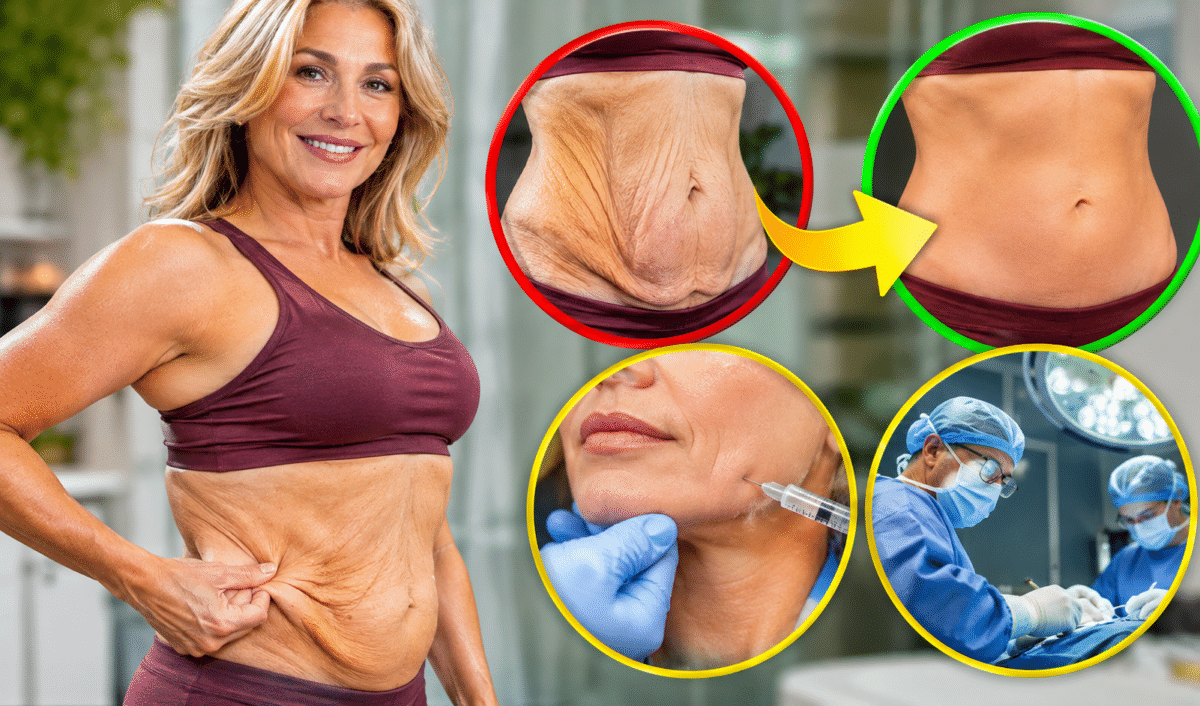
Fat does more than fill space. In the face, fat pads support the cheeks, temples and jawline. When they shrink quickly, the skin above them loses its scaffolding. Healio, summarizing specialist views, describes “Ozempic face” as changes centered on the chin, neck, jaw and lower face, and notes that rapid loss limits how far skin can recoil. Commonly described signs include sagging facial skin, sunken eyes, thinner lips and more prominent bone structure. On the body, skin that was stretched for years may have lost elastin and collagen, so it does not fully recoil.
Speed matters too. Dermatologist Sabrina Fabi of UC San Diego explained that rapid loss may not give skin time to adjust. She also cited lab research suggesting GLP-1s may affect fat-derived stem cells that help produce collagen, though that has not been proven in people. Age, genetics, sun damage, smoking and how much weight you lose all influence how much loose skin you end up with.
The Plastic Surgery Boom Driven by GLP-1s
The American Society of Plastic Surgeons’ 2025 data, released in September 2026, show how quickly GLP-1 weight loss is changing demand. “It’s more than a trend; it’s a seismic shift, and plastic surgery is forever changed by the advent of these drugs,” said Dr. Kristy Hamilton.
Which Procedures GLP-1 Patients Ask About
Body
Face
Procedure Growth in 2025
Why the Face Is Now the Focus
Early in the GLP-1 wave, most requests involved the body: bellies, arms and thighs. The 2025 numbers suggest a second phase is arriving. Brow lifts rose 29%, neck lifts 21%, eyelid surgery 19% and facelifts 13%, according to the ASPS. Dr. Sara Dickie described the moment as “the real start of this GLP-1 revolution,” as patients who reached their goal weight turn their attention to how their faces have changed. Facial consultation requests were also widespread: 71% of surgeons reported GLP-1-related facelift inquiries and 64% reported neck lift inquiries.
Facial fat grafting, which moves a patient’s own fat into hollowed areas, had the largest percentage increase of any cosmetic procedure. “Facial fat loss can be quite aging, and patients want a longer-lasting procedure,” said Dr. Kelly Killeen.
What to Do While You Are Still Losing Weight
You cannot fully control how your skin responds, but you can influence the tissues underneath it. These steps protect muscle, support skin quality and set you up for better results if you later choose treatment.
- Prioritize protein at every mealGLP-1 drugs reduce appetite, so protein often falls short. Ask your doctor or a dietitian for a daily target; adequate protein helps preserve muscle that supports your shape.
- Lift weights 2 or more days a weekStrength training rebuilds muscle under loose skin, which can improve contour, especially on the arms, buttocks and thighs.
- Ask about a gradual dose planFabi suggests slower loss may give skin more time to adjust. Never change your dose without your prescriber.
- Wear sunscreen dailySun damage breaks down collagen and elastin, making sagging worse. Use SPF 30 or higher on your face and neck.
- Stop smoking and stay hydratedSmoking damages collagen; hydration supports skin appearance, though it will not tighten loose skin.
- Talk about skin early“Skin health discussions should be introduced the moment someone is prescribed these medications,” Fabi said.
Creams, Supplements and Quick Fixes
Topical retinoids can modestly improve fine wrinkles and skin texture over months, and some newer formulations are being studied specifically in GLP-1 users. But no cream can remove significant excess skin, and collagen supplements have limited evidence for tightening. Be cautious with products marketed as “Ozempic face” cures, which often promise more than any topical can deliver.
Who Tends to Notice Sagging Most
Not everyone on a GLP-1 drug ends up with noticeable loose skin. People who lose a large share of their body weight, lose it quickly, or are older tend to see more change, because skin elasticity naturally declines with age and years of sun exposure. KFF found current GLP-1 use is highest among adults 50 to 64, a group whose skin already has less collagen than it did decades earlier. Smokers and people with a long history of significant weight gain may also have less skin recoil. Younger adults who lose a moderate amount of weight often see their skin adapt better over time, though there are no guarantees.
Matching the Problem to the Treatment
Treatment depends on whether the problem is lost volume, loose skin or both, and how much. Many surgeons prefer weight to be stable before major procedures, since further loss can undo results. The table below is a general guide; downtime estimates are indicative and vary by patient and surgeon.
| Concern | Non-surgical options | Surgical options | Indicative downtime | Best when |
|---|---|---|---|---|
| Hollow cheeks and temples | Hyaluronic acid fillers, collagen stimulators | Facial fat grafting | Days for fillers; 1 to 2 weeks for grafting | Volume loss with good skin quality |
| Jowls and neck laxity | Energy-based tightening for mild cases | Facelift, neck lift | 2 to 3 weeks | Moderate to severe sagging |
| Upper arms | Strength training | Arm lift | 2 to 4 weeks | Hanging skin under the arm |
| Abdomen | Strength training, core work | Tummy tuck, panniculectomy | 2 to 6 weeks | Apron of skin or separated muscles |
| Thighs | Strength training | Thigh lift | 3 to 6 weeks | Inner thigh skin folds |
| Breasts | None reliable | Breast lift, with or without implants | 1 to 3 weeks | Loss of volume and droop |
What the Injectable Research Shows
A phase 4 study by Galderma tested a combined regimen of Restylane hyaluronic acid fillers and Sculptra, a poly-L-lactic acid collagen stimulator, in people who had lost weight on GLP-1s. At week 40, 85.7% said their face looked less gaunt and 91.4% said they would recommend the regimen to others taking GLP-1s. The study was company-sponsored, and the experts Healio quoted had received consulting fees from Galderma, so independent research is still needed.
Facial Treatment Results and Usage
- While losingProtect the foundation. Protein, strength training 2 or more days a week, daily SPF 30 and no smoking.
- Weight slowingAssess with a specialist. A board-certified dermatologist or plastic surgeon can separate volume loss from loose skin.
- Weight stableStart injectables if needed. In the Galderma study, results were measured at week 40, so expect a process measured in months.
- Stable for monthsConsider surgery. Many surgeons prefer stable weight before lifts so results last.
- Long termMaintain. Keep strength training and stable weight; regain and loss can stretch skin again.
Energy Devices and Skin Tightening
Radiofrequency, microneedling with radiofrequency and ultrasound-based treatments heat deeper skin layers to encourage new collagen. Dermatologists generally reserve them for mild laxity, such as early jowling or slight neck looseness, and results build gradually over months. They will not lift a hanging fold of skin on the arms or abdomen. If a provider promises surgery-like results from a device alone, treat that as a warning sign and ask to see results in patients with a similar amount of weight loss.
Choosing the Right Specialist
Look for a board-certified dermatologist or a plastic surgeon certified by the American Board of Plastic Surgery, and ask how many post-weight-loss patients they treat. A good consultation should cover your weight history, current GLP-1 dose and whether you plan to keep taking it, since stopping the drug can lead to weight regain. Tell your surgeon you take a GLP-1 before any procedure involving anesthesia: these drugs slow stomach emptying, and surgical teams may give specific instructions about when to pause a dose. Never stop or skip your medication without guidance from the prescriber.
Insurance and Costs
Cosmetic procedures such as facelifts, arm lifts and fillers are usually paid out of pocket. A panniculectomy, which removes an overhanging apron of abdominal skin, may be covered by insurance when it causes documented medical problems such as rashes or infections. Ask your surgeon’s office to check coverage before scheduling, and get a written estimate that includes surgeon, anesthesia and facility fees. KFF found 56% of GLP-1 users already find the drugs difficult to afford, so budgeting for follow-up care matters. The same poll found 14% of people who had ever used a GLP-1 stopped because of cost and 13% stopped because of side effects, which is another reason surgeons like to see weight hold steady before operating.
- Protein at every mealAsk for a daily target
- Strength train 2+ daysRebuild muscle under skin
- SPF 30 dailyProtect collagen
- Fillers for volumeNot for loose skin
- Surgery for excess skinOnce weight is stable
- Board-certified specialistDermatologist or plastic surgeon
Frequently Asked Questions
What is Ozempic face?
It is an informal term for facial changes after rapid GLP-1 weight loss, including hollow cheeks, sagging skin, sunken eyes and thinner lips, caused mainly by loss of facial fat.
Can you prevent loose skin on GLP-1 drugs?
Not completely. Protein, strength training, sun protection and a gradual pace may reduce it, but age, genetics and amount of weight lost also matter.
Do fillers help Ozempic face?
They can restore lost volume. In a company-sponsored study combining fillers and a collagen stimulator, 85.7% of GLP-1 users said their face looked less gaunt at 40 weeks.
When should I get plastic surgery after weight loss?
Many surgeons prefer your weight to be stable for several months first, so further loss does not undo results. Discuss timing with a board-certified plastic surgeon.
Does insurance cover skin removal after weight loss?
Cosmetic lifts are usually not covered. A panniculectomy may be covered if excess abdominal skin causes documented medical problems.
How common is plastic surgery after GLP-1 weight loss?
In 2025, 82% of ASPS surgeons reported GLP-1-related requests, and arm, thigh and neck lifts each rose about 20%.
Does strength training tighten loose skin?
It does not shrink skin, but building muscle can fill out areas under loose skin and improve contour, especially on the arms and legs.
How many Americans take GLP-1 drugs?
A late-2025 KFF poll found 12% of U.S. adults currently take a GLP-1 drug and 18% have ever taken one.
The Short Version
Rapid GLP-1 weight loss can leave hollow cheeks and loose skin because fat shrinks faster than skin can tighten. With 12% of U.S. adults now taking these drugs, 82% of plastic surgeons report related requests, and lifts for arms, thighs and necks rose about 20% in 2025. While losing weight, focus on protein, strength training, sunscreen and a steady pace. Once weight is stable, fillers and collagen stimulators can restore facial volume, while surgery removes excess skin. See a board-certified specialist to match the treatment to the problem.

Omisha is a health writer passionate about turning complex medical research into clear, actionable content readers can trust. She covers everything from nutrition and mental wellness to chronic disease management, always grounding her work in credible science and real-world relevance. When she's not writing, she's usually reading up on the latest health studies or exploring new wellness trends to write about next.