New York Flu Cases Surge Six Weeks Early — Weekly Cases Jump 77% as Health Officials Urge Vaccination Before Thanksgiving
Lab-confirmed flu cases reached 7,696 in a single week and hospitalizations more than doubled, state data show. Officials say flu arrived before most New Yorkers got their shots.
ByThe Public Health DeskFact-checkedAgainst NYS Department of Health, CDC FluView and local reportsUpdatedNovember 9, 2026CoversNew York State, 2026-27 flu season
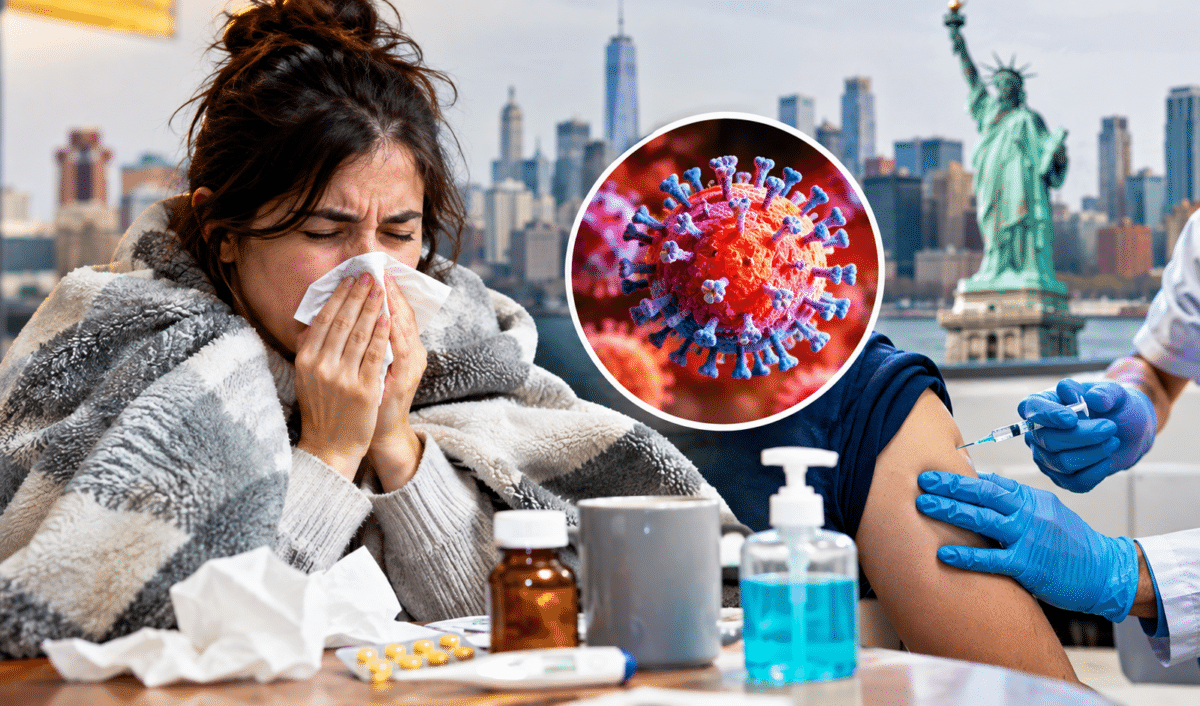
If it feels like half your office, your kid’s classroom or your train car is coughing, the data backs you up. New York’s flu season did not wait for winter this year. State Health Commissioner Dr. James McDonald says flu “started about six weeks earlier than usual,” and the numbers have climbed fast since mid-October.
In the most recent week reported by the New York State Department of Health, lab-confirmed flu cases rose 77% to 7,696, and flu hospitalizations jumped 105% to 668, according to WROC Rochester. The state has declared flu prevalent, and officials are pressing a simple message ahead of the holidays: if you have not been vaccinated, do it now. As McDonald put it, “Don’t wait… vaccinate.”
What We Know
- The state reported 7,696 lab-confirmed flu cases in the latest week, up 77%, and 668 hospitalizations, up 105%.
- Commissioner McDonald says flu began about six weeks earlier than usual and has been declared prevalent statewide.
- Nationally, 98.9% of subtyped flu A viruses in CDC’s week 42 data were H1N1.
- New York reported no pediatric flu deaths this season as of early November.
What Is Still Unclear
- Whether this early surge means a worse season overall or an earlier peak is too soon to tell.
- How well this season’s vaccine matches the circulating strain has not been measured yet.
- Current statewide vaccination rates were not given; officials say they are below target.
- Weekly figures are provisional and can be revised as reports come in.
How Fast New York’s Flu Numbers Are Climbing
The early rise showed up in state data in October. For the week ending Oct. 17, New York recorded 3,526 lab-confirmed flu cases, compared with 596 in the same surveillance week last season, nearly six times higher, CNY Central reported from the state’s respiratory virus dashboard. In late October, McDonald cited 4,172 cases, up 13%, and 326 hospitalizations, up 40%, according to WBNG. Then the latest week nearly doubled again.
Weekly Lab-Confirmed Flu Cases in New York
Comparisons with last year are stark. McDonald told WRVO that as of Nov. 4, cases were about eight times higher than at the same point last year and hospitalizations 15 times higher. In Monroe County, the county’s flu dashboard showed 240 cases as of Oct. 31, compared with 22 at the same point last year, WROC reported, although the station also cited a figure of 42 for last year.
This Season Versus the Same Point Last Year
Why an Early Season Catches People Off Guard
Timing is the core problem. McDonald told WRVO that many people get their flu shot in November or December rather than September or October, so this year the virus arrived before much of the public was protected. He said vaccination rates are slightly higher than last year but well below the state’s goal. CNY Central reported that state officials described rates as lower than in previous years; the difference may reflect different points in time.
Which Flu Strain Is Spreading Now
New York’s reports have not named a strain, but national data point clearly to one. In CDC’s FluView report for the week ending Oct. 24, 98.9% of subtyped influenza A viruses were A(H1N1)pdm09, a descendant of the 2009 pandemic strain, and almost all belonged to a genetic group called D.3.1.1. That is a shift from last season, when a new version of H3N2 known as subclade K dominated and the vaccine was a weaker match.
National Flu Snapshot, Week Ending Oct. 24, 2026
CDC estimated that by late October the 2026-27 season had already caused at least 1 million illnesses, 16,000 hospitalizations and 900 deaths nationwide. It counted 6,100 lab-confirmed flu hospitalizations in the week ending Oct. 24, up from 4,811 the week before, and reported the season’s first pediatric flu death, which was associated with H1N1. The FluSurv-NET hospitalization rate for that week was the highest for that point in the season since 2010-11, and adults 65 and older had the highest cumulative rate, 13.3 per 100,000.
What Last Season Taught New York
Last season was severe. On Dec. 26, 2025, the state reported 71,123 positive flu cases in a single week, the most since influenza became reportable in 2004. A week later it reported a record 4,546 flu hospitalizations in one week. McDonald said in September that the 2025-26 season caused 27,000 flu hospitalizations statewide, compared with 14,000 for RSV and 13,000 for COVID-19.
Last Season in New York, by the Numbers
What “Prevalent” Means for Hospitals and Nursing Homes
When the commissioner declares flu prevalent, a state regulation takes effect. Health care facilities must make sure staff who have not received this year’s flu vaccine wear surgical or procedure masks in areas where patients may be present, according to the department’s December 2025 declaration. The rule stays in place until the state declares flu no longer prevalent, usually in spring.
The timing this year is notably early. Last season, flu was declared prevalent on Dec. 2, 2025, when 17,783 positive cases had been reported across 62 counties for the season. This year, WRVO reports, the declaration came roughly two weeks before Nov. 9, in late October, more than a month earlier.
Who Should Get Which Vaccine This Fall
On Sept. 10, the New York State and New York City health departments jointly endorsed their 2026-27 respiratory virus immunization recommendations. Everyone 6 months and older should get an annual flu vaccine. Most people 6 months and older should get a COVID-19 vaccine, and RSV protection is recommended for specific groups. The state says these vaccines remain covered by private insurance, public insurance and the Vaccines for Children program.
| Group | Flu shot | COVID-19 vaccine | RSV protection |
|---|---|---|---|
| Infants under 8 months | Not until 6 months | From 6 months | Yes, if parent not vaccinated in pregnancy |
| Children 6 months to 8 years | Yes; 2 doses if first time | Yes, especially 6 to 23 months | 8 to 19 months in risk groups |
| Adults 18 to 49 | Yes | Most people | Not routinely |
| Adults 50 to 74 | Yes | Yes, especially with risk factors | If in certain risk groups |
| Adults 75 and older | Yes | Yes | Yes, if not previously vaccinated |
| Pregnant people | Yes | Yes | First eligible pregnancy |
Children 6 months through 8 years who have never had a flu vaccine need two doses at least four weeks apart, according to CDC guidance cited in national reporting. In New York, flu vaccines are available at participating pharmacies for people 2 and older without a prescription, the state health department has said.
The Season So Far, Date by Date
- Sept. 10State and city release 2026-27 vaccine recommendations
- Week ending Oct. 173,526 cases statewide, versus 596 a year earlier
- Week ending Oct. 24CDC: 98.9% of subtyped flu A is H1N1 nationally
- Late OctoberFlu declared prevalent; McDonald cites 4,172 cases, 326 hospitalizations
- Nov. 6Latest week: 7,696 cases (+77%), 668 hospitalizations (+105%)
- Nov. 12Suggested shot date for protection by Thanksgiving, Nov. 26
How to Protect Yourself and Your Family Now
- Get vaccinated this weekEveryone 6 months and older; pharmacies vaccinate ages 2 and up in New York.
- Book a second dose for young first-timersChildren under 9 getting their first flu shot need two doses four weeks apart.
- Ask about COVID-19 and RSV shotsYou can often get them at the same visit; check which ones apply to you.
- Call a doctor early if you get sickPrescription antivirals work best when started within 48 hours of symptoms, especially for high-risk people.
- Stay home when sickKeep children home from school and avoid visiting older relatives while ill.
- Wash hands and cover coughsSimple steps still reduce spread in homes, classrooms and offices.
Flu, COVID-19 or a Cold? Why Testing Helps
Flu, COVID-19 and RSV are all circulating in the fall, and their symptoms overlap: fever, cough, sore throat, body aches and fatigue. Flu often comes on suddenly, with high fever and muscle aches, but you cannot reliably tell the viruses apart by symptoms alone. A test matters because flu antivirals and COVID-19 treatments are different and work best when started early. Home tests that check for both flu and COVID-19 are sold at many pharmacies, and a doctor or urgent care clinic can test you if symptoms are severe or you are at high risk.
Local Help Getting to a Shot
Counties are trying to remove barriers. In Broome County, BC Transit is offering free rides to vaccine appointments through March 31, WBNG reported. McDonald said the state is also working with trusted local messengers in communities where vaccine hesitancy and misinformation are common, and he urged New Yorkers to get vaccinated at least two weeks before Thanksgiving gatherings, noting that “children spread it very easily from one to another.”
Who Is Most at Risk
Young children and older adults face the highest risk of severe illness, Dr. Jana Shaw, a pediatric infectious disease specialist at Upstate Golisano Children’s Hospital in Syracuse, told CNY Central. People with chronic conditions such as heart disease, lung disease or diabetes, and pregnant people, are also at higher risk. In Monroe County, WROC reported the hospitalization rate among people older than 64 had reached about 10%. Shaw’s goal for the season: “We want that flu to go from wild to mild.”
- Flu shot by Nov. 12Two weeks before Thanksgiving
- Second dose if neededKids under 9, first-time
- Antivirals within 48 hoursCall your doctor quickly
- Stay home with feverUntil at least 24 hours fever-free
- RSV shot if 75+If not previously vaccinated
- Check insurance coverageCovered by most plans
Frequently Asked Questions
How bad is the flu in New York right now?
The state reported 7,696 lab-confirmed flu cases in the latest week, up 77%, and 668 hospitalizations, up 105%. Officials say cases are about eight times higher than at the same point last year.
Is flu prevalent in New York?
Yes. The state declared flu prevalent in late October, which requires unvaccinated health care workers to wear masks in patient areas. Last season the declaration came on Dec. 2.
What flu strain is going around in 2026?
Nationally, CDC data for the week ending Oct. 24 showed 98.9% of subtyped flu A viruses were H1N1, mostly the D.3.1.1 genetic group. New York has not published its own strain breakdown.
Is it too late to get a flu shot?
No. Health officials say to get vaccinated now. Protection takes about two weeks, so a shot by about Nov. 12 helps protect you by Thanksgiving.
Who should get a flu shot?
Everyone 6 months and older, according to New York State and New York City health departments. Children under 9 getting their first flu vaccine need two doses four weeks apart.
Can I get a flu shot at a pharmacy in New York?
Yes. Participating pharmacies can vaccinate people 2 and older without a prescription. Flu vaccines are covered by most private and public insurance.
How effective is the flu vaccine?
It varies by season. Last season adults saw 25% to 30% effectiveness against medical visits, while vaccinated children were about 40% less likely to need care. This season’s estimate is not yet available.
What should I do if I get the flu?
Stay home and call your doctor, especially if you are high risk. Prescription antivirals work best when started within 48 hours of symptoms. Seek urgent care for trouble breathing.
The Short Version
Flu arrived about six weeks early in New York this year. In the latest week, lab-confirmed cases rose 77% to 7,696 and hospitalizations rose 105% to 668, with officials reporting cases eight times and hospitalizations 15 times higher than at this point last year. The state has declared flu prevalent. Nationally, H1N1 is driving most cases. Everyone 6 months and older should get a flu shot now; getting it by Nov. 12 helps protect you before Thanksgiving. If you get sick, call your doctor quickly about antivirals.

Omisha is a health writer passionate about turning complex medical research into clear, actionable content readers can trust. She covers everything from nutrition and mental wellness to chronic disease management, always grounding her work in credible science and real-world relevance. When she's not writing, she's usually reading up on the latest health studies or exploring new wellness trends to write about next.