Sleep HealthDoctors ExplainBedtime Habits
Should You Sleep With Socks On? What Doctors and Sleep Studies Say About Warm Feet and Faster Sleep
Warm feet help the body shed heat, which signals it is time to sleep. In one small study, bed socks added 32 minutes of sleep. But the type of sock matters, and some people should skip them.
Usually fineClean, loose, breathable socksUse careHot sleepers, sweaty feetAvoid overnightCompression socks unless prescribed
ByThe Sleep Health DeskFact-checkedAgainst peer-reviewed studies, Cleveland Clinic and NIH sourcesUpdatedNovember 9, 2026ScopeU.S. adults
It is a question that splits households. One partner cannot fall asleep until their feet are warm and pulls on a pair of thick socks every night. The other finds the idea unbearable and kicks the blankets off to cool down. Each is sure the other is doing it wrong.
The science suggests both can be right. Sleep researchers have known for decades that warm hands and feet are one of the strongest physical signs that the body is ready to fall asleep. A small but often-cited study found that bed socks helped people fall asleep faster and sleep longer in a cool room. Doctors say socks are a reasonable, low-cost tool, with a few important exceptions.
What We Know
- A 1999 study in Nature found that widened blood vessels in hands and feet best predicted how quickly people fell asleep.
- A 2018 study found bed socks improved sleep in a cool room without changing core body temperature.
- Cleveland Clinic sleep specialist Dr. Aparna Bhat says socks can be “an effective part of a good sleep strategy.”
- Doctors advise against sleeping in compression socks unless they are recommended for a medical reason.
What Is Still Unclear
- The best-known socks study had only six participants, all young men.
- Whether socks help women, older adults or people with insomnia to the same degree has not been well tested.
- That study used wrist activity monitors, not full brain-wave sleep testing.
- No large trial has compared sock materials for sleep.
Why Warm Feet Help You Fall Asleep
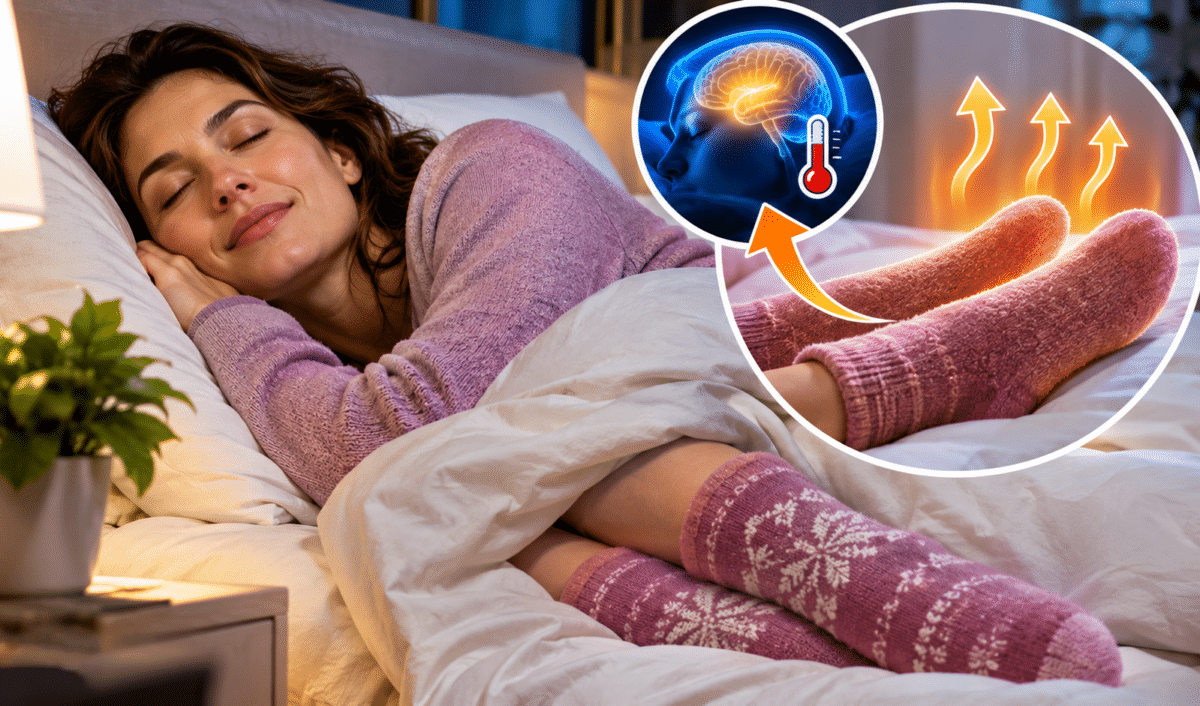
To fall asleep, your body needs to cool down slightly. Core body temperature drops in the evening, and one of the main ways the body sheds heat is through the hands and feet. When blood vessels in the skin of the feet widen, a process called vasodilation, warm blood flows to the surface and heat escapes into the room. That is why warm feet are not a contradiction of cooling down; they are part of the process.
Researchers led by Kurt Kräuchi made this link famous in a 1999 paper in the journal Nature titled “Warm feet promote the rapid onset of sleep.” They found that widening of blood vessels in the hands and feet, which increases heat loss from the extremities, was the best physiological predictor of how fast people fell asleep. Cleveland Clinic’s Dr. Bhat explains it the same way: warm feet widen blood vessels, which releases heat and lowers core temperature.
Cold Feet Can Get in the Way
The problem comes when your feet are cold. In a cool bedroom, blood vessels in the feet tighten to conserve heat, which slows the heat loss that helps trigger sleep. Socks can keep the feet warm enough for those blood vessels to stay open. That is the theory behind the advice, and it is what a team of Korean researchers set out to test.
Temperatures in the Bed Socks Study and at Home
Inside the Bed Socks Study Doctors Cite
The study most often quoted on this question was published in the Journal of Physiological Anthropology in April 2018 by Yelin Ko and Joo-Young Lee of Seoul National University. Six healthy young men slept for seven hours, from midnight to 7 a.m., in a climate-controlled room set to 23°C, about 73°F, which the researchers described as a cool environment for sleep. Each man slept two nights in random order: once with bare feet and once wearing bed socks, which they put on about an hour before bed.
Sleep With and Without Bed Socks, in Minutes
The results were striking for such a simple change. With socks, the men fell asleep 7.5 minutes faster on average, slept 32 minutes longer and woke up far less often. Sleep efficiency, the share of time in bed actually spent asleep, rose from 86.2% to 93.8%. Foot skin temperature stayed warmer, but there were no significant differences in core body temperature, heart rate or average skin temperature between the two nights.
Awakenings and Sleep Efficiency
Awakenings per night
Sleep efficiency
Why Six People Is Not the Final Word
The study was tiny, involved only young men and used wrist monitors rather than full laboratory sleep testing, which measures brain waves. The socks used were 98.6% polyester. The room was set to 23°C, warmer than the 65 to 68°F (18.3 to 20.0°C) many sleep experts suggest, so results could differ in a cooler or warmer bedroom. Still, the findings fit with the Nature research on warm feet and with what many people report anecdotally.
Who May Benefit Most From Bed Socks
Dr. Bhat of Cleveland Clinic says going barefoot or wearing socks is “a personal choice,” but socks can help several groups. People who simply have cold feet at night are the most obvious. Beyond that, doctors point to a few health conditions where warm feet may help.
Raynaud’s, Hot Flashes and Dry Heels
Raynaud’s is a condition in which blood vessels in the fingers and toes narrow too much in response to cold or stress, turning them white or blue and numb. The National Heart, Lung, and Blood Institute has estimated that about 5% of the U.S. population has it. Cleveland Clinic says socks may help by promoting blood flow and heat. For people going through menopause, socks may help moderate body temperature so it swings less during hot flashes. And for dry, cracked heels, moisturizing your feet before putting on cotton socks can help the cream soak in overnight.
| Situation | Socks at night? | Best type | Watch out for |
|---|---|---|---|
| Cold feet, healthy adult | Often helpful | Loose cotton, merino wool or bamboo | Overheating; take off if you wake up hot |
| Raynaud’s (about 5% of Americans) | Often helpful | Warm, non-binding wool socks | Tight cuffs that restrict blood flow |
| Menopause hot flashes | Try and see | Thin, breathable socks | Synthetic socks that trap sweat |
| Dry or cracked heels | Helpful | Clean cotton over moisturizer | Reusing unwashed socks |
| Diabetes or peripheral artery disease | Ask your doctor | Clean, seamless, non-binding socks | Heated socks, hot water bottles and tight bands |
| Hot sleeper or sweaty feet | Often skip | None, or very thin moisture-wicking pair | Damp feet and fungal infections |
| Compression socks | Avoid overnight | Only if prescribed for nighttime | Pressure on skin and circulation |
A Special Note for People With Diabetes
Cleveland Clinic notes that socks can reduce the risk of sores from feet rubbing against sheets, which matters for people with diabetes or peripheral artery disease. At the same time, nerve damage from diabetes can make it hard to feel heat or pressure. That makes tight socks, heated socks, electric blankets and hot water bottles risky, because a burn or pressure sore may go unnoticed. If you have diabetes, choose clean, loose, seamless socks and check your feet every day, as your care team likely already advises.
What About Babies and Young Children?
Infants are a different case. The American Academy of Pediatrics advises against overheating during sleep and suggests dressing a baby in no more than one layer more than an adult would wear to be comfortable in the same room. Lightweight footed sleepers usually make separate socks unnecessary. Watch for signs of overheating, such as sweating or a flushed face, and follow your pediatrician’s advice on safe sleep. For older children, the same rules as for adults apply: clean, loose socks are fine if their feet are cold, and they can come off if they get warm.
When Socks Can Work Against You
Socks are not a sleep aid for everyone. If you tend to sleep hot, extra layers can leave you sweaty and awake. Doctors’ most consistent warning concerns compression socks, which are designed to squeeze the legs to improve blood flow while you are upright. Cleveland Clinic advises against sleeping in them unless they are recommended for a specific medical issue.
Cleveland Clinic recommends breathable natural fibers, such as cotton, merino wool, bamboo or viscose, over synthetics like polyester, and says loose-fitting socks are better. Ironically, the socks in the 2018 study were mostly polyester, which suggests the warming effect itself matters most. For everyday use at home, natural fibers reduce sweating and odor.
| Sock material | Warmth | Breathability | Moisture handling | Good for |
|---|---|---|---|---|
| Merino wool | High | Good | Wicks and resists odor | Cold feet, Raynaud’s |
| Cotton | Moderate | Good | Absorbs but stays damp | Moisturizing heels, mild chill |
| Bamboo or viscose | Moderate | Very good | Soft, wicks moisture | Sensitive skin, warmer sleepers |
| Polyester or fleece | High | Low | Can trap sweat | Very cold rooms, short term |
| Compression socks | Low to moderate | Varies | Varies | Daytime, or nighttime only if prescribed |
A Warm-Feet Bedtime Routine
If you want to test socks for yourself, timing can help. In the 2018 study, participants put on their socks about an hour before bed. Other research has found that a warm bath or shower one to two hours before bed helps people fall asleep faster, likely through the same heat-release mechanism.
- 90 min beforeWarm shower or bathDraws blood to the skin and helps the body cool afterward
- 60 min beforeSocks onClean, loose, breathable pair, as in the 2018 study
- 30 min beforeCool the roomMany experts suggest 65 to 68°F
- BedtimeLights outIf feet feel hot, slip the socks off
- MorningFresh pair tomorrowWash bed socks after each night
- Start with your feet, not the thermostatIf your feet are cold but your body is warm, socks are a better fix than turning up the heat.
- Choose loose, breathable socksMerino wool, cotton or bamboo, without tight elastic bands.
- Try it for a weekNote how long it takes to fall asleep and how often you wake, with and without socks.
- Take them off if you overheatSweating or waking up hot means the socks are working against you.
- Skip compression socks at nightUnless your doctor has specifically recommended them.
- Talk to a doctor about constantly cold feetPersistent cold, numb or color-changing toes can signal circulation problems or Raynaud’s.
- Socks on 60 minutes before bedTiming used in the 2018 study
- Room at 65 to 68°FCommon sleep expert advice
- Natural fibersCotton, merino wool or bamboo
- No tight bandsNo deep marks in the morning
- Fresh pair nightlyReduces bacteria and odor
- Daily foot check if diabeticLook for sores or redness
Frequently Asked Questions
Is it good to sleep with socks on?
For most healthy adults, yes. Warm feet help the body release heat and lower core temperature, which can help you fall asleep faster. Choose clean, loose, breathable socks.
Does wearing socks to bed help you fall asleep faster?
In a 2018 study of six young men in a cool room, bed socks shortened the time to fall asleep by 7.5 minutes and added 32 minutes of total sleep.
Is it bad to sleep with socks on every night?
Generally no, if the socks are clean, loose and breathable. Wear a fresh pair each night and remove them if your feet get hot, sweaty or itchy.
Can I sleep in compression socks?
Doctors generally advise against sleeping in compression socks unless they are recommended for a specific medical issue, because they are designed for use while you are upright.
What socks are best for sleeping?
Cleveland Clinic recommends loose socks made from breathable natural fibers such as cotton, merino wool, bamboo or viscose rather than synthetics like polyester.
Should people with diabetes wear socks to bed?
Clean, loose, seamless socks can protect feet from rubbing. Avoid tight bands, heated socks and hot water bottles, and check your feet daily. Ask your care team for personal advice.
Why do warm feet help you sleep?
Warm feet widen blood vessels, letting heat escape from the skin. A 1999 Nature study found this widening in hands and feet was the best predictor of how quickly people fell asleep.
Why are my feet always cold at night?
A cool room is a common reason, but persistently cold, numb or color-changing toes can be a sign of Raynaud’s or circulation problems. Talk to a doctor if it is frequent.
The Short Version
Sleeping with socks on is safe for most people and may help you fall asleep faster, because warm feet help the body release heat before sleep. In a small 2018 study, bed socks cut the time to fall asleep by 7.5 minutes, added 32 minutes of sleep and nearly halved awakenings. Choose clean, loose, breathable socks, put them on about an hour before bed and take them off if you overheat. Skip compression socks at night unless prescribed, and if you have diabetes, choose non-binding socks and check your feet daily.

Omisha is a health writer passionate about turning complex medical research into clear, actionable content readers can trust. She covers everything from nutrition and mental wellness to chronic disease management, always grounding her work in credible science and real-world relevance. When she's not writing, she's usually reading up on the latest health studies or exploring new wellness trends to write about next.