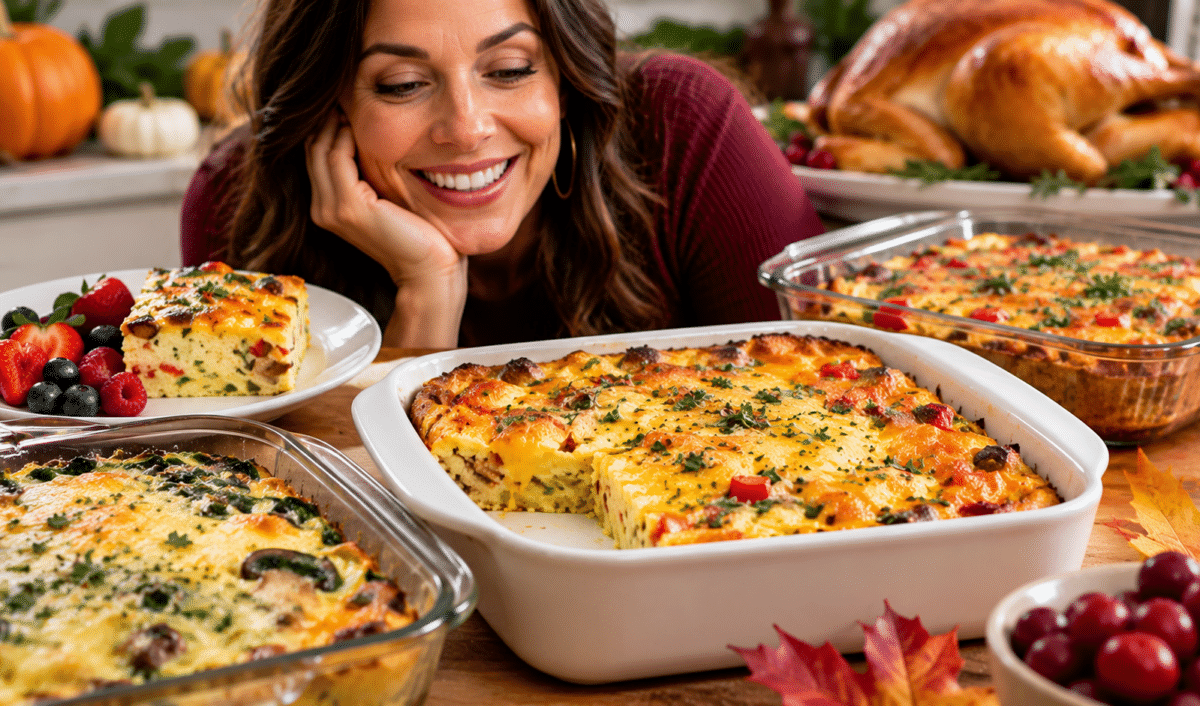
Food · Holiday Cooking · Thanksgiving Weekend 2026
14 Healthy Make-Ahead Breakfast Casseroles for Thanksgiving Weekend, Including Smart Ways to Use the Leftovers
Assemble the night before, bake in the morning and feed a full house. Each recipe below lists approximate protein and calories per serving, plus the USDA temperatures and storage times that keep egg dishes safe.
- By the Home Kitchen Desk
- Checked against USDA food safety guidance
- Updated November 27, 2026
- Scope: U.S. home cooks, 9×13-inch pans
The turkey is carved, the dishwasher has run twice and the house is still full. Thanksgiving is over, but the weekend is not. AAA’s travel window runs through Monday, November 30, which means many hosts still have guests to feed tomorrow morning and the morning after.
A make-ahead breakfast casserole solves the problem neatly. You assemble it the night before, slide it into the oven when the first person wakes up, and serve eight people from one pan. Many of the 14 ideas below are built around what is already in your refrigerator: turkey, sweet potatoes, green beans, cranberries and even stuffing. They lean on eggs, vegetables, beans and whole grains rather than sausage gravy and white bread, so they feel lighter after a heavy feast.
What We Know
- Egg dishes need 160°F. USDA says quiches, breakfast casseroles and other egg dishes should reach an internal temperature of 160°F, measured with a food thermometer.
- Leftovers have a clock. USDA’s Food Safety and Inspection Service says leftovers keep 3 to 4 days in the refrigerator or 3 to 4 months in the freezer.
- Two hours is the limit. The FDA says to refrigerate perishable foods, including eggs, within 2 hours, or within 1 hour above 90°F.
- Lots of guests are on the move. AAA forecast 81.5 million Americans traveling at least 50 miles between November 24 and 30.
- Eggs are cheaper. BLS data show the average dozen of Grade A large eggs at $2.32 in October 2026, down sharply from 2025.
What Is Still Unclear
- Exact nutritionCalories and protein here are estimates. Brands, pan sizes and how generously you add cheese change totals.
- Overnight limitsUSDA does not set a single hour limit for unbaked egg casseroles; NDSU Extension advises assembling no more than one day ahead.
- Freezer qualityGuidance for baked egg casseroles ranges from 1 to 2 months to 2 to 3 months, depending on the source.
- Christmas pricingEgg prices have fallen in 2026, but December prices were not yet published when this was written.
Why This Weekend Is Built for Casseroles
Holiday weekends stretch a host’s kitchen in two directions at once: more people to feed and less energy to cook. A casserole needs one pan and one bake, and the oven does the work while coffee brews. It also turns leftovers into a new meal instead of a fourth round of the same plate.
The cost picture helps, too. The American Farm Bureau Federation’s 41st annual survey put the classic Thanksgiving dinner for 10 at $58.63 this year, up 6% from 2025. Turkey drove most of that increase. Eggs, the backbone of most breakfast casseroles, moved the other way.
- 81.5 millionThanksgiving travelers, AAA, Nov. 24 to 30
- 72.9 millionOf them traveling by car
- $58.63Classic dinner for 10, AFBF 2026
- $23.68Average 16-lb turkey, up from $21.50
What a dozen large eggs has cost
U.S. average price, Grade A large eggs, per dozen. Bureau of Labor Statistics data via FRED and OfficialData. Annual figures are yearly averages.
The 14 Casseroles, From Leftover Rescues to Fresh Bakes
Every recipe is written for a 9×13-inch pan cut into 8 servings. Recipes marked “Leftover” use Thanksgiving extras. Per-serving numbers are approximate, based on USDA FoodData Central values for typical ingredients.
- 1Leftover Turkey, Spinach and Feta Egg Bake12 eggs, 2 cups chopped turkey, 4 cups spinach, half cup feta, 1 cup milk. The highest-protein option here.Leftover About 22 g protein, 215 kcal
- 2Sweet Potato and Black Bean Breakfast BakeMashed or cubed leftover sweet potatoes, 10 eggs, 2 cups black beans, 1 cup cheddar, cumin and salsa.Leftover About 15 g protein, 250 kcal
- 3Cranberry-Orange Baked Oatmeal3 cups rolled oats, 2 cups milk, 2 eggs, 1 cup Greek yogurt, leftover cranberries, orange zest and a little maple syrup.Leftover About 10 g protein, 210 kcal
- 4Lighter Stuffing Strata4 cups leftover stuffing, 10 eggs, 2 cups milk, half cup cheese and a big handful of chopped vegetables.Leftover About 15 g protein, 325 kcal
- 5Broccoli-Cheddar Cottage Cheese Egg Bake12 eggs, 2 cups 2% cottage cheese, 1 cup sharp cheddar and 3 cups broccoli florets.About 20 g protein, 220 kcal
- 6Green Bean and Mushroom Egg-White Bake4 cups liquid egg whites, leftover green beans, sautéed mushrooms and half cup Parmesan.Leftover About 16 g protein, 100 kcal
- 7Turkey Sausage, Kale and Quinoa Bake1 lb lean turkey sausage, 10 eggs, 2 cups cooked quinoa and 4 cups chopped kale.About 21 g protein, 240 kcal
- 8Mediterranean Chickpea Shakshuka BakeTwo cans crushed tomatoes, two cans chickpeas, 8 eggs cracked into wells, feta and 2 tbsp olive oil.About 14 g protein, 270 kcal
- 9Overnight Whole-Grain Pumpkin French Toast Bake8 slices whole-wheat bread, 8 eggs, 2 cups milk, 1 cup pumpkin puree, cinnamon and a quarter cup maple syrup.Leftover About 13 g protein, 220 kcal
- 10Southwest Tofu Breakfast Bake (Vegan)Two blocks firm tofu, 2 cups black beans, peppers, salsa and 8 corn tortillas layered like enchiladas.About 15 g protein, 205 kcal
- 11Ham, Asparagus and Swiss Egg Bake12 eggs, 2 cups diced leftover ham, 1 bunch asparagus and 1 cup Swiss cheese.Leftover About 21 g protein, 220 kcal
- 12Apple-Cinnamon Quinoa Breakfast Bake1.5 cups uncooked quinoa, 2.5 cups milk, 2 eggs, 2 diced apples, cinnamon and half cup walnuts.About 10 g protein, 245 kcal
- 13Smoked Salmon, Dill and Potato Frittata Bake12 eggs, 8 oz smoked salmon, 2 cups roasted potatoes, dill and half cup Greek yogurt.About 17 g protein, 185 kcal
- 14Butternut Squash, Sage and Goat Cheese Egg Bake12 eggs, 3 cups roasted squash, spinach, 4 oz goat cheese and fresh sage.About 13 g protein, 180 kcal
Protein per serving, highest to lowest
Approximate grams per serving, 8 servings per 9×13 pan. Our estimates based on USDA FoodData Central values; indicative only.
Calories per serving, from heartiest to lightest
Approximate calories per serving, 8 servings per 9×13 pan. Our estimates based on USDA FoodData Central values; indicative only.
Matching the Casserole to the Crowd
Not every guest list wants the same breakfast. Vegetarian cousins, a gluten-free aunt and a teenager who only eats sweet things can all be covered with two pans instead of three separate meals.
| Casserole | Protein | Calories | Vegetarian | Gluten-free option | Bake time |
|---|---|---|---|---|---|
| 1. Turkey, spinach, feta | 22 g | 215 | No | Yes | 45 to 55 min |
| 2. Sweet potato, black bean | 15 g | 250 | Yes | Yes | 45 to 55 min |
| 3. Cranberry baked oatmeal | 10 g | 210 | Yes | With certified oats | 35 to 45 min |
| 4. Stuffing strata | 15 g | 325 | Depends on stuffing | No | 60 to 75 min |
| 5. Broccoli cottage cheese | 20 g | 220 | Yes | Yes | 45 to 55 min |
| 6. Green bean egg-white | 16 g | 100 | Yes | Yes | 35 to 45 min |
| 7. Turkey sausage quinoa | 21 g | 240 | No | Yes | 45 to 55 min |
| 8. Chickpea shakshuka | 14 g | 270 | Yes | Yes | 25 to 35 min |
| 9. Pumpkin French toast | 13 g | 220 | Yes | No | 45 to 55 min |
| 10. Southwest tofu (vegan) | 15 g | 205 | Yes, vegan | Yes | 30 to 40 min |
| 11. Ham, asparagus, Swiss | 21 g | 220 | No | Yes | 45 to 55 min |
| 12. Apple quinoa bake | 10 g | 245 | Yes | Yes | 50 to 60 min |
| 13. Smoked salmon frittata | 17 g | 185 | No | Yes | 40 to 50 min |
| 14. Squash and goat cheese | 13 g | 180 | Yes | Yes | 45 to 55 min |
- Under 150 kcalEgg-white green bean bake. Good after a heavy holiday dinner.
- 150 to 220 kcalMost egg-and-vegetable bakes. Pair with fruit for a full breakfast.
- 220 to 270 kcalBean, quinoa and oatmeal bakes. More fiber, longer fullness.
- Over 300 kcalStuffing strata. Cut smaller pieces or add extra vegetables.
- 20 g+ proteinTurkey, ham, sausage and cottage cheese bakes for active guests.
The Night-Before Game Plan
A make-ahead casserole is only easy if the timing is planned. NDSU Extension nutrition specialist Julie Garden-Robinson advises preparing perishable make-ahead foods such as casseroles no more than one day before serving. Here is how that works in practice.
- Evening, up to 24 hours ahead: Cook any raw meat and vegetables, cool them, then assemble the casserole and cover it tightly.
- Overnight: Refrigerate at 40°F or below. Bread and oat bakes absorb liquid and improve with time.
- Morning: Heat the oven to 325°F to 350°F. A cold dish from the refrigerator usually needs extra time.
- Bake 25 to 75 minutes: Check the center with a thermometer; egg casseroles are done at 160°F.
- Serving, up to 2 hours: Keep the dish warm at 140°F or above, or return it to the refrigerator within 2 hours.
- Leftovers, 3 to 4 days: Store in shallow containers and reheat to 165°F.
- Freezer, 1 to 3 months: Freeze baked portions for best quality and thaw in the refrigerator.
Cook it first, then assemble
Raw sausage, bacon or ground turkey should be fully cooked before it goes into an unbaked casserole that will sit overnight. Leftover Thanksgiving turkey is already cooked, but it should have been refrigerated within 2 hours of the meal.
Food Safety Numbers Every Host Should Know
| Situation | Safe guideline | Source | Why it matters |
|---|---|---|---|
| Baking an egg casserole | 160°F in the center | USDA | Kills Salmonella in eggs |
| Reheating leftovers | 165°F | USDA | Reheats evenly and safely |
| Keeping a dish on the buffet | 140°F or above | USDA | Stops bacterial growth |
| Room-temperature time | 2 hours, or 1 hour above 90°F | FDA | Bacteria multiply from 40°F to 140°F |
| Refrigerated leftovers | 3 to 4 days | USDA FSIS | Quality and safety decline after |
| Frozen egg casserole | 1 to 3 months for best quality | Colorado State, USDA guides | Texture and flavor fade |
| Make-ahead assembly | No more than 1 day ahead | NDSU Extension | Limits time for bacteria to grow |
Worked example: what one pan really costs in eggs
- Eggs in casserole No. 112 eggs = 1 dozen
- October 2026 average price (BLS)$2.32 per dozen
- Egg cost per serving (8 servings)$2.32 ÷ 8 = $0.29
- Same dozen at the 2025 average$4.25 ÷ 8 = $0.53
- AFBF Thanksgiving dinner, per personAbout $5.86
Egg prices come from BLS averages, and the per-serving figures are our arithmetic. Turkey, feta, spinach and milk add to the total, but with the turkey already paid for, the breakfast stays far below the cost of the holiday dinner.
Shortcuts That Backfire
What people get wrong with make-ahead casseroles
- Judging doneness by looks. A golden top can hide an undercooked center. Use a thermometer and look for 160°F.
- Assembling two or three days early. Extension experts advise no more than one day ahead for perishable casseroles.
- Using turkey that sat out all evening. Food left out more than 2 hours should be thrown away, not baked into breakfast.
- Moving a frozen glass dish straight into a hot oven. Thaw in the refrigerator first to protect the dish and bake evenly.
- Ignoring sodium. Ham, stuffing, smoked salmon and feta are salty; skip added salt in those recipes.
Your Host’s Checklist
- Plan 1 pan for every 8 guests.
- Refrigerate leftovers within 2 hours of dinner.
- Assemble no more than 24 hours before baking.
- Bake egg casseroles to 160°F at the center.
- Hold on the buffet at 140°F or above.
- Use leftover turkey within 3 to 4 days.
- Offer 1 vegetarian pan if guests need it.
- Freeze extra portions for up to 1 to 3 months.
Frequently Asked Questions
Can I assemble a breakfast casserole the night before?
Yes. Assemble it, cover tightly and refrigerate overnight. NDSU Extension advises preparing perishable make-ahead casseroles no more than one day before serving.
What temperature should an egg casserole reach?
USDA says breakfast casseroles and other egg dishes should reach 160°F in the center, measured with a food thermometer.
How long does a breakfast casserole last in the fridge?
Leftover egg casseroles keep about 3 to 4 days in the refrigerator. Reheat leftovers to 165°F.
Can you freeze a breakfast casserole?
Yes. Freeze it after baking and use within about 1 to 3 months for best quality. Thaw in the refrigerator before reheating.
How can I use leftover Thanksgiving turkey for breakfast?
Chop it into an egg bake with spinach and feta, or add it to a sweet potato and black bean casserole. Use turkey that was refrigerated within 2 hours and eat it within 3 to 4 days.
What is a healthy breakfast casserole?
One built on eggs or plant protein, plenty of vegetables and whole grains, with modest cheese and processed meat. Most in this list are about 100 to 270 calories per serving.
How long can a breakfast casserole sit out?
No more than 2 hours at room temperature, or 1 hour above 90°F. Keep it warm at 140°F or above on a buffet.
How many people does a 9×13 breakfast casserole feed?
Usually 8 people as a main dish, or up to 12 with fruit and other sides.
The Short Version
With 81.5 million Americans traveling over Thanksgiving week, many hosts still have a full house this weekend. A make-ahead casserole feeds 8 from one pan, and many of these 14 ideas reuse turkey, sweet potatoes, green beans, cranberries or stuffing. Most land between about 100 and 270 calories and 10 to 22 grams of protein per serving. Assemble no more than a day ahead, bake egg dishes to 160°F, keep them out no more than 2 hours, and eat leftovers within 3 to 4 days. With eggs averaging $2.32 a dozen, breakfast for a crowd has rarely been cheaper.

Omisha is a health writer passionate about turning complex medical research into clear, actionable content readers can trust. She covers everything from nutrition and mental wellness to chronic disease management, always grounding her work in credible science and real-world relevance. When she's not writing, she's usually reading up on the latest health studies or exploring new wellness trends to write about next.