Doomscrolling Health Warning: Experts Call Problematic Internet Use a Global Public Health Concern
A Lancet Psychiatry Commission says more than 1 in 10 people worldwide may be affected and urges governments to regulate infinite scroll, autoplay and other attention-grabbing design features.
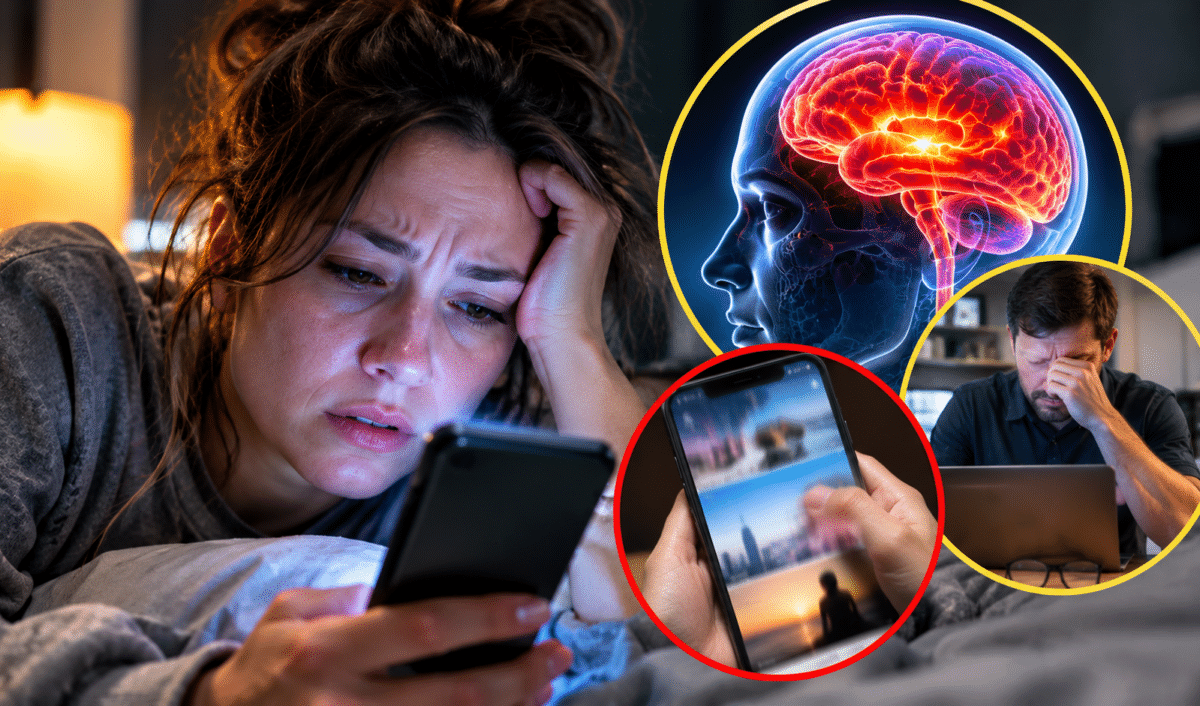
It starts with a headline. Then another. A video autoplays, a recommendation appears, and the feed never ends because it was designed not to. An hour later, you feel worse than when you started and cannot quite remember what you read. That habit has a name, doomscrolling, and this week it received its most serious medical attention yet: an international commission of experts writing in The Lancet Psychiatry says compulsive, problematic internet use should be treated as an urgent global public health concern.
What the Lancet Psychiatry Commission Actually Said
The report comes from the Lancet Psychiatry Commission on global action on problematic usage of the internet, a multidisciplinary group of experts in addiction, public health and policy led by Naomi Fineberg of the University of Hertfordshire. The commission was first announced in The Lancet Psychiatry in October 2024. Its findings, published this week and announced in a Flinders University release, describe problematic internet use as “highly prevalent, to be increasing and to entail considerable psychological and societal harms.”
The commission is careful about what it is not saying. “Digital technologies are now woven into almost every aspect of modern life and bring enormous benefits,” said Zsolt Demetrovics, Flinders professor in mental health and wellbeing and a commission member. “The challenge is finding ways to reduce harms while preserving the many benefits of being connected.” Problematic use, the report says, ranges from mildly impairing to severe, and it often appears alongside depression, anxiety, eating disorders and sleep problems.
Its sharpest focus is on design. “Many digital products are intentionally designed to capture and hold our attention,” said Andrea Czakó, senior research fellow in psychology at Flinders. The commission names infinite scrolling feeds, autoplay videos, personalized recommendations and app notifications as features that can fuel compulsive use, and calls for more transparency about algorithms, independent audits of platforms and government regulation rather than industry self-policing.
Doomscrolling, Defined: It Is Not About the Hours
“Doomscrolling” entered everyday language during 2020, when people spent the pandemic refreshing grim news feeds. A 2022 University of Florida study published in the American Psychological Association journal Technology, Mind, and Behavior found it is a distinct behavior, not just a trendy label: it starts with wanting to stay informed and turns into compulsive scrolling for negative information. The study found no ideological difference among doomscrollers, but men and young people were more likely to engage in it.
The commission uses a broader term, problematic usage of the internet, which covers doomscrolling and seven other patterns. The common thread is not the amount of time online. It is the loss of control and the damage that follows. A new University of the Western Cape study of 491 students, described this week in News24, reached the same conclusion: the problem is less how long people scroll than whether they can stop.
The eight faces of problematic internet use
| Type | What it looks like | Formal diagnosis? | Feature that can fuel it |
|---|---|---|---|
| Social media use | Endless feeds, including negative news | Not yet | Infinite scroll, recommendations |
| Gaming | Play that crowds out sleep, school or work | Yes, ICD-11 | Rewards, loot boxes, notifications |
| Gambling | Online betting that escalates | Yes | 24/7 access, instant play |
| Pornography use | Compulsive viewing despite harm | Partly, ICD-11 | Autoplay, endless content |
| Shopping | Repeated impulse buying online | Proposed | One-click checkout, targeted ads |
| Cyberbullying | Harassing or being harassed online | No | Anonymity, viral sharing |
| Digital hoarding | Unable to delete files, emails, photos | Not yet | Unlimited cloud storage |
| Cyberchondria | Compulsive health searching that raises anxiety | Not yet | Search results, symptom checkers |
Types as listed by the Lancet Psychiatry Commission, reported by People and Flinders University. Diagnosis column reflects WHO ICD-11 categories: gaming disorder, gambling disorder and compulsive sexual behaviour disorder; the commission’s 2024 announcement noted shopping and social media could be classed as other specified addictive disorders.
What We Know and What Is Still Unclear
What We Know
- The commission calls problematic internet use an urgent public health concern.
- More than 10% of people worldwide are estimated to be affected.
- Young people and people with mental health conditions are especially vulnerable.
- It wants infinite scroll, autoplay and recommendations regulated.
- Most internet use, the experts stress, is not harmful.
What Is Still Unclear
- Exactly how many Americans meet the threshold for problematic use.
- Whether design features cause harm or mainly amplify existing vulnerability.
- Which regulations, if any, U.S. lawmakers or agencies will adopt.
- How representative the expert panel is; some outside scientists question it.
Not every scientist welcomed the report uncritically. Experts quoted by Spain’s Science Media Centre noted that the document is a consensus statement from a commissioned panel rather than a new empirical study, and questioned whether the selection of experts was sufficiently representative. The commission itself says that, despite gaps in the evidence, what exists is enough to justify regulatory action.
How Connected Americans Already Are
The U.S. numbers help explain why the warning lands. Pew Research Center reported in December 2024 that 46% of U.S. teens ages 13 to 17 say they are online almost constantly, nearly double the 24% recorded in 2014 and 2015. About four in ten U.S. adults also report being online almost constantly. Forty-four percent of teens told Pew that being without their phone makes them anxious.
Percent of teens ages 13 to 17. Source: Pew Research Center teen surveys, 2014-15 through 2024, and Pew adult survey data.
The teen share roughly doubled in a decade. Adult figure is Pew’s “about four in ten.”
Pew’s December 2025 survey of 1,458 teens found that 36% use at least one of five major platforms almost constantly. The share on TikTok almost constantly rose to 21% from 16% in 2022, while Instagram and Snapchat stood at 12% each and Facebook at 3%.
Percent of U.S. teens ages 13 to 17. Source: Pew Research Center, “Teens, Social Media and AI Chatbots 2025,” survey conducted September 25 to October 9, 2025.
Why Bad News Hooks the Brain
Humans are wired to pay attention to threats, says E. Alison Holman, a University of California, Irvine health psychologist who has studied media exposure for years with colleague Roxane Cohen Silver. Silver’s research after the September 11 attacks found that the more people engaged with news about the attacks, the more likely they were to report mental and physical health problems over time. Their later work on the 2013 Boston Marathon bombing reached similar conclusions about repeated media exposure.
A study in the journal Health Communication, led by Texas Tech researcher Bryan McLaughlin, surveyed about 1,100 adults and found that 16.5% showed signs of “severely problematic” news consumption. Of those, 74% reported experiencing mental health problems. “We were surprised to find that 17% of study participants suffer from the most severe level,” McLaughlin said. An August 2024 study of 800 adults in Computers in Human Behavior Reports linked doomscrolling with greater existential anxiety, and Harvard Health notes the physical side: long sessions also mean long stretches of sitting still.
Percent of people studied. Sources: Lancet Psychiatry Commission (global estimate), 2020 meta-analysis cited in the commission’s 2024 announcement, Health Communication study of about 1,100 U.S. adults. Different measures; not directly comparable.
“Many people think doomscrolling steals their time. Evidence suggests it may also be stealing their sleep,” said Ken Purnell, head of educational neuroscience at CQUniversity in Australia. Sleep supports emotional regulation, memory and mental health, yet many people end the day immersed in emotionally stimulating content.
From Pandemic Buzzword to Psychiatric Warning: A Timeline
- 2019WHO adopts ICD-11Gaming disorder is formally recognized as a diagnosable condition.
- 2020“Doomscrolling” goes mainstreamPandemic news habits popularize the term; a meta-analysis finds about 7% show internet addiction signs.
- 2022Researchers measure itUniversity of Florida and Health Communication studies define doomscrolling and find 16.5% severe news users.
- 2023U.S. Surgeon General advisoryTeens on social media more than 3 hours a day face double the risk of depression and anxiety symptoms.
- 2024Commission announcedThe Lancet Psychiatry announces a global commission; Pew finds 46% of teens almost constantly online.
- 2025Platform shiftPew finds 21% of teens on TikTok almost constantly, up from 16% in 2022.
- Nov 2026Commission reportsProblematic internet use declared an urgent global public health concern affecting 10%+ of people.
Is Your Scrolling a Problem? A Four-Level Check
There is no official cutoff in minutes. The commission and the studies above point instead to control and consequences. The ladder below translates that into a practical self-check. The thresholds are indicative, drawn from the research themes described here and common clinical guidance, not a diagnostic tool.
You can stop when you choose, and sleep, work and relationships are unaffected over a typical week.
You often scroll longer than planned, or check your phone within 30 minutes of waking and before sleep most days.
Scrolling regularly cuts into sleep or obligations several times a week, and attempts to cut back fail.
Use continues for weeks despite clear harm, or comes with persistent anxiety, low mood or thoughts of self-harm.
If you or someone you know is in crisis or thinking about self-harm, call or text 988, the Suicide and Crisis Lifeline, in the United States.
The Hidden Math of a Daily Scroll
Small daily habits add up to surprising totals. The calculation below is hypothetical and simply converts daily minutes into a year.
What two hours a day becomes
- Doomscrolling per day2 hours
- Days in a year365
- Hours per year (2 times 365)730 hours
- Equivalent in full 24-hour daysabout 30 days
- Cutting just 30 minutes a day savesabout 182 hours
- Time reclaimed per yearabout 7.6 full days
Hypothetical illustration. 0.5 hours times 365 days equals 182.5 hours; divided by 24 equals about 7.6 days.
- Believing the hours alone define a problem; loss of control matters more.
- Thinking staying informed requires constant updates; repeated exposure raises stress.
- Assuming only teens are affected; about 4 in 10 U.S. adults are online almost constantly.
- Blaming willpower alone; the commission points to features designed to hold attention.
- Quitting all news; experts suggest setting limits rather than switching off entirely.
Eight Ways to Break the Scroll Without Going Offline
- Turn off autoplay in every app that offers it.
- Disable nonessential notifications; keep only calls and messages from people.
- Pick 2 fixed news check-ins a day instead of constant refreshing.
- Set app limits of 30 to 60 minutes for your most-used feeds.
- Charge your phone outside the bedroom at night.
- Follow a few trusted outlets instead of algorithmic trending feeds.
- Replace the first 15 minutes after waking with a non-screen habit.
- Notice how you feel after scrolling; stop when the answer is worse.
The American Academy of Pediatrics notes that research on teen doomscrolling is still limited, but studies link it to feeling less happy and less connected. The commission says young people are particularly susceptible, and Czakó said, “we need digital environments that support wellbeing rather than undermine it.” Shared family rules, such as no phones at meals or after a set bedtime, model the limits teens are asked to follow.
Frequently Asked Questions
What is doomscrolling?
Doomscrolling is compulsively scrolling through social media or news, often negative or distressing content, for longer than intended. Researchers describe it as starting with a wish to stay informed and turning into a hard-to-stop habit.
What did the Lancet Psychiatry report say about doomscrolling?
The Lancet Psychiatry Commission on global action on problematic usage of the internet said such use is an urgent global public health concern, likely affecting more than 10% of people, and called for regulation of design features such as infinite scroll and autoplay.
Is doomscrolling an addiction?
Not formally. Gaming and gambling disorders are recognized diagnoses, but problematic social media use and doomscrolling are not yet official diagnoses. The commission describes problematic internet use as ranging from mild to severe.
How much scrolling is too much?
There is no official limit. Experts focus on control and consequences: if you cannot stop when you want and scrolling harms your sleep, work, school or relationships, it may be problematic.
Is doomscrolling bad for your mental health?
Research links it to stress, anxiety and lower wellbeing. One study found 74% of people with severely problematic news consumption reported mental health problems, though studies show association rather than proof of cause.
How many teens are online almost constantly?
Pew Research Center reported that 46% of U.S. teens ages 13 to 17 said they were online almost constantly in 2024, up from 24% in 2014-15.
How do I stop doomscrolling?
Turn off autoplay and nonessential notifications, set app time limits, schedule fixed news check-ins, keep your phone out of the bedroom, and follow trusted sources instead of trending feeds.
What design features make doomscrolling worse?
The commission names infinite scrolling feeds, autoplay videos, personalized recommendations and app notifications as features that can capture attention and fuel compulsive use.
The Short Version
A Lancet Psychiatry Commission says problematic internet use, including doomscrolling, is an urgent global public health concern that may affect more than 1 in 10 people. It names eight types, from social media and gaming to cyberchondria, and urges governments to regulate infinite scroll, autoplay, recommendations and notifications. In the U.S., 46% of teens and about 4 in 10 adults say they are online almost constantly. For most people scrolling is harmless; the warning signs are losing control and losing sleep. Small changes, like turning off autoplay, can reclaim days each year.

Omisha is a health writer passionate about turning complex medical research into clear, actionable content readers can trust. She covers everything from nutrition and mental wellness to chronic disease management, always grounding her work in credible science and real-world relevance. When she's not writing, she's usually reading up on the latest health studies or exploring new wellness trends to write about next.