Drug Safety FDA Labeling
FDA Orders Vision Loss Warning on Ozempic, Zepbound and Other GLP-1 Drugs — How Rare NAION Is and the Symptoms That Need Same-Day Care
Every GLP-1 medicine must now warn of a rare optic nerve condition that can cause sudden, permanent vision loss in one eye. Here is what the FDA found, what the numbers mean and what patients should watch for.
6.4 vs 3.8 NAION cases per 100,000 person-years in FDA trial analysis
By The Drug Safety DeskFact-checked against FDA communications, European Medicines Agency findings and published researchUpdated November 13, 2026Scope U.S. patients using GLP-1 medicines
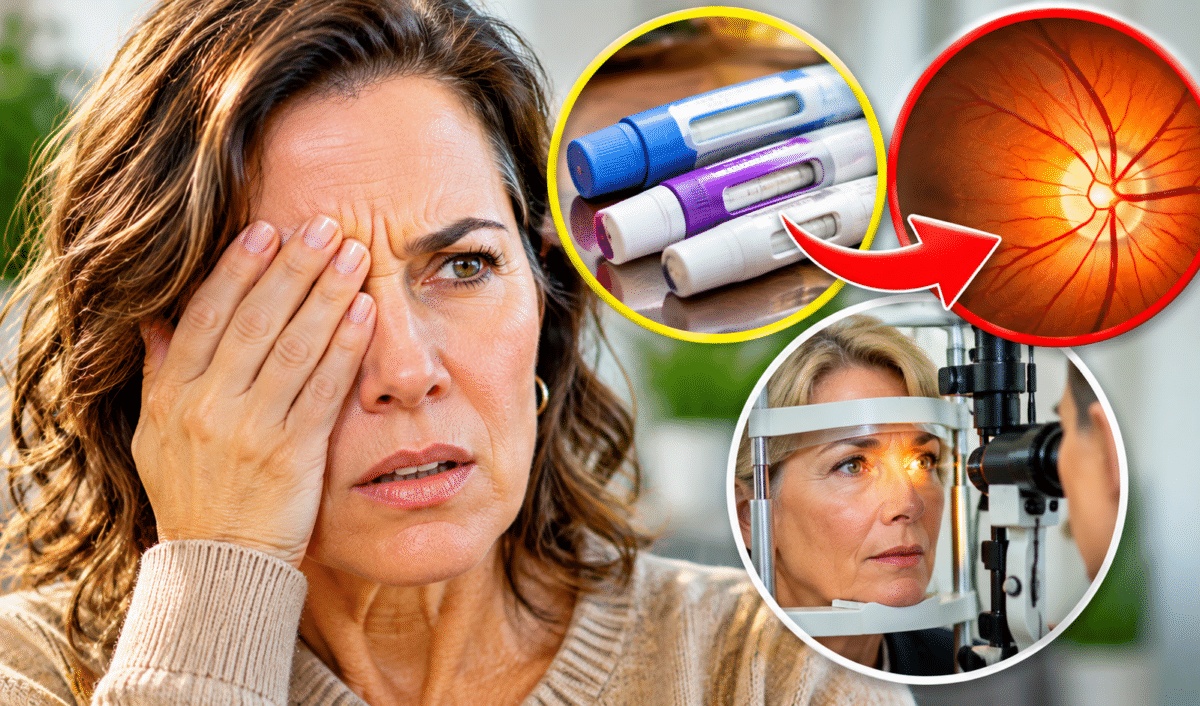
You wake up and the bottom half of your vision in one eye looks dim or washed out. There is no pain, no redness, nothing that feels like an emergency. For a small number of people, that quiet change is the first sign of non-arteritic anterior ischemic optic neuropathy, or NAION, a stroke-like loss of blood flow to the optic nerve. On Monday, November 9, 2026, the U.S. Food and Drug Administration said it will require every GLP-1 drug to warn about it.
The change covers the medicines that have reshaped diabetes and obesity care, including Ozempic, Wegovy, Mounjaro and Zepbound, about a dozen injectable and oral products in all, according to CBS News. A KFF poll in late 2025 found 12% of U.S. adults were currently taking a GLP-1. The warning is serious, but the risk it describes is small. Understanding both halves of that sentence is the key to deciding what, if anything, to do.
What We Know
- The FDA announced November 9, 2026, that all GLP-1 labels must warn of a possible increased NAION risk.
- Its trial analysis found 6.4 versus 3.8 cases per 100,000 person-years.
- Europe’s regulator listed NAION as a “very rare” semaglutide side effect in June 2025.
- Vision lost to NAION often does not come back.
What Is Still Unclear
- Whether GLP-1 drugs cause NAION or only appear linked; drugmakers dispute causation.
- Why the drugs might affect blood flow to the optic nerve.
- Whether risk differs among semaglutide, tirzepatide and other drugs.
- When updated labels will appear on each product.
What the FDA Found, in Plain Numbers
FDA scientists began looking into NAION after a 2024 study linked it to semaglutide, the active ingredient in Ozempic and Wegovy, CBS News reported. The agency reviewed clinical trial data, observational studies and reports in its adverse event system. Its pooled analysis of 126 randomized controlled trials across multiple GLP-1 drugs found NAION at 6.4 cases per 100,000 person-years among people taking a GLP-1, compared with 3.8 per 100,000 person-years among those on placebo or another glucose-lowering drug, The National reported.
The FDA said doctors should consider advising patients to stop a GLP-1 if signs of NAION appear “unless the benefits of treatment clearly outweigh the risk.” It also said patients with a history of NAION are at increased risk. “NAION is a rare condition that can result in acute, painless, decreased vision in one eye, including permanent vision loss,” the agency said.
How Often NAION Occurs
The Worked Math: Small Risk, Big Population
What NAION Is, and Why It Is Hard to Reverse
The optic nerve carries visual signals from the eye to the brain. In NAION, blood flow to the front part of that nerve drops, damaging nerve fibers. The underlying cause is not well understood, CBS News reported. It typically strikes one eye, often noticed on waking, and is painless. Symptoms include blurred vision, blind spots, distorted colors and dimming of part of the visual field.
Dr. Joseph Rizzo of Massachusetts Eye and Ear, who co-authored the 2024 paper that prompted the FDA’s review, told CBS News that vision loss from NAION tends to be irreversible, can worsen even after a person stops the drug, and that improvement is usually small. There is no known way to reduce the risk. Loss in one eye also does not predict how the other eye will fare.
Who Already Faces Higher Risk
NAION occurs without GLP-1 drugs, mainly in people over 50. Commonly cited risk factors include diabetes, high blood pressure, sleep apnea and a small, crowded optic disc, according to ophthalmology guidance. Several of these conditions are common among people prescribed GLP-1s, which is one reason it has been hard to separate the drug’s effect from the underlying health conditions. KFF found GLP-1 use is highest among adults 50 to 64, at 22%.
Who Is Taking GLP-1 Drugs
Why the Studies Disagree
The 2024 study that started the scrutiny, published in JAMA Ophthalmology by researchers at Massachusetts Eye and Ear, reviewed patients seen at a neuro-ophthalmology service and reported much higher relative risks with semaglutide: a hazard ratio of about 4.3 among people with type 2 diabetes and about 7.6 among people with overweight or obesity. Because those patients were already being seen by eye specialists, the absolute rates were higher than in the general population, and the design could not prove cause and effect.
Later studies varied. When the European Medicines Agency’s safety committee reviewed the evidence, it noted that two observational studies suggested elevated risk while two others did not, The Pharmaceutical Journal reported. The EMA concluded in June 2025 that NAION is a “very rare” side effect of semaglutide, affecting up to 1 in 10,000 users, with large studies in type 2 diabetes suggesting about double the risk of non-users, or about one extra case per 10,000 person-years.
Relative Risk Estimates by Source
The pattern is familiar in drug safety: early, smaller studies in specialized settings often show larger effects than broad trial pools. The FDA’s estimate, drawn from randomized trials across the whole drug class, is the most conservative of the three. Drugmakers dispute causation. Novo Nordisk said “available research does not establish that GLP-1 medications cause NAION,” as reported by ABC News via The National. Eli Lilly said it is “carefully evaluating the update” and noted the FDA’s communication did not cite findings specific to Lilly products, CBS News reported.
A Different Label Change This Year
The NAION warning is not the only GLP-1 label change of 2026. On January 13, the FDA asked makers of Saxenda, Wegovy and Zepbound to remove a warning about suicidal thoughts and behavior after a review of 91 placebo-controlled trials with 107,910 patients and a cohort study of about 2.2 million new users found no increased risk. Taken together, the two moves show the agency adjusting labels in both directions as evidence builds.
Which Drugs Are Affected
The FDA said the warning applies to all GLP-1 receptor agonist medicines. The table below lists the major products U.S. patients are likely to encounter. Approved uses and dosing are summarized from product labeling and may change; check with your pharmacist for your specific medicine.
| Brand | Active ingredient | Maker | Main approved use | How taken |
|---|---|---|---|---|
| Ozempic | Semaglutide | Novo Nordisk | Type 2 diabetes | Injection, once weekly |
| Wegovy | Semaglutide | Novo Nordisk | Weight management, heart risk | Injection weekly or daily pill |
| Rybelsus | Semaglutide | Novo Nordisk | Type 2 diabetes | Pill, once daily |
| Mounjaro | Tirzepatide | Eli Lilly | Type 2 diabetes | Injection, once weekly |
| Zepbound | Tirzepatide | Eli Lilly | Weight management, sleep apnea | Injection, once weekly |
| Foundayo | Orforglipron | Eli Lilly | Weight management | Pill, once daily |
| Trulicity | Dulaglutide | Eli Lilly | Type 2 diabetes | Injection, once weekly |
| Saxenda and Victoza | Liraglutide | Novo Nordisk | Weight management; diabetes | Injection, once daily |
| Soliqua | Insulin glargine and lixisenatide | Sanofi | Type 2 diabetes | Injection, once daily |
Compounded semaglutide and tirzepatide sold through some telehealth services contain the same active ingredients, so the same concerns would logically apply, though compounded drugs are not FDA-approved and do not carry FDA labels.
What to Do Now
Rizzo said he does not discourage patients from taking GLP-1s, which “have really been profoundly beneficial to a large number of people.” The practical goal is to recognize symptoms fast and make an informed decision with your doctor.
- Do not stop on your ownStopping a GLP-1 abruptly can raise blood sugar or lead to weight regain. Talk to your prescriber first.
- Tell your doctor about eye historyMention any prior NAION, optic nerve problems or unexplained vision loss; the FDA says prior NAION raises risk.
- Know the warning signsSudden, painless blurring, dimming or a dark area in one eye, often noticed on waking.
- Act the same dayContact a doctor immediately and ask for an urgent eye exam if vision changes in one eye.
- Keep routine eye examsPeople with diabetes should already have regular dilated eye exams; keep them on schedule.
- Report side effectsYou or your doctor can report problems to the FDA’s MedWatch program.
| What you notice | Urgency | Possible causes | What to do | Timing |
|---|---|---|---|---|
| Sudden painless dim or blurred vision in one eye | Urgent | NAION, retinal artery blockage, stroke | Call doctor or go to ER | Same day |
| Dark area or blind spot in part of vision | Urgent | NAION, retinal detachment | Urgent eye exam | Same day |
| Colors look faded in one eye | Prompt | Optic nerve problem | Call eye doctor | Within 24 hours |
| Vision loss with weakness or trouble speaking | Emergency | Stroke | Call 911 | Immediately |
| Gradual blur in both eyes | Routine | Glasses change, diabetic eye disease | Book eye exam | Within weeks |
| Eye pain, redness, light sensitivity | Prompt | Inflammation, glaucoma | Call eye doctor | Same or next day |
The urgency guidance above reflects standard medical advice for sudden vision changes and is not specific to GLP-1 drugs.
Questions Worth Asking at Your Next Visit
The new warning is a good prompt for a short conversation with your prescriber rather than a reason to panic. Useful questions include whether you have any personal risk factors for NAION, such as sleep apnea, poorly controlled blood pressure or a prior optic nerve problem; whether a baseline dilated eye exam makes sense before or soon after starting treatment; and what your plan would be if you noticed a sudden change in one eye. If you have already had NAION in one eye, the FDA says your risk is higher, so ask whether the benefits of continuing a GLP-1 clearly outweigh that risk for you. For many people with diabetes, heart disease or severe obesity, they may. For others, the calculation may differ.
How the Warning Took Shape
- July 2024JAMA Ophthalmology study links semaglutide to higher NAION risk.
- January 2025EMA safety committee begins review after two observational studies.
- June 6, 2025EMA lists NAION as a “very rare” semaglutide side effect, up to 1 in 10,000.
- January 13, 2026FDA asks makers to remove suicidal-thought warnings after reviewing 91 trials.
- November 9, 2026FDA requires NAION warning on all GLP-1 labels after reviewing 126 trials.
- Coming monthsManufacturers update labels and patient information for about 12 products.
- Risk in trials6.4 vs 3.8 per 100,000 person-years
- Prior NAIONHigher risk; tell your doctor
- SymptomsSudden, painless, usually 1 eye
- Act fastSame-day medical contact
- Do not self-stopTalk to prescriber first
- Most at riskAdults over 50
Frequently Asked Questions
What warning did the FDA add to GLP-1 drugs?
The FDA is requiring all GLP-1 drugs to warn about a possible increased risk of NAION, a rare optic nerve condition that can cause sudden and sometimes permanent vision loss in one eye.
Can Ozempic or Zepbound cause blindness?
A link has been found, but the risk is rare. FDA trial data show 6.4 cases per 100,000 person-years on GLP-1 drugs versus 3.8 on comparison treatments. Causation has not been proven.
What are the symptoms of NAION?
Sudden, painless blurred or dim vision in one eye, blind spots, faded colors or loss of part of the visual field, often noticed on waking.
Should I stop taking my GLP-1 because of the warning?
Not without talking to your doctor. The FDA advises considering stopping if NAION signs appear, unless benefits clearly outweigh the risk.
Which drugs are covered by the new warning?
All GLP-1 receptor agonists, including Ozempic, Wegovy, Rybelsus, Mounjaro, Zepbound, Trulicity, Saxenda and Victoza, about a dozen products.
Is NAION vision loss reversible?
Usually not. Experts say improvement is typically small, and loss can worsen even after stopping the drug.
Who is most at risk of NAION?
Adults over 50, people with a prior NAION episode, and those with risk factors such as diabetes, high blood pressure or sleep apnea.
Did the FDA remove another GLP-1 warning this year?
Yes. In January 2026, the FDA asked makers to remove the suicidal thoughts warning from Saxenda, Wegovy and Zepbound after finding no increased risk.
The Short Version
The FDA will require all GLP-1 drugs, including Ozempic, Wegovy, Mounjaro and Zepbound, to warn about NAION, a rare condition that can cause sudden, painless and often permanent vision loss in one eye. Its review of 126 trials found 6.4 cases per 100,000 person-years on GLP-1s versus 3.8 on comparison treatments. Europe reached a similar conclusion in 2025. The absolute risk is small, but vision changes need same-day care. Do not stop your medicine without talking to your doctor.

Omisha is a health writer passionate about turning complex medical research into clear, actionable content readers can trust. She covers everything from nutrition and mental wellness to chronic disease management, always grounding her work in credible science and real-world relevance. When she's not writing, she's usually reading up on the latest health studies or exploring new wellness trends to write about next.