Health and Weather Pain Science
Is “Barometric Flu” Real? Why Falling Pressure Can Worsen Headaches and Joint Pain — and How Much the Science Supports It
A viral term is blaming storm systems for headaches, dizziness and aching joints. Research shows a real but modest weather effect for some people, not an infection. Here is what studies measured and what helps.
By The Health DeskFact-checked against peer-reviewed studies, university research releases and specialist interviewsUpdated November 13, 2026Scope U.S. adults with migraine, arthritis or chronic pain
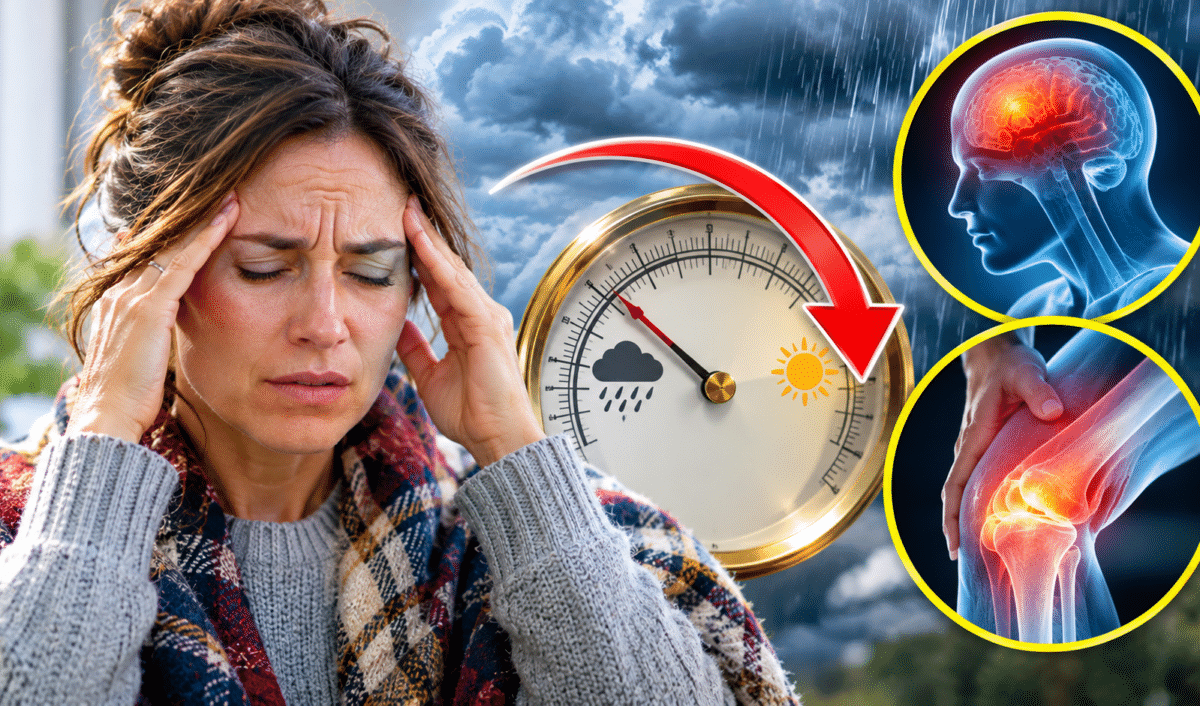
A cold front sweeps across the East Coast, a nor’easter begins to spin up off New England, and social media fills with the same complaint: pounding headaches, dizzy spells, sore teeth, achy knees. On November 12, 2026, a TikTok creator blamed the falling barometric pressure for how she felt, and in a follow-up video gave the cluster of symptoms a name: “the barometric flu.” Thousands of viewers, mostly women, said they recognized it.
The phrase is new, but the idea is ancient. Doctors have heard patients link pain to weather since Hippocrates. The real question is how strong the effect is and who feels it. The research gives a more interesting answer than either “it’s all in your head” or “storms make everyone sick.” For some people, weather appears to be one piece of a larger puzzle, and knowing that can change how you prepare for a stormy week.
What We Know
- Weather is the most commonly reported migraine trigger, cited by 30% to 50% of people with migraine.
- Small Japanese studies tied migraine onset to falling pressure.
- A large U.K. study linked high humidity, low pressure and wind to more painful days.
- Experts describe the effect as modest and rarely enough on its own.
What Is Still Unclear
- Exactly how the body senses pressure changes; leading ideas involve the inner ear and joint tissues.
- Why some people are sensitive and others are not.
- Whether perimenopause increases pressure sensitivity, as many people claim.
- Why several large studies found no link at all.
What People Mean by “Barometric Flu”
Barometric pressure is the weight of the air above you. At sea level, standard pressure is about 1013 hectopascals, or hPa. When a storm system approaches, pressure falls, sometimes sharply. Nor’easters, which form when low pressure pulls cold, dry Arctic air from Canada into warm, wet air from the Atlantic, are most common between September and April, according to NOAA, and can cause steep drops along the East Coast.
The “flu” part of the name is misleading. No virus is involved, and you cannot catch it. People using the term describe a cluster of symptoms that seem to arrive with storms: headaches, dizziness, fatigue, tooth or sinus pain and stiff joints. Dr. Elie Sader, a double board-certified neurologist and pain specialist, told Yahoo Health that patients consistently report weather-linked migraine and joint pain tied to falling pressure, even though studies are “messy.”
Why It Is Trending Right Now
Timing matters. The viral posts arrived as a cold front crossed the eastern U.S. and a nor’easter formed in New England, Yahoo Health reported. Many people who posted said they were in perimenopause, and the creator claimed women become more sensitive to pressure changes during that phase. Sader said declining estrogen may heighten sensitivity to sensory input, including sound, smell and possibly air pressure, but that link has not been well studied.
The Migraine Evidence: Small Studies, Consistent Signal
Some of the most specific data come from Japan. In a 2011 study in the journal Internal Medicine, researchers at Dokkyo Medical University followed 28 people with migraine who kept headache diaries for a year and lived near a weather observatory. Migraine frequency rose when pressure fell by more than 5 hPa from the headache day to the next day. Weather change was linked to headaches in 18 of the 28 patients, and 14 of those 18 named low pressure as the trigger.
A 2015 study in SpringerPlus tracked 34 migraine patients as Typhoon Halong approached Japan. Migraine onset was most frequent when pressure fell 6 to 10 hPa below the 1013 hPa standard. About three-quarters of people with migraine developed attacks as pressure dropped, compared with about one in five patients with tension-type headaches.
Migraine and Falling Pressure in Two Japanese Studies
How Pressure Might Trigger a Headache
The mechanisms are not fully understood. One leading idea is that the inner ear acts as a pressure sensor and can activate nerve pathways linked to migraine. Pressure changes may also affect how blood vessels in the brain widen and narrow or shift pressure inside the skull, possibly stimulating pain-sensitive nerves. Heat can affect the same nerve pathways, and dehydration, a known migraine trigger, is more common on hot days. The Mayo Clinic lists sunlight glare, high humidity, extreme heat and very dry air as possible triggers that vary by person.
Not every study agrees. The American Migraine Foundation describes the research as mixed, and some studies have found no link. Sader’s framing helps: weather is part of a “trigger stack.” It “is not going to be sufficient to trigger migraine on its own,” he said, but on a day with poor sleep, a skipped meal or stress, a falling barometer may tip the balance.
Joint Pain: The Biggest Study Found a Small Effect
For arthritis and chronic pain, the best-known study is Cloudy with a Chance of Pain, run by the University of Manchester throughout 2016. More than 13,000 people across the U.K. signed up, and researchers analyzed 2,658 participants who logged symptoms daily for about six months on a smartphone app linked to local weather data. The results were published in npj Digital Medicine in 2019.
High relative humidity was the most important factor, followed by low pressure and stronger wind. Rainfall was not linked to pain, and temperature showed no association when averaged across everyone. On the worst combination, a damp, windy day with low pressure, pain was about 20% more likely than on an average day. In practical terms, that is the difference between 5 and 6 painful days out of 100.
How Big Is the Weather Effect on Pain?
The largest U.S. analysis looked at rain only. Harvard’s Dr. Anupam Jena and colleagues examined more than 11.6 million outpatient visits by more than 1.5 million Medicare patients over four years, published in The BMJ in 2017. Joint or back pain was the reason for 6.35% of visits on rainy days and 6.39% on dry days, a difference too small to matter. “It’s hard to prove a negative,” Jena said, noting the study did not measure pressure or temperature.
Other Studies Point Both Ways
A Tufts Medical Center study of knee osteoarthritis led by Dr. Timothy McAlindon found pain rose slightly with colder weather and with changes in barometric pressure. McAlindon called the overall evidence “all a little conflicting,” STAT reported. A University of Sydney study of 345 knee osteoarthritis patients found no significant link between pain flares and temperature, humidity, pressure or rain. Stanford’s Donald Redelmeier has argued that people “seize on times that support their ideas” and overlook times that do not.
Why Joints Might Sense the Weather
One theory is that falling pressure lets fluid and tissue in and around a joint expand slightly, stretching the joint capsule, Sader told Yahoo Health. In joints already inflamed by arthritis, that small change may be enough to register as more pain. Cold can also stiffen muscles and tendons, and people tend to move less on gloomy days, which can itself worsen stiffness.
Putting Storm Pressure in Perspective
Pressure Drops Compared
This comparison helps explain why the science is so mixed. Pressure is rarely the only thing changing when a storm moves in. Humidity rises, temperatures shift, winds pick up, daylight dims, routines change and sleep often suffers. Teasing out which of those factors matters for any one person requires careful tracking, which is exactly what most studies struggle to do.
| Weather factor | Joint pain evidence | Migraine evidence | Proposed reason | What you can do |
|---|---|---|---|---|
| Falling pressure | Small effect | Small studies support | Inner ear sensing; joint capsule stretch | Track forecasts; plan ahead |
| High humidity | Strongest U.K. factor | Possible trigger | Not well understood | Use AC or dehumidifier indoors |
| Strong wind | Small effect | Reported by some | Often travels with storms | Dress warmly, limit exposure |
| Cold temperatures | Mixed | Sudden shifts reported | Stiffer tissues, less movement | Warmth, gentle movement |
| Heat | Little evidence | Possible trigger | Dehydration, nerve sensitivity | Hydrate, cool down |
| Rainfall | No link in U.S. and U.K. data | Some app data link | Likely a proxy for other changes | Focus on other triggers |
| Bright sun and glare | Not studied much | Common trigger | Light sensitivity | Sunglasses, hats |
| Very dry air | Little evidence | Listed by Mayo Clinic | Dehydration, sinus irritation | Humidifier, fluids |
Evidence labels in this table are this desk’s summary of the studies cited in this article and should be read as general guidance rather than a formal rating.
A Storm-Week Plan That Actually Helps
You cannot control the weather, but you can control much of the rest of the trigger stack. Sader said he sometimes prescribes extra medication, such as naproxen, sold as Aleve, for a few days before a major pressure or temperature shift in patients who know weather triggers their migraines. That should be done only with a doctor’s guidance. The timeline below is an indicative self-care plan, not a medical protocol.
- 72 hoursCheck the forecast or a pressure app for incoming storms and big temperature swings.
- 48 hoursProtect sleep: aim for consistent bed and wake times.
- 24 hoursHydrate, eat regular meals and follow any doctor-approved plan.
- Storm dayKeep moving gently, use heat on stiff joints and limit other triggers.
- 24 hours afterLog symptoms and weather to see whether the pattern holds.
- Keep a two-month diaryRecord pain, headaches, sleep, meals, stress, menstrual cycle and local pressure each day to see your real pattern.
- Look for clustersNote whether symptoms follow pressure drops, humidity, heat or simply bad sleep on those days.
- Talk to your doctorIf weather seems to matter, ask about a short-term preventive plan before big storms.
- Stay active indoorsGentle stretching, walking or water exercise can ease stiff joints on cold, damp days.
- Control the controllablesRegular sleep, meals, hydration and stress management reduce how many triggers stack up.
- Track for 2 monthsPain, sleep, weather and stress
- Watch drops of 5+ hPaLinked to migraine in studies
- Hydrate on hot daysDehydration is a trigger
- Sleep 7 or more hoursPoor sleep stacks triggers
- Move dailyEases stiff joints
- Fever means flu checkAntivirals best within 48 hours
Frequently Asked Questions
What is the barometric flu?
It is an informal internet term for headaches, dizziness, joint pain and fatigue that some people notice when barometric pressure falls. It is not an infection or medical diagnosis.
Can barometric pressure cause headaches?
It may contribute for some people. Between 30% and 50% of people with migraine say weather is a trigger, and small studies link attacks to pressure drops of 5 to 10 hPa.
Why do my joints hurt before it rains?
Falling pressure and rising humidity may slightly stretch tissues around inflamed joints. A large U.K. study found damp, windy, low-pressure days were about 20% more likely to be painful.
Is weather-related joint pain real or in my head?
Evidence is mixed. Some studies show small effects, while a large U.S. study found no link between rain and doctor visits for joint pain. Personal tracking can reveal your own pattern.
What barometric pressure causes migraines?
There is no single number. Japanese studies linked migraines to day-to-day drops of more than 5 hPa and to pressure 6 to 10 hPa below the 1013 hPa standard.
How can I prevent weather-related headaches?
Track forecasts, protect sleep, stay hydrated, eat regular meals and manage stress. Some doctors prescribe short-term preventive medication before big weather changes.
Does perimenopause make you more sensitive to weather?
Some experts think declining estrogen can heighten sensory sensitivity, but research on pressure sensitivity specifically is limited.
How do I know if it is the flu or the weather?
Fever, chills, cough and body aches suggest a real infection like influenza. Weather-linked symptoms do not cause fever.
The Short Version
“Barometric flu” is a viral nickname, not an infection, but weather can genuinely add to headaches and joint pain for some people. Between 30% and 50% of people with migraine cite weather as a trigger, and small studies tie attacks to pressure drops of 5 to 10 hPa. For joint pain, a U.K. study found damp, windy, low-pressure days about 20% more likely to be painful, while a U.S. study found no rain effect. Weather is usually one trigger among many. Track your symptoms, protect sleep and hydration, and talk to a doctor about a plan.

Omisha is a health writer passionate about turning complex medical research into clear, actionable content readers can trust. She covers everything from nutrition and mental wellness to chronic disease management, always grounding her work in credible science and real-world relevance. When she's not writing, she's usually reading up on the latest health studies or exploring new wellness trends to write about next.