Beauty and Skin Health Dermatologist Basics
How to Build a Skincare Routine That Takes Under 5 Minutes — and the 3 Steps Dermatologists Say You Should Never Skip
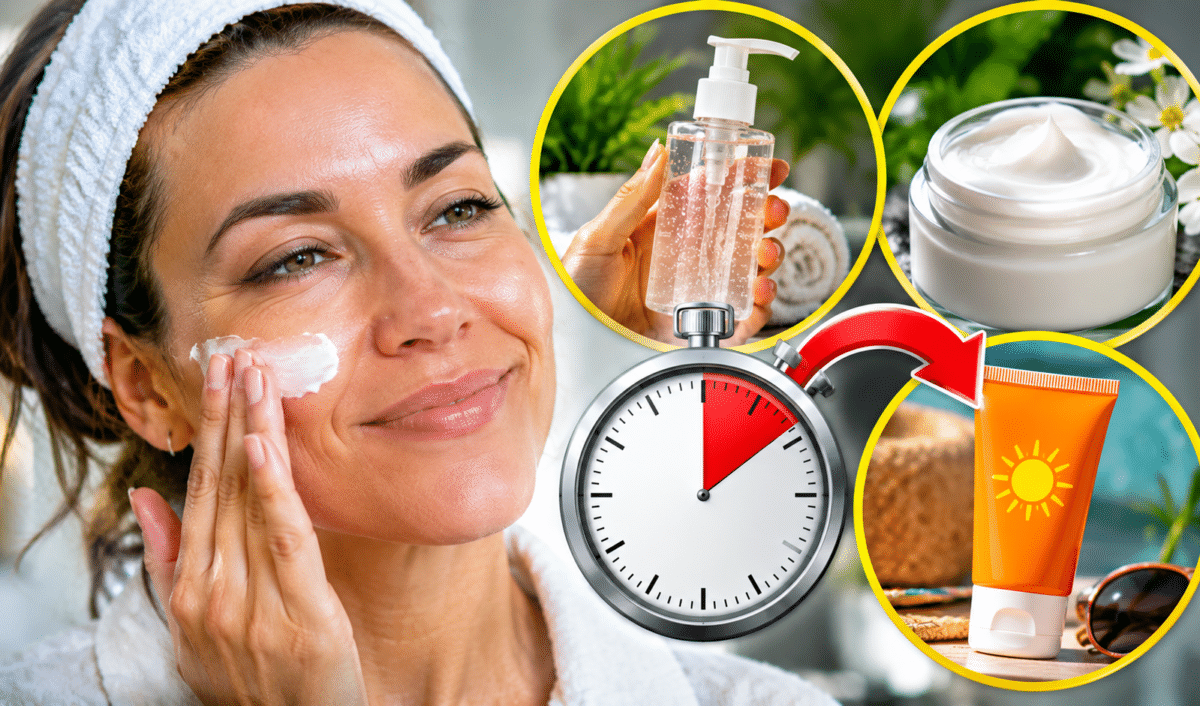
Dermatologists say “less is more”: a gentle cleanser, a moisturizer and a daily SPF 30 sunscreen cover most needs. Here is a timed morning and night routine, the right amounts to use and the evidence behind each step.
By The Beauty and Health DeskFact-checked against American Academy of Dermatology guidance, clinical trials and national surveysUpdated November 13, 2026Scope U.S. adults, everyday skincare
Your bathroom shelf may hold a serum you bought after one video, a toner you are not sure you need and a sunscreen you only remember in July. Meanwhile, social media routines run to 10 steps and 20 minutes. If that feels unsustainable, the good news comes from dermatologists themselves. The American Academy of Dermatology says “less is more when it comes to skin care” and recommends sticking to three basics: a gentle cleanser, sunscreen and moisturizer, used consistently morning and night.
Consistency is where most Americans fall down. In a 2024 YouGov poll of 1,148 adults, only half described their routine as very or somewhat consistent, and 36% of men said they had no routine at all. A 2026 Talker Research survey for sunscreen maker ISDIN found 53% of Americans frequently forget daily sunscreen. A routine short enough to finish while your coffee brews is one you are far more likely to keep.
What We Know
- The AAD recommends a gentle cleanser, moisturizer and SPF 30 or higher sunscreen as the basics.
- Washing twice a day with lukewarm water and fingertips is enough for most people.
- Daily sunscreen use slowed visible skin aging in a 903-person trial.
- Skin cancer affects 1 in 5 Americans in their lifetime, according to the AAD.
What Is Still Unclear
- How much extra benefit serums and multi-step routines add for healthy skin.
- Exactly how many Americans wear sunscreen daily; surveys vary widely.
- Which single “treatment” product matters most varies by person and concern.
- Long-term data comparing short and long routines head to head.
Why Short Routines Win
A routine only works if you do it. YouGov’s survey found that among Americans with a consistent routine, 75% were satisfied with their skin, compared with 63% of those without one. That does not prove the routine caused the satisfaction, but it suggests habits matter more than any single product. Women were far more likely than men to cleanse and moisturize daily.
How Americans Approach Skincare
Very or somewhat consistent routine
Moisturize at least once a day
No routine at all
Ever used retinol
Cost Counts Too
Fewer steps also mean fewer purchases. In the YouGov poll, 72% of Americans said affordability was a very or somewhat important factor when choosing skincare, and 60% valued a dermatologist recommendation. Only 16% said they would spend more than $40 on a single product. A three-product routine built on drugstore basics fits those priorities without sacrificing the steps that matter.
The Under-5-Minute Routine, Step by Step
The timings below are this desk’s indicative estimates for an unhurried pace, built around AAD recommendations. You can add or remove a step, but the three core steps should stay.
- 0:00AM: rinse or gentle cleanse
- 0:45AM: moisturizer
- 1:15AM: SPF 30+ sunscreen
- 2:00PM: remove makeup or sunscreen, cleanse
- 3:15PM: one treatment, optional
- 3:45PM: moisturizer; done by 4:30
Cumulative minutes across morning and night. Timings are indicative, not from a study.
Time Per Step, in Seconds
Morning: Protect
Wet your face with lukewarm water and use a gentle, non-abrasive cleanser with your fingertips, the AAD advises; some people with dry skin prefer a plain water rinse in the morning. Pat dry with a soft towel. Apply moisturizer, especially if your skin feels dry or tight. Then apply a broad-spectrum sunscreen with SPF 30 or higher. The AAD says most adults need about 1 ounce to cover exposed skin and at least a teaspoon for the face. Apply it about 15 minutes before going outside, and do not forget your neck and ears.
Night: Clean and Repair
At night, remove makeup and sunscreen, then cleanse again. The AAD recommends limiting washing to twice a day, plus after heavy sweating, because overwashing can irritate skin. If you use one targeted product, such as a retinoid for acne or fine lines, or a treatment recommended by your dermatologist, apply it to dry skin. Finish with moisturizer. That is the whole routine.
- Cleanse gentlyLukewarm water, a mild cleanser and fingertips only. No scrubbing, washcloths or harsh tools.
- MoisturizeApply while skin is still slightly damp to help lock in hydration; choose oil-free if you are acne-prone.
- Sunscreen every morningBroad-spectrum SPF 30 or higher, at least 1 teaspoon for the face, even on cloudy days.
- Add one treatment at nightOnly if you need it; introduce new actives slowly to see how your skin responds.
- Reapply when outdoorsEvery 2 hours, or right after swimming or sweating, the AAD says.
The Step Most People Skip, and Why It Matters Most
If you only have time for one step, dermatologists consistently point to sunscreen. The evidence is strong. In a 2013 randomized trial published in Annals of Internal Medicine, 903 adults under 55 in Nambour, Australia, were assigned to use sunscreen daily or at their discretion for 4.5 years. Daily users showed 24% less skin aging, measured by lines and coarseness. The Skin Cancer Foundation cites a study finding daily use of SPF 15 or higher sunscreen reduced melanoma risk by 50%.
Yet many people skip it. The 2026 Talker Research survey for ISDIN, a sunscreen maker, found Americans wear SPF on average only 31% of the year, and 29% said daily SPF seemed unnecessary. The survey gave two different figures for daily use, 10% and 24%, without explaining the difference, which shows how hard this behavior is to measure. The most common reason people gave for skipping sunscreen was disliking the texture.
The Sunscreen Gap
Match the Routine to Your Skin
The same three steps work for almost everyone; what changes is the formula. The table below is general guidance based on common dermatologist recommendations, not a prescription. If you have a skin condition such as eczema, rosacea or severe acne, ask a board-certified dermatologist.
| Skin type | Cleanser | Moisturizer | Sunscreen | Optional night step |
|---|---|---|---|---|
| Dry | Creamy, fragrance-free; 1 wash a day may suffice | Rich cream | SPF 30+ moisturizing formula | Extra moisturizer layer |
| Oily | Gel or foaming, 2 times a day | Lightweight, oil-free | SPF 30+ gel or fluid | Acne treatment if needed |
| Combination | Gentle gel, 2 times a day | Light lotion | SPF 30+ lotion | Spot-treat oily zones |
| Sensitive | Mild, fragrance-free | Fragrance-free, minimal ingredients | SPF 30+ mineral, zinc or titanium | Skip new actives; test 1 at a time |
| Acne-prone | Gentle, 2 times a day and after sweating | Noncomedogenic | SPF 30+ noncomedogenic | Retinoid or benzoyl peroxide |
| Mature | Gentle, hydrating | Richer cream | SPF 30+ every day | Retinoid, if tolerated |
Reading Labels in 30 Seconds
You do not need to decode every ingredient. A few label terms do most of the work. “Broad-spectrum” on a sunscreen means it protects against both UVA rays, linked to aging, and UVB rays, which cause burns. “Water resistant” sunscreens are tested to stay effective for either 40 or 80 minutes of swimming or sweating, a claim U.S. sunscreen labeling rules govern. “Noncomedogenic” signals a product formulated not to clog pores, useful if you break out. “Fragrance-free” helps sensitive skin; “unscented” can still contain masking fragrance. If a product makes big promises, like erasing wrinkles in days, treat that as a reason for skepticism.
When to Add a Fourth Step
A targeted treatment makes sense when you have a specific goal, such as acne, dark spots or fine lines. Retinoids are among the best-studied options for acne and signs of aging, and they belong in the evening routine because sunlight can break some forms down. Introduce one new product at a time, start a few nights a week and watch for irritation before increasing. If a product stings, burns or causes a rash, stop and talk to a dermatologist.
What About Toners, Serums and Masks?
None of these are required. A vitamin C serum in the morning or a hydrating serum at night can be pleasant additions, but the AAD’s core advice does not include them, and every extra product adds time and another chance of irritation. If you enjoy a weekend mask or a toner, keep it as an occasional extra rather than part of the daily five minutes.
Lips, Hands and the Spots You Miss
A quick routine can still cover the forgotten areas. The AAD recommends lip balm with SPF 30 or higher before going outdoors, and sunscreen on the neck and ears. The backs of your hands get constant sun, especially while driving; the 2013 Australian trial measured aging there. Keep a small sunscreen near the door or in your car so the step takes seconds.
- Wash 2 times a dayLukewarm water, fingertips
- SPF 30 or higherEvery morning, all year
- 1 teaspoon for faceAt least, per AAD
- Reapply every 2 hoursWhen outdoors or sweating
- 1 new product at a timeWatch for irritation
- Annual skin checkLook for new or changing spots
Making the Habit Stick
The Talker Research survey found 79% of Americans remember to plug in their phone every night or most nights, while 53% often forget sunscreen. That contrast points to a simple fix: attach skincare to something you already do. Keep sunscreen next to your toothbrush or car keys, and moisturizer beside the bed. Put the night routine right after brushing your teeth. Short routines tied to existing habits are far easier to repeat, and repetition is what produces results over months, not any single product.
Beyond the Bathroom Mirror
Skincare is also cancer prevention. The AAD says one indoor tanning session raises the risk of melanoma by 20%, squamous cell carcinoma by 67% and basal cell carcinoma by 29%. It recommends checking your skin regularly for new spots, spots that look different from the others, or moles that itch, bleed or change color. Melanoma caught before it reaches the lymph nodes has a 98% five-year survival rate.
How Much One Indoor Tanning Session Raises Skin Cancer Risk
Forty percent of Americans in the 2026 Talker Research survey said they had never had their skin checked by a dermatologist. A routine that takes under five minutes a day leaves time for a monthly self-check in the mirror, which takes another minute or two.
Frequently Asked Questions
What is the simplest skincare routine?
A gentle cleanser, a moisturizer and a broad-spectrum SPF 30 or higher sunscreen each morning, plus cleansing and moisturizing at night. The AAD says less is more.
How many times a day should I wash my face?
The AAD recommends twice a day, morning and night, and after heavy sweating, using lukewarm water and a gentle cleanser.
How much sunscreen should I put on my face?
At least 1 teaspoon, according to the AAD. Most adults need about 1 ounce, a shot glass full, for all exposed skin.
Do I need sunscreen every day, even indoors or in winter?
Dermatologists recommend daily sunscreen on exposed skin year-round. A trial found daily users had 24% less skin aging.
What order should I apply skincare products?
Generally cleanser, then any treatment, then moisturizer, with sunscreen last in the morning.
Is a 10-step skincare routine better?
Not necessarily. More products can increase irritation. Consistency with a few well-chosen products matters more for most people.
How often should I reapply sunscreen?
Every two hours when outdoors, and right after swimming or sweating, the AAD says.
Should men follow the same skincare routine?
Yes. The same three steps apply. YouGov found 36% of men have no routine, so even cleanser and sunscreen is a meaningful start.
The Short Version
A daily skincare routine can take under 5 minutes. In the morning, cleanse gently, moisturize and apply at least a teaspoon of SPF 30 or higher sunscreen to your face. At night, cleanse, add one treatment only if you need it, and moisturize. The AAD says less is more, and daily sunscreen is the step with the strongest evidence, linked to 24% less skin aging in one trial. Wash twice a day, reapply sunscreen every 2 hours outdoors and check your skin for changes.

Omisha is a health writer passionate about turning complex medical research into clear, actionable content readers can trust. She covers everything from nutrition and mental wellness to chronic disease management, always grounding her work in credible science and real-world relevance. When she's not writing, she's usually reading up on the latest health studies or exploring new wellness trends to write about next.