Hair HealthDIY BeautyEvidence Check
DIY Hair Growth Serum: Which Ingredients Actually Have Evidence — and How to Mix One Safely at Home
Rosemary oil, caffeine and peppermint have small studies behind them; castor oil and many viral blends do not. Here is what the research shows, the dilution math that keeps your scalp safe and how long any serum takes to work.
By The Beauty Science DeskFact-checked against peer-reviewed trials and dermatology guidanceUpdated November 11, 2026Scope U.S. adults, topical and home use
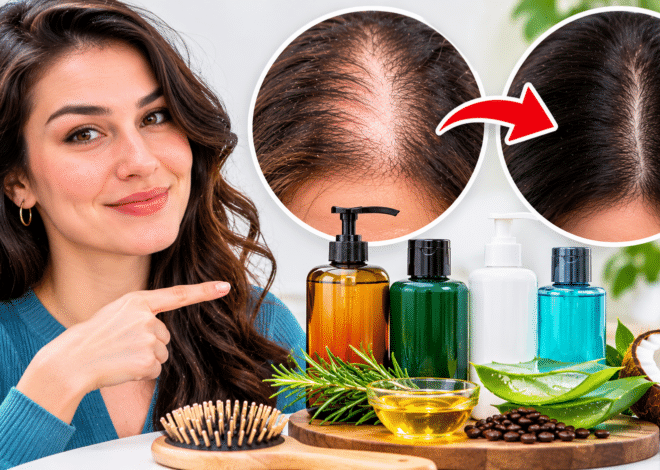
Your bathroom shelf may already look like an apothecary: a bottle of rosemary oil, a jar of castor oil, maybe a dropper of something an influencer swore by. Mixing your own hair growth serum is cheap, feels natural and is all over social media. The question is whether any of it works, and whether some of it could do more harm than good.
The honest answer is mixed. A handful of ingredients have real, if small, human studies. Others rest on animal research or on no research at all. And the most cited study, the one comparing rosemary oil with minoxidil, is often described more confidently than its design allows. This guide sorts the evidence, gives you a cautious recipe with the math shown, and explains when to skip DIY and see a dermatologist.
What We Know
- A 2015 trial found rosemary oil and 2% minoxidil produced similar hair count gains at six months, with less scalp itching from rosemary.
- A 2017 trial found a 0.2% caffeine liquid was not inferior to 5% minoxidil over six months.
- Pumpkin seed oil raised hair counts 40% versus 10% for placebo, but it was taken as an oral supplement.
- Minoxidil remains the FDA-approved over-the-counter option for hereditary hair loss.
What Is Still Unclear
- No large, independent, placebo-controlled trial has tested a homemade rosemary serum.
- The best concentration and frequency for rosemary oil on the scalp are not established.
- Castor oil has no published clinical trials showing hair regrowth.
- Whether results in men apply to women with thinning hair is largely untested.
Why So Many People Are Mixing Their Own Serums
Thinning hair is extremely common. The American Academy of Dermatology says hereditary hair loss affects about 80 million American men and women, according to a University Hospitals summary of AAD guidance. Proven treatments such as minoxidil and prescription finasteride work for many people, but they must be used indefinitely, and some people dislike the side effects or the idea of a drug. A $10 bottle of rosemary oil looks like an easy alternative.
Before mixing anything, it helps to know what a serum can and cannot do. Hair grows in cycles. According to Bernstein Medical, a hair restoration practice, about 90% of scalp hairs are in the growth phase, called anagen, which lasts two to seven years. A short transition phase of two to three weeks follows, then a resting phase of three to four months before the hair sheds. Any serum that helps must either lengthen the growth phase or wake up resting follicles, and both take months to show.
How Long Each Phase of the Hair Cycle Lasts
The Rosemary Oil Study Everyone Cites
Rosemary oil became a social media star largely because of one trial. Published in SKINmed in 2015 by Panahi and colleagues, it assigned 100 men with pattern hair loss to rosemary oil or minoxidil 2% for six months. According to a review in the journal Cutis, both groups had significantly more hair at six months than at baseline and at three months, and the difference between them was not statistically significant. Scalp itching was more common with minoxidil.
That sounds like a clear win, but the details matter. At three months, neither group had improved. There was no placebo group, so it is impossible to know how much of the improvement came from simply tracking hair carefully. The comparison drug was the weaker 2% minoxidil, not the 5% strength most men use. The trial included only men and has not been independently repeated, as a review by Acibadem International notes.
The Evidence Behind Other Popular Ingredients
A 2017 trial in Skin Pharmacology and Physiology tested a caffeine-based liquid against 5% minoxidil in 210 men. After six months, the caffeine group’s share of growing hairs rose 10.59% and the minoxidil group’s 11.68%, a difference small enough that researchers called caffeine “not inferior.” The study was funded by the caffeine product’s manufacturer, Dr. Kurt Wolff GmbH, and was open label, meaning participants knew what they were using.
How Many People Were in Each Study?
Pumpkin seed oil often appears in DIY recipes, but its best study used capsules, not a scalp serum. In a 2014 trial of 76 men, those taking 400 mg a day of a supplement containing pumpkin seed oil for 24 weeks saw hair counts rise about 40%, compared with about 10% on placebo. The capsule contained other ingredients, and the maker funded the study. Peppermint oil’s evidence comes from a 2014 study in mice: over four weeks, 3% peppermint oil produced more hair growth signs than saline, jojoba oil or 3% minoxidil. Mouse hair cycles differ greatly from human ones.
Reported Gains in the Two Strongest Human Trials
Hair count, oral supplement trial
Growing-hair rate, topical trial
An Ingredient-by-Ingredient Evidence Check
Not every popular ingredient deserves a spot in your bottle. The table ranks common DIY serum ingredients by the strength of their human evidence, from the best-studied to the least.
| Ingredient | Best evidence | Study size and length | DIY caution | Verdict |
|---|---|---|---|---|
| Caffeine | Formulated 0.2% liquid vs. minoxidil 5% | 210 men, 6 months | Brewed coffee is far weaker than 0.2% | Promising |
| Rosemary oil | Similar to minoxidil 2% at 6 months | 100 men, 6 months | Must be diluted; can irritate skin | Promising |
| Pumpkin seed oil | Oral capsule raised hair counts | 76 men, 24 weeks | No trial of scalp use | Indirect |
| Onion juice | More regrowth than tap water in alopecia areata | 38 patients | Can cause contact dermatitis; strong odor | Limited |
| Peppermint oil | Hair growth signs in mice | Mice, 4 weeks | Strong tingle; dilute well | Animal only |
| Castor oil | No clinical trials for regrowth | None found | Thick; can mat hair | Unproven |
| Jojoba or argan oil | Used as carriers, not growth agents | Not applicable | Good base for dilution | Carrier |
Why Your Coffee Rinse Is Not the Same as the Caffeine Study
Caffeine scalp rinses using brewed coffee are a popular hack. But the FDA says an 8-ounce cup of coffee contains about 80 to 100 milligrams of caffeine. That works out to roughly 0.03% to 0.04% caffeine by weight, far below the 0.2% liquid tested in the trial, and the trial product was designed to stay on the scalp rather than be rinsed off.
Caffeine Strength: Study Product Versus Kitchen Coffee
A Cautious DIY Rosemary Serum, With the Math
If you want to try a homemade serum, keep it simple and dilute. Researchers have not established a standard concentration for rosemary oil on the scalp, so the recipe below follows common aromatherapy guidance of about 1% essential oil for leave-on skin use. It is a starting point, not a tested formula.
- Choose a carrier oilUse about 30 mL (1 ounce) of jojoba, argan or grapeseed oil in a clean, dark glass dropper bottle.
- Add about 6 drops of rosemary essential oilThis is roughly a 1% dilution; skip extras with added fragrance.
- Optional: add up to 3 drops of peppermint oilIt tingles; stop if it burns or reddens your scalp.
- Patch test for several daysApply a small amount to the inner forearm and watch for redness, itching or swelling before using it on your scalp.
- Apply a few drops to the scalp and massageFocus on thinning areas; use on clean, dry skin.
- Make small batchesPlant oils can go rancid; store away from heat and light and replace if the smell changes.
Who Should Skip DIY Serums
Skip essential oil blends if you are pregnant or breastfeeding, have eczema or psoriasis on your scalp, or have reacted to fragrances before, unless your doctor approves. Keep essential oils away from children’s skin and pets. If you are already using minoxidil, ask a dermatologist before adding oils, since scalp irritation can make it harder to keep using a proven treatment.
How Long Before You See Anything
Patience is the hardest part. In the rosemary trial, neither rosemary oil nor minoxidil had produced measurable gains at three months; differences appeared only at six. Both the caffeine and pumpkin seed oil trials also ran about six months. Since scalp hair grows about half an inch a month, even successful regrowth looks slow at first.
- Week 1Patch testCheck skin reaction before scalp use
- Month 1Baseline photosSame light, same angle, every 4 weeks
- Month 3Early checkNo change in rosemary trial at this point
- Month 6Fair testWhen studies measured gains
- No changeSee a dermatologistAsk about proven options
- Essential oil at 1% to 1.5%About 6 to 9 drops per ounce
- Patch test firstSeveral days on the inner forearm
- Photos every 4 weeksSame lighting and angle
- Give it 6 monthsThe timeline used in trials
- Fragrance-free oilsLower risk of dermatitis
- Doctor for patchy lossOr more than about 100 hairs a day
Frequently Asked Questions
Does rosemary oil really grow hair?
A 2015 trial of 100 men found rosemary oil produced similar hair count gains to 2% minoxidil after six months, but no change at three months and no placebo comparison. Evidence is promising but limited.
How do I make a DIY hair growth serum?
A simple version uses about 30 mL of jojoba or argan oil with about 6 drops of rosemary essential oil, roughly a 1% dilution. Patch test before use and apply a few drops to the scalp.
How long does it take for a hair serum to work?
Studies of rosemary oil, caffeine and pumpkin seed oil measured results at about six months. The rosemary trial found no change at three months.
Is castor oil good for hair growth?
There are no published clinical trials showing castor oil regrows hair. It can work as a conditioning oil but is thick and may mat hair.
Can I put rosemary oil directly on my scalp?
Undiluted essential oils can irritate or sensitize skin. Dilute rosemary oil in a carrier oil, commonly to about 1%, and patch test first.
Is a DIY serum better than minoxidil?
Minoxidil is FDA-approved and has far more evidence. One small trial found rosemary oil comparable to 2% minoxidil, and one maker-funded trial found a 0.2% caffeine liquid comparable to 5% minoxidil.
Does coffee on hair help it grow?
Brewed coffee contains about 0.03% to 0.04% caffeine, far less than the 0.2% formulated liquid tested in a 2017 trial, so a coffee rinse is not equivalent.
How many hairs a day is normal to lose?
The American Academy of Dermatology says losing about 50 to 100 hairs a day is normal. See a doctor for sudden, patchy or much heavier shedding.
The Short Version
A DIY hair growth serum is a low-cost experiment with modest, uncertain payoff. Rosemary oil matched 2% minoxidil after six months in one small trial of men, a formulated 0.2% caffeine liquid matched 5% minoxidil in a maker-funded study, and pumpkin seed oil worked as a swallowed capsule rather than a scalp serum. Peppermint oil’s evidence is from mice, and castor oil has none. If you try it, dilute essential oils to about 1%, patch test, take monthly photos and give it six months. See a dermatologist for patchy or sudden loss.

Omisha is a health writer passionate about turning complex medical research into clear, actionable content readers can trust. She covers everything from nutrition and mental wellness to chronic disease management, always grounding her work in credible science and real-world relevance. When she's not writing, she's usually reading up on the latest health studies or exploring new wellness trends to write about next.