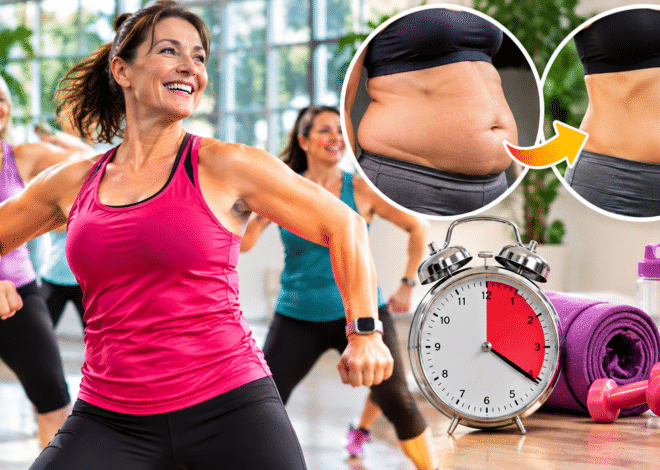
Exercise Scientists Compared Three Workouts in Older Adults — Only High-Intensity Intervals Cut Fat While Keeping Muscle
In a six-month study of 123 adults averaging 72 years old, high, moderate and low-intensity training all trimmed some fat, but only HIIT held on to lean tissue. A separate study of 96,000 adults adds to the case for working harder, not just longer.
HIITFat down, lean mass keptModerateFat down, small lean mass lossLow intensityModest fat loss only
By The Fitness Science DeskFact-checked against peer-reviewed journals, university releases and CDC guidelinesUpdated November 11, 2026Scope U.S. adults, especially 60+
If you are over 60, the standard advice sounds simple: move more, walk daily, maybe lift some light weights. But there is a frustrating problem hiding inside that advice. When older adults lose weight, part of what they lose is often muscle, the very tissue that keeps them strong, steady on their feet and independent.
A team of exercise scientists in Australia set out to see whether the intensity of exercise changes that trade-off. Their answer, reported by ScienceDaily on Oct. 9, 2026, was clear enough to catch attention: all three workout intensities produced modest fat loss, but only high-intensity interval training, or HIIT, kept lean muscle. Here is what that study did and did not show, why intensity keeps showing up in the research, and how older adults can try it safely.
What We Know
- All three exercise intensities produced modest fat loss in adults averaging 72 years old.
- Only the HIIT group retained lean mass; the moderate group lost a small amount.
- High and moderate intensity both improved fat carried around the middle.
- Only 29.0% of U.S. adults 65 and older met federal activity guidelines in 2023, per America’s Health Rankings.
What Is Still Unclear
- The differences were small and may not be clinically meaningful after measurement error, the researchers noted.
- The scans measured lean tissue, not strength; lean mass includes water and other tissue.
- Per-group numbers for fat and lean mass were not reported in public summaries.
- A 2026 review of 25 reports did not find HIIT consistently superior to moderate exercise.
Inside the Study: Three Intensities, Six Months
The research, led by exercise physiologist Dr. Grace Rose of the University of the Sunshine Coast with Associate Professor Mia Schaumberg and colleagues at the University of Queensland, was published in the journal Maturitas. It enrolled 123 healthy older adults from the Greater Brisbane area, with an average age of 72 and an average body mass index of about 26, considered normal for adults over 65.
Participants were assigned to high-intensity interval training, moderate-intensity training or a low-intensity comparison group. Each group did three supervised gym sessions a week, 45 minutes each, for six months. Researchers measured fat and lean tissue throughout the body with a scanning technique at the start, at three months and at six months.
“We found that high, medium and low intensity exercises all led to modest fat loss but only HIIT retained lean muscle,” Rose said. High and moderate intensity reduced fat mass more than low intensity, and both improved the composition of weight carried around the middle. But moderate training came with a catch. “While moderate training reduced fat mass, it also caused a small decline in lean muscle,” she said.
Why Harder Bursts May Protect Muscle
Schaumberg described HIIT as repeated bursts of very hard exercise alternated with easier recovery. “HIIT likely works better because it puts more stress on the muscles,” she said. That added stress appears to send a stronger signal to keep muscle tissue, even while the body is burning fat. Moderate, steady exercise is excellent for the heart, but it may not challenge muscles enough to protect them during fat loss.
| Workout type | Fat mass | Lean mass | Belly fat | How it feels |
|---|---|---|---|---|
| High-intensity intervals | Reduced | Retained | Improved | Only a few words between breaths during bursts |
| Moderate-intensity | Reduced | Small decline | Improved | Can talk, but not sing |
| Low-intensity | Modest loss | Not reported | Less change | Easy conversation |
| Strength training, per CDC | Supports | Builds muscle | Supports | Muscles work hard; 2 or more days a week |
| Balance work, per CDC | Not the goal | Supports function | Not the goal | Steady, controlled movement |
The Bigger Picture: Intensity Keeps Showing Up
The Australian findings land alongside another 2026 study pointing the same way. Researchers analyzing wrist-tracker data from 96,408 UK Biobank participants, average age about 62, reported in the European Heart Journal that people who did more than 4% of their total physical activity at a vigorous level had 29% to 61% lower risks of eight major chronic diseases and premature death than people with no vigorous activity, Men’s Journal reported. The link held after accounting for total activity. “We were struck by how much more important intensity was than total volume,” one researcher said.
Why Keeping Muscle Matters More After 60
Muscle is not just about appearance. It powers the everyday tasks that decide whether someone lives independently: climbing stairs, getting out of a low chair, carrying groceries and catching yourself after a stumble. That is why the Australian team focused on what happened to lean tissue, not just the number on the scale. A diet or exercise plan that strips away fat but also takes muscle with it can leave an older adult lighter yet weaker.
This is also why the finding about moderate exercise deserves attention without alarm. Brisk walking and steady cycling remain good for the heart, blood pressure and mood. The study simply suggests that, when the goal is losing fat while holding on to muscle, adding some harder efforts may tip the balance. Pairing any aerobic routine with strength work, as the CDC already advises, is the most direct way to protect muscle.
Intensity in the Numbers
That study was observational, so it shows an association rather than proof that vigorous exercise prevents disease. But it fits with the Australian trial and with other 2026 research. A home-based HIIT study published in Medicine and Science in Sports and Exercise had 20 adults aged 61 to 74 train on a machine that let them work arms and legs without bearing body weight. Over eight weeks, they lost about 1.4 kilograms, roughly 3 pounds, of fat on average, completed 96% of scheduled workouts and had no exercise-related adverse events.
How Big Were the 2026 Studies?
What HIIT Actually Looks Like After 60
HIIT does not have to mean sprinting or jumping. The core idea is alternating short periods of hard effort with easier recovery. For an older adult, that might mean pedaling hard on a stationary bike for 30 seconds, then easily for 60 to 90 seconds, repeated several times. Recumbent bikes, rowing machines and seated arm-and-leg machines like the one in the home study reduce stress on joints and lower fall risk.
Weekly Exercise Targets Compared
A Cautious Six-Month Ramp-Up Plan
The study ran six months with supervision, and that matters. Building up gradually lets joints, tendons and the heart adapt. This sample plan is indicative, based on the study’s structure and CDC guidance, not a prescription. Check with your doctor first if you have heart disease, high blood pressure, diabetes, joint problems or have been inactive.
- Weeks 1 to 2Build the base. Three 20 to 30 minute sessions at easy to moderate effort.
- Weeks 3 to 4Add short bursts. Four to six 20-second harder efforts with long easy recovery.
- Months 2 to 3Lengthen bursts. Work toward 30 to 60 seconds hard, 1 to 2 minutes easy.
- Month 3First check. The study measured body composition at 3 months.
- Months 4 to 6Hold steady. Three sessions of up to 45 minutes, as in the study.
- Month 6Reassess. Compare strength, stamina and how clothes fit.
- Get medical clearance if neededEspecially with heart, lung or blood pressure conditions, or if you have been inactive.
- Pick a low-impact machineRecumbent bike, rower or seated stepper reduces fall and joint risk.
- Warm up 5 to 10 minutesStart easy before any hard intervals.
- Use the talk testHard bursts leave you able to say only a few words; recover until you can talk easily.
- Add strength training twice a weekThe CDC recommends muscle-strengthening activities for older adults.
- Stop for warning signsChest pain, dizziness or unusual shortness of breath mean stop and seek care.
Making Intervals Joint-Friendly
Many older adults avoid hard exercise because of sore knees, hips or backs. Intervals do not require impact. On a recumbent bike, the backrest supports the spine and the pedals take body weight off the joints. A rowing machine works the legs, back and arms together, though it calls for good technique. Water exercise and seated arm-and-leg machines are other low-impact options. The key is the effort level, not the movement itself: a 30-second push that leaves you able to say only a few words counts as a hard interval on any machine.
Recovery matters as much as effort. Many people new to HIIT make the bursts too long and the rests too short, then quit after a week of feeling wiped out. Starting with generous recovery periods and building gradually, as in the sample plan above, gives the body time to adapt and makes the habit more likely to last the six months the study ran.
Why Supervision Helped
Every session in the Australian study was supervised in a gym. The home HIIT study used remote supervision and still had 96% attendance and no exercise-related adverse events. If you are new to vigorous exercise, a class, a trainer or a cardiac rehabilitation program can teach you what “hard but safe” feels like. The CDC also recommends balance exercises for adults over 65, which can be added to warm-ups or cool-downs.
- 3 sessions a weekUp to 45 minutes each
- Bursts of 20 to 60 secondsBuild gradually
- Strength 2 days a weekCDC recommendation
- Balance workRecommended for adults 65+
- Check progress at 3 monthsSame point as the study
- Doctor first if at riskHeart, lung, joint issues
Frequently Asked Questions
What workout is best for older adults to lose fat?
In a 2026 study of 123 adults averaging 72, high, moderate and low-intensity exercise all led to modest fat loss, but only high-intensity interval training kept lean muscle.
Is HIIT safe for people over 60?
Studies in older adults have used supervised or carefully monitored HIIT, and one 2026 home study reported no exercise-related adverse events. Check with your doctor first if you have health conditions.
Does moderate exercise cause muscle loss?
In the Australian study, moderate training reduced fat but also caused a small decline in lean mass. That does not mean moderate exercise is harmful; pairing it with strength training helps protect muscle.
How much exercise do older adults need?
The CDC recommends 150 minutes of moderate or 75 minutes of vigorous activity a week, plus muscle-strengthening on 2 or more days and balance activities.
How do I know if I am exercising vigorously?
Use the talk test. At moderate intensity you can talk but not sing. At vigorous intensity you can say only a few words before pausing for breath.
How long does it take to see results from HIIT?
The Australian study measured at 3 and 6 months. A home HIIT study found about 1.4 kilograms of fat loss in 8 weeks.
Is HIIT better than walking?
A 2026 review of 25 reports found HIIT reliably improves cardiovascular fitness but did not show it is consistently better than moderate exercise overall. Walking still has major benefits.
Do I still need strength training if I do HIIT?
Yes. HIIT helped retain lean tissue, but lean mass is not the same as strength. The CDC recommends muscle-strengthening activities at least 2 days a week.
The Short Version
Exercise scientists comparing three workout intensities in 123 adults averaging 72 found that all led to modest fat loss, but only high-intensity interval training kept lean muscle over six months; moderate training caused a small muscle decline. A separate 2026 study of 96,408 adults linked even a small share of vigorous activity to 29% to 61% lower disease risk. The benefits were modest, and strength training still matters. If you are cleared by your doctor, short, hard intervals on a low-impact machine, built up gradually, are a reasonable addition to your week.

Omisha is a health writer passionate about turning complex medical research into clear, actionable content readers can trust. She covers everything from nutrition and mental wellness to chronic disease management, always grounding her work in credible science and real-world relevance. When she's not writing, she's usually reading up on the latest health studies or exploring new wellness trends to write about next.