Men’s HealthSkincareWinter 2026
Winter Skincare Routine for Men: The 5-Step Plan Dermatologists Recommend Before Cold, Dry Air Cracks Your Skin
Shorter warm showers, moisturizer within three minutes, a smarter shave and sunscreen even on snowy days. Here is what dermatologists actually advise, with the numbers behind each step.
5 to 10 minShower length3 minWindow to moisturizeSPF 30+Even in winter30% to 50%Indoor humidity
ByThe Men’s Health DeskFact-checkedAgainst AAD, Cleveland Clinic, WHO and ACS guidanceUpdatedNovember 11, 2026ScopeU.S. adult men, winter months
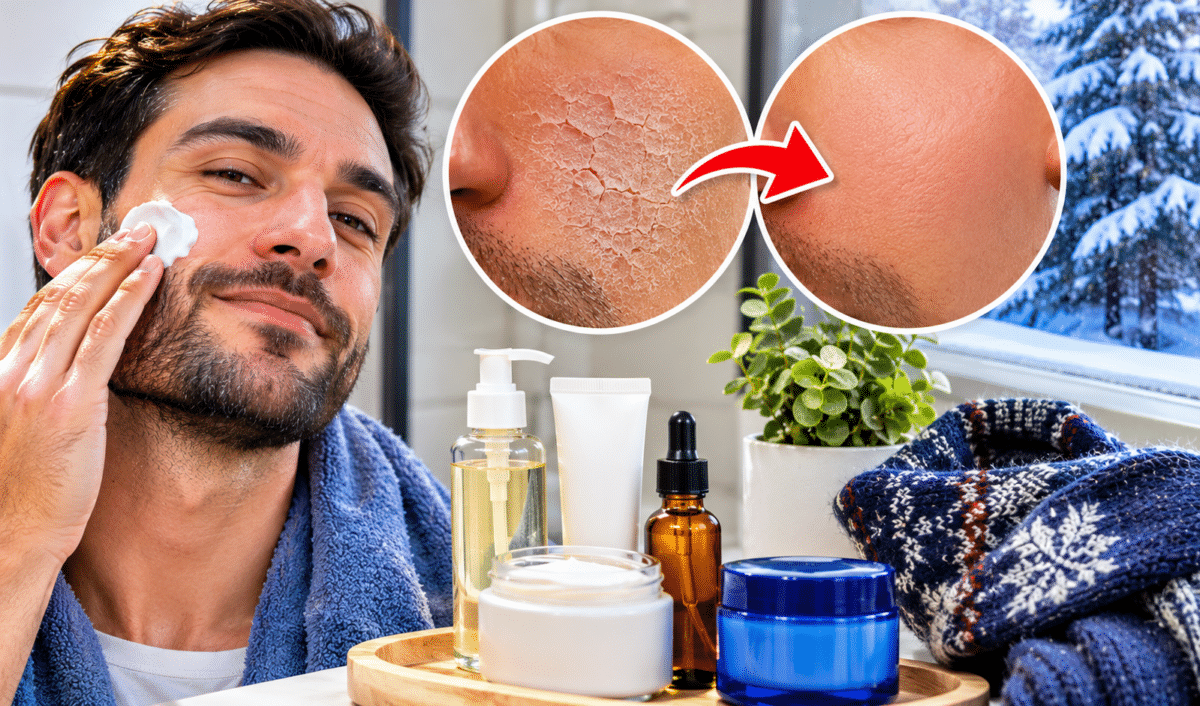
It starts small. A tight feeling after your morning shower. Razor burn that lingers into the afternoon. Flaky patches around your nose and eyebrows, knuckles that crack and sting when you wash your hands. By January, many men are walking around with skin that feels like sandpaper and have no idea that a few simple habits could prevent most of it.
Winter is hard on skin for a simple reason: cold outdoor air holds little moisture, and indoor heating dries the air further. Your skin loses water faster than it can replace it. Men often make it worse with long hot showers, harsh bar soap, a dull razor and no moisturizer at all. Dermatologists say the fix does not require a 10-product routine. It requires doing a few things in the right order, at the right time.
What We Know
- The American Academy of Dermatology recommends 5 to 10 minute warm showers and fragrance-free products for dry skin.
- Cleveland Clinic advises keeping indoor humidity at 30% to 50% and moisturizing within three minutes of showering.
- The WHO says snow can reflect up to 80% of UV radiation, and UV rises about 10% per 1,000 meters of altitude.
- Men face more invasive melanoma diagnoses and deaths than women in 2026 estimates.
What Is Still Unclear
- Studies disagree on how much thicker men’s skin is; some find no difference in the outer layer.
- There is little research comparing specific men’s skincare products in winter.
- How much indoor heating alone contributes to dry skin varies by home and climate.
- Ideal moisturizer type differs by skin type and is best tested individually.
Why Winter Hits Men’s Skin Differently
Men’s skin is not a separate species, but it does differ in a few ways that matter in winter. A review summarized by Dermatology Times reported that men tend to produce more oil, or sebum, on most of the face, and that young men have relatively high skin hydration that declines after age 40. The authors of that review wrote that men’s skin pigmentation and thickness are “significantly higher,” although other studies using imaging found no difference in the thickness of the outer layer. Daily shaving adds a factor women’s facial skin usually does not face: repeated scraping of the surface.
That combination can be confusing. Men with oily T-zones may assume they do not need moisturizer, while their cheeks, jaw and neck dry out and crack. The same review noted men under 50 had higher water loss on the forehead, cheeks and neck than women. In winter, that is exactly where many men feel tightness, flaking and razor irritation.
Melanoma in 2026: Men Versus Women
New invasive cases
Deaths
Step 1 and 2: Shorter Showers and a Gentler Wash
The first change is the one men resist most: the shower. The American Academy of Dermatology recommends limiting baths and showers to five to ten minutes and using warm water. Cleveland Clinic dermatologist Dr. Jennifer Lucas puts it plainly: “The warmer the water, the drier your skin’s going to be.” Hot water strips away the natural oils that hold moisture in your skin, and the effect builds over a winter of daily showers.
Next is what you wash with. Deodorant bar soaps and heavily scented body washes can irritate dry skin. The AAD recommends fragrance-free products and notes that even “unscented” products may still contain irritating chemicals. On the face, a gentle, non-foaming or low-foaming cleanser once or twice a day is usually enough. If your face feels tight and squeaky after washing, your cleanser is probably too harsh.
What to Look for on the Label
For moisturizers, the AAD lists ingredients that help dry skin: jojoba oil, dimethicone, glycerin, hyaluronic acid, lactic acid, lanolin, mineral oil, petrolatum and shea butter. It says ointments and creams are more effective than lotions, which contain more water and evaporate faster. Many men prefer a light lotion in summer; in winter, a cream for the face and an ointment or thick cream for hands and body work better.
Step 3: The Three-Minute Moisturizer Rule
Timing matters as much as the product. The AAD advises applying moisturizer when skin is still damp after a shower or bath, after washing hands and whenever skin feels dry. Cleveland Clinic’s Dr. Lucas is more specific: “Aim to get that moisturizer on within three minutes,” before the air evaporates the water left on your skin. Pat dry with a towel instead of rubbing, then apply right away.
| Step | Morning | Night | Winter tweak | Key number |
|---|---|---|---|---|
| Shower and cleanse | Warm, short shower; gentle cleanser | Rinse face with gentle cleanser | Skip hot water and deodorant soap | 5 to 10 min |
| Moisturize face and body | Cream on damp skin | Richer cream or ointment | Switch from lotion to cream | Within 3 min |
| Shave | On wet skin, with the grain | Optional, for less irritation | Sensitive-skin shaving cream | New blade every 5 to 7 |
| Sunscreen | Face, ears, neck, backs of hands | Not needed | Reapply outdoors, especially on snow | SPF 30+, 1 oz body |
| Lips | Balm, ideally with SPF | Petroleum jelly | Stop products that sting | Reapply often |
| Hands | Cream after washing | Thick cream, cotton gloves | Gloves outdoors and for dishes | After every wash |
Step 4: A Shave That Does Not Wreck Your Skin
Winter makes razor burn worse because dry skin is already irritated. The AAD’s shaving steps are simple: wet your skin and hair first to soften them, apply a shaving cream or gel, shave in the direction the hair grows and rinse the blade after each swipe. If you have very dry or sensitive skin, the AAD suggests a shaving cream labeled for sensitive skin. Change your blade or throw away a disposable razor after five to seven shaves, and store your razor somewhere dry.
The Best Time to Shave
Shaving at the end of a warm shower, when hair is softest, reduces drag. Follow with a fragrance-free moisturizer rather than an alcohol-based aftershave. If you have a beard, the skin under it still dries out; wash it with a gentle cleanser and apply a light moisturizer or beard oil to the skin underneath.
Step 5: Winter Sunscreen Is Not Optional
Many men think sunscreen is for beach trips. But the World Health Organization says fresh snow can reflect as much as 80% of UV radiation, compared with about 15% for dry beach sand and less than 10% for grass, soil or water. And UV levels rise about 10% with every 1,000 meters of altitude, which matters for skiers, snowboarders and anyone in mountain towns.
How Much UV Different Surfaces Reflect
Estimated Extra UV at Popular Winter Elevations
The AAD recommends a broad-spectrum, water-resistant sunscreen with SPF 30 or higher, applied at least 15 minutes before going outside and reapplied at least every two hours, or after sweating. Most adults need about 1 ounce, roughly a shot glass, to cover exposed skin. In winter, that usually means face, ears, neck and the backs of hands. Do not forget your lips; a lip balm with SPF helps.
Your Daily Winter Routine, Start to Finish
- 5 to 10 minWarm shower, gentle cleanser
- Under 3 minMoisturize damp skin
- 5 to 7 shavesFresh blade, shave with the grain
- 15 min beforeSPF 30+ on face, ears, neck
- Every 2 hoursReapply if outdoors
- 30% to 50%Bedroom humidity overnight
- Cut shower time to 5 to 10 minutesUse warm, not hot, water and a fragrance-free cleanser.
- Pat dry and moisturize within 3 minutesUse a cream or ointment; lotions may not be enough in winter.
- Shave on wet skinUse cream or gel, go with the grain and replace blades after 5 to 7 shaves.
- Apply SPF 30 or higherBroad-spectrum, 15 minutes before going out; reapply every 2 hours outdoors.
- Protect lips and handsLip balm or petroleum jelly; gloves outside and for dishwashing.
- Run a bedroom humidifierAim for 30% to 50% humidity and clean it regularly to prevent mold.
When Dry Skin Is More Than Dry Skin
The AAD notes that dry skin that does not improve with these steps may need a dermatologist’s attention. Red, itchy patches that crack or bleed can be eczema. Greasy, flaky patches around the nose, eyebrows and beard can be seborrheic dermatitis, which is common in men and often flares in winter. Thick, silvery plaques may be psoriasis. These conditions usually need medicated creams or shampoos, not just moisturizer. See a doctor if itching keeps you up at night, skin cracks and bleeds, or you notice a new or changing mole.
- Shower 5 to 10 minutesWarm, not hot
- Moisturize within 3 minutesCream over lotion
- New razor bladeEvery 5 to 7 shaves
- SPF 30+ dailyReapply every 2 hours outdoors
- Humidity 30% to 50%Humidifier in the bedroom
- Fragrance-free productsSoap, moisturizer, aftershave
Frequently Asked Questions
What is a good winter skincare routine for men?
Take 5 to 10 minute warm showers, use a gentle fragrance-free cleanser, moisturize within about three minutes, shave on wet skin with a sharp blade and wear SPF 30 or higher on exposed skin.
Do men need moisturizer in winter?
Yes. Even men with oily skin can have dry cheeks, jaw and neck in winter. Dermatologists recommend creams or ointments, which work better than lotions for dry skin.
Should men wear sunscreen in winter?
Yes. The AAD recommends broad-spectrum SPF 30 or higher year-round. Snow can reflect up to 80% of UV radiation, and UV rises about 10% per 1,000 meters of altitude.
How do I stop razor burn in winter?
Shave on wet skin with shaving cream, go in the direction of hair growth, rinse the blade after each swipe and replace it after 5 to 7 shaves. Skip alcohol-based aftershave.
Are hot showers bad for your skin in winter?
Hot water strips natural oils and worsens dryness. The AAD recommends warm water and limiting showers to 5 to 10 minutes.
What humidity is best for dry winter skin?
Cleveland Clinic advises keeping indoor humidity between 30% and 50%. The AAD suggests running a humidifier in the bedroom while you sleep and cleaning it regularly.
How do I fix dry, flaky skin in my beard?
Wash with a gentle cleanser and moisturize the skin under the beard. Greasy, flaky patches that do not improve may be seborrheic dermatitis and may need a dermatologist.
What helps cracked hands in winter?
Moisturize after every hand wash, wear gloves outdoors and for dishwashing, and use a thick cream or ointment at night. See a doctor if cracks bleed or do not heal.
The Short Version
Men’s winter skincare comes down to five habits. Keep showers to 5 to 10 minutes in warm water with a fragrance-free cleanser. Moisturize within about three minutes, using a cream rather than a lotion. Shave on wet skin, with the grain, and change blades every 5 to 7 shaves. Wear SPF 30 or higher on exposed skin, especially around snow, where up to 80% of UV can reflect. And keep indoor humidity at 30% to 50%. See a dermatologist if dryness cracks, bleeds or will not improve.

Omisha is a health writer passionate about turning complex medical research into clear, actionable content readers can trust. She covers everything from nutrition and mental wellness to chronic disease management, always grounding her work in credible science and real-world relevance. When she's not writing, she's usually reading up on the latest health studies or exploring new wellness trends to write about next.