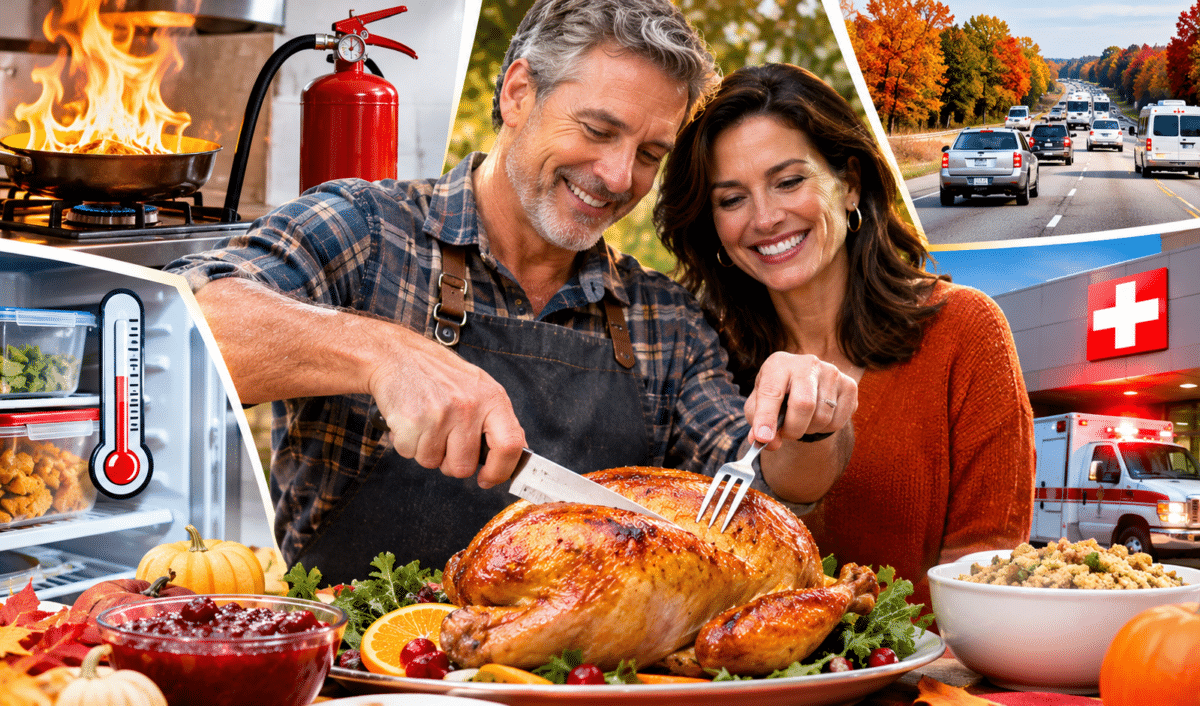
How to Avoid the ER This Thanksgiving: Expert Tips on Fires, Food Safety, Carving and Travel
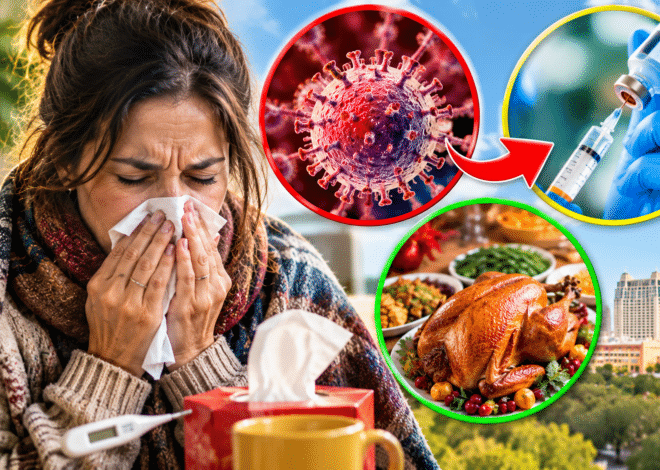
Thanksgiving is the peak day for home cooking fires in the U.S., and emergency doctors say the surge in patients often comes after the meal. Here is what to do before Thursday, November 26.
If your turkey weighs more than 20 pounds and is still frozen, the safest moment to move it into the refrigerator is roughly today. That small, unglamorous fact sums up how most Thanksgiving emergencies happen. They start with a rushed thaw, a pot left on the stove while the doorbell rings, or a knife pulled toward a thumb.
Why Emergency Rooms Brace for the Day After the Feast
Emergency physicians describe a consistent pattern. Thanksgiving Day itself is often quiet in the waiting room, because people are home with family and putting off care. The surge tends to arrive afterward. One emergency physician told Yahoo that volume is usually light on the holiday but that “post-Thanksgiving dinner is when we usually see a surge in the ER.” An ER medical director at AdventHealth Avista in Colorado told Denver7 that it is the days following the holiday that bring an influx of patients.
People cook unfamiliar recipes in bulk, use knives and hot oil they rarely touch, and then drive long distances. The American College of Emergency Physicians notes that the Centers for Disease Control and Prevention reports more than 50,000 hospitalizations from foodborne illness each year, and that cooking causes more than 150,000 home fires annually, citing the National Fire Protection Association.
What We Know and What Remains Uncertain
What We Know
- Thanksgiving is the leading day of the year for U.S. home cooking fires, according to NFPA.
- Unattended cooking is the top contributing factor in home cooking fires and fire deaths.
- USDA says turkey and stuffing are safe at an internal temperature of 165°F.
- AAA projects 81.5 million travelers between November 24 and 30, 2026.
- NFPA discourages oil-based turkey fryers because of severe burn risk.
What Is Still Unclear
- There is no single official national count of ER visits on Thanksgiving Day; figures quoted online vary.
- NFPA’s newest holiday fire data runs through 2024, so 2025 totals are not yet published.
- How winter weather on the Nov. 24 to 30 travel window will affect road crashes this year.
- How busy respiratory virus season will be in the weeks after the holiday gatherings.
The Stovetop Is Still the Biggest Holiday Hazard
The National Fire Protection Association reports that an estimated 1,139 home cooking fires were reported to U.S. fire departments on Thanksgiving Day 2024, a 321% increase over the daily average. Christmas Day and Christmas Eve ranked second and third, each at nearly twice the daily average.
“Keeping a close eye on what’s cooking and minimizing distractions can greatly reduce the risk of cooking fires,” said Lorraine Carli, NFPA’s vice president of Outreach and Advocacy. The organization’s tips are deliberately specific: stay in the kitchen when using the stovetop, especially when frying or sautéing with oil; stay home while the turkey roasts and check it often; and keep oven mitts, wooden utensils, packaging and towels at least 3 feet from the cooking area.
Estimated fires reported to U.S. fire departments. Source: NFPA annual reports as published in 2019, 2022, 2025 and 2026. Not every year is shown.
Percentage increase in home cooking fires on Thanksgiving over the daily average. Source: NFPA.
Even the lowest recent year is more than three times a normal day.
If a pan catches fire
For a small grease fire, NFPA advises sliding a lid over the pan, turning off the burner and leaving the lid on until the pan cools completely. The American College of Emergency Physicians warns never to throw water on a grease fire, because it can spread the flames. For an oven fire, turn off the heat and keep the door closed; open it only once the fire is clearly out, standing to the side. If you have any doubt, leave the house and call 911.
The Turkey Fryer Question Has a Clear Expert Answer
NFPA discourages oil-based turkey fryers outright, because a spill or overflow of hot oil can cause severe burns and fast-moving fires. It points to infrared fryers, air fryers and electric turkey fryers as safer ways to get a similar result. The Consumer Product Safety Commission, which accepts that many families will fry anyway, summarizes its advice with the word COOK: carefully follow the manufacturer’s instructions, never overheat the oil, never overfill the fryer, and keep it out of the garage, off the deck and away from the house.
Ice in a partly thawed bird turns to steam instantly in hot oil, pushing oil over the rim and onto the flame. Michigan officials quoted by Bridge Michigan recommend keeping a fryer 10 feet from the house, and CPSC advises at least 2 feet between the propane tank and the burner.
Before heating any oil, place the turkey in the empty pot, add water until it just covers the bird, then remove the turkey and mark the water line. That line is the most oil you need. Dry the pot completely before adding oil. This common technique prevents the overfilling that CPSC lists among the main causes of fryer fires.
Your Thaw Schedule Starts Earlier Than You Think
The U.S. Department of Agriculture recommends thawing a turkey in the refrigerator at 40°F or below, allowing roughly 24 hours for every 4 to 5 pounds. A 15-pound turkey therefore needs about three days. Never thaw on the counter: the outside sits in the 40°F to 140°F danger zone long before the center thaws.
Working back from Thursday, November 26, 2026, the calendar below shows the latest sensible day to move a frozen bird from the freezer to the refrigerator, based on USDA’s ranges.
- Fri Nov 2020 to 24 lbNeeds 5 to 6 days; start today
- Sat Nov 2116 to 20 lbNeeds 4 to 5 days in the fridge
- Sun Nov 2212 to 16 lbNeeds 3 to 4 days in the fridge
- Mon Nov 234 to 12 lbNeeds 1 to 3 days in the fridge
- Thu Nov 26165°FCheck thigh, wing and stuffing with a thermometer
USDA guidance by turkey weight. Refrigerator at 40°F or below; cold water changed every 30 minutes, about 30 minutes per pound. Bars show the upper end of the refrigerator range in days.
Cold-water alternative: 2 to 6 hours (4 to 12 lb), 6 to 8 hours (12 to 16 lb), 8 to 10 hours (16 to 20 lb), 10 to 12 hours (20 to 24 lb). Cook immediately after a cold-water thaw.
If Thursday arrives and the bird is still frozen, USDA says it is safe to cook a turkey from frozen; it simply takes at least 50% longer than a thawed one. What is not safe is roasting at a low temperature to “save” time later. USDA advises never cooking poultry in an oven set below 325°F.
The Numbers That Keep Food Poisoning Off the Guest List
Most holiday food poisoning comes down to time and temperature. A turkey that looks done can still be undercooked in the thigh, and stuffing inside the bird is often the last part to reach a safe heat.
| Rule | Number | Why it matters | Common mistake |
|---|---|---|---|
| Refrigerator | 40°F or below | Slows bacterial growth during thawing and storage | Overloaded fridge drifting warmer on the holiday |
| Danger zone | 40°F to 140°F | Bacteria multiply fastest in this range | Thawing the bird on the counter overnight |
| Cooked turkey and stuffing | 165°F | Minimum safe internal temperature | Judging doneness by color or pop-up timer alone |
| Oven setting | 325°F minimum | Lower settings keep poultry in the danger zone too long | Slow-roasting overnight at low heat |
| Food left out | 2 hours | Refrigerate within 2 hours, or 1 hour above 90°F | Leaving the spread out through the afternoon |
| Leftovers | 3 to 4 days | Eat or freeze within this window; reheat to 165°F | Eating cold turkey a week later |
Source: USDA Food Safety and Inspection Service Thanksgiving guidance. Store leftovers in shallow containers so they cool quickly.
USDA’s Meat and Poultry Hotline exists for exactly these questions and is open on Thanksgiving Day from 8 a.m. to 2 p.m. Eastern Time at 1-888-674-6854.
Carving Without Carving Your Thumb
Lacerations to the fingers and thumb of the non-dominant hand are among the injuries emergency doctors associate most with the holiday. The American Society for Surgery of the Hand advises carving away from yourself, never toward yourself, and keeping your free hand opposite the side you are cutting toward. A sharp knife slips less than a dull one.
Cut a flat side on round produce such as squash and sweet potatoes so it rests steady, and put a damp towel under the cutting board so it cannot slide.
Burns that do not involve fire
Steam and hot liquids cause many holiday burns. NFPA advises keeping children and pets at least 3 feet from the stove and from areas where hot food and drinks are prepared or carried, and placing hot dishes away from the edges of tables and counters, where a small hand can pull them down.
Holiday Heart, Heavy Meals and the Drive Home
“Holiday heart” is the informal name doctors use for an irregular heart rhythm, most often atrial fibrillation, that can follow heavy drinking. Michigan health officials quoted by Bridge Michigan listed it alongside cuts, burns and alcohol-related injuries as a reason for holiday ER visits. Symptoms can include a racing or fluttering heartbeat, shortness of breath and lightheadedness.
Travel adds its own risk. AAA projects that 72.9 million of the 81.5 million Thanksgiving travelers will go by car this year, and the club says it answered more than half a million roadside calls last Thanksgiving for flat tires, dead batteries, fuel and lockouts. Fatigue after a large meal and alcohol both slow reaction time on the drive home.
Millions of travelers going 50 miles or more from home, November 24 to 30, 2026. Source: AAA 2026 Thanksgiving travel forecast.
ER, Urgent Care or Home: Knowing Which Door to Choose
The ladder below summarizes widely used guidance. The food poisoning thresholds come from CDC’s list of symptoms that warrant seeing a doctor; the others reflect common first-aid and emergency medicine practice and are indicative, not a diagnosis.
Chest pain or pressure, trouble breathing, choking that does not clear, fainting, a large or deep burn, a grease or oven fire spreading beyond the pan, or signs of stroke.
A cut that keeps bleeding after 10 minutes of firm pressure, a wound with exposed fat or tendon, a burn larger than the palm, or a racing irregular heartbeat that does not settle.
A small cut that may need stitches, minor burns with blisters, or vomiting and diarrhea with fever above 102°F, bloody stools, or symptoms lasting more than 3 days.
Small superficial burns cooled under running water for 10 to 20 minutes, minor cuts that stop bleeding, and mild stomach upset with no warning signs, while drinking fluids.
Emergency physicians have long noted that families often bring older parents to the ER on the holiday because they “not acting quite right.” A phone or video check-in in the days before Thanksgiving gives time to arrange an appointment instead of an emergency visit.
A Worked Example: Timing a 22-Pound Turkey
Consider a host with a 22-pound frozen turkey, dinner planned for 4 p.m. on Thursday, November 26. The numbers below use USDA’s guidance and are indicative; your oven and bird will vary, so the thermometer decides, not the clock.
From freezer to table, safely
- Refrigerator thaw at 24 hours per 4 to 5 pounds5 to 6 days
- Latest start for a full thaw by Thursday morningFri Nov 20 or Sat Nov 21
- Unstuffed roasting time at 325°F, 20 to 24 lb4.5 to 5 hours
- Rest before carving20 to 30 minutes
- Into the oven no later thanabout 10:30 a.m.
- Leftovers into the fridge byabout 5:30 p.m.
Indicative calculation using USDA thawing and roasting ranges. The resting time is a common cooking practice rather than a USDA requirement. If the thaw started late, add at least 50% to cooking time for any part still frozen and verify 165°F in the thigh, wing and stuffing.
- Trusting the pop-up timer instead of checking 165°F in several places.
- Rinsing the raw turkey in the sink, which spreads bacteria across the kitchen.
- Leaving the stovetop “for just a minute” to greet guests or watch the game.
- Lowering a partly frozen turkey into hot oil.
- Leaving the meal out all afternoon, well past the 2-hour mark.
Your Night-Before Safety Checklist
- Test every smoke alarm and keep a fire extinguisher near the kitchen exit.
- Confirm the turkey is thawing in the fridge, on a tray to catch juices.
- Put a working food thermometer next to the roasting pan.
- Clear towels, packaging and mitts 3 feet from the stove.
- Set phone timers for every dish that takes longer than 30 minutes.
- Mark a 3-foot kid-and-pet-free zone around the stove.
- Plan a designated driver or ride before the first drink is poured.
- Save the USDA hotline number: 1-888-674-6854.
Frequently Asked Questions
What is the most common reason people go to the ER on Thanksgiving?
Emergency physicians most often cite kitchen injuries such as cuts from carving and burns, followed by food poisoning, alcohol-related problems and travel crashes. Thanksgiving is also the peak day for U.S. home cooking fires, according to NFPA.
How long does it take to thaw a turkey in the refrigerator?
USDA recommends about 24 hours for every 4 to 5 pounds in a refrigerator at 40°F or below. A 12 to 16 pound turkey takes 3 to 4 days, and a 20 to 24 pound turkey takes 5 to 6 days.
What temperature should turkey be cooked to?
USDA says turkey is safe at an internal temperature of 165°F, checked in the thickest part of the thigh, the wing and the thickest part of the breast. Stuffing must also reach 165°F at its center.
How long can Thanksgiving food sit out?
No more than 2 hours at room temperature, or 1 hour if the temperature is above 90°F. After that, refrigerate it in shallow containers and use leftovers within 3 to 4 days.
Is it safe to deep-fry a turkey?
NFPA discourages oil-based turkey fryers because of the risk of severe burns and fires. If you fry anyway, CPSC advises using the fryer outdoors away from the house, garage and deck, never overfilling or overheating the oil, and never frying a turkey that is still frozen.
How do I put out a grease fire on the stove?
Slide a lid over the pan, turn off the burner and leave the lid on until the pan has cooled. Never pour water on a grease fire. If the fire spreads, get everyone out and call 911.
What is holiday heart syndrome?
It is an irregular heart rhythm, often atrial fibrillation, that can follow heavy drinking. Seek medical care for a racing or irregular heartbeat, chest pain, shortness of breath or fainting.
Can I cook a turkey that is still frozen?
Yes. USDA says a turkey can be cooked from frozen, but it will take at least 50% longer than a thawed bird. Do not use a frozen or partly frozen turkey in a deep fryer.
The Short Version Before You Preheat
Thanksgiving’s emergencies are predictable, which makes most of them preventable. Thaw the turkey in the refrigerator, starting by Friday or Saturday for a big bird. Stay in the kitchen while anything is on the stove and keep a lid nearby for grease fires. Cook turkey and stuffing to 165°F, refrigerate food within 2 hours, and eat leftovers within 3 to 4 days. Carve away from your body. Skip the oil fryer or use it far from the house. And plan the drive home before anyone pours a drink.

Omisha is a health writer passionate about turning complex medical research into clear, actionable content readers can trust. She covers everything from nutrition and mental wellness to chronic disease management, always grounding her work in credible science and real-world relevance. When she's not writing, she's usually reading up on the latest health studies or exploring new wellness trends to write about next.