Eye Health GLP-1 Medicines
Why Your Eyes Need a Checkup on Ozempic, Wegovy or Zepbound — and the 13-Month Window Eye Doctors Recommend
After the FDA’s new vision-loss warning, optometrists and diabetes guidelines point to a simple safeguard: a dilated eye exam around the time you start a GLP-1, plus regular follow-up if you have diabetes. Here is who needs it and why.
By The Eye Health DeskFact-checked against American Optometric Association guidance, ADA Standards of Care summaries, clinical trials and FDA reportingUpdated November 14, 2026Scope U.S. adults taking or starting GLP-1 drugs
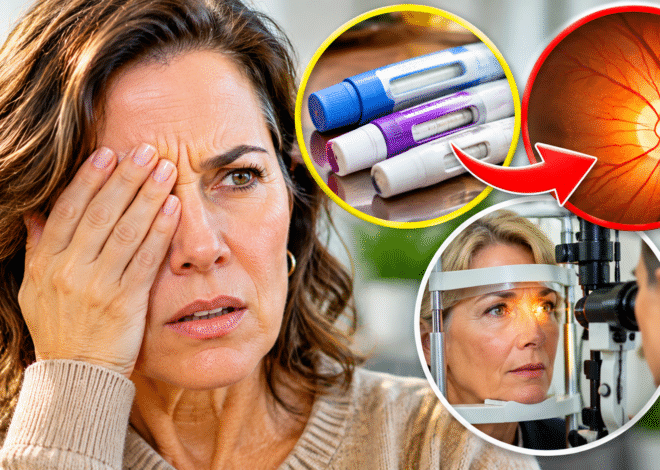
Most people starting a GLP-1 medicine get bloodwork, a weight check and a talk about nausea. Few get asked when they last had their eyes dilated. That gap matters more after Monday, November 9, 2026, when the Food and Drug Administration said every GLP-1 drug must carry a warning about NAION, a rare optic nerve condition that can cause sudden, painless vision loss in one eye.
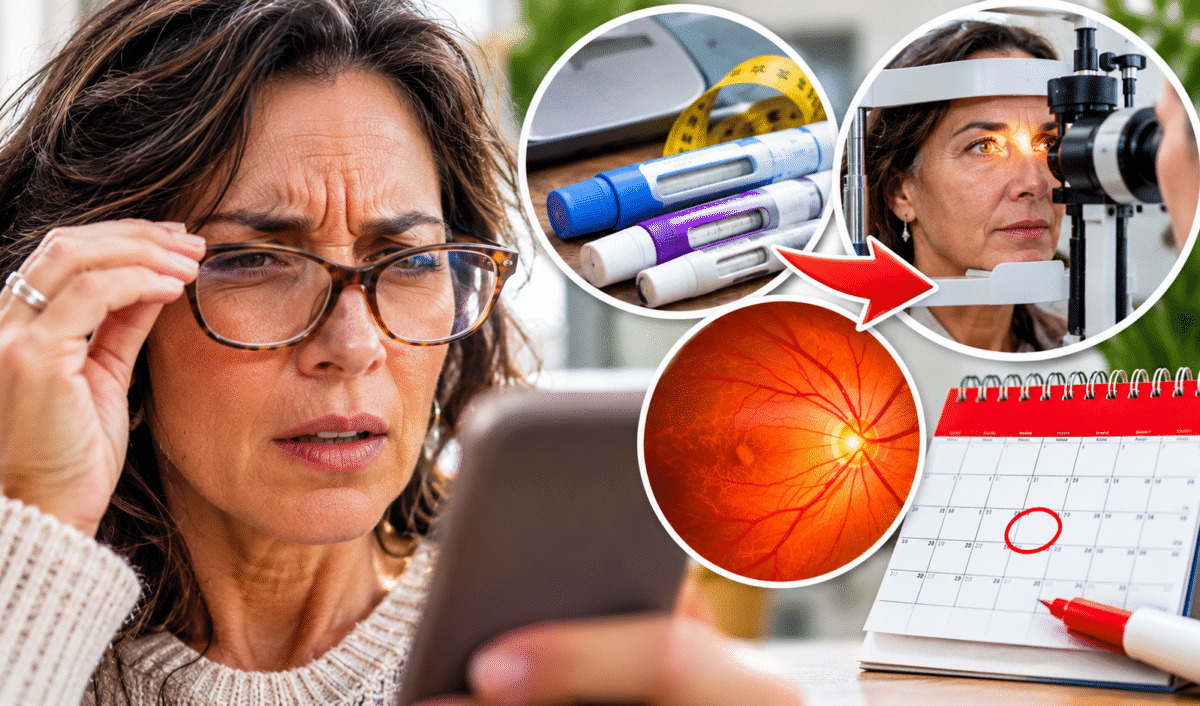
The eye question is not only about NAION. For people with type 2 diabetes, rapid drops in blood sugar can temporarily worsen diabetic retinopathy, damage to the retina’s blood vessels, and drug labels already tell doctors to watch for it. The American Optometric Association’s advice is concrete: get a comprehensive, in-person dilated eye exam within 12 months before starting a GLP-1, or a baseline exam within one month after. Together, that creates a 13-month window around your first dose.
What We Know
- The FDA is requiring an NAION warning on all GLP-1 drug labels, announced November 9, 2026.
- The AOA recommends a baseline dilated exam around the start of GLP-1 treatment.
- Semaglutide and tirzepatide labels advise monitoring people with a history of diabetic retinopathy.
- Long-term data suggest GLP-1 users with diabetes may have lower retinopathy risk over time.
What Is Still Unclear
- How often eye exams should be repeated on GLP-1s for people without diabetes.
- Whether the drugs cause NAION or only appear linked.
- Results of the FOCUS trial on semaglutide and retinopathy, expected in early 2027.
- Whether risks differ among individual GLP-1 drugs.
The Two Eye Questions Behind the Advice
Eye doctors are watching for two different problems, and they behave differently. The first is NAION, a stroke-like loss of blood flow to the front of the optic nerve. The FDA’s pooled analysis of 126 randomized trials found 6.4 cases per 100,000 person-years among GLP-1 users versus 3.8 among comparison groups, as reported by The National. The absolute risk is small, and the vision loss is often permanent.
The second is diabetic retinopathy. It affects people with diabetes, and doctors have long known that lowering blood sugar quickly, with any drug including insulin, can cause a temporary worsening called early worsening. In the SUSTAIN-6 trial of semaglutide in 3,297 people with type 2 diabetes, retinopathy complications occurred in 3.0% of semaglutide users versus 1.8% on placebo, a finding that led to the label warnings. Most cases occurred in people who already had retinopathy.
Mixed Evidence, Clear Logic
The evidence points in different directions, which is exactly why a baseline exam helps. Dr. Mihail Zilbermint of Johns Hopkins Medicine told The Baltimore Banner that a review of 20 clinical trials with more than 83,000 patients found no statistically significant rise in serious eye problems, while the FDA’s larger analysis suggests a possible NAION increase. According to the Banner’s account, he does not recommend extra NAION screening simply because someone takes a GLP-1, but people with diabetes should keep up routine eye exams, especially if they already have diabetic eye disease.
What the Retinopathy Data Show
For people with diabetes, the long-term picture looks reassuring. A study in the journal Retina followed 37,258 adults with type 2 diabetes in the NIH All of Us program for 10 years. GLP-1 users had a hazard ratio of 0.31 for diabetic retinopathy and 0.40 for diabetic macular edema compared with nonusers, after adjusting for blood sugar levels. In plain terms, their risk was roughly a third and two-fifths as high. Because the study was observational, it cannot prove the drugs caused the difference.
Long-Term Eye Disease Risk in GLP-1 Users With Type 2 Diabetes
Short-term data show why monitoring still matters. An American Academy of Ophthalmology IRIS Registry analysis of more than 48,000 adults, presented in 2023, found that after two years on semaglutide, 2.2% of eyes with no or background retinopathy worsened and 3.5% of eyes with mild to moderate nonproliferative retinopathy worsened. Nearly 60% of eyes with severe or proliferative disease improved, likely reflecting treatment by eye specialists.
Retinopathy Changes With Semaglutide, by Study
The lead IRIS researcher, Dr. Zeeshan Haq, said ophthalmologists “need more data to inform screening guidelines, monitoring schedules, and patient counseling,” and advised patients considering semaglutide to talk with both their primary care and eye care providers. The FOCUS trial, designed specifically to test semaglutide’s long-term effect on diabetic eye disease, is expected to conclude in February 2027.
Who Needs Which Exam, and When
The right schedule depends mostly on whether you have diabetes and whether your eyes already show damage. The table below combines AOA guidance with the American Diabetes Association’s 2026 Standards of Care as summarized by eye care sources. Your eye doctor may recommend a different interval.
| Your situation | Priority | Exam type | When | Why it matters |
|---|---|---|---|---|
| Starting a GLP-1, any reason | Recommended | Comprehensive dilated exam | Within 12 months before or 1 month after start | Baseline to compare future changes |
| Type 2 diabetes, no retinopathy | Routine | Dilated exam | Yearly; every 1 to 2 years may be considered if stable and at goal | Retinopathy often has no early symptoms |
| Known diabetic retinopathy | High | Ophthalmologist exam | At least yearly, more often if progressing; check when therapy is intensified | Rapid glucose drops can cause early worsening |
| Type 1 diabetes, adult | Routine | Dilated exam | Starting 5 years after diagnosis, then yearly | Retinopathy takes years to develop |
| Diabetes and pregnancy | High | Dilated exam | Before pregnancy and in the first trimester, then as advised | Retinopathy can progress during pregnancy |
| Prior NAION in one eye | High | Specialist review | Before starting or continuing a GLP-1 | FDA says prior NAION raises risk |
| Age-related macular degeneration | Recommended | Dilated exam | Before starting, then as advised | AOA lists AMD among conditions to monitor |
| No diabetes, healthy eyes | Standard | Baseline exam | Within the AOA window | Documents normal optic nerve and retina |
What Happens During the Exam
A comprehensive dilated exam usually takes under an hour, plus time for the drops to work. The eye doctor checks your vision, measures eye pressure and uses drops to widen the pupils so they can see the retina, the blood vessels at the back of the eye and the optic nerve head, the part affected in NAION. Your vision may be blurry and light-sensitive for a few hours afterward, so bring sunglasses and consider arranging a ride. Ask the doctor to note the appearance of your optic disc, since a small, crowded disc is a known NAION risk factor.
Why a Retinal Photo Is Not Always Enough
Many primary care offices now take retinal photos, sometimes read by FDA-authorized artificial intelligence. The ADA says photos can screen for retinopathy but are not a substitute for a comprehensive dilated exam, which should be done at least initially and then as an eye care professional recommends. Photos do not check for glaucoma or cataracts, which occur earlier and more often in people with diabetes, and poor-quality or abnormal photos need an in-person exam.
Your Eye-Safe GLP-1 Timeline
Here is how eye care can fit around the first year of treatment. The months shown are indicative, based on the AOA and ADA guidance described above, and your doctors may adjust them.
- Month -12 to 0Dilated baseline exam; share results with your prescriber.
- Month 0Start the GLP-1; ask how fast your blood sugar is expected to fall.
- Month 1Last point for a baseline exam if you did not have one before.
- Months 1 to 6Dose increases; report any vision change the same day.
- Month 12Yearly dilated exam if you have diabetes or eye disease.
Indicative schedule based on AOA and ADA guidance; not a substitute for your clinician’s plan.
Recommended Exam Timing, in Months
- Tell your prescriber about your eyesMention diabetic retinopathy, glaucoma, macular degeneration or any past optic nerve problem.
- Book a dilated examAn optometrist or ophthalmologist can check the retina and optic nerve; bring your medication list.
- Share results both waysAsk the eye doctor to send findings to your prescriber, and vice versa.
- Know the urgent symptomsSudden painless vision loss in one eye, dark areas, blurring or faded colors need same-day contact.
- Keep yearly exams if you have diabetesRetinopathy often has no symptoms until it is advanced.
- Never stop a GLP-1 on your ownTalk to your doctor first; the AOA says these risks do not mean patients should stop.
Mistakes, Symptoms and Coverage
The AOA lists four symptoms that warrant immediately contacting a doctor of optometry: sudden painless vision loss in one eye, missing or dark areas in your vision, especially the upper or lower half, blurred or cloudy vision, and faded or washed-out colors. Dr. Zilbermint said sudden vision loss needs emergency care right away, and that NAION vision loss is often permanent, though some people regain part of their sight.
Who Pays for the Exam
Medicare covers a diabetic eye exam once a year for people with diabetes, according to Medicare.gov as cited by eye care sources. Most private health plans also cover medical eye exams when there is a diagnosis such as diabetes; routine vision plans may cover a yearly exam as well. Ask your eye doctor’s office to bill the visit as a medical exam if it relates to diabetes or a medication-related concern, and confirm coverage before your appointment.
Why Some Doctors Want a Baseline Even Without Diabetes
For people taking a GLP-1 only for weight loss, a baseline exam documents what the optic nerve and retina look like before treatment. If a problem ever appears, the eye doctor can compare against that record. Risk factors common among GLP-1 users, such as high blood pressure, sleep apnea and smoking history, also raise the chance of eye conditions on their own, Zilbermint said, which makes a clear starting picture more useful.
- Baseline window12 months before or 1 month after
- DiabetesDilated exam every year
- Known retinopathyCheck when therapy intensifies
- Prior NAIONSpecialist input before continuing
- Sudden vision lossSame-day or emergency care
- FOCUS trialResults expected Feb. 2027
Frequently Asked Questions
Do I need an eye exam before starting Ozempic or Zepbound?
The American Optometric Association recommends a comprehensive dilated eye exam within 12 months before starting a GLP-1, or within one month after, especially if you have diabetes or macular degeneration.
Can GLP-1 drugs make diabetic retinopathy worse?
Rapid blood sugar lowering can temporarily worsen existing retinopathy. In SUSTAIN-6, complications occurred in 3.0% on semaglutide versus 1.8% on placebo, mostly in people with prior retinopathy.
Do GLP-1s protect the eyes long term?
A 10-year observational study of 37,258 adults with type 2 diabetes found GLP-1 users had about a third the risk of diabetic retinopathy, but it could not prove cause and effect.
What eye symptoms on a GLP-1 need urgent care?
Sudden painless vision loss in one eye, dark or missing areas, blurred or cloudy vision, or faded colors. Contact a doctor the same day.
Should I get screened for NAION on a GLP-1?
Extra NAION screening is not routinely recommended, but a baseline exam and prompt care for vision changes are. People with prior NAION should talk to an eye specialist.
How often should people with diabetes get eye exams?
Generally once a year. Every one to two years may be considered if there is no retinopathy and blood sugar is at goal.
Does Medicare cover eye exams for people with diabetes?
Medicare covers a diabetic eye exam once a year for people with diabetes.
Should I stop my GLP-1 because of the eye warning?
No, not without talking to your doctor. Eye care groups say these risks do not mean most patients should stop treatment.
The Short Version
After the FDA’s November 2026 NAION warning, eye doctors recommend a simple safeguard for GLP-1 users: a dilated eye exam within 12 months before starting or within one month after. People with diabetes should keep yearly exams, and those with existing retinopathy should be checked when treatment intensifies, because rapid blood sugar drops can cause temporary worsening. Long-term data suggest GLP-1s may lower retinopathy risk. Any sudden vision change in one eye needs same-day care. Do not stop your medicine without your doctor.

Omisha is a health writer passionate about turning complex medical research into clear, actionable content readers can trust. She covers everything from nutrition and mental wellness to chronic disease management, always grounding her work in credible science and real-world relevance. When she's not writing, she's usually reading up on the latest health studies or exploring new wellness trends to write about next.