Heart HealthBlood PressureExercise Science
Can Wall Sits Lower Blood Pressure — and How Often Do You Need to Do Them to Keep the Benefit?
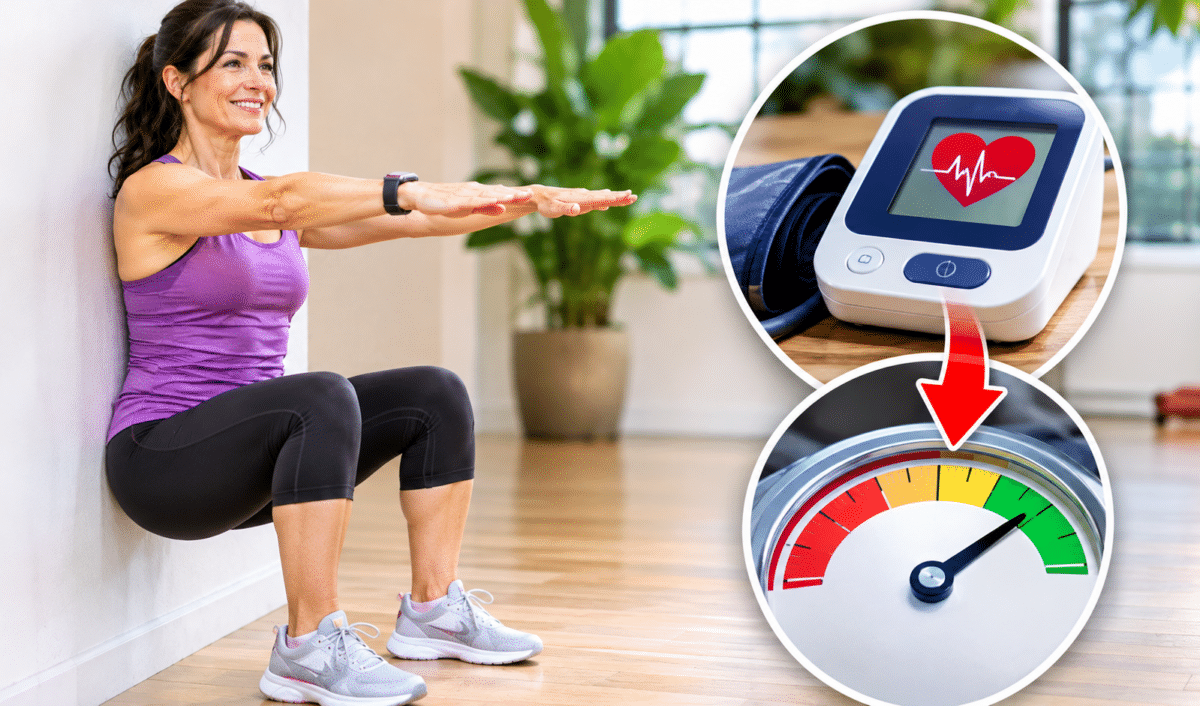
An analysis of 270 trials ranked isometric exercise first for cutting resting blood pressure, with wall squats lowering systolic pressure by 10.47 mmHg on average. A 2026 trial tested how often people need to keep going.
Average systolic drop with wall squats, BJSM 2023
By The Heart Health DeskFact-checked against BJSM and BMJ journal data, CDC surveys and AHA categoriesUpdated November 11, 2026Scope U.S. adults with normal to high blood pressure
Nearly half of American adults have high blood pressure, and most of them do not have it under control. The standard advice is familiar: lose weight, cut salt, get 150 minutes of exercise a week. Yet one of the most effective exercises for blood pressure, according to the largest analysis of its kind, needs no gym, no equipment and no running shoes. It needs a wall.
The wall sit, also called the wall squat, is an isometric exercise. Your muscles work hard, but your body does not move. In 2023, researchers in the British Journal of Sports Medicine found isometric training lowered blood pressure more than walking, running, cycling or weight lifting. This October, a new trial asked the practical follow-up question: once your pressure comes down, how often do you need to keep doing wall sits to hold the gain?
What We Know
- Isometric exercise ranked first of five exercise types for lowering systolic pressure in a 270-trial analysis.
- Wall squats ranked first among individual exercises for systolic reduction.
- In a 2026 trial, three weekly sessions preserved a 13.73 mmHg systolic drop at 8 weeks.
- Larger reductions were seen in people with high blood pressure than in those without.
What Is Still Unclear
- The 2026 trial enrolled healthy adults, average age 37.4, without diagnosed hypertension.
- Its maintenance phase lasted only four weeks; long-term effects are unknown.
- No trials compared isometric exercise directly against aerobic exercise head to head.
- The isometric evidence base is smaller than for walking or running, the authors cautioned.
The Blood Pressure Problem Most Americans Have Not Solved
The CDC’s National Center for Health Statistics found that 47.7% of U.S. adults had hypertension between August 2021 and August 2023, defined as a reading of 130/80 mmHg or higher or taking blood pressure medicine. Only 59.2% of those people knew they had it, and just 20.7% had it under control. Those numbers were essentially unchanged from the 2017 to 2020 survey.
Hypertension, Awareness and Control by Age
Have hypertensionControlled, among those with it
The age pattern is striking. Fewer than one in four adults aged 18 to 39 have hypertension, but only 27.2% of those who do are aware of it, and just 4.5% have it controlled. That is exactly the group most likely to skip a doctor’s visit, and the group a quick home exercise could reach.
What Makes a Wall Sit Different
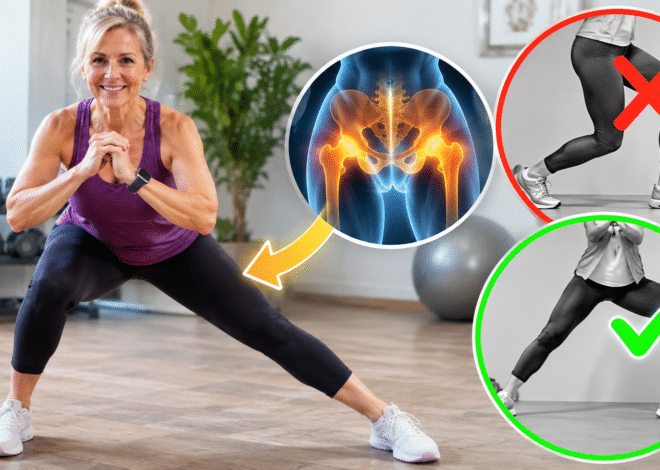
Most exercise is dynamic: your muscles lengthen and shorten as you move. Isometric exercise holds a muscle under tension without movement. In a wall sit, you lean your back against a wall and slide down until your knees are bent, as if sitting in an invisible chair, then hold. Your thigh muscles work hard the whole time, and you feel it within a minute.
Why Squeezing and Holding May Lower Pressure
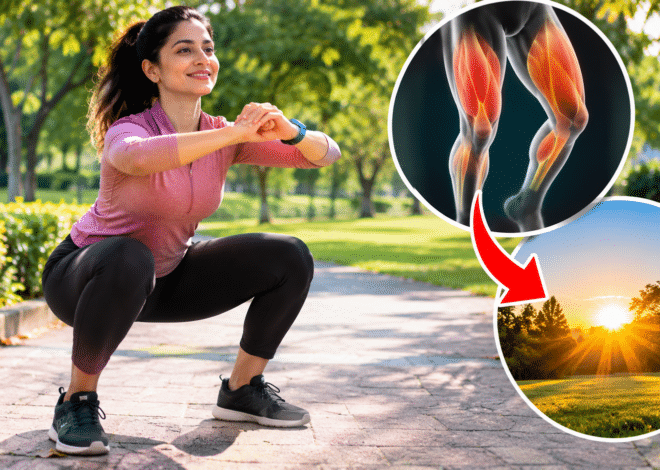
During the hold, the contracting muscles squeeze blood vessels and restrict blood flow. When you release, blood rushes back in. Researchers believe that repeated cycle of restriction and release trains blood vessels to relax more easily, which lowers resistance in the circulation. The 2026 trial found that people training three times a week kept improvements in total peripheral resistance, a measure of how hard the heart pushes against blood vessels, along with heart rate variability, a marker of nervous system control.
Those four numbers define the routine used in most trials, according to the 2023 BJSM paper. Total time under load is eight minutes per session. Including rest, a session takes roughly 14 to 20 minutes. Intensity is usually set by knee angle: a deeper bend is harder. Some trials had people choose an angle that felt moderately hard at the start and very hard by the fourth hold, rating effort from about 3.5 to 4.5 rising to 8 to 9 out of 10.
The 270-Trial Analysis That Put Wall Sits on the Map
The 2023 study, led by Jamie Edwards of Canterbury Christ Church University in England, pooled 270 randomized trials published between 1990 and February 2023, involving 15,827 people. It compared aerobic exercise, dynamic resistance training, combined training, high-intensity interval training and isometric exercise. Isometric training came out clearly ahead, with a 98.3% probability score of being the most effective for systolic pressure.
Blood Pressure Drop by Type of Exercise
Systolic (top number)Diastolic (bottom number)
Within the isometric category, the researchers broke results down by specific exercise. Wall squats ranked first for systolic pressure, with a 90.4% probability score, followed by isometric leg extensions and handgrip squeezes. For diastolic pressure, running edged ahead, with wall squats second.
Systolic Drop by Specific Exercise
The authors added two important cautions. There were no trials testing isometric exercise directly against other types, so the rankings come from indirect comparisons. And the isometric evidence base is smaller than for aerobic exercise. They also found that all exercise types worked better in people who already had high blood pressure, which is good news for those who need it most.
The 2026 Trial: How Often Is Enough?
Published in BMJ Open Sport and Exercise Medicine and announced on Oct. 26, the new trial by Harry Swift, Jonathan Wiles and colleagues enrolled 100 adults with an average age of 37.4 and systolic pressure between 120 and 140 mmHg. None had diagnosed hypertension or took blood pressure medicine, and none exercised regularly. People who smoked or drank more than 14 units of alcohol a week were excluded.
- Week 0Baseline. 100 adults randomized into 1 control group and 4 exercise groups; blood pressure measured.
- Weeks 1 to 4Training. All 4 exercise groups did home wall squats 3 times a week: 4 holds, 2 minutes of seated rest between.
- Week 4Check. All exercise groups had significantly lower systolic, diastolic and mean arterial pressure than control.
- Weeks 5 to 8Maintenance. Groups switched to 3, 2, 1 or 0 sessions a week.
- Week 8Result. 3 sessions kept the biggest drop; stopping lost the significant benefit.
Systolic Change at Week 8 by Maintenance Frequency
“Higher frequencies are required to preserve these benefits and the associated vascular and cardiac autonomic adaptations,” the authors wrote. But they also described once- or twice-weekly sessions as “a pragmatic option for individuals with limited time or adherence challenges.” Diastolic pressure was less durable: no group kept a significant diastolic difference from control after the maintenance phase.
Where Wall Sits Fit on the Blood Pressure Scale
The American Heart Association groups readings into categories. The table below shows each one alongside what research suggests about wall sits at that level. The guidance is general; anyone with elevated readings should talk to a doctor first.
| AHA category | Systolic, mmHg | Diastolic, mmHg | Wall sit takeaway | Next step |
|---|---|---|---|---|
| Normal | Below 120 | Below 80 | Optional, helps keep pressure healthy | Check yearly |
| Elevated | 120 to 129 | Below 80 | Matches the range tested in the 2026 trial | Lifestyle changes, recheck |
| Stage 1 hypertension | 130 to 139 | 80 to 89 | Larger reductions seen in people with high pressure | Talk to your doctor first |
| Stage 2 hypertension | 140 or higher | 90 or higher | Possible add-on only with medical approval | Medical treatment plan |
| Hypertensive crisis | Above 180 | Above 120 | Do not exercise | Seek emergency care |
Time Cost Compared With Cardio
Three wall-sit sessions of four 2-minute holds total 24 minutes of actual work a week, or roughly 42 minutes including 2-minute rests. The CDC recommends 150 minutes of moderate aerobic activity weekly for general health. Wall sits are not a substitute for that guideline, which also protects against diabetes, some cancers and depression, but they are a time-efficient addition aimed squarely at blood pressure.
How to Do a Wall Sit Safely
These steps follow the protocols used in the research. Check with your doctor before starting if you have high blood pressure, heart disease, knee problems or take medication, and avoid isometric exercise if your resting pressure is above 180/110 mmHg.
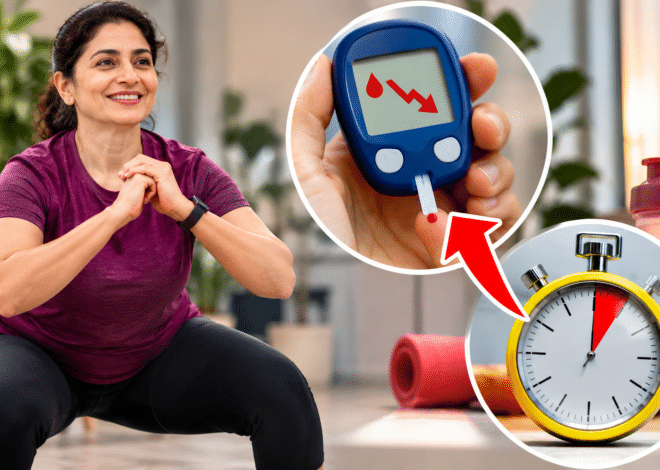
- Measure your baselineSit quietly for 5 minutes, then take two readings a minute apart. Repeat on several days and average them.
- Set up against a smooth wallStand with your back flat against the wall and feet about shoulder-width apart, a step or two out from the wall.
- Slide down to a manageable depthBend your knees until the first hold feels moderately hard, about 4 out of 10. Keep knees over ankles.
- Hold for 2 minutes and breatheBreathe steadily. Never hold your breath. It should feel very hard, about 8 to 9 out of 10, by the fourth hold.
- Rest 2 minutes, seatedThen repeat until you have completed 4 holds. Total session time is about 14 minutes.
- Repeat 3 times a weekRecheck blood pressure after 4 weeks. Once improved, the 2026 trial suggests keeping 3 sessions for the full benefit.
Stop Signs to Respect
Stop immediately if you feel chest pain, dizziness, a severe headache, unusual shortness of breath or sharp knee pain. If home readings above 180/120 mmHg stay high after rest, seek emergency care. If your readings are consistently above 130/80, book an appointment with your doctor even if you feel fine; high blood pressure rarely causes symptoms.
- 4 holds of 2 minutes8 minutes under load per session
- 2 minutes of rest betweenSeated, as in the 2026 trial
- 3 sessions a weekKept a 13.73 mmHg drop at 8 weeks
- Effort 8 to 9 out of 10By the fourth hold
- Steady breathingNo breath-holding
- Skip if above 180/110Talk to your doctor first
Frequently Asked Questions
Do wall sits lower blood pressure?
Research suggests they do. A 2023 analysis of 270 trials found wall squats lowered resting blood pressure by an average of 10.47/5.33 mmHg, the largest systolic drop of any exercise studied.
How long should you hold a wall sit for blood pressure?
Most trials used four holds of 2 minutes each, with 1 to 4 minutes of rest between, three times a week.
How quickly can wall sits lower blood pressure?
In a 2026 trial, all exercise groups had significantly lower blood pressure than the control group after just 4 weeks of training three times a week.
Is isometric exercise better than cardio for blood pressure?
In the 2023 analysis, isometric exercise lowered systolic pressure by 8.24 mmHg versus 4.49 for aerobic exercise, but no trials compared them head to head, and cardio offers broader health benefits.
Are wall sits safe if you have high blood pressure?
Research protocols have been used in people with high blood pressure, but talk to your doctor first, breathe steadily during holds and do not exercise if resting pressure is above 180/110 mmHg.
How many times a week should you do wall sits?
Three times a week preserved the largest benefit in a 2026 trial, a 13.73 mmHg systolic drop. Once or twice a week kept about half of that.
What happens if you stop doing wall sits?
In the 2026 trial, people who stopped after 4 weeks no longer had significantly lower blood pressure than the control group four weeks later.
Can wall sits replace blood pressure medication?
No. Wall sits may help as an addition, but do not stop or change prescribed medication without talking to your doctor.
The Short Version
Isometric exercise, especially the wall sit, ranked first for lowering resting blood pressure in a 2023 analysis of 270 trials, with wall squats averaging a 10.47/5.33 mmHg drop. The standard routine is four 2-minute holds, three times a week. A 2026 trial of 100 adults found three weekly sessions kept systolic pressure 13.73 mmHg lower at eight weeks, while one or two sessions kept about half. With nearly half of U.S. adults hypertensive and only about one in five controlled, it is a cheap, quick tool worth discussing with your doctor.

Omisha is a health writer passionate about turning complex medical research into clear, actionable content readers can trust. She covers everything from nutrition and mental wellness to chronic disease management, always grounding her work in credible science and real-world relevance. When she's not writing, she's usually reading up on the latest health studies or exploring new wellness trends to write about next.