Holiday Fitness Quick Workouts
A 3-Minute Christmas Dance Workout You Can Do Between Gift Wrapping — and Why Short Bursts Like This Actually Count
Six festive 30-second moves, no equipment, one upbeat holiday song. Research on one-minute activity bursts and on dance for mood helps explain why tiny sessions add up during the busiest weeks of the year.
By The Fitness DeskFact-checked against peer-reviewed studies, CDC national survey data and the Compendium of Physical ActivitiesUpdated November 14, 2026Scope Healthy U.S. adults, home workouts
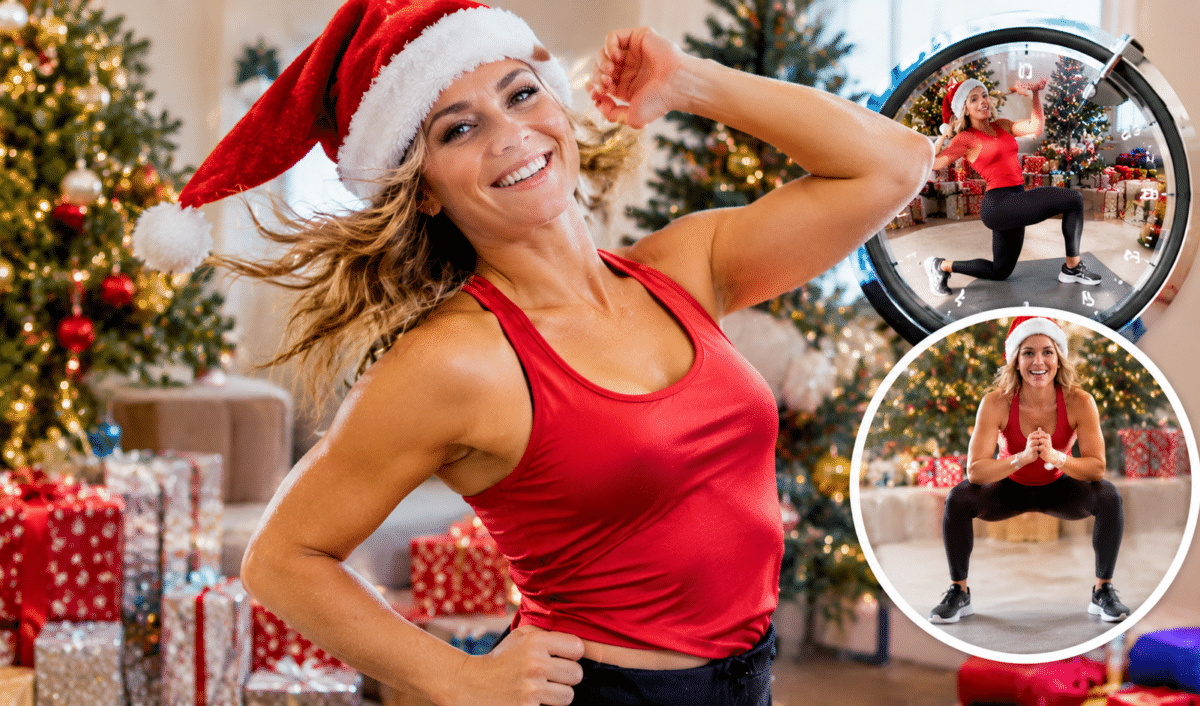
December has a way of swallowing workout plans. There are parties, travel, school concerts and a list of errands that never seems to shrink. By the time you could exercise, the day is gone. But there is almost always room for one song. A holiday dance workout of about three minutes fits between batches of cookies, during a commercial break, or before the family wakes up.
Three minutes will not replace a full fitness program. It does not need to. A growing body of research suggests that very short bursts of brisk movement, repeated a few times a day, are linked to real health benefits, and dance in particular has shown strong effects on mood. This guide gives you a six-move routine, explains what the evidence does and does not show, and shows how to scale it for any fitness level.
What We Know
- Brief bursts of vigorous activity are linked to lower death risk in observational research.
- Dance produced large reductions in depression symptoms in a 2024 BMJ analysis of 218 trials.
- Fewer than half of U.S. adults meet the federal aerobic activity guidelines.
- Average holiday weight gain is small, about 0.8 pound, but often not lost afterward.
What Is Still Unclear
- Whether short bursts cause the benefits seen in observational studies.
- The ideal number of daily bursts; studies range from 1 to 6 or more.
- How much a 3-minute dance alone changes weight; the calorie burn is modest.
- Exact calories for you, which depend on body size and effort.
The Routine: Six Moves, 30 Seconds Each
Pick any upbeat holiday song you love, ideally one with a steady beat you can step to. Clear a small space, wear supportive shoes and keep water nearby. Each move lasts 30 seconds. Start gently and build intensity through the middle, then ease off at the end. If you need to, march in place between moves instead of stopping.
- 10:00 to 0:30Jingle MarchMarch in place, clapping on every fourth step. Lift knees a little higher each 10 seconds to warm up.
- 20:30 to 1:00Tinsel Step-TouchStep right, tap left; step left, tap right. Swing arms overhead side to side like tossing tinsel.
- 31:00 to 1:30Sleigh-Ride GrapevineFour steps right crossing behind, then four steps left. Pump arms like holding reins.
- 41:30 to 2:00Snowflake JacksJumping jacks, or step-out jacks for low impact, reaching arms wide like a snowflake.
- 52:00 to 2:30Reindeer Knee DriveAlternate quick knee lifts with hands touching knees. Go faster for more challenge.
- 62:30 to 3:00Candle Sway Cool-DownSlow side-to-side sway with long overhead reaches, then deep breaths to finish.
How Hard Should It Feel?
For moves two through five, aim for an effort where you can speak in short sentences but could not sing the lyrics. Health agencies often describe this as moderate to vigorous intensity. On a 0 to 10 scale of effort, that is roughly a 5 to 7 in the middle of the routine. The warm-up and cool-down should feel easy, around a 3. If you feel dizzy, short of breath beyond normal, or have chest pain, stop and seek medical advice.
Why Three Minutes Is Not Too Short to Matter
The best-known evidence comes from a 2022 study in Nature Medicine led by Emmanuel Stamatakis of the University of Sydney. Researchers analyzed wrist-tracker data from more than 25,000 UK Biobank participants who said they did not exercise in their leisure time, following them for about seven years. They looked at vigorous intermittent lifestyle physical activity, or VILPA: brief bursts like climbing stairs quickly or walking fast for a minute.
What Short Bursts Were Linked To
Three to four one-minute bursts a day appeared to deliver much of the benefit, and more was better. “A few very short bouts totalling three to four minutes a day could go a long way,” Stamatakis said. Because the study was observational, it cannot prove the bursts caused the lower risk; people who move in quick bursts may differ in other ways. A 2026 meta-analysis of 11 randomized trials with 472 adults, reported by Pulse, found that 1- to 2-minute vigorous “exercise snacks” improved fitness, peak power and leg strength.
The Mood Bonus of Dancing
Dance has an edge for mental health. A 2024 network meta-analysis in The BMJ pooled 218 randomized trials involving 14,170 people with depression. Dance produced large reductions in depression symptoms compared with active controls, while walking or jogging, yoga and strength training produced moderate reductions, according to the BMJ Group summary. Researchers also found that more vigorous activity tended to bring greater benefit. During a season that can be stressful as well as joyful, a few minutes of dancing to a favorite song is a low-cost mood lift.
How Much Energy Does Dancing Use?
Exercise scientists measure intensity in METs, multiples of the energy you use sitting still. The 2024 Adult Compendium of Physical Activities lists aerobic dance at 7.3 METs, vigorous folk or nightclub dancing, including line dancing and polka, at 9.8, and slow ballroom dancing at 3.0. Your Christmas routine likely falls between 5 and 7.3 METs depending on how hard you push the middle moves.
Energy Cost of Different Dance Styles
To estimate calories, a standard formula multiplies METs by 3.5 by body weight in kilograms, then divides by 200 to get calories per minute. For a 154-pound person, or 70 kilograms, three minutes of aerobic dance at 7.3 METs uses about 27 calories in total. That is modest, which is why the value of a short routine is mostly in fitness, mood and consistency, not burning off a holiday dessert.
Estimated Calories in 3 Minutes, 154-Pound Adult
Make It Fit Your Body
The same routine can be gentler or harder. Low-impact versions keep one foot on the floor at all times. The table below offers common modifications; if you have a heart condition, joint problems, are pregnant or are new to exercise, check with your doctor first.
| Who | Swap for jumping moves | Effort target, 0 to 10 | Rounds per day | Safety note |
|---|---|---|---|---|
| Beginner | Step-out jacks, slower knee lifts | 4 to 5 | 1 to 2 | Hold a chair for balance if needed |
| Older adult | Marching instead of jacks | 4 to 6 | 2 to 3 | Clear tripping hazards, wear shoes |
| Knee or hip pain | Smaller steps, no jumping | 3 to 5 | 1 to 3 | Stop if pain increases |
| Pregnant, cleared by doctor | Low-impact steps, gentle arms | 3 to 5 | 1 to 2 | Follow your provider’s guidance |
| Kids and family | Any version they enjoy | Playful | 2 or more | Make it a game, not a test |
| Already active | Squat jumps, faster knee drives | 7 to 8 | 3 to 4 | Add as extra, not replacement |
The effort targets and round counts above are indicative suggestions based on common exercise guidance, not results from a specific study. Federal guidelines recommend at least 150 minutes of moderate or 75 minutes of vigorous aerobic activity each week, plus muscle-strengthening on 2 days, for adults.
Why Home Routines Help the Least Active Most
The CDC national survey data discussed below also show big gaps by body weight and region. Among adults with obesity, 38.0% met the aerobic guidelines, compared with 54.8% of adults at a healthy weight. By region, the West led at 51.9%, followed by the Northeast at 48.4%, the Midwest at 46.4% and the South at 44.1%. A song-length routine in the living room removes several common barriers at once: no gym fee, no travel, no special clothes and no need for good weather in December.
Who Needs It Most
The CDC’s National Center for Health Statistics reported in April 2026 that 47.2% of U.S. adults met federal aerobic activity guidelines in 2024. Women, older adults and people with disabilities were less likely to meet them, which is part of why short, home-based routines are so useful.
Share of U.S. Adults Meeting Aerobic Guidelines, 2024
Your Countdown to Christmas
From November 14 to December 25 there are 41 days. The suggested build-up below starts small and grows. It is an indicative plan, not a prescription.
- Nov. 16 to 221 round a day. Learn the 6 moves.
- Nov. 23 to 292 rounds a day. Add one after Thanksgiving dinner.
- Nov. 30 to Dec. 133 rounds a day: morning, afternoon, evening.
- Dec. 14 to 243 to 4 rounds; try a faster song.
- Dec. 25A family round before or after gifts.
Suggested schedule; adjust to your fitness level and medical advice.
The Holiday Weight Reality Check
The holidays get blamed for big weight gain, but the classic study tells a more nuanced story. In research published in the New England Journal of Medicine in 2000, NIH scientists followed 195 adults and found an average gain of 0.8 pound between Thanksgiving and New Year’s Day, with fewer than 10% gaining more than 5 pounds. The catch: participants were still about 1.4 pounds heavier a year later. Small, steady habits like a daily dance break may help more than a January crash plan.
- Pick your song nowChoose 3 favorite upbeat holiday tracks so you never waste time deciding.
- Anchor it to a habitDance while the coffee brews, the oven preheats or the kids get their shoes on.
- Warm up and cool downKeep the first and last 30 seconds easy every time.
- Repeat through the dayAim for 2 to 4 rounds; the bursts research suggests the total matters.
- Invite othersFamily dance breaks make it social and fun, which helps consistency.
- Keep strength work tooAdd 2 days of muscle-strengthening each week, per federal guidelines.
- 3 minutes per roundSix 30-second moves
- Effort 5 to 7Talk but not sing
- 2 to 4 rounds a dayShort bursts add up
- 63 minutes a weekAt 3 rounds daily
- Low-impact optionNo jumping needed
- Stop if painChest pain or dizziness means stop
Frequently Asked Questions
Is a 3-minute workout worth it?
Yes, especially when repeated. A large study linked three to four one-minute bursts of vigorous activity a day to up to 40% lower risk of death, though it could not prove cause and effect.
How many calories does a 3-minute dance workout burn?
Roughly 11 to 36 calories for a 154-pound adult, depending on intensity, based on standard MET calculations.
Does dancing count as cardio?
Yes. Aerobic dance is rated 7.3 METs in the Compendium of Physical Activities, which is vigorous-intensity aerobic activity.
Can dancing improve mood or depression?
A 2024 BMJ analysis of 218 trials found dance produced large reductions in depression symptoms, more than walking, yoga or strength training.
How much exercise do adults need each week?
At least 150 minutes of moderate or 75 minutes of vigorous aerobic activity, plus muscle-strengthening on 2 days, under federal guidelines.
How much weight do people gain over the holidays?
About 0.8 pound on average between Thanksgiving and New Year’s, according to an NIH study, but it often stays on.
Is a dance workout safe for older adults?
Generally yes, with low-impact moves like marching instead of jumping, a clear floor and supportive shoes. Check with a doctor if you have health concerns.
What songs work for a Christmas dance workout?
Any upbeat holiday song with a steady beat you enjoy. Songs around 120 to 130 beats per minute are easy to step to.
The Short Version
A 3-minute Christmas dance workout of six 30-second moves, march, step-touch, grapevine, jacks, knee drives and a cool-down sway, fits into the busiest holiday days. Research links three to four short bursts of vigorous activity a day to up to 40% lower risk of death, and dance has shown large benefits for depression symptoms. A single round burns only about 11 to 36 calories, so repeat it 2 to 4 times a day. Three rounds daily add up to 63 minutes a week.

Omisha is a health writer passionate about turning complex medical research into clear, actionable content readers can trust. She covers everything from nutrition and mental wellness to chronic disease management, always grounding her work in credible science and real-world relevance. When she's not writing, she's usually reading up on the latest health studies or exploring new wellness trends to write about next.