Spent $8,000 on hair treatments before a 73-year-old acupuncturist in San Francisco’s Chinatown changed everything. What Stanford researchers just discovered about ancient Chinese herbs is making pharmaceutical companies nervous—and it explains why my dermatologist now asks patients about their kidney health before prescribing Rogaine.
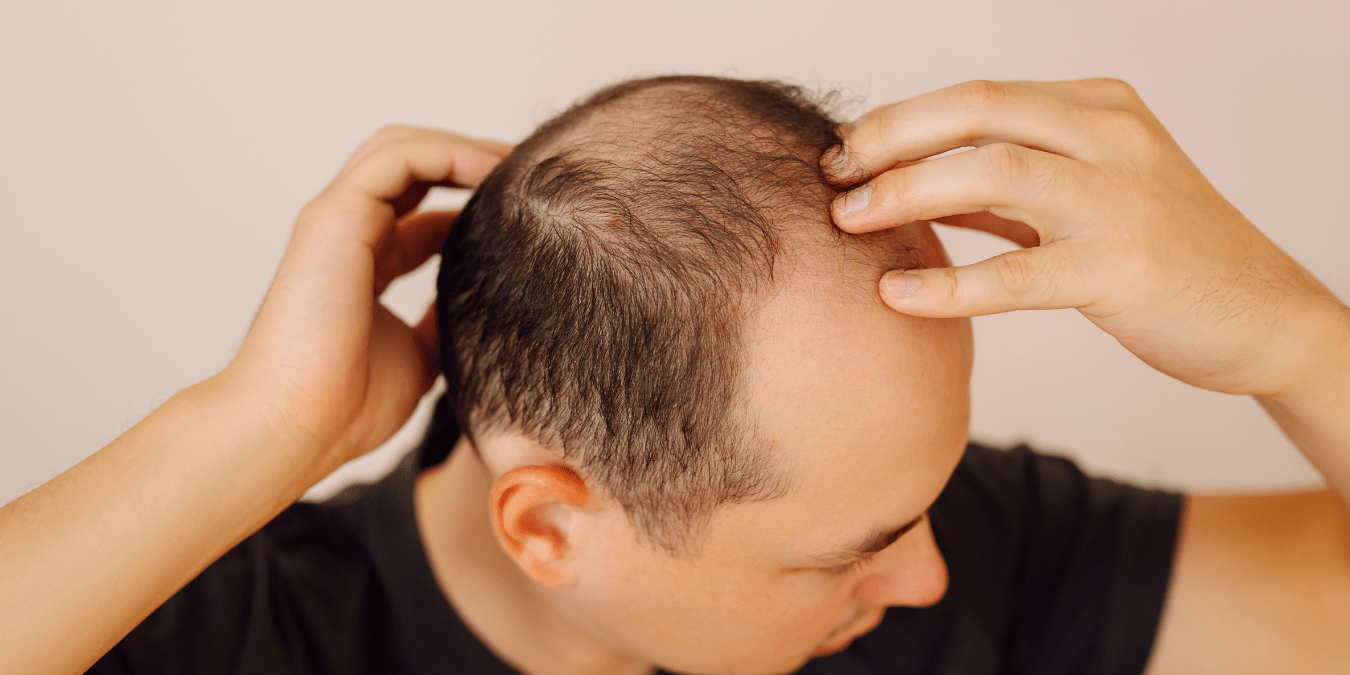
The bathroom mirror doesn’t lie. For millions of Americans, it tells an unwelcome story—a widening part, a receding hairline, or thinning patches that seem to appear overnight. You’ve probably scrolled through countless ads promising miracle solutions, each more expensive and questionable than the last. But what if the answer to modern hair loss has been hiding in plain sight for over 2,000 years?
Major American universities are now seriously investigating herbs with names most of us can’t pronounce. Prestigious medical journals are publishing studies on acupuncture for hair regrowth. And the biological mechanisms researchers are uncovering align remarkably well with observations Chinese physicians made centuries before microscopes existed.
This isn’t about abandoning modern medicine for mysticism. It’s about recognizing that while Americans spend over $3.5 billion annually on hair loss treatments with mixed results, some of the most promising solutions might come from a medical tradition older than our country itself. The question isn’t whether ancient Chinese medicine works—it’s how it works, which conditions it addresses best, and how we can thoughtfully integrate it with conventional treatments.
Let me be clear from the start: I’m not selling you supplements or miracle cures. What I’m offering is a honest, research-based exploration of what’s actually happening at the intersection of Eastern wisdom and Western science. Because if you’re among the two-thirds of American men experiencing hair loss by age 35, or the 40% of women dealing with thinning hair, you deserve to know about every legitimate option available.
The hair growing back on your head might just require looking backward—way backward—to move forward.
- Your Smartwatch Already Knows Something Is Wrong — Why AI-Powered Wearables in 2026 Are Catching Diseases Before Your Doctor Even Schedules Your Appointment

- Your Light Bulb Could Be Making Your Anxiety Worse — or Better: Here’s the Science Behind Colour Therapy

- Your Gut Health Obsession Just Got Scientific Backup — Here’s What Doctors Actually Say Works in 2026

- Your Child’s School Could Be Ground Zero: The Hidden Measles Outbreaks Spreading Across 33 States That Most American Parents Have No Idea About
- Your Blood Pressure Reading Has a “Hidden Number” Doctors Say Most People Ignore

- Your Blood Pressure Is Perfect — But These 7 Silent Clues in Your Blood Work Say Your Arteries May Already Be Clogging

The Hair Loss Crisis Facing Americans
Before we dive into ancient remedies, let’s acknowledge the scope of this problem. By age 35, approximately two-thirds of American men will experience some degree of hair loss. By age 50, that number climbs to 85%. Women aren’t spared either—roughly 40% will experience visible hair thinning by the time they reach menopause.
The emotional toll is significant. Studies consistently show that hair loss correlates with decreased self-esteem, social anxiety, and even depression. It’s not vanity—it’s about how we present ourselves to the world and how we feel in our own skin.
The conventional Western approach typically involves minoxidil (Rogaine), finasteride (Propecia), or expensive transplant procedures. These work for some people, but they come with limitations: ongoing costs, potential side effects, and the need for continuous use to maintain results.
A Different Philosophy of Treatment
Traditional Chinese Medicine (TCM) approaches hair loss from a fundamentally different angle than Western medicine. Rather than viewing it as an isolated scalp issue, TCM practitioners see hair health as a reflection of your body’s internal balance—particularly the health of your kidneys, liver, and blood.
In TCM theory, hair is considered an extension of blood, and the kidneys store the essence (jing) that nourishes hair growth. When your kidneys are deficient in this vital energy, or when blood flow is compromised, hair becomes brittle, thin, and eventually stops growing altogether.
This might sound mystical to Western ears, but here’s what’s fascinating: modern research is finding biological mechanisms that align remarkably well with these ancient observations.
The Herbs Making Scientists Take Notice
Several Chinese herbs used for centuries are now attracting serious attention from researchers at American universities and pharmaceutical companies.
He Shou Wu (Fo-Ti) is perhaps the most famous. Legend says it’s named after a man whose gray hair turned black after consuming the root. While we can’t verify that story, laboratory studies have shown that He Shou Wu promotes the proliferation of dermal papilla cells—the very cells responsible for regulating hair follicle growth. A 2019 study published in the Journal of Ethnopharmacology found it could extend the anagen (growth) phase of the hair cycle in mice.
Ginseng has moved beyond its reputation as an energy booster. Korean researchers discovered that ginsenosides, the active compounds in ginseng, can promote hair growth by preventing cell death in follicles and enhancing blood circulation to the scalp. The study showed results comparable to minoxidil in some subjects.
Ligusticum wallichii (Chuan Xiong), used in TCM to invigorate blood circulation, has demonstrated the ability to stimulate vascular endothelial growth factor—essentially encouraging new blood vessel formation around hair follicles. Better blood flow means better nutrient delivery and waste removal.
Angelica sinensis (Dong Quai) has shown promise in regulating hormones and reducing inflammation, both factors implicated in certain types of hair loss. Given that hormonal imbalances play a major role in both male and female pattern baldness, this ancient “female ginseng” deserves more research attention.
The Acupuncture Connection
While herbs get most of the attention, acupuncture represents another intriguing avenue. The practice involves inserting ultra-thin needles at specific points to stimulate energy flow—or in modern terms, to influence nerve pathways, blood flow, and cellular signaling.
A 2020 pilot study at the University of California, San Diego examined acupuncture combined with plum blossom needle technique (a form of micro-needling used in TCM) for treating alopecia areata, an autoimmune condition causing patchy hair loss. The results showed improvement in 85% of participants over 12 weeks, with minimal side effects.
The mechanism likely involves multiple factors: increased blood circulation to the scalp, reduced stress hormones (chronic stress being a major hair loss trigger), and possible modulation of the immune system in cases of autoimmune hair loss.
Dr. Sarah Chen, a dermatologist at Stanford who’s researched both conventional and alternative approaches, told me: “We’re seeing that acupuncture may influence the inflammatory pathways that disrupt hair follicle cycling. It’s not magic—it’s neurobiology and immunology we’re only beginning to understand.”
What the Research Actually Shows
Let me be clear: the evidence base for TCM approaches to hair loss isn’t as robust as for FDA-approved treatments. Most studies are small, and many have methodological limitations. This is partly because research funding tends to flow toward patentable pharmaceuticals rather than traditional herbs.
However, the existing research is encouraging enough that major institutions are paying attention. The National Center for Complementary and Integrative Health, part of the NIH, has funded multiple studies examining Chinese herbal formulas for various conditions, including some related to hair and skin health.
A 2018 systematic review published in Evidence-Based Complementary and Alternative Medicine analyzed 23 studies on Chinese herbal medicine for alopecia. The authors concluded that while more rigorous trials are needed, the available evidence suggests Chinese herbs may be effective for certain types of hair loss, particularly when combined with conventional treatments.
The American Integration Movement
Across the United States, we’re seeing a growing integration of Eastern and Western approaches. Dermatology clinics in cities like New York, Los Angeles, and Seattle now offer combination treatments: perhaps minoxidil alongside specific herbal supplements, or finasteride combined with acupuncture sessions.
This integrative approach makes sense. Why not harness multiple mechanisms—blocking DHT (the hormone implicated in male pattern baldness) while simultaneously improving scalp circulation and reducing systemic inflammation?
Dr. Michael Zhang, who practices integrative dermatology in Boston, describes his approach: “I look at the patient’s complete picture. A 35-year-old man with early thinning might benefit from finasteride to address the hormonal component, but if he’s also dealing with stress and poor sleep, we might add adaptogenic herbs and acupuncture to address those systemic factors contributing to hair loss.”
The Safety Question
One concern Americans rightfully have about herbal supplements is safety and quality control. Unlike pharmaceuticals, supplements aren’t strictly regulated by the FDA. Quality can vary dramatically between brands, and some products have been found contaminated with heavy metals or undeclared ingredients.
If you’re considering Chinese herbs for hair loss, work with a licensed acupuncturist or practitioner trained in Chinese herbal medicine. Look for products that have been third-party tested and carry certifications like NSF International or USP Verified. Be wary of dramatic claims or products that seem too good to be true.
Also discuss any herbs with your physician, especially if you’re taking medications. Some herbs can interact with blood thinners, diabetes medications, or hormone therapies.
What You Can Realistically Expect
Let me temper expectations: no treatment—Eastern or Western—works for everyone, and none works overnight. Hair grows slowly, cycling through phases that take months. Most experts recommend trying any approach for at least six months before judging results.
Chinese medicine practitioners also emphasize that herbs work best as part of a holistic approach. This means addressing diet (ensuring adequate protein, iron, and vitamins), managing stress, getting quality sleep, and sometimes making lifestyle changes that support overall vitality.
The goal isn’t to choose between ancient wisdom and modern science—it’s to thoughtfully combine them. The minoxidil might stop further loss while herbs and acupuncture work on deeper systemic issues. The finasteride addresses hormones while stress-reduction practices prevent cortisol from undermining your results.
Looking Forward
As someone who’s spent considerable time researching this topic—and watching my uncle maintain his improved hair density for three years now—I’m cautiously optimistic about what ancient Chinese medicine might contribute to solving hair loss.
The next decade will likely bring more rigorous clinical trials, better understanding of mechanisms, and hopefully, standardized protocols combining the best of both medical traditions. Some pharmaceutical companies are already investigating synthetic versions of compounds found in Chinese herbs, attempting to isolate and concentrate the active ingredients.
The key is approaching this with eyes wide open: appreciating the wisdom accumulated over millennia while demanding the evidence standards we expect from any medical intervention. Hair loss might be as old as humanity, but our ability to address it is entering an exciting new era—one that honors both ancient observation and modern scientific validation.
For Americans struggling with hair loss, the message is hopeful: you have more options than ever before. The solution might come from a cutting-edge laboratory, an ancient root, or most likely, a thoughtful combination of both.

Omisha is a health writer passionate about turning complex medical research into clear, actionable content readers can trust. She covers everything from nutrition and mental wellness to chronic disease management, always grounding her work in credible science and real-world relevance. When she's not writing, she's usually reading up on the latest health studies or exploring new wellness trends to write about next.