Food & Nutrition · High-Protein Cooking · U.S. 2026
High-Protein Beef Burritos: How to Reach About 50 Grams a Burrito Without Guesswork
New federal dietary guidelines put protein at the center of every meal, and ground beef is near record prices. Here is what each ingredient adds, what it costs and how to store a batch safely.
- By the Food & Nutrition Desk
- Checked against USDA, HHS, FDA and BLS data
- Updated November 24, 2026
- Scope: U.S. home cooks, 2026 prices
Search for “high-protein burrito” and you will find claims of 37, 40, even 50 grams per wrap. Some are honest. Some quietly depend on a specialty tortilla, a scoop of something unusual or a portion of beef bigger than it looks. The difference matters more this year, because federal advice on protein changed and the price of the main ingredient climbed.
This guide does the arithmetic in the open. It uses USDA nutrient data for ground beef, FDA label rules for daily values, the 2025–2030 Dietary Guidelines for Americans and Bureau of Labor Statistics retail prices, so you can build a burrito that matches what the numbers actually say.
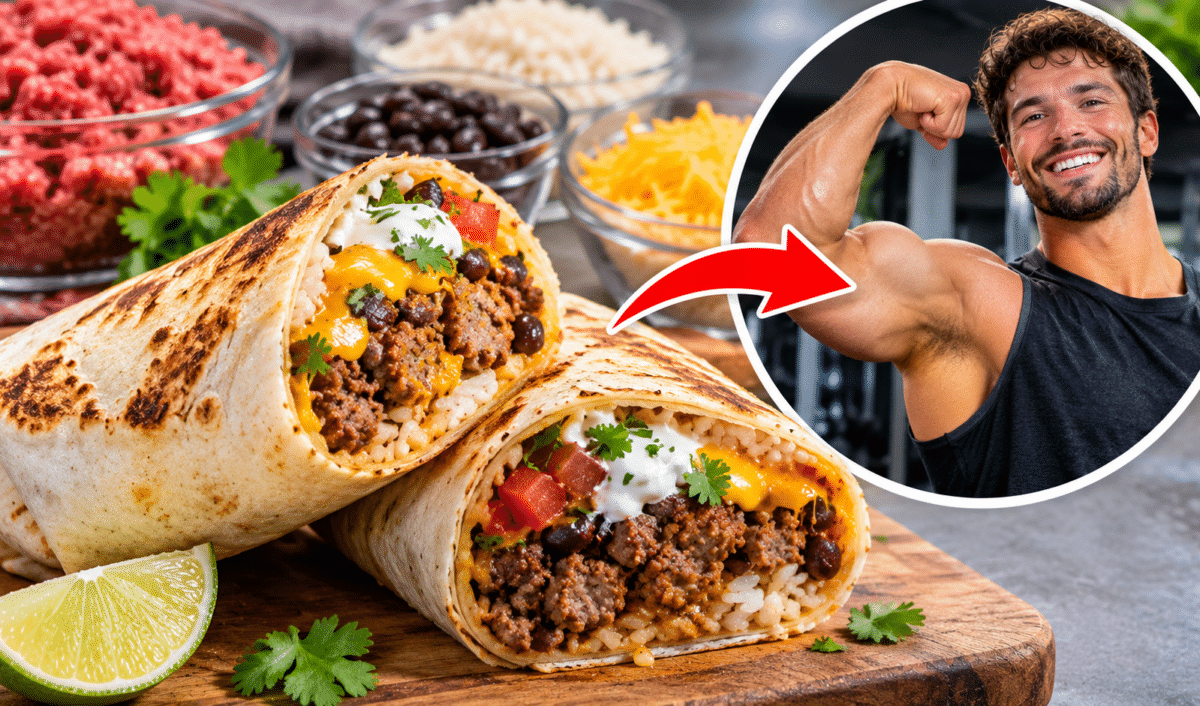
The answer: A beef burrito made with 4 ounces of raw 93% lean ground beef, half a cup of black beans, an ounce of cheese, a whole-wheat tortilla, a little Greek yogurt and half a cup of brown rice adds up to about 51 grams of protein, based on published nutrient values. The beef supplies nearly half. Cook it to 160°F, refrigerate leftovers within 2 hours and eat them within 3 to 4 days.
- 51 gProtein in our sample build (calculated)
- 23.7 gFrom 4 oz raw 93/7 beef (USDA)
- 160°FSafe internal temperature for ground beef
- $7.07U.S. average per lb, all ground beef, Oct 2026
What We Know About Protein, Beef and Burritos in 2026
These points are confirmed by federal data or official guidance, and they shape every number in the rest of this article.
- New guidelines. USDA and HHS released the Dietary Guidelines for Americans, 2025–2030, on January 7, 2026, with a protein target of 1.2 to 1.6 grams per kilogram of body weight per day.
- Old benchmark. The previous recommended dietary allowance was 0.8 grams per kilogram, about 54 grams a day for a 150-pound person, as PBS NewsHour reported.
- Label value. The FDA Daily Value for protein on Nutrition Facts labels is 50 grams, based on a 2,000-calorie diet.
- Beef protein. USDA FoodData Central lists raw 93% lean ground beef at 20.9 grams of protein per 100 grams.
- Beef prices. BLS put all uncooked ground beef at $7.07 a pound in October 2026.
- Safety. USDA says ground beef should reach 160°F, checked with a food thermometer.
What Is Still Unclear
Some important questions do not have settled answers yet, and honest cooking advice should say so.
- Whether most people need more protein. Experts quoted by FactCheck.org said many Americans already eat close to 1.2 grams per kilogram, so the new target may change less on the plate than headlines suggested.
- Your tortilla’s real number. Protein in tortillas varies widely by brand and size. Check the label on yours rather than trusting a recipe’s total.
- Where beef prices go next. Federal data show ground beef near record highs in 2026, but monthly figures have moved in both directions, and no forecast is certain.
- A per-meal protein ceiling. Researchers often cite 25 to 30 grams per meal as a useful target, but how much one meal “should” contain is still debated.
The Protein Rule That Changed the Burrito Math
For years, the number most people heard was 0.8 grams of protein per kilogram of body weight. In January 2026, the new Dietary Guidelines told Americans to prioritize protein foods at every meal and set a range of 1.2 to 1.6 grams per kilogram. That is up to double the old figure.
- 0.8 g/kgPrevious RDA benchmark
- 1.2 to 1.6New 2025–2030 target, g per kg per day
- 50 gFDA Daily Value used on labels
- Jan 72026 release date of the new guidelines
Translate that into pounds and the targets look large. FactCheck.org calculated that the range works out to about 108 to 144 grams a day for a 199-pound man and 94 to 125 grams for a 172-pound woman, the average U.S. adult weights. The table below runs the same math across common body weights and shows what share of that daily range one 51-gram burrito would cover.
| Body weight | In kilograms | Daily target at 1.2 g/kg | Daily target at 1.6 g/kg | 51 g burrito covers |
|---|---|---|---|---|
| 130 lb | 59.0 kg | 71 g | 94 g | 54% to 72% |
| 150 lb | 68.0 kg | 82 g | 109 g | 47% to 62% |
| 172 lb | 78.0 kg | 94 g | 125 g | 41% to 54% |
| 199 lb | 90.3 kg | 108 g | 144 g | 35% to 47% |
| 220 lb | 99.8 kg | 120 g | 160 g | 32% to 43% |
The takeaway is not that one burrito should carry the whole day. It is that a well-built burrito can carry a third to two-thirds of it, which leaves room for eggs at breakfast, dairy, beans and other foods the guidelines also encourage.
Why the Number on the Beef Package Matters Most
Ground beef is labeled by its lean-to-fat ratio, and that ratio changes protein per bite. Leaner blends carry slightly more protein per ounce because there is less fat taking up space. The bigger difference is in fat and calories, not protein.
Protein in 4 ounces of raw ground beef, by lean-to-fat ratio
Grams of protein. 95/5 from a USDA-based nutrition facts listing (UH Hospitals); 93/7 and 90/10 calculated from USDA FoodData Central per-100-gram values; 85/15, 80/20 and 75/25 are rounded midpoints from published nutrition summaries.
The gap between 93/7 and 80/20 is under 5 grams of protein per 4-ounce portion. The calorie gap is much wider. One nutrition summary of USDA records puts 4 ounces of raw 75/25 beef at about 325 calories, while USDA’s 95/5 listing comes in near 155. For a high-protein burrito, the lean blend buys you protein density, not a dramatically bigger protein total.
Building the Burrito, One Ingredient at a Time
Most of a burrito’s protein comes from three places: beef, beans and dairy. The tortilla and rice add a few grams each. Here is how a sensible build stacks up using published per-serving values.
Where the protein comes from in a 51-gram beef burrito
Grams of protein per ingredient. Beef calculated from USDA FoodData Central; beans from GoodRx’s bean table; Greek yogurt from Cleveland Clinic (half of a half-cup); cheese, tortilla and rice from published nutrition guides. Indicative; brands vary.
Swaps that move the total
Swapping sour cream for nonfat Greek yogurt is one of the easiest gains; Cleveland Clinic’s dietitians suggest exactly that swap on tacos and chili. Stirring cottage cheese into the beef filling is another. Cleveland Clinic lists half a cup of 1% cottage cheese at 14 grams of protein, so even a few spoonfuls per burrito add up. Pinto beans work as well as black beans, at 7.7 grams per half cup in GoodRx’s comparison.
The swaps that do the least are the ones people expect to matter most. Extra rice adds little protein. Extra cheese adds protein but also saturated fat, which the new guidelines still cap at less than 10% of daily calories, about 20 grams on a 2,000-calorie pattern.
Worked Example: Checking a 51-Gram Claim Yourself
Here is the arithmetic behind our sample burrito, written out so you can swap in your own labels.
One burrito, four servings from a pound of beef
- 4 oz raw 93/7 beef (113.4 g × 20.9 g per 100 g)23.7 g
- 1/2 cup cooked black beans7.6 g
- 1 oz shredded cheese7 g
- 1/4 cup nonfat Greek yogurt5.5 g
- 1 whole-wheat tortilla5 g
- 1/2 cup cooked brown rice2.5 g
- Total protein51.3 g
- Share of FDA 50 g Daily Value103%
- Beef cost at $8.40/lb lean (BLS, Oct 2026)About $2.10
The calculation is indicative: real tortillas range widely, and cheese varies by type. If your tortilla label says 3 grams, your total drops to about 49. If it says 8, you reach about 54. The beef line is the one to get right, because it is half the answer.
How Published High-Protein Burritos Really Compare
Recipe sites and meal kits publish their own numbers. Lining them up shows why protein alone is the wrong scoreboard. A burrito can be high in protein because it is huge, or because its ingredients are dense.
Protein per burrito, as published
Grams of protein per serving as listed by each publisher, checked November 2026. Our Best Bites uses lower-carb tortillas; HelloFresh figures are per serving.
Protein per 100 calories, same recipes
Grams of protein per 100 calories, our calculation from each publisher’s listed protein and calories (405, 436, 920 and 500 calories).
The two top protein numbers come from very different burritos. HelloFresh’s crispy version reaches 51 grams at 920 calories per serving. Our Best Bites reaches 50 grams at 405 calories, with 30 grams of fiber, largely thanks to a specialty tortilla. Neither is wrong. They simply answer different questions, which is why protein per 100 calories is the more revealing number for most home cooks.
What a Pound of Beef Costs Right Now
Ground beef has rarely been more expensive. BLS data show all uncooked ground beef averaging $7.07 a pound in October 2026, compared with $1.84 in 1998. The “100% beef” series hit a record $6.92 in August 2026, and lean and extra-lean ground beef cost noticeably more than regular blends.
U.S. average retail price per pound, October 2026
Dollars per pound, BLS average price data as compiled by Beef Price Index and in2013dollars. Sirloin steak included for scale.
At the lean price, the beef in one 4-ounce burrito costs about $2.10. At the all-ground-beef average, it is about $1.77. That 33-cent gap per burrito is the real cost of choosing lean. For a family making 8 burritos a week, it comes to about $2.64.
Beans are the budget lever. They add protein and fiber at a fraction of the cost, and a filling that is part beef, part beans stretches a pound further without dropping the protein total much.
The Meal-Prep Timeline That Keeps a Batch Safe
High-protein burritos are popular for batch cooking, and that is where food safety gets skipped. USDA guidance gives clear numbers for each stage.
- Day 0Cook ground beef to 160°F, checked with a thermometer, not by color.
- Within 2 hrsRefrigerate cooked filling or wrapped burritos; 1 hour if it is above 90°F.
- Days 1 to 4Eat refrigerated burritos within 3 to 4 days at 40°F or below.
- Up to 3 to 4 moFreeze at 0°F for best quality, per USDA’s leftovers guidance.
- Reheat to 165°FHeat leftovers through, turning burritos so the center gets hot.
Color is not a reliable test. University of Arizona Extension notes that some lean ground beef can stay pink well above 160°F, and the reverse can happen too. A thermometer is the only way to know.
Raw beef has a shorter clock
Uncooked ground beef should be cooked or frozen within 1 to 2 days of purchase, according to USDA food safety guidance. Raw ground beef keeps in the freezer for about 3 to 4 months for best quality.
- 1 to 2 daysRaw ground beef in the refrigerator at 40°F or below.
- 3 to 4 daysCooked beef burritos in the refrigerator.
- 3 to 4 monthsRaw ground beef or cooked leftovers in the freezer, for best quality.
- 2 hoursMaximum time cooked food should sit out before chilling.
Where High-Protein Burrito Plans Go Sideways
Most mistakes come from trusting a headline number instead of the ingredients behind it.
Common mistakes, and the fix
- Logging cooked weight against raw data. USDA lists raw and cooked beef separately. Mixing them can throw off your protein count by several grams per portion.
- Assuming leaner beef means much more protein. The protein difference between 93/7 and 80/20 is under 5 grams per 4 ounces; the bigger change is fat and calories.
- Forgetting sodium. Mayo Clinic dietitians warn that canned black beans can be high in sodium and suggest rinsing them. The FDA Daily Value for sodium is less than 2,300 mg a day.
- Judging doneness by color. Pink or brown, only a thermometer reading of 160°F confirms ground beef is safely cooked.
- Treating one burrito as the whole day. Even 51 grams covers only 32% to 72% of the new daily range, depending on body weight and where in the range you aim.
A Shopping and Prep Checklist You Can Screenshot
Use this as a quick reference before your next grocery run or batch-cooking session.
- Buy 93/7 ground beef: 4 oz raw gives about 23.7 g protein.
- Plan 1 lb of beef per 4 burritos.
- Rinse canned beans; 1/2 cup adds about 7.6 g protein.
- Use nonfat Greek yogurt instead of sour cream: about 5.5 g per 1/4 cup.
- Read the tortilla label; protein ranges widely by brand.
- Cook beef to 160°F and check with a thermometer.
- Chill within 2 hours; eat within 3 to 4 days.
- Freeze extras at 0°F; reheat to 165°F before eating.
Frequently Asked Questions
How much protein is in a beef burrito?
It depends on the build. A burrito with 4 ounces of raw 93% lean ground beef, half a cup of black beans, an ounce of cheese, a whole-wheat tortilla, a quarter cup of Greek yogurt and half a cup of brown rice works out to about 51 grams, using published nutrient values.
What ground beef is best for high-protein burritos?
Lean blends such as 93/7 or 95/5 give the most protein per ounce and far fewer calories than 80/20. The protein gain is modest, under 5 grams per 4 ounces, so the main benefit is lower fat.
How much protein should I eat per day under the new guidelines?
The Dietary Guidelines for Americans, 2025–2030, released January 7, 2026, set a target of 1.2 to 1.6 grams of protein per kilogram of body weight per day. For a 150-pound person, that is about 82 to 109 grams.
Are high-protein beef burritos good for meal prep?
Yes, if handled safely. Cook ground beef to 160°F, refrigerate within 2 hours, eat refrigerated burritos within 3 to 4 days, and freeze extras at 0°F. Reheat to 165°F before eating.
How long do frozen beef burritos last?
USDA guidance says cooked leftovers kept frozen at 0°F keep their best quality for about 3 to 4 months. Label each burrito with the date you froze it.
How can I add more protein to a burrito without more meat?
Use nonfat Greek yogurt instead of sour cream, add beans, or stir cottage cheese into the filling. Cleveland Clinic lists half a cup of 1% cottage cheese at 14 grams of protein.
How much does ground beef cost in 2026?
BLS data show all uncooked ground beef averaged $7.07 per pound in October 2026. Lean and extra-lean ground beef averaged about $8.40, so the beef for one 4-ounce burrito costs roughly $1.77 to $2.10.
Is a 50-gram protein burrito too much for one meal?
For many adults it fits within the new daily range, covering roughly 43% to 72% of the low-end target depending on weight. How much protein one meal should contain is still debated, so spread protein across the day if that suits you better.
The Short Version
A high-protein beef burrito is mostly a beef decision. Four ounces of raw 93% lean ground beef supplies about 23.7 grams, and beans, cheese, Greek yogurt, a tortilla and rice can carry the total to about 51 grams. That covers the FDA’s 50-gram Daily Value and a large share of the new 1.2 to 1.6 g/kg target from the 2025–2030 Dietary Guidelines. Beef costs more than ever, about $7.07 a pound on average in October 2026, so beans are the best way to stretch it. Cook to 160°F, chill within 2 hours and eat within 3 to 4 days.

Omisha is a health writer passionate about turning complex medical research into clear, actionable content readers can trust. She covers everything from nutrition and mental wellness to chronic disease management, always grounding her work in credible science and real-world relevance. When she's not writing, she's usually reading up on the latest health studies or exploring new wellness trends to write about next.