Food Safety · USDA Health Alert · United States
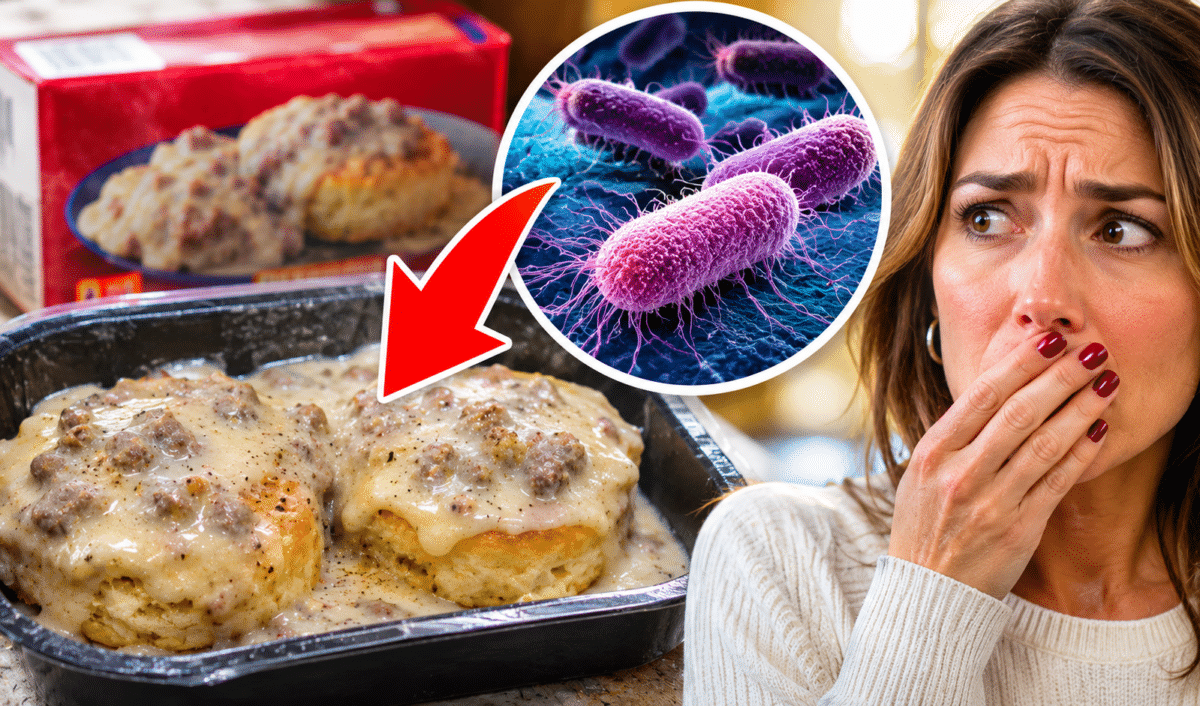
Do Not Eat These Recalled Breakfast Items: USDA Flags a Biscuit & Sausage Gravy Meal Over Listeria
A 9.5-ounce vending-machine breakfast made with recalled C.H. Guenther & Son biscuits is under a federal public health alert, and officials say more products may follow.
- By the Food Safety Desk
- Fact-checked against USDA FSIS, FDA and CDC material
- Updated November 24, 2026
- Scope: U.S. consumers and workplaces
It is the kind of breakfast nobody remembers buying. You grab it from a vending machine on the way to an early shift, or it sits in the office freezer until a busy morning. That ordinary routine is exactly why federal food safety officials are telling people to check one specific product now, even though its printed dates have already passed.
On November 14, 2026, the U.S. Department of Agriculture’s Food Safety and Inspection Service (FSIS) issued a public health alert for a ready-to-eat biscuit and sausage gravy meal that may contain Listeria monocytogenes. The meat and gravy fall under USDA. The biscuit, made by a different company and regulated by the Food and Drug Administration, is where the concern started.
The answer: Do not eat 9.5-ounce “Mmm! Meals Made in Minutes Biscuit & Sausage Gravy” packs marked EST. 51248 with best-by dates from 11/12/26 to 11/18/26. FSIS says to throw them away. The biscuits inside came from a C.H. Guenther & Son recall for possible Listeria. No confirmed illnesses have been reported.
- 9.5 ozPackage size named in the alert
- EST. 51248Number inside the USDA mark
- 11/12 to 11/18/26Best-by dates covered (7 dates)
- 0Confirmed illnesses reported so far
What We Know Right Now
The confirmed facts come from the FSIS alert itself and from the FDA-posted company recall that followed it. Here they are without the noise.
- The alert date. FSIS issued the public health alert on Saturday, November 14, 2026, for ready-to-eat meat products containing FDA-regulated biscuits that may be contaminated with Listeria.
- The product. 9.5-ounce “Mmm! Meals Made in Minutes Biscuit & Sausage Gravy,” EST. 51248, best by 11/12/26 through 11/18/26.
- Where it went. Per FSIS, the product was distributed in Arkansas, Louisiana, Mississippi, Oklahoma, Tennessee and Texas, mainly through vending machines, employee break rooms and workplace cafeterias.
- How it surfaced. A firm told FSIS it had received FDA-regulated biscuits recalled by C.H. Guenther & Son.
- Health reports. FSIS says there have been no confirmed reports of illness tied to these products.
- What to do. Throw the product away and do not eat it.
What Is Still Unclear
Several important details had not been publicly settled when this article was updated.
- The size of the biscuit recall. Food Poison Journal reported on November 16 that the biscuit maker itself had not yet posted a public recall notice, so the full list of customers who bought the biscuits was not public.
- The exact state list. FSIS lists six states. The Washington Times listed five, leaving out Oklahoma. NewsNation’s report on the expanded company recall named seven, adding Alabama.
- Which products come next. FSIS has said additional downstream products may be identified as the ingredient recall progresses.
- Where the contamination happened. Public reports do not say how or where the biscuits may have been contaminated, or whether Listeria was confirmed by testing.
The 20-Second Label Check That Settles It
You do not need a lab to decide whether a pack is part of this alert. You need three printed details, and all three must match. A different size, a different establishment number or a date outside the window means the pack is not the one named in this alert, though it is still worth watching for later additions.
| Detail | What the alert names | Where to find it | Match means |
|---|---|---|---|
| Brand line | Mmm! Meals Made in Minutes | Front of package | Keep checking |
| Product name | Biscuit & Sausage Gravy | Front of package | Keep checking |
| Net weight | 9.5 ounces | Front or side panel | Keep checking |
| Establishment number | EST. 51248 | Inside the USDA mark of inspection | Strong match |
| Best-by date | 11/12/26 through 11/18/26 | Printed date code on the pack | Discard it |
| Date outside window | For example 11/25/26 | Printed date code | Not in this alert |
The establishment number is the strongest clue because it identifies the plant that made the product under USDA inspection. If the wrapper is gone and only a loose meal remains, toss it.
How One Biscuit Pulled Two Agencies Into the Same Story
American food oversight is split. USDA’s FSIS inspects most meat, poultry and egg products. The FDA covers most other foods, including plain baked goods like biscuits. When a meat company buys an FDA-regulated ingredient and that ingredient is recalled, the finished meat product lands back on FSIS’s desk.
The same biscuits had already caused one West Coast recall before the USDA alert reached the South.
- Nov 7 to 8A Washington company recalls 2,414 units of Fresh To You Sausage, Egg & Cheese Biscuit Sandwiches sold in Oregon and Washington, according to Food Poison Journal’s reading of the FDA notice.
- Nov 14FSIS issues its public health alert for the 9.5-oz biscuit and sausage gravy meal after a firm reports receiving the recalled biscuits.
- Nov 16Food Poison Journal notes 2 products in 8 states now tied to one biscuit recall, with no public notice yet from the biscuit maker.
- Nov 17Fresh & Ready Foods expands its FDA-posted recall to include the biscuit with sausage gravy product, per NewsNation.
- Nov 18Last best-by date covered by the alert passes. National coverage peaks.
- Nov 24Alert remains in effect. FSIS has signaled more downstream products may be added.
This pattern is not new. In April 2025, FSIS issued a similar alert for soup and bowl products after an FDA-regulated cilantro ingredient was recalled. Ingredient recalls ripple outward as each buyer checks its records.
Five Notices, Five Different State Maps
If headlines showed different state lists, you were not misreading. Each report described a different slice of the same event.
States named, by notice or report
Count of U.S. states listed. Sources: FSIS alert via Rolling Out and Time News; The Washington Times; NewsNation; Food Poison Journal. Combined figure counts every state named anywhere.
| State | FSIS gravy alert | Expanded recall report | Original sandwich recall |
|---|---|---|---|
| Alabama | Not listed | Listed | Not listed |
| Arkansas | Listed | Listed | Not listed |
| Louisiana | Listed | Listed | Not listed |
| Mississippi | Listed | Listed | Not listed |
| Oklahoma | Listed | Listed | Not listed |
| Tennessee | Listed | Listed | Not listed |
| Texas | Listed | Listed | Not listed |
| Oregon | Not listed | Not listed | Listed |
| Washington | Not listed | Not listed | Listed |
The practical rule: people carry food across state lines. If the label matches, the state you are in does not change the instruction.
Why This Is an “Alert” and Not a “Recall”
Many readers assume a public health alert is a softer warning than a recall. It is not about softness. FSIS uses an alert when it wants consumers to know a product should not be eaten, but a recall is not practical because the product is no longer available for sale. Reports on this case say exactly that: the meals were no longer actively on the market.
When FSIS does run a recall, it sorts it into one of three classes by health risk. Listeria in a ready-to-eat meat product is the textbook Class I example in FSIS’s own background material.
- Class IIIEating the product will not cause adverse health consequences, for example a labeling problem such as excess water.
- Class IIA remote probability of adverse health consequences, for example an undeclared dry milk ingredient in sausage.
- Public alertA warning not to eat a product that is no longer for sale. Risk can be serious; the tool is chosen because a recall is impractical.
- Class IA reasonable probability of serious adverse health consequences or death, such as Listeria in ready-to-eat meat.
How FSIS recalls split by class
Number of recalls. FY2003 and FY2004 from an FSIS training document; 2021 from the National Agricultural Law Center’s summary of FSIS data.
Fiscal year 2003
Fiscal year 2004
2021
The numbers lean heavily toward Class I, the pathogen and allergen cases most likely to make someone sick. FSIS also cannot order a mandatory recall; companies recall FSIS-regulated food voluntarily.
Why Listeria Earns a Do-Not-Eat Warning Every Time
Listeria is not ordinary food poisoning. According to the CDC, an estimated 1,600 people get listeriosis each year in the United States, and about 260 die. The agency ranks it as the third leading cause of death from foodborne illness.
- 1,600Estimated U.S. listeriosis cases a year (CDC)
- 260Estimated deaths a year (CDC)
- 3rdRank among foodborne causes of death (CDC)
- 1 in 6Non-pregnant people with invasive illness who die (CDC)
The risk is not spread evenly. A CDC analysis published in 2013 found infection rates far above the general population in specific groups. Those are the people FSIS has in mind when it says listeriosis primarily affects older adults, people with weakened immune systems, and pregnant women and their newborns.
Listeria infection rate compared with the general population
Relative rate (general population = 1). Source: CDC Vital Signs, MMWR, June 2013, covering 2009 to 2011 data.
In pregnancy, the infection can be deceptively mild for the parent. The CDC has warned that pregnant women with Listeria infections often have only mild symptoms or fever, yet the infection can lead to miscarriage, premature labor, or serious illness or death in newborns. That gap between how sick someone feels and how serious the outcome can be is the reason officials do not wait for illness reports before warning the public.
The Waiting Game: When Symptoms Can Show Up
One reason Listeria is hard to trace is time. Someone may eat a contaminated meal and feel fine for days or weeks. Reporting that draws on CDC guidance gives these windows, and they are wide.
How long after eating can Listeria symptoms appear?
Days. Intestinal timing from South Carolina DPH; invasive timing from CDC as reported by CBS News and The Philadelphia Inquirer. Bar lengths are indicative, not to strict scale.
Intestinal illness tends to bring diarrhea and vomiting. Invasive illness, which happens when the bacteria spread beyond the gut, can bring fever, muscle aches, fatigue, headache, stiff neck, confusion, loss of balance and seizures. That list is why “it was weeks ago” is not a reason to dismiss symptoms if you know you ate a matching product.
A simple ladder for deciding what to do
- Day 0You find a matching pack. Do not eat it. Bag it and throw it out, then wipe the fridge shelf or vending tray.
- Ate it, no symptomsNote the date you ate it. Watch for fever or flu-like illness for the next several weeks, since onset can be delayed.
- Mild symptomsCall a health care provider and say you may have eaten a product under a Listeria alert. Mention the date.
- High risk or severePregnant, 65 or older, immune-weakened, or stiff neck and confusion: seek medical care promptly.
Worked Example: Checking a Pack Step by Step
Here is the check on a hypothetical pack found in a workplace fridge.
Hypothetical: a pack found in the break room on November 24
- Front label readsBiscuit & Sausage Gravy
- Net weight printed9.5 oz
- Number in USDA markEST. 51248
- Best-by date printed11/15/26
- Alert window11/12/26 to 11/18/26
- Days into the 7-date windowDay 4 of 7
- VerdictMatches. Throw it away.
Now change one detail. If the date read 11/22/26, the pack would fall 4 days after the window closes and would not be covered by this alert as written. It would still be wise to check the FSIS site again, because FSIS has said more products may be added. If the date is smudged or the wrapper is gone, treat the meal as a match. The cost of a $0 decision to discard is tiny next to a possible infection.
What People Get Wrong About Recalled Breakfast Food
These reasonable-sounding mistakes are the ones most likely to trip people up here.
Common mistakes, corrected
- “The dates have passed, so it is all gone.” Printed dates only describe quality. Meals can linger in office freezers, desk drawers and lunch bags long after the date.
- “Freezing it killed the bacteria.” USDA food safety guidance says freezing does not kill harmful bacteria; it only pauses them.
- “I’ll just heat it really well.” The official instruction is to discard the product. Uneven microwave heating is a poor bet for a meal under a Listeria warning.
- “An alert is less serious than a recall.” The label reflects whether the product is still for sale, not how dangerous it is.
- “No illnesses means no risk.” Listeria symptoms can take weeks to appear, so the absence of early reports is not a clean bill of health.
A Checklist for Homes, Offices and Vending Routes
Because this product moved mostly through vending machines and workplace food service, the people best placed to stop it are often office managers, facility staff and cafeteria operators, not just shoppers.
- Check vending trays, break-room fridges and freezers for 9.5-oz packs marked EST. 51248.
- Compare every best-by date against the 7-date window, 11/12/26 to 11/18/26.
- Bag matching packs and discard them; do not return them to shared shelves.
- Wipe shelves and trays that held the product with hot, soapy water.
- Post a short notice in the break room so coworkers check their own lunch bags.
- Questions about meat and poultry safety: USDA Meat and Poultry Hotline, 888-674-6854.
- Questions for the company: 1-855-424-8390, the number published with the recall coverage.
- Recheck the FSIS recalls and alerts page in 7 days for any added products.
Frequently Asked Questions
Which breakfast item is covered by the USDA health alert?
The alert covers 9.5-ounce “Mmm! Meals Made in Minutes Biscuit & Sausage Gravy” with establishment number EST. 51248 and best-by dates from 11/12/26 through 11/18/26. The biscuits in it came from a C.H. Guenther & Son recall for possible Listeria.
Where was the recalled biscuit and sausage gravy sold?
FSIS says it was distributed in Arkansas, Louisiana, Mississippi, Oklahoma, Tennessee and Texas, mainly through vending machines, employee break rooms and workplace cafeterias. Some reports list slightly different states, so check the label wherever you are.
Why did USDA issue a public health alert instead of a recall?
FSIS uses a public health alert when a product should not be eaten but a recall is not practical, usually because it is no longer available for purchase. That was the situation here.
Has anyone gotten sick from the recalled biscuits?
FSIS says there have been no confirmed reports of illness from these products. Because Listeria symptoms can appear weeks after eating, anyone who ate a matching product should watch for symptoms and contact a health care provider if they develop.
What are the symptoms of Listeria infection?
Intestinal illness can bring diarrhea and vomiting, usually within about a day. Invasive illness can bring fever, muscle aches, fatigue, headache, stiff neck, confusion, loss of balance and seizures, usually within two weeks but sometimes much later.
Who is most at risk from Listeria?
CDC data show pregnant women are about 10 times more likely than the general population to get a Listeria infection, and adults 65 and older about 4 times more likely. People with weakened immune systems are also at higher risk.
Can I eat the product if I cook it thoroughly?
No. FSIS says consumers should throw the product away and not eat it. Freezing does not kill bacteria, and reheating at home is not a reliable fix for a meal under a Listeria alert.
Will more breakfast products be added to the alert?
Possibly. FSIS has said additional downstream products may be identified as the biscuit ingredient recall progresses, and a biscuit sandwich sold in Oregon and Washington had already been recalled over the same biscuits.
The Short Version
A federal public health alert, issued November 14, 2026, tells Americans not to eat 9.5-ounce Mmm! Meals Made in Minutes Biscuit & Sausage Gravy marked EST. 51248 with best-by dates from 11/12/26 to 11/18/26. The meals, sold mostly through workplace vending and cafeterias in six Southern states, contain biscuits from a C.H. Guenther & Son recall for possible Listeria. No illnesses are confirmed, but Listeria is slow, cold-tolerant and dangerous for pregnant people, older adults and anyone with a weakened immune system. If the label matches, or you cannot tell, throw it out and keep checking for added products.

Omisha is a health writer passionate about turning complex medical research into clear, actionable content readers can trust. She covers everything from nutrition and mental wellness to chronic disease management, always grounding her work in credible science and real-world relevance. When she's not writing, she's usually reading up on the latest health studies or exploring new wellness trends to write about next.