Aerobic Exercise Speeds Up Concussion Recovery in Youth: Inside the New At-Home Trial
A JAMA Pediatrics trial of 210 young people found a coached, heart-rate-guided exercise program eased lingering concussion symptoms faster than stretching, adding to evidence that the old advice of strict rest is outdated.
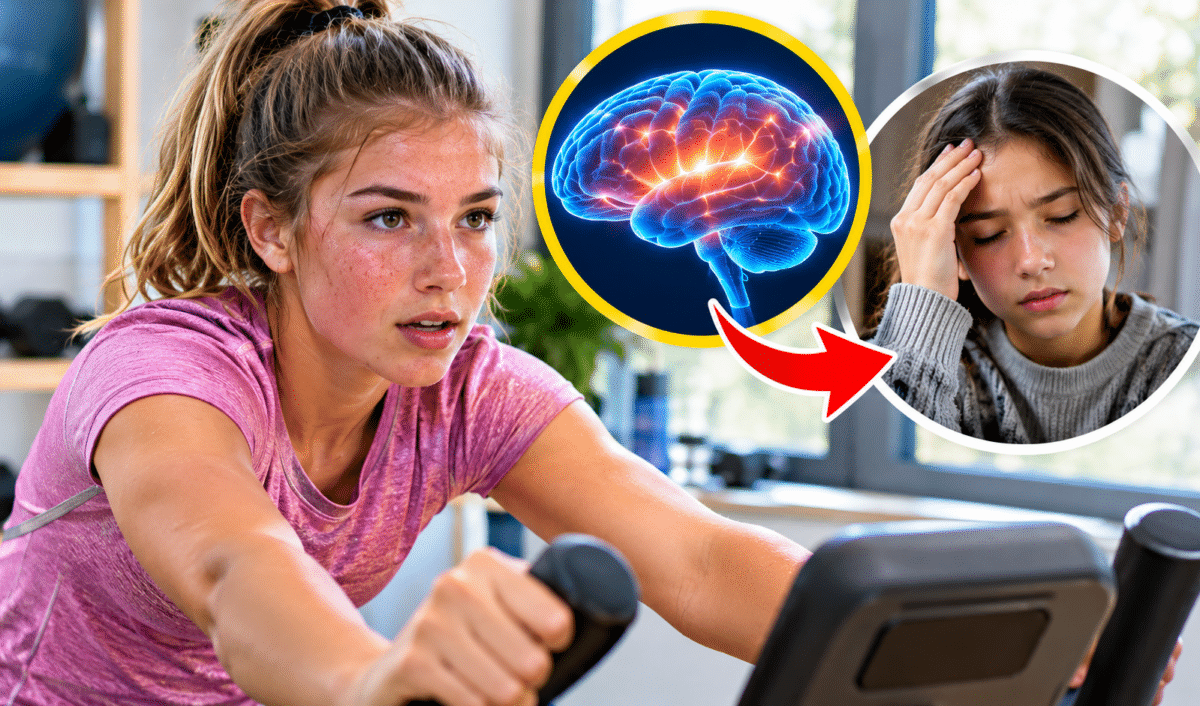
For years, the standard advice after a concussion was to sit in a dark room, skip screens and wait. Many parents still assume that is the safest approach. Now a growing body of trials points the other way: carefully controlled aerobic exercise, kept below the level that worsens symptoms, helps young brains recover faster. The newest study, published in JAMA Pediatrics in October 2026 and covered by HealthDay on November 18, shows that this kind of program can be coached remotely at home and still speed up recovery for teens whose symptoms linger.
How Common Concussions Are Among American Kids
Concussion is one of the most common injuries in youth sport. According to the CDC, about 7 out of 10 emergency department visits for sports- and recreation-related traumatic brain injuries, including concussions, are among children aged 17 and under. A CDC report covering 2010 to 2016 estimated that about 283,000 children sought emergency care for these injuries each year, with contact sports accounting for about 45% of visits.
Boys have about twice the rate of emergency visits for these injuries as girls, the CDC says, but girls have a higher chance of concussion in sports played under the same rules, such as soccer and basketball. Most young people recover within a few weeks, but a meaningful share struggle with headaches, dizziness, fatigue and trouble concentrating for much longer, which can disrupt school and sport.
From Dark Rooms to Treadmills: Why the Advice Changed
The shift began with research from the University at Buffalo Concussion Management Clinic, led by John Leddy. Its approach uses “subthreshold” or “sub-symptom threshold” exercise: physical activity at a heart rate just below the point where symptoms flare. The team measures each patient’s tolerance, often with the Buffalo Concussion Treadmill Test, then prescribes a target heart rate for daily exercise.
The 2023 consensus statement from the 6th International Conference on Concussion in Sport in Amsterdam, summarized for U.S. pediatricians in Pediatrics, reflects the change. It states that “rather than strict rest, early return to light physical activity and reduced screen time facilitate recovery.” The consensus also reported stronger evidence for the benefit of light-intensity activity within the first 48 hours after injury.
- First 24 to 48 hoursRelative rest; normal daily activities that do not significantly worsen symptoms.
- After 48 hoursLight activity such as walking; symptoms may rise only mildly.
- Prescribed zoneIn MSTEP, about 120 bpm at first, about 60% of max heart rate, rising toward 150 bpm.
- Stop signalIn MSTEP, stop if any symptom rises by 2 points; avoid contact sport until cleared.
Indicative illustration combining Amsterdam 2023 consensus principles and the MSTEP protocol. Heart-rate targets are individual and should be set by a clinician.
Inside the 2026 MSTEP Trial
The new randomized trial, published online October 19, 2026, in JAMA Pediatrics, tested whether the exercise approach could work without repeated clinic visits. Researchers recruited 210 participants aged 11 to 18 at outpatient facilities in Washington, Utah, Wisconsin and Oregon between March 2021 and October 2025. Their average age was 15.1, 58.1% were female, and on average they were 73.3 days past their injury, with some up to a year out.
Of the participants, 104 were assigned to aerobic exercise and 106 to daily stretching, and everyone continued their usual concussion care. The exercise group received activity trackers and a program that began at about 60% of maximum heart rate, typically around 120 beats per minute, starting with 10 minutes and progressing toward about 150 beats per minute over six weeks. Trained health coaches met with participants weekly by video, and as they progressed, some added sport-specific drills cleared by their concussion doctor.
Participant characteristics. Source: Chrisman et al., JAMA Pediatrics (October 2026), as reported by Medical Dialogues and Nature World News.
Bars for days and age are scaled to the study’s maximums of about 365 days and 18 years.
What the results showed
Symptoms and quality of life improved in both groups over time, but faster with exercise. Teens started at about 32 points on a symptom questionnaire; at three months, the aerobic group had improved about 3 points more than the stretching group and gained about 4 more points on quality of life. Modeling showed “noticeably quicker symptom recovery” with the exercise program. At six weeks and six months, differences were not statistically significant, and sleep, anxiety and depressive symptoms improved similarly in both groups. No trial-related adverse events were reported.
Points on study questionnaires. Source: Chrisman et al., JAMA Pediatrics (2026), as reported by Nature World News. Differences are aerobic group versus stretching at 3 months.
The benefit was clearest for youth enrolled within about 3 months of injury, an exploratory finding.
Chrisman told HealthDay, “This is the first study to study a virtually delivered exercise program for concussion,” adding that with over 200 kids it was the largest study of subthreshold exercise for concussion, doubling previous studies of about 100 individuals.
What Earlier Trials Found About Starting Early
The MSTEP trial focused on lingering symptoms. Earlier University at Buffalo trials tested exercise in the first days after injury. In the landmark 2019 JAMA Pediatrics trial, 103 adolescent athletes aged 13 to 18 were enrolled within 10 days of a sport-related concussion, on average about 5 days after injury. Those assigned to subthreshold aerobic exercise recovered in a median of 13 days, compared with 17 days for those assigned to placebo-like stretching.
A follow-up analysis compared those groups with 48 adolescents told to rest. The rest group took a median of 16 days, significantly longer than the exercise group. Delayed recovery, defined as 30 days or more, occurred in 4% of the exercise group, 14% of the stretching group and 13% of the rest group, though that difference was not statistically significant. A 2021 Buffalo trial in The Lancet Child and Adolescent Health found that exercise started within 10 days reduced the risk of persistent post-concussion symptoms by 48%.
Median days from injury to recovery. Sources: Leddy et al., JAMA Pediatrics (2019); follow-up comparison with a rest group (PMC6879855).
Delayed recovery means 30 days or more. Percentage bars scaled to 17 for comparison.
What We Know
- Subthreshold aerobic exercise sped recovery versus stretching in multiple trials.
- The 2026 trial showed benefits can be delivered remotely at home.
- Strict rest is no longer recommended; light activity within 48 hours helps.
- No trial-related adverse events were reported in MSTEP.
What Is Still Unclear
- Why MSTEP differences faded by 6 months, when both groups had improved.
- Whether the 3-month cutoff for benefit holds; that finding was exploratory.
- How much benefit comes from exercise itself versus trackers and coaching.
- Whether results apply to non-sport injuries such as falls and car crashes.
The 6-Step Return to Play, and Where Exercise Fits
Exercise as treatment is different from returning to sport. The CDC’s 6-step return-to-play progression, based on the international consensus guidelines, begins only after a young athlete is back to regular activities like school and has a healthcare provider’s approval. Each step typically takes a minimum of 24 hours, and an athlete should move on only if no new symptoms appear.
- 1Back to routineSchool and daily life; provider approval
- 2Light aerobicWalking or stationary bike
- 3Moderate activityIncreased heart rate, limited head movement
- 4Heavy, non-contactMore intense drills and training
- 5Full practiceContact practice if cleared
- 6CompetitionReturn to games
Based on CDC HEADS UP 6-Step Return to Play Progression. Each step typically takes at least 24 hours, so the full progression takes at least 6 days.
| Trial | Participants | When exercise started | Program | Main finding |
|---|---|---|---|---|
| JAMA Pediatrics 2019 | 103, ages 13 to 18 | Within 10 days, about day 5 | Individual heart-rate target, in clinic | 13 vs 17 median recovery days |
| Rest comparison analysis | 48 rest vs exercise groups | Within 10 days | Rest recommendation | Rest group took 16 days |
| Lancet Child Adolesc Health 2021 | Adolescent athletes | Within 10 days | Daily subthreshold aerobic exercise | 48% lower risk of persistent symptoms |
| JAMA Pediatrics 2026, MSTEP | 210, ages 11 to 18 | Average 73 days after injury | 6 weeks at home, trackers, weekly video coaching | Better symptoms and quality of life at 3 months |
| Amsterdam consensus 2023 | Expert guidance | First 24 to 48 hours | Light activity, reduced screen time | Strict rest not recommended |
Summary of selected studies and guidance. Designs differ; consult original sources for details.
A Worked Example: Timing a Teen’s Recovery
Consider a hypothetical 15-year-old soccer player who sustains a concussion on a Saturday and is evaluated by a clinician on day 4. The arithmetic below uses trial medians and the CDC progression to show a realistic timeline, not a promise.
From injury to game day, a sample timeline
- Relative rest, first 24 to 48 hoursDays 1 to 2
- Light activity begins, walking as toleratedFrom day 3
- Prescribed subthreshold exercise starts after evaluationDay 4 or 5
- Median symptom recovery with exercise, 2019 trialDay 13
- Minimum time for CDC 6-step progression at 24 hours each6 days
- Earliest realistic return to competitionAbout day 19 or later
Hypothetical example. 13 days median recovery plus at least 6 days for the return-to-play progression equals day 19 at the earliest. Many teens take longer; only a clinician can clear return to sport.
- Keeping a teen in a dark room for days; consensus guidance now advises against strict rest.
- Letting them “push through” symptoms; exercise should stay below the symptom threshold.
- Confusing treatment exercise with return to sport; contact play waits for clearance.
- Assuming it is too late after a month; MSTEP enrolled teens up to a year after injury.
- Expecting exercise to fix sleep or mood alone; those improved equally with stretching in MSTEP.
When to Call a Doctor Right Away
Exercise is a treatment for diagnosed concussion, not a substitute for evaluation. The ladder below is indicative, based on CDC HEADS UP guidance and common pediatric practice.
Any suspected concussion: remove from play and see a healthcare provider.
Ask about starting light activity and a personalized exercise plan.
Symptoms still affecting school or daily life: ask about a concussion specialist.
Worsening headache, repeated vomiting, seizures, slurred speech, weakness or unusual drowsiness: go to the emergency room.
Researchers believe concussion can disrupt the body’s automatic control of heart rate and blood flow to the brain, and that carefully dosed aerobic exercise may help retrain that system. The MSTEP authors note the mechanism was not directly tested in their trial.
Specialized concussion clinics are not available everywhere; as Chrisman told HealthDay, concussion care varies widely depending on where you are seen. A remotely coached program using trackers and video calls could extend evidence-based care to families who live far from a clinic, which was a key goal of the MSTEP design.
Frequently Asked Questions
Does exercise help concussion recovery in teens?
Yes, research shows carefully guided aerobic exercise below the symptom threshold speeds recovery. A 2019 trial found a median recovery of 13 days with exercise versus 17 with stretching, and a 2026 trial found faster improvement in lingering symptoms.
When can my child start exercising after a concussion?
Current consensus guidance supports light activity, such as walking, after the first 24 to 48 hours, as long as it does not more than mildly worsen symptoms. A clinician should guide more structured exercise.
What is subthreshold exercise for concussion?
It is aerobic exercise kept just below the heart rate at which concussion symptoms worsen. Clinicians often test tolerance on a treadmill or bike and prescribe a target heart rate for daily sessions.
Is rest still recommended after a concussion?
Only briefly. The 2023 Amsterdam consensus says that rather than strict rest, early return to light physical activity and reduced screen time help recovery.
How long does concussion recovery take in kids?
It varies. In the 2019 trial of adolescent athletes, median recovery was 13 to 17 days depending on treatment. Some have symptoms lasting a month or longer and should see a specialist.
What heart rate should a teen exercise at after a concussion?
It is individual. In the 2026 MSTEP trial, exercise started at about 60% of maximum heart rate, around 120 beats per minute, and progressed toward about 150 as tolerated. A clinician should set the target.
How many steps are in the return-to-play process?
The CDC outlines 6 steps, from returning to regular activities through light, moderate and heavy exercise to full practice and competition. Each step typically takes at least 24 hours.
Can exercise help if concussion symptoms last months?
The 2026 trial enrolled youth on average 73 days after injury and found benefits at 3 months, with the clearest effect in those enrolled within about 3 months of their injury.
The Short Version
Guided aerobic exercise, kept just below the level that worsens symptoms, helps young people recover from concussion faster than stretching or rest. A 2019 trial found a median of 13 versus 17 days to recovery, a 2021 trial found 48% lower risk of persistent symptoms, and the new 2026 MSTEP trial of 210 youth showed a remotely coached home program improved lingering symptoms and quality of life at 3 months. Strict rest is out. Light activity after 48 hours, a clinician-guided exercise plan, and the CDC’s 6-step return to play are in.

Omisha is a health writer passionate about turning complex medical research into clear, actionable content readers can trust. She covers everything from nutrition and mental wellness to chronic disease management, always grounding her work in credible science and real-world relevance. When she's not writing, she's usually reading up on the latest health studies or exploring new wellness trends to write about next.