What Tart Cherry Actually Does to Your Muscles, According to a New Biopsy Study and Two Decades of Trials
A 2026 study found tart cherry changed the proteins inside damaged muscle but did not speed strength recovery. Here is how that fits with earlier research on soreness, strength and inflammation.
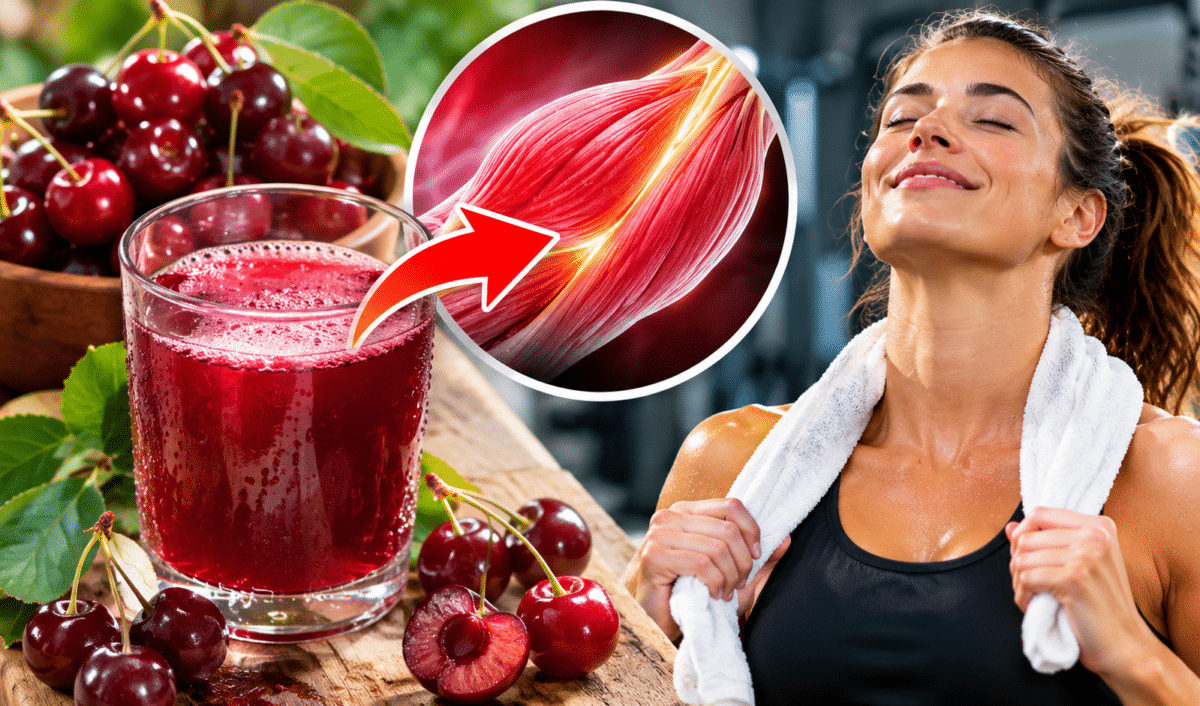
The day after leg day, the stairs feel steeper. Someone at the gym swears by a shot of tart cherry concentrate, and the bottles promise faster recovery. Is it real? The honest answer is more interesting than yes or no. Tart cherry clearly does something inside muscle, and several trials show it can ease soreness and help strength return. But a carefully controlled 2026 study that looked directly inside muscle tissue found molecular changes without faster functional recovery. What you get depends on what you are measuring, and on how hard you trained.
Why Athletes Started Drinking Tart Cherry in the First Place
Tart cherries, mostly the Montmorency variety grown in Michigan and other northern U.S. states, are rich in polyphenols such as anthocyanins, plant compounds with antioxidant and anti-inflammatory activity in lab studies. Hard or unfamiliar exercise, especially eccentric movements where muscles lengthen under load, causes small structural damage. The body responds with inflammation and repair, which is part of why muscles feel sore and weaker for 2 to 5 days.
The idea was simple: if polyphenols blunt excess inflammation and oxidative stress, recovery might come faster. The first human evidence arrived in 2006, when University of Vermont researchers led by Declan Connolly published a trial in the British Journal of Sports Medicine. Fourteen male college students drank 12 fluid ounces of a tart cherry juice blend or placebo twice a day for 8 days, with an arm-damaging exercise bout on day 4. Averaged over the 4 days afterward, strength loss was 22% with placebo but only 4% with cherry juice.
Inside the 2026 Study That Looked Directly at Muscle Tissue
The newest and most detailed look comes from a study published in Frontiers in Nutrition in 2026, led by researchers at the University of Exeter and the Quadram Institute in the U.K. and funded by PepsiCo. Thirty-four healthy young men took part in a double-blind, placebo-controlled crossover design. Each completed two of three conditions, separated by a two-week washout: placebo, low-dose tart cherry with 30 mL of concentrate, or high-dose tart cherry with 60 mL, each mixed into a 500 mL drink taken every morning for seven days.
- Days 1 to 7Pre-load500 mL drink daily with 0, 30 or 60 mL concentrate
- Day 8BaselineBlood draw and muscle biopsy before exercise
- Day 8DamageEccentric exercise to injure the muscle
- 24 h afterCheck 1Repeat blood, biopsy and strength tests
- 48 h afterCheck 2Final samples; 10-day total intervention
Using proteomics, a technique that profiles many proteins at once, the team found tart cherry changed the muscle’s protein makeup. Contractile and structural proteins increased and then fell by 48 hours after damage, and immune-related pathways involving macrophages, the cells that clear damaged tissue, shifted. The authors suggested tart cherry “may confer a pre-conditioning effect for skeletal muscle.”
The twist: no faster recovery of strength
Despite those molecular changes, the paper reported that “tart cherry supplementation did not improve muscle function recovery.” One intriguing finding was hippuric acid, a compound made when the body and gut microbes process polyphenols. Higher plasma levels were positively associated with knee extensor strength and with proteins in mitochondrial pathways. That is a correlation, not proof of cause, and the study included only men.
What We Know
- Tart cherry alters muscle protein profiles after damaging exercise.
- Pooled trials show a small reduction in soreness.
- Pooled trials show moderate help with strength and power recovery.
- Several studies show lower IL-6 and C-reactive protein after endurance events.
- Many studies use 30 mL concentrate or 8 to 12 oz juice, for 4 to 7 days before exercise.
What Is Still Unclear
- Why molecular changes in 2026 did not translate into faster recovery.
- Whether results apply equally to women and older adults; many trials use young men.
- Whether regular use could blunt long-term training adaptations.
- The ideal dose and form; protocols vary widely.
What 20 Years of Trials Add Up To
The best summary of the evidence remains a 2021 systematic review and meta-analysis in the International Journal of Sport Nutrition and Exercise Metabolism by Hill, Keane, Quinlan and Howatson. Pooling studies that measured soreness, strength, power and blood markers, it found a small beneficial effect on muscle soreness, with an effect size of 0.44, and a moderate effect on recovery of muscular strength, at 0.78. Muscular power also showed a moderate effect, at 0.53.
Absolute standardized effect sizes, pooled across trials. Source: Hill et al., Int J Sport Nutr Exerc Metab (2021). Rough guide: 0.2 small, 0.5 moderate, 0.8 large.
Soreness confidence interval ran from 0.02 to 0.87, meaning the true effect could be very small.
A March 2026 narrative review in Physical Activity and Nutrition reached a more cautious conclusion. Favorable signals were more frequent for soreness and perceived recovery, it found, while strength and power findings were “mixed and condition-dependent,” and blood markers were “heterogeneous and difficult to interpret in isolation.” The authors framed tart cherry as “a context-dependent adjunct during high recovery-pressure periods,” such as congested competition schedules, short turnarounds and travel.
Endurance events show the clearest inflammation signal
Some of the strongest blood-marker evidence comes from endurance sport. In a 2010 study of 20 recreational marathon runners in the Scandinavian Journal of Medicine and Science in Sports, runners took cherry juice for 5 days before, on race day and for 48 hours after. Isometric strength recovered significantly faster, total antioxidant status was about 10% higher, and inflammation markers IL-6 and C-reactive protein were lower than with placebo. A later study of the Vistula cherry variety in marathoners found average hs-CRP of 7.9 mg/L with cherry versus 12.5 mg/L with placebo during recovery, though soreness and function did not differ.
Cyclists showed a similar inflammation pattern
Cycling research points the same way. A study published in Nutrients examined Montmorency tart cherry concentrate across 3 days of simulated road cycle racing, with blood drawn before and after trials on days 5, 6 and 7 of supplementation. Responses for lipid hydroperoxides, a marker of oxidative stress, along with IL-6 and high-sensitivity C-reactive protein, were lower in the cherry group than with placebo. No differences appeared for several other markers, including creatine kinase, a common blood sign of muscle damage. That pattern, lower inflammation without consistent change in damage markers, recurs across the research and helps explain why the 2026 biopsy findings did not translate neatly into faster strength recovery.
Average hs-CRP during recovery, mg/L, and differences. Source: Northumbria University study of Vistula tart cherries following a marathon. Lower is less inflammation.
Despite lower inflammation, soreness and muscle function did not differ between groups.
Not Every Study Found a Benefit
For balance, several well-designed trials found nothing. A 2023 study in the Journal of Functional Morphology and Kinesiology concluded that a tart cherry supplement “did not attenuate losses” in peak torque, power, soreness or muscle activation after damaging exercise. A 2019 Nutrients study found no effect of tart cherry or pomegranate juice in men not used to resistance training. A Lindenwood University trial of 40 active adults found 10 days of powdered tart cherry made no difference to recovery, soreness or performance after repeated sprints.
| Study | Participants | Form and timing | Strength | Soreness or inflammation |
|---|---|---|---|---|
| Connolly, BJSM 2006 | 14 men | 12 oz juice twice daily, 8 days | Faster recovery | Less pain, same tenderness |
| Howatson, SJMSS 2010 | 20 marathon runners | Juice 5 days before to 48 h after | Faster recovery | Lower IL-6 and CRP |
| Nutrients 2019 | Untrained men | Juice around resistance exercise | No effect | No effect |
| JFMK 2023 | Healthy adults | Supplement around eccentric exercise | No effect | No effect |
| Lindenwood trial | 40 active adults | Powder for 10 days | No effect | No effect |
| Frontiers in Nutrition 2026 | 34 men | 30 or 60 mL concentrate, 7 days | No faster recovery | Muscle proteins changed |
Summary of selected trials based on published abstracts and reports. Designs, doses and exercise types differ.
Reviews point to training status, the type of exercise, the dose and form of cherry, and when outcomes are measured. Benefits appear more often after severe, unfamiliar or endurance efforts than after modest sessions, which may explain why trained athletes in heavy competition blocks report more value than casual gym-goers.
How People Use It: Dose, Timing and a Worked Example
Trials have generally used one of three forms: tart cherry juice, often 8 to 12 ounces once or twice a day; concentrate, typically around 30 mL mixed with water; or capsules and powders. Most protocols start several days before the hard effort and continue for 2 to 4 days after. The 2026 study used 30 or 60 mL of concentrate daily for 7 days beforehand.
A hypothetical 10-day race-week protocol
- Days before the race, based on trial designs7 days
- Race day plus recovery days3 days
- Servings at 30 mL concentrate twice daily20 servings
- Total concentrate needed600 mL
- Approximate U.S. fluid ouncesAbout 20 fl oz
- Equivalent juice at 8 oz twice daily160 fl oz
Hypothetical example based on common trial protocols, not a medical recommendation. 10 days times 2 servings equals 20; 20 times 30 mL equals 600 mL; 600 mL divided by 29.6 equals about 20 fl oz. 10 days times 2 times 8 oz equals 160 fl oz.
- Expecting it to cancel soreness; the pooled effect on soreness is small.
- Starting the morning of the event; most positive trials pre-loaded for 4 to 7 days.
- Ignoring sugar and calories in juice; check the label, especially if managing blood sugar.
- Assuming more is better; the 2026 study found no recovery advantage even at 60 mL daily.
- Using it every day year-round without a reason; researchers frame it for high-demand periods.
Amount per day as used in published studies cited in this article. Concentrate and juice are not equivalent by volume.
500 mL is about 17 fl oz; 24 fl oz is about 710 mL.
Who Might Benefit, and Who Should Check First
The evidence points to tart cherry as most useful when recovery time is short and demands are high. The ladder below is indicative, based on how researchers have framed its use, not an official guideline.
Marathons, tournaments or back-to-back competition days with little recovery time.
Unaccustomed hard training blocks, such as a new eccentric-heavy program, for 1 to 2 weeks.
Routine moderate workouts; sleep, protein and rest deliver more.
Diabetes, kidney disease or regular medications: check with a clinician or pharmacist first.
Some researchers caution that antioxidant supplementation may interfere with how muscles adapt to resistance training, because some inflammation and oxidative stress act as signals for adaptation. Evidence for tart cherry specifically is limited, which is one reason experts suggest using it strategically rather than every day.
Frequently Asked Questions
Does tart cherry juice help muscle recovery?
Modestly, in some studies. A 2021 meta-analysis found a small reduction in soreness and moderate help with strength recovery, but several trials, including a 2026 biopsy study, found no faster recovery of muscle function.
How much tart cherry juice should I drink for recovery?
Studies commonly use 8 to 12 ounces of juice once or twice daily, or about 30 mL of concentrate mixed with water, starting several days before hard exercise. A 2026 study tested 30 and 60 mL of concentrate daily for 7 days.
When should I take tart cherry, before or after a workout?
Most positive trials started 4 to 7 days before the hard effort and continued for 2 to 4 days afterward. A single dose right after exercise has less research support.
Does tart cherry reduce inflammation?
Several studies found lower IL-6 and C-reactive protein after marathons and cycling with tart cherry. Results for other markers, such as creatine kinase, are inconsistent.
Does tart cherry help build muscle?
There is no good human evidence that tart cherry builds muscle. A 2026 study found changes in muscle proteins after damage, but not faster recovery. Some researchers caution that antioxidants may blunt training adaptations.
Is tart cherry concentrate better than juice?
Both have been used successfully in studies. Concentrate is smaller in volume, while juice provides more fluid. Compare sugar and calorie content on labels.
Are there side effects of tart cherry juice?
Tart cherry is a food and generally well tolerated, but juice contains natural sugar and some people experience digestive upset. People with diabetes or on medications should talk to a clinician.
Does tart cherry work for women?
Many trials, including the 2026 biopsy study, enrolled only or mostly men. Some studies included women, but researchers note more data are needed.
The Short Version
Tart cherry does something real inside muscle: a 2026 biopsy study found it changed contractile, structural and immune-related proteins after damaging exercise. But in that study, it did not speed recovery of muscle function. Across two decades of trials, the pooled picture is a small reduction in soreness, moderate help with strength recovery and lower inflammation after endurance events, with many null results. Treat it as an optional tool for marathons, tournaments and heavy training blocks, started several days ahead, not as a daily essential.

Omisha is a health writer passionate about turning complex medical research into clear, actionable content readers can trust. She covers everything from nutrition and mental wellness to chronic disease management, always grounding her work in credible science and real-world relevance. When she's not writing, she's usually reading up on the latest health studies or exploring new wellness trends to write about next.