Health Cancer Care and Survivorship U.S. 2026
Is Exercise Now a First-Line Cancer Treatment? What a Landmark Trial and New Guidelines Show — and Where the Evidence Stops
A structured exercise program cut colon cancer recurrence by 28% and deaths by 37% in a randomized trial, pushing physical activity from wellness advice toward standard cancer care. Here is what the data supports, what it does not, and how much movement experts recommend.
By The Health DeskFact-checked against NEJM trial reports, ASCO and ACSM guidelines and American Cancer Society dataUpdated November 15, 2026Scope U.S. adults with or at risk of cancer
For decades, a cancer patient who asked “What else can I do?” usually heard some version of “Rest, eat well and let the treatment work.” Exercise was something to try once you felt better, a nice extra rather than part of the plan. That advice is changing quickly, and the reason is not a new drug. It is a 30-minute brisk walk, repeated through the week.
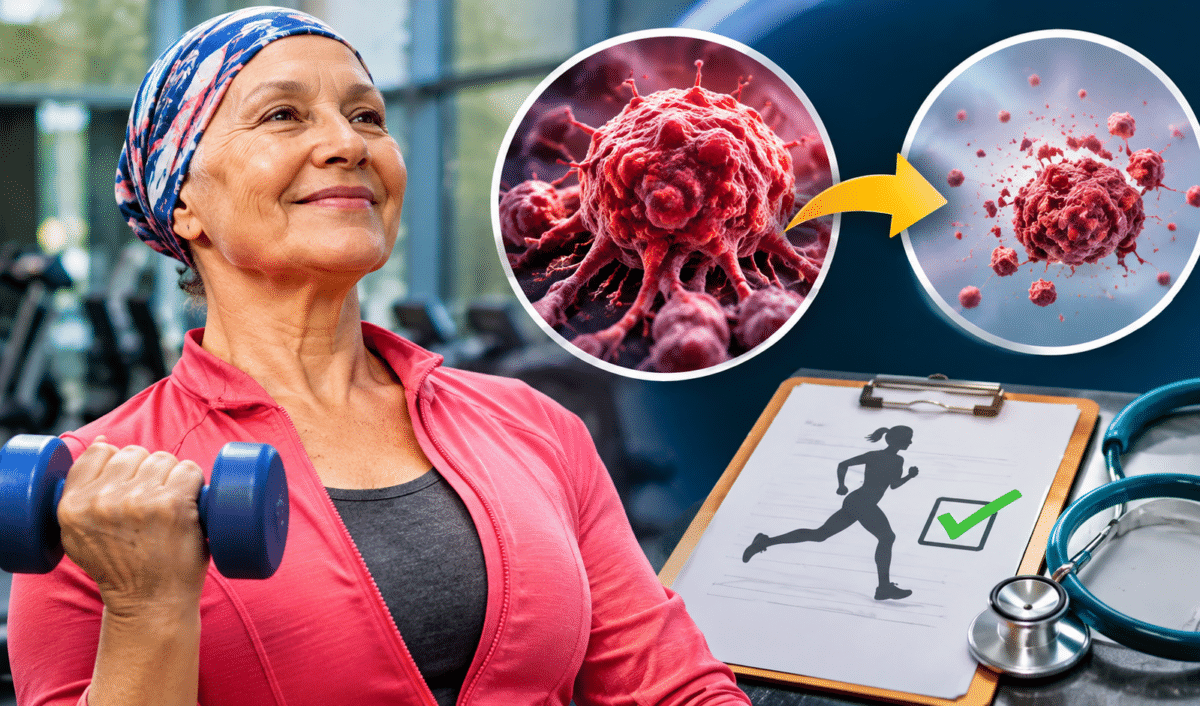
Oncologists increasingly describe exercise as a therapy in its own right, with a dose, a schedule and measurable results. The phrase “first-line” is being used loosely in headlines, and it needs care: exercise does not replace surgery, chemotherapy, radiation or immunotherapy. But the evidence that it belongs alongside them, from diagnosis through survivorship, is now strong enough that major cancer organizations recommend it. Here is how that shift happened.
What We Know
- A randomized trial showed exercise improved survival after colon cancer treatment.
- Exercise during treatment reduces fatigue and preserves fitness and strength.
- Higher activity is linked to lower risk of 13 cancer types in a large pooled study.
- ASCO guidance tells oncologists to recommend exercise during curative treatment.
What Is Still Unclear
- Whether survival benefits seen in colon cancer apply to other cancers.
- Whether exercise during treatment improves survival, not just side effects.
- The exact dose needed to lower risk of death for each cancer type.
- How to make supervised exercise programs available and covered by insurance.
The Trial That Changed the Conversation
The turning point came in June 2025, when results from the CHALLENGE trial were presented at the American Society of Clinical Oncology’s annual meeting and published in The New England Journal of Medicine. Researchers enrolled 889 patients who had completed surgery and chemotherapy for stage 3 or high-risk stage 2 colon cancer. About 90% had stage 3 disease, according to a CancerNetwork review of the trial.
Patients were randomly assigned to a structured exercise program or to health education materials, which the University of Sydney release described as the current standard of care. The exercise program lasted three years and included regular meetings with a fitness coach, according to Associated Press reporting summarized by HealthDay. Participants were not already meeting the recommended 150 minutes of moderate activity a week when they joined.
CHALLENGE Trial: Exercise Program Versus Health Education
Exercise programHealth education
The hazard ratio for recurrence, new primary cancer or death was 0.72, a 28% reduction, with a median follow-up of 7.9 years, according to CancerNetwork. Overall survival improved by 37%. “Now we can say definitively exercise causes improvements in survival,” study co-author Kerry Courneya of the University of Alberta told the Associated Press, as reported by HealthDay. Dr. Jeffrey Meyerhardt of Dana-Farber Cancer Institute said it was the first randomized controlled trial to show fewer recurrences and better survival with exercise.
Why a Randomized Trial Matters So Much
Before CHALLENGE, nearly all evidence that exercise helped cancer survival came from observational studies, which compare active and inactive people. Those studies cannot rule out that healthier people simply exercise more. A randomized trial assigns the exercise by chance, so differences in outcome can be attributed to the program itself. That is the same standard used to approve cancer drugs, which is why oncologists describe the result as practice-changing rather than merely encouraging.
How Exercise Moved From Advice to Guideline
The trial did not arrive out of nowhere. In 2019, an American College of Sports Medicine roundtable of 40 experts reviewed the research and concluded that physical activity is linked to lower risk of seven common cancers: colon, breast, kidney, endometrial, bladder, stomach and esophageal adenocarcinoma, according to the National Institutes of Health director’s blog. The panel also found exercise before and after diagnosis was linked to better survival in breast, colorectal and prostate cancers.
- 2010First ACSM expert panel on exercise and cancer
- 20161.44 million-person study links activity to 13 cancers
- 2019ACSM roundtable of 40 experts sets survivor dosing
- 2022ASCO guideline backs exercise during treatment
- 2025CHALLENGE trial shows 37% lower risk of death
- 2026ACS projects 2.1 million new U.S. cases
In May 2022, the American Society of Clinical Oncology published its first guideline focused on people actively receiving treatment. It states that oncology providers should recommend regular aerobic and resistance exercise during active treatment with curative intent, and may recommend exercise before surgery for lung cancer. Preoperative exercise in lung cancer patients reduced hospital stay and complications, the guideline found.
The ASCO panel was careful about limits. Evidence was not sufficient to recommend exercise during treatment specifically to improve recurrence, survival or treatment completion, the guideline notes. Its case rests on how people feel and function: exercise reduces fatigue, preserves cardiorespiratory fitness, physical functioning and strength, and in some groups improves quality of life and reduces anxiety and depression, with low risk of adverse events. More than 100 clinical trials have examined exercise during treatment, lead author Jennifer Ligibel told Healio.
The scale explains the urgency. The American Cancer Society projects 2,114,850 new cancer cases and 626,140 cancer deaths in the United States in 2026, about 5,800 diagnoses a day. Five-year relative survival across all cancers has reached 70%, which means a growing population of survivors living with the long-term effects of treatment, from fatigue to heart strain to muscle loss. Exercise addresses many of those at once.
The Prevention Side: Lower Risk Across 13 Cancers
Exercise does not only matter after a diagnosis. A 2016 study in JAMA Internal Medicine, led by Steven Moore of the National Cancer Institute, pooled data from 12 U.S. and European studies with 1.44 million people. Compared with the least active, the most active had lower risk of 13 of 26 cancer types studied and a 7% lower risk of cancer overall, as reported by Pharmacy Times.
Lower Cancer Risk With High Versus Low Leisure-Time Activity
Most of these links held regardless of body weight or smoking history, the researchers reported. There were two exceptions in the other direction: higher activity was associated with a 5% higher risk of prostate cancer, which researchers thought might reflect more screening among active men, and higher melanoma risk, likely from more sun exposure. Because the activity data were self-reported and observational, the study shows association, not proof that exercise prevents each cancer.
Why Moving Muscles May Affect Tumors
Scientists do not yet know exactly how exercise fights cancer, and several mechanisms likely work together. Exercise improves how the body handles insulin, which matters because cancer cells may use insulin to grow and divide faster, Scientific American reported. During exercise, immune cells called natural killer cells and T cells increase significantly in number. Muscles also release signaling proteins called myokines that researchers are studying for possible anti-tumor effects.
How Much Exercise Do Cancer Patients Need?
The 2019 ACSM roundtable translated the evidence into specific prescriptions. For cancer survivors, moderate aerobic and resistance exercise at least three times a week, for about 30 minutes per session, for at least 8 to 12 weeks may consistently improve common treatment-related symptoms and side effects, according to the roundtable’s executive summary. The dose depends on the problem being targeted.
Minimum Weekly Aerobic Exercise by Symptom Target
For cancer prevention, ACSM points to the federal Physical Activity Guidelines: 150 to 300 minutes a week of moderate activity or 75 to 150 minutes of vigorous activity. For survival, the exact dose needed to reduce cancer-specific or overall death is not yet known, though more activity appears to bring greater benefit, according to the same guidance.
| Goal | Aerobic sessions | Minutes per session | Weekly minutes | Evidence level |
|---|---|---|---|---|
| Reduce fatigue | 3 a week | 30, moderate | 90 | Strong |
| Ease anxiety | 3 a week | 30 to 60, moderate to vigorous | 90 to 180 | Strong |
| Ease depression | 3 a week | 30 to 60, moderate to vigorous | 90 to 180 | Strong |
| Quality of life | 2 to 3 a week | 30 to 60, moderate to vigorous | 60 to 180 | Strong |
| Physical function | 3 a week | 30 to 60, moderate to vigorous | 90 to 180 | Strong |
| Better sleep | 3 to 4 a week | 30 to 40, moderate | 90 to 160 | Moderate |
| Lymphedema and bone health | Aerobic alone not shown | Not applicable | Not applicable | Strong (lymphedema), moderate (bone); see strength options |
Doses are drawn from ACSM’s 2019 exercise guidelines for cancer survivors; weekly minutes are calculated by this desk. ACSM also lists resistance and combined aerobic plus strength options, typically two strength sessions a week of 2 sets of 8 to 15 repetitions. Your care team may adjust any dose for your diagnosis, treatment and fitness. People with or at risk of lymphedema should take extra care with strength training, such as wearing a compression sleeve, according to the Society of Behavioral Medicine.
Getting Started Safely During or After Treatment
The CHALLENGE results came from a supported program with coaching, not a printed handout. That detail matters. People who start on their own often stop when fatigue or setbacks hit. Asking for a referral to an exercise professional who understands cancer can make the difference between a plan that lasts three weeks and one that lasts three years.
- Ask your oncologist firstConfirm any limits tied to surgery, bone involvement, blood counts or heart effects.
- Request a referralPhysical therapists, exercise physiologists and cancer rehab programs can tailor a plan.
- Start with 10 minutesShort walks count; build toward 30 minutes, 3 times a week.
- Add strength twice a weekTwo sets of 8 to 15 reps for major muscle groups.
- Adjust on hard daysLower intensity during treatment cycles rather than stopping entirely.
- Track and reportNote fatigue, mood and sleep; share changes with your care team.
When to Pause or Check In
Stop and contact your care team if you have chest pain, unusual shortness of breath, fainting, new bone pain, fever or signs of infection. People with advanced cancer can still benefit, but the ASCO guideline notes some groups need to work with exercise professionals rather than exercising alone. Exercise should feel challenging but manageable; the talk test, being able to speak in short sentences, is a simple guide.
- 30 minutes, 3 times a weekModerate aerobic exercise
- 2 strength days2 sets of 8 to 15 reps
- 8 to 12 weeksMinimum for symptom benefits
- 150 to 300 minutesWeekly target for prevention
- Before lung surgeryPreoperative exercise may help
- Red flags mean stopChest pain, fever, new bone pain
Frequently Asked Questions
Is exercise a treatment for cancer?
It is a recommended part of care, not a replacement for standard treatment. In the CHALLENGE trial, exercise after surgery and chemotherapy cut colon cancer recurrence risk by 28% and death risk by 37%.
Is it safe to exercise during chemotherapy?
For most people, yes. ASCO’s 2022 guideline recommends aerobic and resistance exercise during curative treatment and found a low risk of adverse events. Check with your oncologist about personal limits.
How much exercise should cancer survivors do?
ACSM recommends moderate aerobic and resistance exercise at least 3 times a week for about 30 minutes per session, for at least 8 to 12 weeks, to improve common side effects.
Can exercise prevent cancer?
Higher activity is linked to lower risk of 13 cancer types, including a 16% lower colon cancer risk and 10% lower breast cancer risk in a 1.44 million-person study, though that research was observational.
Does exercise help with cancer fatigue?
Yes. Strong evidence shows 30 minutes of moderate aerobic exercise 3 times a week, alone or with strength training, reduces cancer-related fatigue.
What kind of exercise was used in the colon cancer trial?
A structured three-year program with regular coaching that helped participants increase activity, commonly described as adding about 2.5 hours of exercise a week.
Does exercise improve survival for all cancers?
Not proven. Randomized evidence exists for colon cancer. Observational studies link activity to better survival in breast, colorectal and prostate cancers.
How many new cancer cases are expected in the U.S. in 2026?
The American Cancer Society projects about 2,114,850 new cases and 626,140 deaths in 2026.
The Short Version
Exercise has moved from optional advice to recommended cancer care. A randomized trial of 889 colon cancer survivors found a three-year exercise program lowered recurrence risk by 28% and death risk by 37%. ASCO recommends aerobic and strength exercise during curative treatment to reduce fatigue and preserve fitness. ACSM suggests about 30 minutes three times a week plus two strength sessions. Exercise is not a replacement for surgery, chemotherapy or radiation, and survival benefits beyond colon cancer still need trials.

Omisha is a health writer passionate about turning complex medical research into clear, actionable content readers can trust. She covers everything from nutrition and mental wellness to chronic disease management, always grounding her work in credible science and real-world relevance. When she's not writing, she's usually reading up on the latest health studies or exploring new wellness trends to write about next.