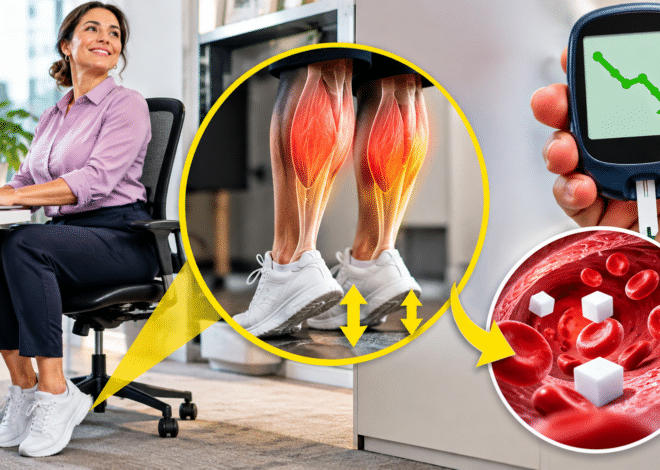
For Better Mental Health, How Often You Exercise May Matter More Than How Hard You Push
A study of 10,460 students published in PLOS One found that exercise frequency was the most consistent predictor of lower depression and anxiety risk one year later, ahead of intensity and session length.
You have 20 minutes before work. Is that even worth changing into sneakers for, or should you wait for the weekend and do a proper hour? For your mood, new research suggests the short, regular session may be the smarter bet. A large Norwegian study published in PLOS One, and widely covered this month, found that students who exercised more often were less likely to meet diagnostic criteria for depression or anxiety a year later, and that how often they moved mattered more consistently than how hard or how long.
Why This Question Matters to Millions of Americans
Anxiety and depression are common in the United States. A National Center for Health Statistics report found that in 2022, 18.2% of adults had symptoms of anxiety and 21.4% had symptoms of depression in the previous two weeks, with the highest rates among adults aged 18 to 29. The National Institute of Mental Health estimates that 23.1% of U.S. adults had any mental illness in 2022, rising to 36.2% among those aged 18 to 25.
Exercise is one of the most accessible tools people can use alongside professional care, but questions about the right dose often stop people before they start. If an hour feels impossible, many skip it entirely. That is why the question of frequency versus intensity is more than academic: it shapes whether people move at all.
Inside the Study: 59,544 Responses, One Year, One Clear Pattern
The research, led by Michael Grasdalsmoen of Western Norway University of Applied Sciences, used Norway’s Students’ Health and Wellbeing Study, known as SHoT. According to Earth.com’s report on the paper, 169,572 students were invited in 2022 and 59,544 responded. Researchers analyzed exercise answers from 53,362 students aged 18 to 35, and about a year later 10,460 of them completed a diagnostic questionnaire built for the World Health Organization’s mental health surveys.
- 2022169,572 students invited to SHoT; 59,544 respond and report exercise habits.
- About 1 year later10,460 complete a WHO-based diagnostic questionnaire.
- August 19, 2026Results published in PLOS One by Grasdalsmoen and colleagues.
- November 2026Findings widely reported, including by ScienceDaily on November 19.
The pattern was striking in raw numbers. Among women who never or seldom exercised, 59.9% met criteria for depression or generalized anxiety at follow-up, compared with 41.6% of women who exercised daily. For men the figures were 45.2% and 23.1%. These raw gaps shrank once researchers accounted for age, family background, living situation, children and baseline distress, but they did not disappear.
Percent meeting diagnostic criteria about one year later, unadjusted. Source: Grasdalsmoen et al., PLOS One (2026), as reported by Earth.com. Norwegian students aged 18 to 35.
About 8% of women and 10% of men reported never or seldom exercising. Risk rose at each step down in frequency.
Frequency, Intensity, Duration: Which Lever Moved the Needle
The researchers asked about four things: how often students exercised, how hard, how long each session lasted and total weekly hours. Frequency showed a link in both women and men. Intensity and session length behaved differently by sex. ScienceDaily summarized the authors’ conclusion that “students who engage in regular physical exercise are at lower risk of developing common mental disorders.”
Percent higher risk versus the most active comparison group, after adjustment. Source: PLOS One (2026), as reported by Earth.com. Comparison groups: daily exercisers, exercise close to exhaustion, sessions over 1 hour, or meeting the WHO guideline.
Session length showed no consistent pattern in women; intensity showed no reliable link in men after adjustment.
| Exercise measure | Women | Men | What it suggests |
|---|---|---|---|
| Frequency | Seldom: 15% higher risk | Seldom: 33% higher risk | Most consistent factor in both sexes |
| Intensity | Easy only: 31% higher risk | No reliable link | Some effort may matter for women |
| Session length | No consistent pattern | Under 15 min: 67% higher risk | Very short sessions linked to risk in men |
| WHO 150-minute guideline | Missing it: 10% higher risk | Missing it: 17% higher risk | Supports the existing target |
| Total weekly hours | Lowest risk at 5 to 6 hours | Risk kept falling to top of range | Benefits level off near 10 hours |
Adjusted findings from Grasdalsmoen et al., PLOS One (2026), as reported by Earth.com and ScienceDaily. Observational; not proof of cause.
The surprise at the top end
More was not always better. Risk dropped steeply from no exercise to a few hours a week and leveled off around 10 hours. Women had their lowest risk at roughly 5 to 6 hours a week, and risk edged up above that. Grasdalsmoen told Earth.com that in separate work, “among women at the very highest levels we observed indications of poorer mental health,” while stressing that those are different studies and cannot show that heavy training causes harm. His summary: “Our findings suggest that regular engagement may matter more than extreme intensity or very high exercise volumes.”
How the Finding Fits With Earlier U.S. Research
The Norwegian results echo two large studies. In 2018, a Lancet Psychiatry analysis of 1.2 million U.S. adults from the CDC’s Behavioral Risk Factor Surveillance System found that people who exercised reported 1.49 fewer days of poor mental health a month, a 43.2% reduction compared with matched non-exercisers. The biggest associations came with sessions of about 45 minutes, 3 to 5 times a week. Co-author Adam Chekroud noted that exercising more than 23 times a month, or in sessions over 90 minutes, was associated with worse mental health.
A 2022 meta-analysis in JAMA Psychiatry pooled 15 studies with 191,130 participants. Adults who got half the recommended activity, equivalent to about 75 minutes of brisk walking a week, had an 18% lower risk of depression than inactive adults. Those meeting the full 2.5 hours a week had a 25% lower risk. The authors estimated that 11.5% of depression cases could have been prevented if less active adults had met the recommendation.
Bigger than many factors people focus on
The 2018 U.S. analysis put the exercise association in perspective. The 43.2% reduction in poor mental health days was larger than the gap linked to several social and demographic factors: people with a college education had a 17.8% reduction compared with those with no education, and people with a normal body mass index had a 4% reduction compared with those with obesity. Among people previously diagnosed with depression, those who exercised reported 7.1 poor mental health days a month versus 10.9 for those who did not, a 34.5% difference. None of this proves exercise is the cause, but it shows why researchers keep returning to it.
Percent lower risk or burden versus no exercise. Sources: Chekroud et al., Lancet Psychiatry (2018), 1.2 million U.S. adults; Pearce et al., JAMA Psychiatry (2022), 191,130 participants. Different measures; not directly comparable.
What We Know
- Exercise frequency was the most consistent predictor in a 10,460-student study.
- Risk fell with more weekly exercise up to about 10 hours.
- Half the recommended activity is linked to 18% lower depression risk.
- Sessions of about 45 minutes, 3 to 5 times weekly, showed the largest U.S. association.
What Is Still Unclear
- Whether exercise causes the lower risk; depression may also reduce exercise.
- Why intensity and session length differed between women and men.
- Whether findings in Norwegian students apply to older U.S. adults.
- Which types of activity work best; the study did not ask about type.
A Worked Example: The Same 150 Minutes, Split Three Ways
Consider a hypothetical adult who can find 150 minutes a week, the amount the WHO and U.S. guidelines recommend. The arithmetic shows how the same total time can deliver very different frequency.
Three ways to spend 150 minutes
- Weekend warrior: 1 session of 150 minutes1 active day
- Every-other-day: 3 sessions of 50 minutes3 active days
- Daily habit: 5 sessions of 30 minutes5 active days
- Daily habit stretched to 7 days of about 21 minutes7 active days
- U.S. study sweet spot: 45 minutes, 3 to 5 times135 to 225 minutes
- Frequency gain from weekend to daily habit5 times as many active days
Hypothetical example. 150 divided by 30 equals 5 sessions; 150 divided by 7 equals 21.4 minutes. 45 times 3 equals 135 and 45 times 5 equals 225. Frequency-based reasoning reflects the PLOS One findings; individual results vary.
A sample week built around frequency
The plan below is indicative, designed to hit about 185 minutes across 6 active days with one lighter day. Any activity that raises your heart rate counts, from brisk walking to cycling or dancing.
- Mon30min brisk walk
- Tue20min bike ride
- Wed30min walk or jog
- Thu10min stretch or rest
- Fri30min home workout
- Sat45min team sport or hike
- Sun20min easy walk
Indicative plan totaling 185 minutes. Adjust for your health and fitness level.
- Skipping exercise because there is only 20 minutes; regular short sessions still count toward frequency.
- Assuming harder is always better; intensity showed no reliable link for men in the Norwegian study.
- Believing more volume is always better; benefits leveled off near 10 hours a week.
- Treating exercise as a substitute for treatment; it is a complement to professional care.
- Reading the study as proof of cause; it is observational, and depression can also reduce activity.
When Exercise Is Not Enough
Exercise can support mental health, but it is not a replacement for professional help. The ladder below is indicative, based on common clinical guidance, to help decide when to reach out.
Low mood or worry that lifts with rest, movement and connection: keep up regular activity.
Persistent sadness, loss of interest or constant worry: talk to a doctor or mental health professional.
Symptoms interfering with work, school or relationships: seek an evaluation.
Thoughts of self-harm or suicide: call or text 988, the Suicide and Crisis Lifeline.
Exercise was self-reported, depression and anxiety were not measured with the diagnostic tool at baseline, medication and therapy were not accounted for, and only one year of follow-up was analyzed. The researchers say the results do not prove that exercise itself prevented depression or anxiety.
The study did not test mechanisms, and Grasdalsmoen said, “We cannot determine from this study why these differences occur.” Regular activity creates more frequent breaks from stress, more routine and often more social contact, which are plausible reasons researchers continue to explore.
Frequently Asked Questions
Is it better to exercise more often or longer for mental health?
A 2026 PLOS One study of 10,460 Norwegian students found exercise frequency was a more consistent predictor of lower depression and anxiety risk than intensity or session length. Regular, repeatable activity appears to matter most.
How many days a week should I exercise for mental health?
A large U.S. study of 1.2 million adults found the biggest associations with exercising 3 to 5 times a week for about 45 minutes. The Norwegian study found risk rose at each step down in frequency, with daily exercisers at lowest risk.
Does a 20-minute workout help depression?
Short sessions count toward weekly activity and frequency. A JAMA Psychiatry meta-analysis found even half the recommended activity was linked to 18% lower depression risk. Very short sessions under 15 minutes were linked to higher risk in men in the Norwegian study.
Can too much exercise be bad for mental health?
Benefits appear to level off. In the Norwegian study, women had the lowest risk at about 5 to 6 hours a week, and a 2018 U.S. study linked sessions over 90 minutes or more than 23 sessions a month with worse mental health.
Does exercise intensity matter for anxiety?
It may differ by sex. In the Norwegian study, women who exercised only at an easy level had 31% higher risk than those exercising close to exhaustion, but intensity showed no reliable link in men after adjustment.
How much exercise do adults need each week?
The WHO and U.S. guidelines recommend at least 150 minutes of moderate-intensity or 75 minutes of vigorous activity a week, plus muscle-strengthening on 2 or more days. The Norwegian findings support the 150-minute target.
Can exercise replace therapy or medication?
No. Exercise can support mental health alongside professional care, but people with persistent symptoms should talk to a doctor or mental health professional. In a crisis, call or text 988.
What type of exercise is best for mental health?
The Norwegian study did not ask about type. A U.S. analysis found team sports, cycling and aerobic or gym activities had the largest associations, but every type of exercise studied was linked to lower mental health burden.
The Short Version
A 2026 PLOS One study of 10,460 Norwegian students found that how often people exercise was the most consistent predictor of lower depression and anxiety risk a year later, ahead of intensity and duration. Seldom exercising was linked to 15% higher risk in women and 33% in men after adjustment, and benefits leveled off near 10 hours a week. U.S. research points the same way: regular, moderate activity, even half the recommended dose, is linked to better mental health. Exercise often, keep it sustainable, and seek professional help when symptoms persist.

Omisha is a health writer passionate about turning complex medical research into clear, actionable content readers can trust. She covers everything from nutrition and mental wellness to chronic disease management, always grounding her work in credible science and real-world relevance. When she's not writing, she's usually reading up on the latest health studies or exploring new wellness trends to write about next.