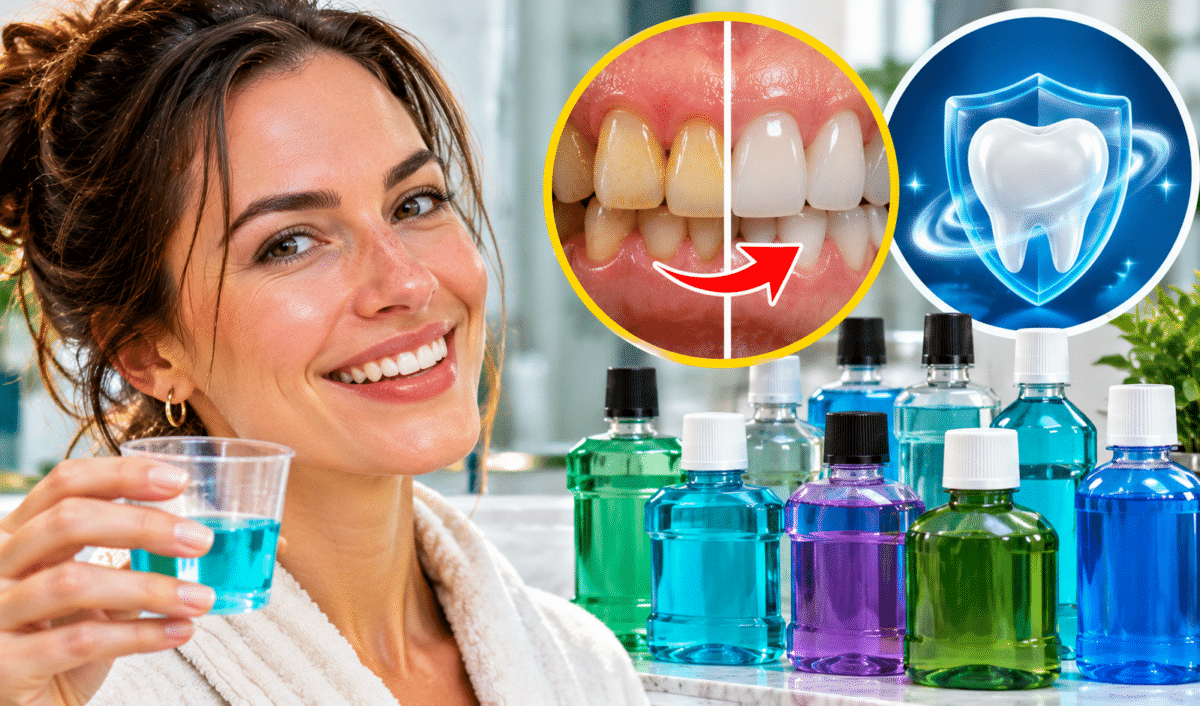
The 9 Best Mouthwashes, According to Dentists, and the One Question to Ask Before You Buy
Dentists choose a rinse by what it treats: gums, cavities, dry mouth, breath or stains. Here are nine strong picks, matched to each job, with the clinical data behind them.
The mouthwash aisle is a wall of blue, green and pink bottles, most promising “fresh breath” and “healthier gums.” Dentists look past the color and flavor to one line on the back: the Drug Facts panel. A rinse with an active ingredient such as fluoride, cetylpyridinium chloride or essential oils is designed to treat something. A rinse without one mostly masks odor for a while. Once you know which problem you are trying to solve, choosing gets much simpler.
Why Your Gums, Not Your Breath, Are the Bigger Story
Gum disease is far more common than most Americans realize. The CDC estimates that 42% of dentate U.S. adults aged 30 and older had periodontitis in 2009 to 2014, with 7.8% having severe periodontitis. The agency also reports that about 60% of adults 65 and older had some level of the disease, and that about 1 in 2 men and 1 in 3 women 30 and older were affected.
Tooth decay is just as widespread. A National Institutes of Health monograph notes that at least 9 out of 10 working-age adults have had decay in their permanent teeth, and that untreated decay cost about $45.9 billion in lost U.S. productivity in 2015. Gingivitis, the earliest stage of gum disease, is reversible with good oral hygiene, the CDC says, which is exactly where a therapeutic rinse can help.
Percent of dentate adults with any periodontitis unless noted. Source: CDC, based on NHANES 2009 to 2014 (men and women shown as CDC’s rounded “1 in 2” and “1 in 3”).
Therapeutic or Cosmetic: The Label Line That Decides Everything
The American Dental Association divides mouthwash into two types. Cosmetic rinses may temporarily control bad breath and leave a pleasant taste, but the ADA says they do not reduce your risk of cavities or gum disease. Therapeutic rinses contain active ingredients that help control plaque, gingivitis, bad breath or tooth decay, and some require a prescription. The quick test in the store: a therapeutic rinse carries a Drug Facts panel listing an active ingredient.
The ADA Seal of Acceptance adds another layer. Companies earn it by submitting scientific evidence of safety and effectiveness, which the ADA’s Council on Scientific Affairs evaluates against objective requirements. The program is voluntary, so a missing Seal does not mean a rinse is ineffective, but a Seal means someone other than the manufacturer checked the claim. Look for it on the exact bottle and flavor you buy, because Seals apply to specific products.
What We Know
- Fluoride rinses reduce tooth decay; the Cochrane estimate in children is 27%.
- Essential-oil rinses have the largest body of 6-month gum studies.
- Chlorhexidine 0.12% is the strongest plaque fighter but can stain teeth.
- Alcohol-free essential-oil rinses performed close to alcohol versions in a 370-person trial.
- The ADA advises no mouthwash for children under 6 unless a dentist directs.
What Is Still Unclear
- Whether daily antiseptic rinsing changes long-term health through the oral microbiome.
- How results from a small 2024 Listerine microbiome study apply to the general public.
- How much fluoride rinse adds for adults who already use fluoride toothpaste.
- Head-to-head data for many newer “natural” or probiotic rinses.
The Nine Picks, Matched to the Job Each One Does Best
These selections follow the ADA’s categories of active ingredients and the clinical research behind them. They are widely recommended in dental practice and easy to find in U.S. stores or pharmacies. Brands named are examples of each type; equivalent store brands with the same active ingredient at the same strength work similarly. No company paid for inclusion.
- Pick 1
Listerine Antiseptic (original or Cool Mint)
Best for plaque and gingivitis
The essential-oil formula with the deepest research. A 2006 JADA meta-analysis counted 21 six-month studies supporting essential-oil rinses, the largest body for any rinse.
- ActiveEssential oils
- AlcoholYes
- Use20 mL, 30 s, 2x daily
- Pick 2
Listerine Total Care Zero Alcohol or Cool Mint Zero
Best alcohol-free gum rinse
For people who dislike the burn. In a 6-month trial of 370 adults, alcohol-free essential-oil rinse cut gingivitis 26.7% and plaque 37.0%, close to the alcohol version.
- ActiveEssential oils
- AlcoholNo
- UsePer label, 2x daily
- Pick 3
Crest Pro-Health Multi-Protection
Best gentle everyday antimicrobial
A cetylpyridinium chloride rinse that is alcohol-free and milder in taste. JADA’s meta-analysis found CPC results depend on the formula, so check for the ADA Seal on the bottle.
- ActiveCPC 0.07%
- AlcoholNo
- Use20 mL, 30 s, 2x daily
- Pick 4
ACT Anticavity Fluoride Rinse
Best for cavity prevention
The classic 0.05% sodium fluoride rinse, useful for people with frequent cavities, braces, exposed roots or a sugary diet. The ADA calls fluoride a proven agent against decay.
- Active0.05% NaF
- AlcoholVaries by flavor
- Use10 mL, 1 min, 1x daily
- Pick 5
Peridex or PerioGard (chlorhexidine 0.12%)
Best for active gum disease, by prescription
The most powerful plaque fighter, prescribed after deep cleanings or oral surgery. Tooth staining is the side effect patients report most, so dentists usually limit the course.
- ActiveChlorhexidine 0.12%
- AccessPrescription
- Use15 mL, 30 s, 2x daily
- Pick 6
Biotene Dry Mouth Oral Rinse
Best for dry mouth
A moisturizing, alcohol-free rinse for people whose medicines or conditions reduce saliva. It soothes rather than kills germs, and dry mouth raises cavity risk, so pair it with fluoride.
- TypeMoisturizing
- AlcoholNo
- UseAs needed, per label
- Pick 7
TheraBreath Fresh Breath Oral Rinse
Best for persistent bad breath
Uses an oxygenating chlorine dioxide-based formula aimed at the sulfur compounds behind bad breath. The ADA lists chlorine dioxide among antimicrobial mouthwash ingredients.
- Active typeChlorine dioxide
- AlcoholNo
- Use1 min, 2x daily
- Pick 8
Colgate Optic White or Crest 3D White rinse
Best for gradual whitening
Hydrogen peroxide rinses lighten surface stains slowly. The ADA cites a study in which 12 weeks of peroxide rinse matched 2 weeks of 10% carbamide peroxide gel.
- ActiveHydrogen peroxide
- AlcoholUsually no
- ResultsAbout 12 weeks
- Pick 9
CloSYS Ultra Sensitive
Best for sensitive or flavor-averse mouths
An unflavored, alcohol-free chlorine dioxide rinse with an optional flavor dropper. It suits people who find mint painful, including some with mouth sores or sensitive gums.
- Active typeChlorine dioxide
- AlcoholNo
- FlavorUnflavored option
Strengths and directions summarize typical U.S. labels; always follow the label or your dentist’s instructions for your specific product.
What the Six-Month Gum Studies Actually Measured
Gum rinses are judged in trials lasting at least six months, the standard the ADA has long used for antiplaque and antigingivitis claims. In a 2016 meta-analysis of 16 trials with 4,016 patients, essential-oil mouthwashes added a 32% reduction in plaque and a 24% improvement in gingival index compared with placebo, on top of normal brushing. A single-center 6-month trial found the essential-oil rinse outperformed a 0.05% CPC rinse, with reductions of 56.2% for plaque and 32.4% for gingivitis versus CPC.
Percent reduction versus the comparison group after 6 months. Sources: Haas et al. meta-analysis (2016); BMC Oral Health trial of 370 adults (2017); single-center EO vs 0.05% CPC trial (2010). Different studies; not head-to-head.
Where chlorhexidine fits in
Chlorhexidine is stronger on plaque. A 2011 systematic review in the Journal of Periodontology found it controlled plaque significantly better than essential oils in studies lasting at least four weeks, though gum inflammation results were similar. The trade-off is staining, extra tartar and altered taste. A review of chlorhexidine research recommends concentrations of 0.12% to 0.2%, noting that anything above 0.2% only adds side effects. That is why it stays a short-term prescription tool rather than an everyday rinse.
Number of six-month studies supporting antiplaque and antigingivitis effects. Source: JADA meta-analysis (2006). CPC results varied by formula; the review did not give a single count.
More studies means more confidence, not necessarily a bigger effect per person.
The 2024 Listerine Microbiome Study, in Context
In June 2024 the Journal of Medical Microbiology published a study from Belgium’s Institute of Tropical Medicine that drew wide attention. Researchers followed 59 men taking HIV pre-exposure prophylaxis in a crossover trial: 3 months of daily Listerine Cool Mint and 3 months of placebo rinse. After Listerine use, two bacteria, Fusobacterium nucleatum and Streptococcus anginosus, were significantly more abundant. Both have previously been linked to gum disease and to esophageal and colorectal cancers.
The Microbiology Society, which publishes the journal, stressed that the results do not mean the public should stop using mouthwash. The study was small, involved a specific group of participants and measured bacterial abundance, not disease. It is a reason to use antiseptic rinses for a purpose rather than by habit, and to ask your dentist whether you need daily use at all.
The ADA states that mouthwash is not a replacement for daily brushing and flossing. Like floss, interdental brushes and water flossers, rinse reaches areas a toothbrush misses, but it cannot remove the sticky plaque film that only mechanical cleaning disrupts.
Fluoride Rinse: The Quiet Cavity Fighter
For cavity prevention, fluoride is the ingredient that matters. A 2016 Cochrane review of 37 trials with more than 15,000 children aged 6 to 14 found supervised fluoride mouthrinse reduced decay in permanent teeth by 27% on average, with a confidence range of 23% to 30%. The ADA notes the benefit held regardless of exposure to other fluoride sources such as water or toothpaste. Most children in those trials used 230 ppm fluoride daily or 900 ppm weekly or every two weeks.
Source: Cochrane review CD002284 (2016), as summarized by NIHR and Cochrane. Children and adolescents, permanent teeth, supervised use.
Trials ran 2 to 3 years. No trials studied baby teeth.
How to Rinse So the Active Ingredient Actually Works
Technique matters as much as the bottle. The ADA notes that some toothpaste ingredients can bind fluoride and reduce a rinse’s effectiveness, so manufacturers may recommend a specific order. For prescription chlorhexidine, MedlinePlus advises 15 mL for 30 seconds, then no water, other mouthwash, brushing or food immediately afterward. The flow below is indicative of typical label directions.
- 20 mLMeasureUse the cap’s fill line; typical antiseptic rinse dose.
- 30 to 60 sSwish30 seconds for most antiseptics; 1 minute for many fluoride rinses.
- Age 6+Spit, do not swallowNever swallow; the ADA advises no rinse under age 6 unless directed.
- 30 minWaitMany fluoride labels advise no eating or drinking for 30 minutes.
| Your goal | Active ingredient to look for | Example pick | Typical use | Watch out for |
|---|---|---|---|---|
| Bleeding or puffy gums | Essential oils or CPC | Picks 1 to 3 | 2 times daily | Alcohol burn; flavor sensitivity |
| Frequent cavities | Sodium fluoride 0.05% | Pick 4 | 1 time daily | Do not swallow; age 6+ |
| Gum disease treatment | Chlorhexidine 0.12% | Pick 5 | 2 times daily, short course | Staining, tartar, taste change |
| Dry mouth | Moisturizing agents, no alcohol | Pick 6 | As needed | Add fluoride; cavity risk rises |
| Bad breath | Chlorine dioxide, CPC or zinc | Pick 7 | 2 times daily | Persistent odor needs a dental exam |
| Yellowing | Hydrogen peroxide | Pick 8 | Daily for 12 weeks | Sensitivity; slow results |
| Sensitive mouth | Unflavored, alcohol-free formula | Pick 9 | 2 times daily | Check label for sores guidance |
Indicative guide based on ADA active-ingredient categories and typical U.S. labels.
A Worked Example: Is Twice-Daily Rinsing Worth the Bottle?
Consider a hypothetical adult with mild gingivitis who uses an essential-oil rinse twice daily, following the 20 mL label dose. The arithmetic shows how quickly bottles go and why a six-month commitment is the real test.
Six months of twice-daily rinsing
- Daily volume at 20 mL, 2 times40 mL
- Volume over 182 days7,280 mL
- 1-liter bottles neededAbout 7.3
- Total swishing time at 30 seconds per rinse182 minutes
- Average extra gingivitis reduction, EO meta-analysis24%
- Point to review results with your dentistMonth 6 checkup
Hypothetical example. 40 mL times 182 days equals 7,280 mL; 364 rinses times 30 seconds equals 10,920 seconds, or 182 minutes. Individual results vary.
- Using rinse instead of flossing; the ADA says it is an addition, not a replacement.
- Choosing by color or burn; the Drug Facts panel tells you what a rinse actually does.
- Rinsing with water right after fluoride or chlorhexidine, which washes the active ingredient away.
- Giving mouthwash to children under 6, who may swallow large amounts.
- Masking bad breath for months instead of seeing a dentist about the cause.
When a Rinse Is Not Enough
A rinse can support healthy gums, but some signs need a dental visit. The CDC notes that a dental checkup at least yearly allows early detection of gum disease. The ladder below is indicative, based on common dental guidance.
Routine checkup and cleaning, even with no symptoms.
Gums still bleed when you brush despite better hygiene: book an exam.
Bad breath persists despite brushing, tongue cleaning and rinsing: get checked for gum disease or other causes.
Loose teeth, receding gums, pus, swelling or pain: see a dentist soon.
Alcohol in traditional antiseptic rinses keeps essential oils dissolved and causes the familiar burn. People with dry mouth, sensitive tissues or a history of alcohol use disorder often do better with alcohol-free formulas, which performed close to alcohol versions in a 6-month trial of 370 adults.
Frequently Asked Questions
What mouthwash do dentists recommend most?
Dentists recommend a therapeutic rinse matched to your needs, ideally with the ADA Seal of Acceptance. Essential-oil and CPC rinses help with plaque and gingivitis, fluoride rinses help prevent cavities, and prescription chlorhexidine is used for active gum disease.
Is it better to use mouthwash before or after brushing?
The ADA says it can depend on personal preference, but some toothpaste ingredients can reduce a rinse’s effectiveness. Follow the order your product label recommends, and avoid rinsing with water right after fluoride or chlorhexidine.
Is alcohol-free mouthwash as effective?
For essential-oil rinses, a 6-month trial of 370 adults found alcohol-free and alcohol versions performed similarly: 26.7% versus 28.2% less gingivitis and 37.0% versus 37.8% less plaque compared with brushing and flossing alone.
Is it safe to use Listerine every day?
Listerine is widely used and studied for plaque and gingivitis. A small 2024 study found daily use changed some mouth bacteria, but its publisher said the results do not mean people should stop using mouthwash. Ask your dentist whether daily use suits you.
What is the best mouthwash for bad breath?
Look for a therapeutic rinse with an antimicrobial such as chlorine dioxide, cetylpyridinium chloride or essential oils. Cosmetic rinses only mask odor briefly. Persistent bad breath can signal gum disease and should be checked by a dentist.
Can children use mouthwash?
The ADA says children younger than 6 should not use mouthrinse unless a dentist directs, because they may swallow large amounts. Older children should use age-appropriate products under supervision and follow the label.
Does fluoride mouthwash prevent cavities?
Yes. A Cochrane review of 37 trials in children found supervised fluoride mouthrinse reduced tooth decay in permanent teeth by about 27%. Adults at high cavity risk may also benefit; ask your dentist.
Why does chlorhexidine stain teeth?
Chlorhexidine binds to tooth surfaces and can react with pigments from foods and drinks, causing brown staining and extra tartar. It is usually prescribed for limited periods, and a dental cleaning removes the stain.
The Short Version
The best mouthwash is the one built for your problem. For gums, choose an essential-oil rinse such as Listerine or a CPC rinse such as Crest Pro-Health; for cavities, a 0.05% fluoride rinse such as ACT; for dry mouth, Biotene; for breath, a chlorine dioxide rinse; and for active gum disease, prescription chlorhexidine. Check the Drug Facts panel and the ADA Seal, follow the label’s swish time, and keep brushing and cleaning between teeth. No rinse replaces a dental checkup at least once a year.

Omisha is a health writer passionate about turning complex medical research into clear, actionable content readers can trust. She covers everything from nutrition and mental wellness to chronic disease management, always grounding her work in credible science and real-world relevance. When she's not writing, she's usually reading up on the latest health studies or exploring new wellness trends to write about next.